Product Catalog
Explore our core manufacturing categories. Each product line is backed by dedicated production teams, specialized machinery, and a vast library of customizable materials.
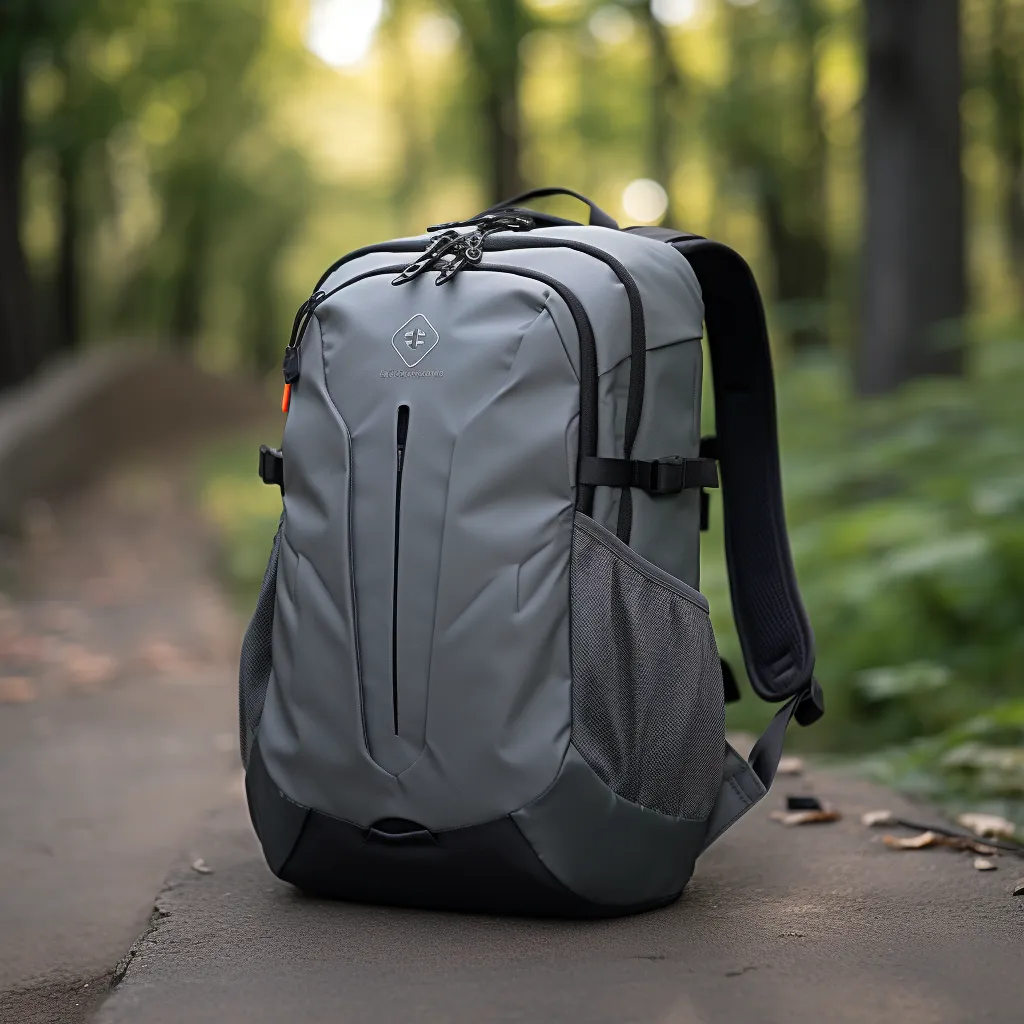
Waterproof & Technical Gear
High-frequency welded construction for extreme environments. 100% waterproof, airtight, and highly durable.
Everyday & Outdoor Bags
Sewn bags for travel, work, sports, and daily commute. Extensive fabric and hardware choices.
Golf & Tool Bag Types
Browse the most requested sub-categories. Each type links to a dedicated factory-focused landing page.
Golf bag categories
Tool bag categories
Promotional & Specialized
High-volume, cost-effective solutions for brands, events, and retail organizers.
Complete Category Coverage
We cover the full range of categories seen on top OEM websites. Each category has its own factory-focused landing page.
Don't see exactly what you need?
We run a true OEM programme through our SGS-verified production base. If you have a tech pack or a sample of any bag type, we can reverse-engineer it and manufacture it to your exact specifications.
Programme categories
Fifteen routes into the catalogue: nine product programmes and six programme-support pages covering process, materials, cost, quality, own-brand and sourcing. Start with the category you are buying, or with the question currently blocking your decision.
Indicative FOB price bands
FOB Xiamen, 500-unit MOQ, indicative only. These bands exist to frame an early conversation, not to replace a quotation. Two programmes inside the same band can differ substantially once material grade, branding method, testing and packing are specified.
| Category | Indicative range | What usually drives position inside the band |
|---|---|---|
| Simple tote | USD 1.80–4.50 | Fabric weight and denier, handle construction, seam type, single or double print position, and whether the bag needs a base board or closure hardware. |
| Basic backpack | USD 4.50–9.00 | Foam thickness behind the back panel, lining quality, lining print, strap webbing grade, zip specification and the number of separate compartments. |
| Laptop backpack | USD 7.00–14.00 | Protective sleeve construction, structured back panel, drop-test expectation, dedicated hardware, cable management features and additional internal organisation. |
| Cooler bag | USD 5.50–12.00 | Insulation foam thickness, sewn versus welded seams, wipe-clean lining choice, FDA 21 CFR food contact considerations and the closure method used. |
| Leather handbag | USD 12.00–35.00 | Hide grade and cutting yield, edge finishing method, hardware plating quality, lining fabric, dust bag and any structured interlining support. |
Bands widen rather than narrow when you add requirements. A test programme covering REACH (EC 1907/2006) and California Proposition 65, an AQL 1.5 inspection level, ISTA 3A transit testing or a customised retail carton each add measurable cost. Conversely, consolidating several styles onto one fabric, one hardware finish and one print method usually pulls a programme towards the lower end of every band above.
Use these figures to sanity-check a quotation received elsewhere, or to decide whether a concept is realistic before spending development time on it. The 24–48 hour quotation covers the same ground with your real specification attached, which is always more reliable than a category average.
Material options at a glance
Eight material families cover almost every programme we quote. The right answer usually follows intended load, expected service life and destination market rather than appearance, so treat specification numbers as decision data.
| Material | Common specifications | Characteristics | Typical applications |
|---|---|---|---|
| Nylon | 210D, 420D, 840D, 1680D | High tensile strength for its weight, good abrasion resistance, takes PU and TPU coatings well; higher cost than polyester at equal denier | Everyday and travel backpacks, high-wear base panels, lightweight linings |
| Polyester | 300D, 600D, 900D, 1200D | Stable colour yield for dyeing and sublimation, good ultraviolet resistance, lower cost than nylon at the same denier | Promotional totes, school bags, gym bags, laptop sleeves and linings |
| Ballistic nylon | 1050D | Dense basket weave with very high tear resistance, heavier hand and a distinctly technical appearance; the strongest choice for abuse-prone panels | Base panels, tool bags, wheeled travel frames and load-bearing corners |
| Canvas | 8 oz to 16 oz | Natural cotton or cotton-polyester hand, prints cleanly, durable under load, absorbs water unless treated or laminated | Retail and promotional totes, casual handbags, branded conference bags |
| Recycled polyester (RPET) | Same denier range as virgin polyester | Comparable mechanical performance with lower virgin input; traceability depends on GRS transaction certificates being kept current | Sustainability-led retail programmes, conference bags, reusable shopping totes |
| TPU laminate | Film laminated to a woven base fabric | Stays flexible at low temperature, allows welded seams, avoids PVC plasticisers restricted under REACH (EC 1907/2006); verify hydrolysis life where relevant | Cooler linings, structured panels, wipe-clean organisers |
| PU synthetic leather | Coated split leather or knitted base | Consistent grain and colour across batches, simple care, generally a wider compliance path than PVC-coated alternatives; check coating adhesion to ASTM D751 | Handbags, wallets, binding and edge trim, branded patches |
| Genuine leather | Full grain, top grain and split | Develops patina with use, demands cutting skill and yield planning, cost driven primarily by hide grade; chromium VI checked to ISO 17075 | Handbags, wallets, straps, trim patches and premium gift programmes |
Mechanical and chemical evidence is how a material claim becomes defensible. Tensile and tear testing follows ASTM D5034 for woven fabrics, coating adhesion follows ASTM D751 where a coated or laminated structure is used, water resistance follows AATCC 127, and colour transfer to other surfaces follows AATCC 8. For programmes feeding the European market, REACH (EC 1907/2006) restricts certain substances in coated fabrics, while OEKO-TEX Standard 100 provides an input-level certificate many retailers ask to see. Recycled content claims are only defensible alongside up-to-date GRS documentation.
Choosing between two fabrics usually comes down to one measurable property and one commercial one. If abrasion resistance is the measurable property, higher denier nylon wins; if colour yield across a printed panel is the requirement, polyester or RPET wins; and if cost per unit at fixed durability is the constraint, PU often replaces leather at a lower price without losing the intended look.
How to narrow the choice
Five decisions, taken in this order, remove most of the uncertainty from a category selection. Skipping ahead usually means re-costing later, because later decisions constrain earlier ones.
Start with the scenario. Where does the user carry this bag, for how long, and loaded with what? A daily commute, a weekend trip and a school day impose completely different requirements on suspension, fabric weight and closure hardware, so write the use case down before looking at any catalogue image. Custom backpacks shows how much of a design follows from that one answer.
Then fix the capacity. Convert the scenario into volume and layout: litres needed, device size, wet versus dry separation, and whether the bag must fit a cabin gauge. Capacity sets panel dimensions and therefore material consumption, which is why changing it after costing always changes the price. Custom travel bags covers the trade-offs in detail.
Next choose materials and hardware. Match fabric family, denier and coating to the load and service life you just defined, then select zips, buckles and webbing to the same standard. A weak component anywhere in the assembly decides the product's life, so the custom bag materials page compares families on measurable performance rather than appearance.
Then select the build method. Sewing, welding, moulding and the order of operations determine what the previous decisions can actually produce, and where tolerances accumulate. Understanding the line sequence also tells you which changes are cheap early and expensive late, which is the subject of the bag manufacturing process page.
Finally set budget and compliance together. Target price, order quantity and the 500-unit per style per colour minimum interact directly, and so do inspection level, testing and destination obligations. Read the cost and MOQ guidance alongside the quality and certification requirements, because a test plan agreed late almost always costs more than one agreed before sampling.
Get the right category costed properly
Tell us the use case, capacity, target market and target price. You receive a written quotation with material options, branding methods and a delivery date within 24–48 hours.
Frequently Asked Questions
How do I choose the right fabric denier for a heavy-duty work bag?
Match denier to load and abrasion risk, then confirm it with testing rather than by hand feel. Tensile and tear behaviour is measured to ASTM D5034, coating adhesion to ASTM D751, and the chosen fabric is then costed against the 500-unit MOQ so the stronger cloth still meets your target FOB Xiamen price.
How is insulation specified for a cooler or food-contact programme?
Insulation is specified by foam thickness, seam method and lining, then checked against the intended hold time. Welded seams remove needle holes that leak, the lining is assessed for FDA 21 CFR food contact where relevant, and the finished build is costed against the 500-unit minimum per style and colour.
What capacity decision should be fixed before a travel bag is costed?
Fix trip length, compartment layout and any airline cabin limit first, because capacity sets panel dimensions and therefore material consumption. Changing volume after sampling alters the pattern, the packing ratio and the unit price, and it restarts the 6-10 working day sampling cycle for the revised build.
How is device protection engineered into a laptop compartment?
Screen diagonal drives the sleeve geometry, foam density and closure type, and the drop expectation is agreed before sampling so the padding is specified rather than guessed. The compartment is then verified on the approved sample and inspected under ISO 2859-1 at AQL 2.5 before the lot is released.
Which fabric family gives the strongest colour yield for printed panels?
Polyester and recycled polyester hold dye and sublimation more consistently than nylon at equal denier, so printed artwork stays closer to the reference across a run. Print fastness is then checked to AATCC 8 for crocking and ISO 6330 for washing before bulk begins at the 500-unit MOQ.
How is genuine leather graded before it enters a cutting plan?
Hide grade, cuttable area and yield are assessed together, because grade drives cost more than any other input. Chromium VI is checked to ISO 17075 where the destination requires it, and the approved hide is recorded in the specification so a reorder matches the original sample.
What is involved in converting a flat tote into a structured build?
Structure adds interlining, a base board, edge control and usually a closure, which changes both pattern and sewing minutes. Expect the unit price to move within its band and allow 12-15 working days for sampling instead of 6-10, because the new geometry has to be proven before bulk.
How is recycled content documented on a polyester programme?
Recycled content is only defensible with current GRS transaction certificates linking the claimed input to the finished goods. We record the certificate number and covered article in the specification, and OEKO-TEX Standard 100 input evidence can be added where your retail partner asks for it at the enquiry stage.
Can one branding method be used across mixed fabric panels?
Rarely. Screen print, heat transfer and embroidery behave differently on polyester, nylon, canvas and coated laminates, so each substrate is tested separately. Mixed panels usually mean one method per substrate, and each artwork position adds tooling of USD 300-2,500 where a dedicated screen or die is needed.
How is a welded seam verified instead of a sewn seam?
Welded seams are proven by peel and hydrostatic testing on production material, then sampled in line rather than at the end. Where a water resistance claim is made the fabric is checked to AATCC 127, and the finished lot is still inspected to ISO 2859-1 at AQL 2.5.