Your Trusted Custom Business Bags Manufacturer
Business bag manufacturing for briefcases, work totes, and commuter bags. Focused on clean finishing, hardware consistency, and packaging readiness.
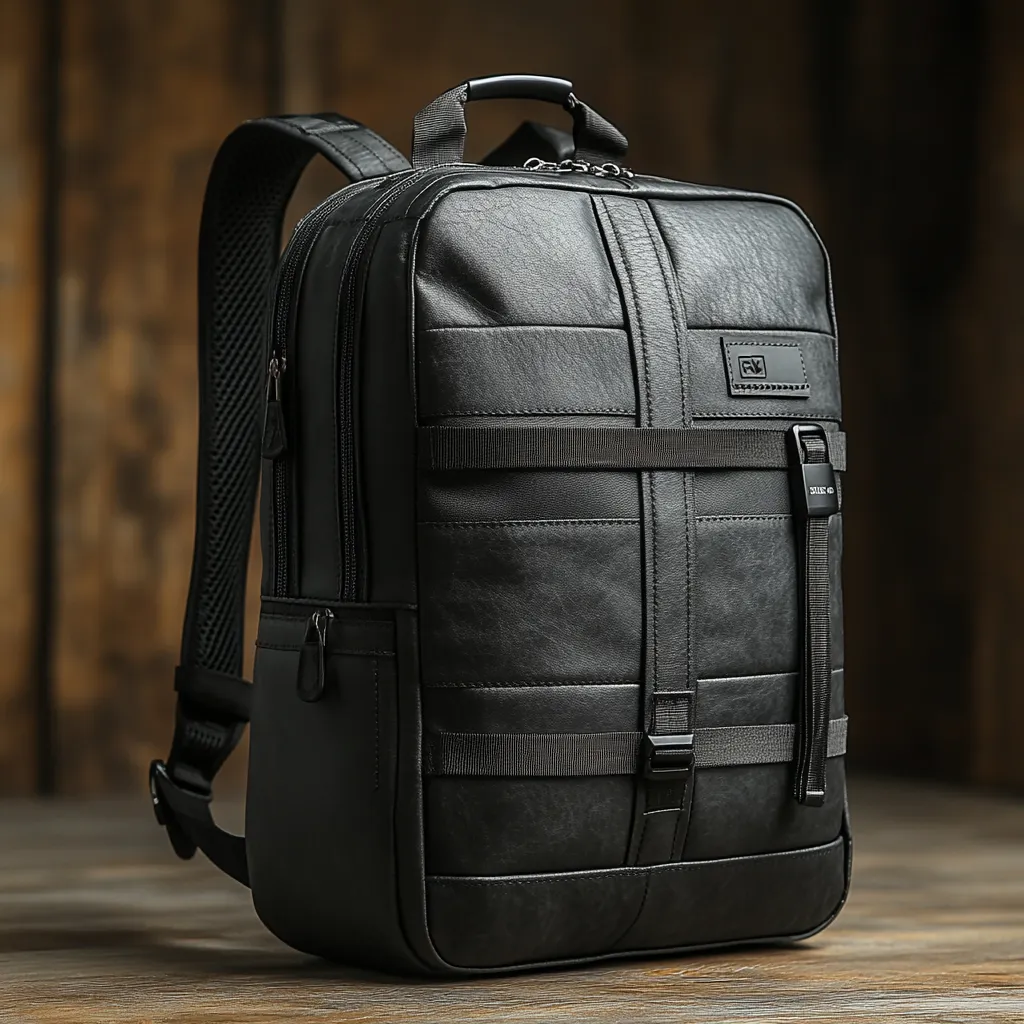
Briefcase Structure & Integrity
A professional bag must hold its shape whether empty or full. We engineer internal frames and piping to maintain crisp silhouettes.
Frame Boards
Keeps the bag standing upright and prevents slouching during meetings.
QC: Board thickness and rigidity tests.
Piping & Binding
Reinforces edges against daily abrasion and maintains silhouette.
QC: Seam straightness and corner turning.
Gusset Reinforcement
Prevents the base from blowing out when overloaded with laptops and documents.
QC: Load bearing and drop tests.
Commuter-Centric Design
-
Trolley Sleeve Slides over rolling luggage handles for seamless airport transitions.
-
Hidden Grab Handles Allows conversion from messenger to briefcase mode instantly.
-
Quick-Stash Pocket Magnetic or zip closure for phones, passports, and boarding passes.
Designed for the Daily Grind
Professionals demand seamless transitions from trains to meetings. Smart access points and versatile carrying modes define a premium commuter bag.
Hardware & Plating Specs
Hardware elevates a bag from basic to luxury. We control alloy strength and plating consistency to ensure components look pristine for years.
Swivel Hooks
Gunmetal, brushed nickel, or antique brass.
Heavy-duty alloys to support fully loaded bags without snapping.
Custom Zipper Pulls
Engraved or debossed logos.
A critical touchpoint for brand perception.
Base Feet (Studs)
Metal or molded feet.
Protects the bottom fabric from dirty floors.
Materials & fabrics
Material choice drives performance, durability, finishing, and target price point.
| Fabric | Waterproof | Cost | Notes |
|---|---|---|---|
| Ballistic nylon / PU leather | depends on spec | varies | Premium work positioning. |
• organizer pockets
• hardware matching
• zipper function checks
• AQL final inspection
• Retail business collections
• Travel accessory programs
Start custom business bags production
Send your requirements and get a structured RFQ checklist and a manufacturing plan.
Business bags cover briefcases, attaché cases, document carriers and conference totes, and they carry a different set of risks than a backpack. There is no harness to absorb error, the hardware is visible at close range, and the buyer's customer is usually holding it in a meeting. Finish quality and hardware selection decide the reorder.
Specification options for custom business bags
The grid below covers the three formats we produce most: the flat document carrier, the structured briefcase, and the full-featured attaché. Dimensions are given for A4 and 15 in device fit; A3 and 17 in variants are common and re-pattern the main panel.
| Parameter | Document carrier | Structured briefcase | Attaché |
|---|---|---|---|
| Exterior dimensions | 39 × 29 × 5 cm | 39 × 29 × 9 cm | 43 × 32 × 11 cm |
| Device fit | A4, 13 in slip | A4, 15 in padded bay | A4 and 17 in, suspended bay |
| Body material | 900D polyester, PU | Full-grain leather 1.2–1.4 mm | Full-grain leather 1.4–1.6 mm |
| Lining | 210D polyester | Twill polyester, branded repeat | Suede-look microfibre |
| Compartments | 3 plus document sleeve | 6 plus organiser | 9 plus file divider |
| Hardware | Zinc-alloy, brushed | Solid brass or zinc-alloy | Brass turn-lock, lockable |
| Empty weight | 700 g | 1,250 g | 1,600 g |
| Documented compliance | REACH (EC 1907/2006), Proposition 65 | ISO 17075, EN 1811, REACH | ISO 17075, EN 1811, REACH, CPSIA |
Leather thickness is the specification most often left open, and it drives both cost and how the bag ages. Below 1.2 mm a full-grain briefcase will crease at the fold within months; above 1.6 mm it becomes heavy and stiff to break in. We recommend 1.3–1.4 mm for a structured briefcase and a lighter split leather for gussets.
The gusset deserves separate attention. On a structured bag the gusset takes the opening stress and is the first place a cheap build splits. A single-piece gusset with a turned and skived edge outlasts a two-piece gusset joined at the base, which is the standard cost-down we advise against on anything above a promotional price point.
How a business bag is built
Structured builds start with a laminated shell. Body material is bonded to a reinforcement interlining and then pressed, so the panel holds shape without a stitched-in board. Bonding is done under heat and pressure with an adhesive matched to the substrate, and bond strength is verified after a heat cycle before the run is released.
Edge finishing separates a good briefcase from an average one. Edges are skived to reduce bulk, folded or butted, then painted and sealed. On leather, edge paint is applied in two or three coats with sanding between, and it is the single most visible quality signal on the finished product.
Stitching is specified for the material, not for the machine. Leather needs a heavier thread and a lower stitch density than textile — typically 6–7 stitches per inch with a bonded nylon, against 9–10 for a 900D polyester build. Running leather at textile settings produces perforated seams that tear along the stitch line.
Hardware is set into reinforcement. A turn-lock or magnetic catch is backed with a concealed plate behind the leather, so pull force spreads across the panel rather than tearing through it. Feet are riveted through a washer, and handle attachments are stitched over a webbing core that is riveted as well as sewn.
Lining is cut slightly generous and floated rather than bonded, so the interior can move independently of the shell. Bonded linings on structured bags wrinkle at the corners within a season, and the wrinkle is visible from outside when the bag is open.
Cost drivers and MOQ for business bags
Material dominates this product. Full-grain leather, corrected-grain leather, PU-coated split and ballistic nylon sit in clearly separated price bands, and because panels are large and uncomplicated, the material share of unit cost is higher here than on almost any other bag type.
Hardware is the second driver and the most underestimated. A solid brass turn-lock is several times the cost of a zinc-alloy equivalent, and a lockable mechanism adds a further step. On programmes where budget is fixed, we keep brass on the visible catch and zinc-alloy on concealed fittings.
Runs start at 500 units per style and colour, with 300 on reorders. Sampling is 6–10 working days for textile builds and 12–15 for leather, where hide selection and shade matching take time. Sample fees are USD 50–150, credited against your first bulk order, and tooling for custom hardware runs USD 300–2,500.
| Configuration | Indicative FOB | Notes |
|---|---|---|
| Document carrier, textile | USD 6.50–11.00 | 900D polyester, 3 compartments, webbing strap |
| Structured briefcase, textile | USD 9.00–14.00 | 1680D ballistic, organiser, padded bay |
| Structured briefcase, leather | USD 12.00–24.00 | Full-grain 1.3 mm, painted edges, brass fittings |
| Attaché, leather | USD 20.00–35.00 | 1.5 mm, lockable turn-lock, suede-look lining |
Terms are T/T 30/70 against FOB Xiamen, with EXW, CIF and DDP available under Incoterms 2020. Quotations come back in 24–48 hours. Transit is 25–35 days by sea, 5–8 days by air, 3–5 days by courier, and a 20GP holds roughly 28 CBM.
Quality gates and acceptance criteria
Every programme is inspected to AQL 2.5 — Critical 0, Major 2.5, Minor 4.0 — sampled under ISO 2859-1, with AQL 1.5 on request. On leather, inspection happens hide-by-hide before cutting as well, because natural marking is a legitimate reason to reject a panel and it is far cheaper to catch at cutting than at packing.
Functional testing focuses on handles and closures. Handle assemblies are pull-tested to well above expected load, closures are cycled, and hardware is salt-spray tested to ASTM B117 for 48 hours. Leather is tested for chromium VI to ISO 17075, and any metal component that contacts skin is checked for nickel release to EN 1811.
| Check | Method | Acceptance |
|---|---|---|
| Handle pull | In-house, static load | Above 400 N, no stitch or rivet failure |
| Closure cycle | In-house, 3,000 operations | No loss of engagement force |
| Hardware corrosion | ASTM B117, 48 h | No red rust on functional surfaces |
| Leather chromium VI | ISO 17075 | Not detectable at 3 ppm |
| Nickel release | EN 1811 | Below 0.5 µg/cm²/week |
| Colour fastness to rubbing | AATCC 8 | Grade 4 dry, 3–4 wet |
Hardware and closure selection
Closure choice is the decision buyers revisit most. A zip gives full-width access and works well on document carriers; a turn-lock reads more formally but restricts the opening; a magnetic catch is quiet and popular on conference totes but needs a concealed backing plate to avoid tearing through the panel.
Finish matters more than base metal for the first twelve months of use. A zinc-alloy fitting with a good electroplated finish will look better at month six than a poorly finished brass one, and it costs less. We qualify finishes by salt-spray testing rather than by appearance at goods-in.
Weight distribution is the last consideration. On a bag carried by a top handle, the handle has to sit close to the loaded centre of gravity, or the bag tips forward in the hand. We check handle placement against a loaded prototype and move the attachment point before the pattern is frozen.
Ordering path for business bag programmes
Textile programmes reach shipment in 9–12 weeks; leather programmes run 11–15 weeks because of hide procurement and shade matching.
Send format, material preference and device fit and we will return a build sheet with an indicative band. Leather and trim options are covered on our materials page, and adjacent formats sit under handbags and laptop bags.