Your Trusted Custom Crossbody Bags Manufacturer
Crossbody bag manufacturing for daily carry, travel, and fashion programs. Built for clean finishing, stable stitching, and consistent hardware matching.
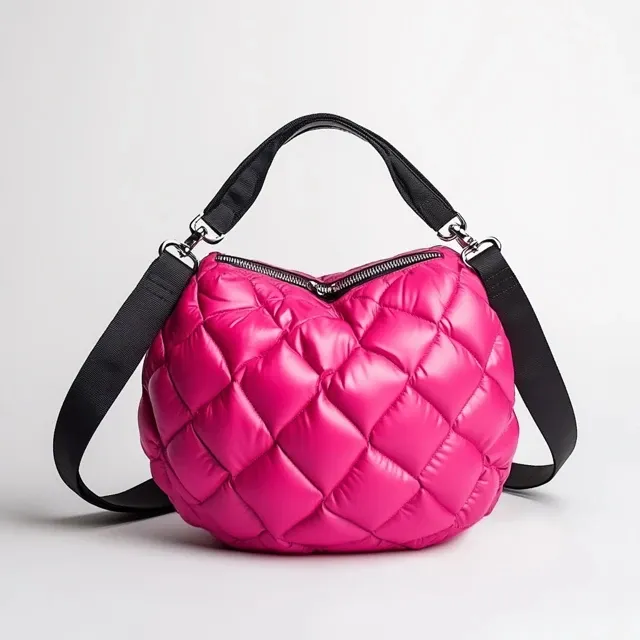
Spec snapshot
A fast engineering view of what matters for sourcing, quoting, and repeatable production.
| Item | Typical | Notes |
|---|---|---|
| Carry scenario | daily / travel / fashion | Scenario drives strap width, hardware, and pocket mapping |
| Hardware package | standard / premium matching (by spec) | Hardware consistency affects perceived quality |
| Wear zones | strap-to-body friction and corner wear | Define abrasion expectations and reinforcement |
| Typical MOQ | 500–1,000 pcs | Depends on fabrics, hardware, and branding package |
Hardware consistency control
Retail crossbody programs need consistent plating, color matching, and zipper feel. This table sets expectations and QC control points.
| Hardware | Options | Finish control | Notes |
|---|---|---|---|
| D-rings and buckles | metal/plastic options (by program) | color match and plating by spec | Define finish tolerance for retail channels |
| Zipper pullers | standard/custom pullers (by spec) | matching metal tone or coated finish | Custom pullers require MOQ and lead time alignment |
| Logo plates (by spec) | metal plate / emboss | plating and scratch tolerance | Define scratch tolerance for premium programs |
Strap anchor & stress-point map
Crossbody bags fail at anchors and corners. This map links reinforcement decisions to QC checkpoints and long-term durability.
| Stress point | Risk | Reinforcement strategy | QC checks |
|---|---|---|---|
| D-ring seams | tear-out under load | reinforcement patch + bar-tack count control | stitch density + bar-tack spot checks |
| Strap adjuster area | webbing slippage and wear | webbing/adjuster pairing + edge binding | slip checks and edge fray inspection |
| Bottom corners | corner abrasion and seam burst | corner reinforcement and base patches (by spec) | corner seam allowance checks |
| Zipper ends | zip stop failures | end reinforcement and geometry control | zipper run checks and end-stop inspection |
• Corner wear is common in daily carry; add targeted reinforcement rather than over-building panels.
• Hardware finish consistency matters: define tolerance and inspection points for bulk.
• If using light-colored fabrics, define color transfer tolerance and cleaning expectations.
Materials & fabrics
Material choice drives performance, durability, finishing, and target price point.
| Fabric | Waterproof | Cost | Notes |
|---|---|---|---|
| PU leather | depends on finish | varies | Premium appearance for retail positioning. |
| Canvas / cotton | n/a | varies | Classic look with strong printability. |
| Nylon | water-resistant | varies | Lightweight for travel usage. |
• strap anchor reinforcement
• hardware consistency control
• custom lining and pockets
• hardware consistency checks
• AQL final inspection
• Travel accessory brands
• Corporate gifting
• Hardware package level and finish requirements
• Strap width and comfort requirements + adjuster preference
• Pocket layout priorities and closure preference
• Fabric preference and abrasion expectation
• Branding method and packaging requirements
Start custom crossbody bags production
Send your requirements and get a structured RFQ checklist and a manufacturing plan.
A crossbody bag carries less weight than any other bag in this range and fails more often. That is because the load is concentrated in one strap attachment, the body is small enough to be over-filled, and the hardware is the first thing a customer sees and touches. Hardware and strap geometry are where the engineering belongs.
Specification options for crossbody bags
Straps are specified by drop length and by how they are anchored, not by width alone. Drop determines where the bag sits on the body, and the anchoring method determines whether it stays there. The three builds below cover the sling, the everyday shoulder bag and a leather-dressed version.
| Parameter | Sling | Everyday crossbody | Leather crossbody |
|---|---|---|---|
| Body dimensions | 18 × 30 × 7 cm | 23 × 27 × 8 cm | 24 × 26 × 9 cm |
| Strap length | 90–130 cm, adjustable | 110–140 cm, adjustable | 115–135 cm, adjustable, leather tab |
| Strap width and drop | 25 mm, drop 45–62 cm | 38 mm webbing, drop 50–65 cm | 20 mm leather, drop 52–60 cm |
| Body material | 420D nylon ripstop, PU | 600D polyester or PU-coated canvas | Full-grain or corrected-grain leather, 1.2–1.4 mm |
| Lining | 210D polyester, light grey | 210D dyed to match, 1 zip pocket | Cotton twill or microsuede, 2 pockets |
| Closure | #5 coil, water-resistant | Flap with magnetic snap plus #5 zip | Flap with turn-lock or hidden magnet |
| Hardware | Acetal buckle, zinc-alloy slider | Zinc-alloy swivel snaps, D-rings | Brass or zinc-alloy, brushed finish |
| Internal organisation | 1 slip, key clip | 3 card slots, 1 zip, 1 slip | 4 card slots, 2 slip, 1 zip |
| Empty weight | 210 g | 380 g | 520 g |
| Documented compliance | REACH (EC 1907/2006), Proposition 65 | REACH, CPSIA, EN 1811 | REACH, EN 1811, ISO 17075, Proposition 65 |
Drop length is the specification most often copied from a reference sample without thought. A 55 cm drop puts the bag at the hip on one body and at the thigh on another, so adjustable ranges are specified rather than a fixed length, and the slider is specified for the strap material — a slider that grips webbing will slip on leather.
How a crossbody bag is assembled
The body is cut as a front, a back and a gusset with a curved top where a flap is used. Curved tops need a notch pattern so the flap lies flat without bubbling, and on a small bag a 2 mm error in that curve is visible from across a room. Where the body is structured, a stiffener panel is inserted between shell and lining and tacked at the seam line only.
Strap attachment carries everything. On a webbing build, the strap anchors to a D-ring or a triangle tab that is stitched through a reinforcement patch and, where the shell allows, riveted as well. Stitching a tab to the lining alone guarantees a warranty claim, because the whole contents load hangs off two centimetres of seam.
Lining is assembled separately and dropped in, joined at the top edge and around the closure. Card slots are built on a separate panel that is inserted before the lining closes; slots are cut with a slight taper so a card sits snug without bowing the panel, and the top edges are turned rather than raw-cut.
Closure selection is a use decision. A zip keeps contents secure but needs both hands in practice; a flap with a magnetic snap is faster to open and is the default for a daily bag. Magnets are specified by pull force and are housed in a pocket so they cannot migrate, and on leather builds the magnet sits behind an interlining so it does not print through the grain.
Edge finishing is what separates a leather-look bag from a leather one. PU edges are turned and topstitched; leather edges are either painted and burnished or turned and stitched, and painted edges need a flex test because a brittle edge coat cracks at the strap fold within a season.
Cost drivers and MOQ for crossbody programmes
The price levers are body material, hardware specification, strap construction, internal organisation and edge finishing. Hardware is the one buyers misjudge: a zinc-alloy swivel snap and a solid brass one differ by several multiples, and the difference is visible to the customer in weight and in how the finish wears.
Bookings start at 500 units per style and colourway; 300 applies to reorders of a live style. Sampling runs 6–10 working days on stock materials, or 12–15 where custom hardware, a debossed logo plate or a bespoke leather shade is required, with tooling at USD 300–2,500. Sample fees are USD 50–150 and are credited to the first bulk order.
| Tier | Typical configuration | Indicative FOB |
|---|---|---|
| Sling | Nylon shell, webbing strap, acetal hardware, 1 slip pocket | USD 4.80–7.50 |
| Everyday | Coated canvas or PU, flap and snap, 3 card slots, lining | USD 7.50–11.00 |
| Leather | Full-grain body, brass hardware, painted edges, 4 card slots | USD 11.00–16.00 |
Standard commercial terms are T/T 30/70 against FOB Xiamen, with EXW, CIF and DDP quoted on request under Incoterms 2020, and indicative pricing returned in 24–48 hours. Transit runs 25–35 days by sea, 5–8 days by air and 3–5 days by courier; a 40GP holds roughly 56 CBM and a 40HQ about 68 CBM.
Quality gates and acceptance criteria
Inspection is to AQL 2.5 under ISO 2859-1, Critical 0, Major 2.5, Minor 4.0, with AQL 1.5 available on request. Because this is a small product held close to the body, cosmetic limits for grain defects, edge finish and hardware plating are agreed before production and recorded with photographs.
The functional tests that matter are strap anchor pull, hardware corrosion and closure endurance. Metal trim is screened for nickel release to EN 1811 and leather for chromium VI to ISO 17075 where the destination requires it; coated and dyed materials are screened against REACH (EC 1907/2006) and California Proposition 65.
| Check | Method | Acceptance |
|---|---|---|
| Strap anchor pull | In-house, 30 kg static, 60 s | No tear, tab shift under 3 mm |
| Closure endurance | In-house, 2,000 cycles, zip or snap | Smooth action, magnet stays seated |
| Hardware corrosion | ASTM B117, 48 h salt spray | No red rust, no plating blister |
| Nickel release | EN 1811 | Within migration limit for destination |
| Chromium VI in leather | ISO 17075 | Not detectable |
| Colour fastness to rubbing | AATCC 8 | Grade 4 dry, grade 3–4 wet |
| Seam strength | ISO 13934-1 | Above 160 N on load-bearing seams |
Hardware, edge finishing and strap geometry
Hardware choice should follow the finish life you want, not the catalogue photograph. Zinc alloy takes a wide range of plated finishes at low cost and is fine for a fashion cycle; brass costs more, weighs more and develops a patina that reads as quality on a leather bag. Plating thickness is specified, not assumed, and is verified by salt spray rather than by eye.
Strap geometry is the final piece. A 38 mm webbing strap spreads load and reads sporty; a 20 mm leather strap looks dressier and concentrates load, which is why leather straps get a wider anchor tab and, on heavier bodies, an interlined core. Adjustment range is set so the bag sits correctly across the size range you sell into, and the tail end is finished with a keeper rather than left loose.
Ordering path for crossbody programmes
First programmes typically land in 9–12 weeks, with custom hardware and leather shade matching on the critical path.
Send a reference bag, your target drop and the finish level you want on the hardware, and we will return a build grid, a hardware recommendation and an indicative FOB band within 48 hours. Trim and plating options are compared on custom bag materials, and documentation scope is set out on quality and certification.