Your Trusted Custom Polyester Fabrics Manufacturer
Polyester fabric selection and customization support for bag manufacturing. Choose the right denier, coating, and finish for cost and performance balance.
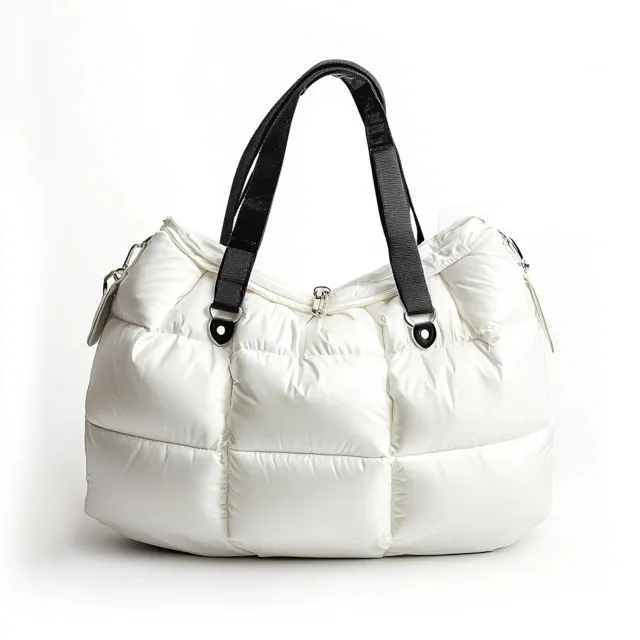
Spec snapshot
A fast engineering view of what matters for sourcing, quoting, and repeatable production.
| Item | Typical | Notes |
|---|---|---|
| Base type | virgin / RPET (by program) | RPET programs require traceability and consistent batch control |
| Print priority | sublimation / transfer / screen (by spec) | Print method drives coating choice and color fastness gates |
| Color strategy | piece-dye / dope-dye (by spec) | Color strategy impacts lead time and batch-to-batch stability |
| Coating target | PU / PVC / none (by spec) | Coating affects hand-feel, print behavior, and hydrolysis risk |
| Typical MOQ | 1000m+ (varies) | Depends on stock base, dyeing, and coatings |
RPET Traceability Playbook
RPET is an operations program, not just a fabric choice. We define traceability rules, documentation, and batch controls so sustainability claims stay defensible.
GRS positioning (by program)
Chip-to-yarn chain
Color consistency
Sustainability messaging
Print Compatibility Matrix
Polyester is a printing-first material. We match artwork type to the right printing path and define QC gates so bulk stays consistent.
| Method | Best For | Limitation | QC |
|---|---|---|---|
| Sublimation-ready polyester | full-bleed artwork and photo designs | works best on light base colors | print proof + wash/rub fastness checks (by spec) |
| Transfer print (by spec) | logos and multi-color artwork | peel/crack risk on high-flex zones | adhesion + flex checks (by spec) |
| Screen print | simple logos at volume | ink hand-feel and cracking risk | ink selection + rub checks (by spec) |
| Coated polyester | water-resistant shells | coatings can reduce print adhesion | adhesion checks + coating uniformity gates |
Color Migration Risk Map
Polyester programs fail quietly through dye migration and sublimation bleed. We map the risk scenarios and apply preventions before bulk production.
Supply Stability Levers
For polyester, supply stability is part of product quality. We choose levers that protect repeat orders, color continuity, and lead time.
Custom Polyester Fabrics catalog
Choose a base style and we will tailor materials, capacity, colors, and branding to your requirements.
Materials & fabrics
Material choice drives performance, durability, finishing, and target price point.
| Fabric | Waterproof | Cost | Notes |
|---|---|---|---|
| 600D/900D polyester | coating options | varies | Popular base fabrics for large programs. |
| RPET polyester | coating options | varies | Eco positioning for sustainable collections. |
• printing compatibility planning
• color tolerance control
• tear strength checks (by spec)
• AQL incoming material checks
• Full-color printing programs
• Eco RPET positioning
• Denier range and weave preferences with reference samples if available
• Print method preference (sublimation/transfer/screen) and artwork type
• Color strategy (stock/piece dye/dope-dye) and tolerance expectations
• Coating needs and waterproof level expectations (by spec)
• Compliance documents required (GRS, REACH guidance, MSDS by request)
Start custom polyester fabrics production
Send your requirements and get a structured RFQ checklist and a manufacturing plan.
Specification options for custom polyester fabrics
Polyester fabric should be bought against a measurable construction, not a generic denier label. Yarn size, weave, finished weight, width, coating chemistry, colour standard, and performance target work together. A 600D fabric from two mills can differ in density, hand feel, abrasion, and backing adhesion, so the approved swatch and test schedule are part of the product specification.
| Specification | Typical option | Control point |
|---|---|---|
| Yarn designation | 150D, 300D, 600D, or 900D | State filament type and texture |
| Finished width | 145–152 cm | Define usable width after selvedge |
| Finished weight | 120–420 g/m² | Set tolerance on conditioned material |
| Weave | Plain, oxford, twill, or ripstop | Construction affects tear and appearance |
| Backing | PU, TPU film, PVC, or uncoated | Match chemistry to claim and destination |
| Surface finish | Durable water repellent, print, or brushed | Agree hand feel and visual standard |
| Typical roll weight | 25–48 kg | Depends on width, weight, and roll length |
| Compliance lines | REACH, OEKO-TEX Standard 100, GRS | Claims require valid scope documents |
End use comes first. A lightweight lining values colourfastness and sewability, while an outer shell may need abrasion, tear, hydrostatic, and coating adhesion performance. Printed material adds repeat, registration, and colour-layer controls. Review how these choices affect finished products in the custom bag materials guide before confirming a fabric code.
How custom polyester fabrics are built
Production begins with yarn selection and preparation. Filament shape, texturing, twist, and lot consistency influence sheen and hand. Warp yarns are arranged under controlled tension, then woven with the chosen pick density. Uneven tension can create bow, skew, or bands that become more visible after coating and cutting, so greige inspection is an early gate.
Scouring and dyeing remove processing residues and establish colour. The method depends on shade, construction, and lot size. Colour approval uses a physical standard under agreed light sources because screen values do not control metamerism. Heat setting stabilises width and dimensional behaviour; an unstable base can shrink or distort during lamination, printing, or later bag assembly.
A coating or film adds body and resistance properties. PU can offer a flexible hand, TPU film supports selected performance goals, and PVC may suit programmes where its chemistry is permitted. Application weight, cure, and adhesion must be controlled across the width. Excessive coating can crack at folds, while insufficient coverage produces pinholes or variable performance.
Surface finishes and prints are applied against defined references. Durable water repellent treatments require realistic claim language and periodic verification. Printed repeats are checked for alignment, edge quality, and colour consistency from start to end of roll. If a fabric will be cut into small panels, the buyer should decide whether minor repeat drift affects the final product appearance.
Finished material is inspected and rolled with traceable labels. Width, weight, shade, coating face, and defects are recorded, while representative swatches are retained. A sewing trial is recommended because needle size, thread, feed, and seam geometry can reveal coating peel or puckering not visible in a roll test. The downstream workflow is described in the bag manufacturing process.
Cost drivers and MOQ for custom polyester fabrics
Yarn specification, density, finished weight, dye depth, coating type, print coverage, recycled content, and certification paperwork are the main price variables. Dark saturated shades can use more dye than pale colours. Film lamination and multi-layer prints add processing stages. A standard colour on an established construction is normally more efficient than a new shade combined with a new weave and a specialised finish.
| Commercial element | Guide | Basis |
|---|---|---|
| Indicative FOB Xiamen | USD 1.80–6.50 per finished metre | Construction, width, finish, and test scope |
| Programme MOQ | 500 units/style/colour; repeat programmes 300 | Dye and coating lot minimums also apply |
| Lab and sample work | 6–10 working days; complex 12–15 | Includes colour and finish confirmation |
| Production | 35–50 days after sample approval | Begins after lab dip and construction lock |
| Charges | Sample USD 50–150; tooling USD 300–2,500 | Sample fee credited on first bulk order |
| Trade terms | T/T 30/70; FOB Xiamen | EXW, CIF, and DDP available |
Clear technical sheets are normally quoted in 24–48 hours. Conversion and finished-product programmes are coordinated through an SGS-verified 4,950 m² production floor with 137 people, 7 lines, 149 machines, and listed capacity of 200,000 units/month. The operation was founded in 2014 by a founder active in the trade since 2004. Fabric mill lead time and approved lot availability remain part of the confirmed schedule.
Quality gates and acceptance criteria
Every lot should be checked against the signed construction sheet and master swatch. Tensile strength can be tested to ASTM D5034 or ISO 13934-1, with colourfastness to rubbing evaluated under AATCC 8. Water-related claims may use ASTM D751, AATCC 22, or AATCC 127 as appropriate. The chosen method, conditioning, face orientation, and pass level belong in the purchase specification.
- Verify usable width, finished weight, weave density, roll length, and labelled coating face.
- Compare shade under agreed light sources and check side-to-centre and roll-to-roll variation.
- Inspect bow, skew, creases, contamination, holes, coating streaks, pinholes, and print faults.
- Test relevant tensile, colourfastness, water, adhesion, and dimensional properties by lot plan.
- Run cutting and sewing trials to observe fraying, needle marks, puckering, and backing separation.
- Use ISO 2859-1 where sampling applies, with AQL 2.5 and Critical 0 / Major 2.5 / Minor 4.0; AQL 1.5 on request.
GRS and OEKO-TEX Standard 100 references must match the current product scope and supply chain documents. A logo on a sales sheet is not a substitute for an applicable certificate. Lot traceability connects roll labels, test reports, cut panels, and finished goods. Build the evidence plan with the quality and certification overview.
Colour, coating, and claim management
Colour approval should include a master standard, viewing conditions, tolerance method, and rules for minor lot variation. Coated textiles can appear lighter or darker depending on surface texture and backing. When several components must match, approve them together because polyester shell, webbing, zipper tape, and print ink rarely reflect light in exactly the same way.
Performance wording must match the tested layer and assembly. A fabric result does not establish the performance of stitched seams, zippers, or a finished bag. State whether the value applies to initial material or after conditioning, washing, or abrasion. This distinction protects product copy from overclaiming and helps developers choose construction features that support the intended outcome.
Ordering path
Use six controlled gates to convert an end-use requirement into an approved fabric lot and then into shipment-ready rolls or cut components.
Send the target end use and performance sheet for a construction recommendation, swatch route, and quote.