Your Trusted Custom Backpacks Manufacturer
Expert OEM/ODM backpack manufacturing. From technical outdoor packs to urban commuter bags, we deliver precision stitching, ergonomic designs, and strict AQL quality control.
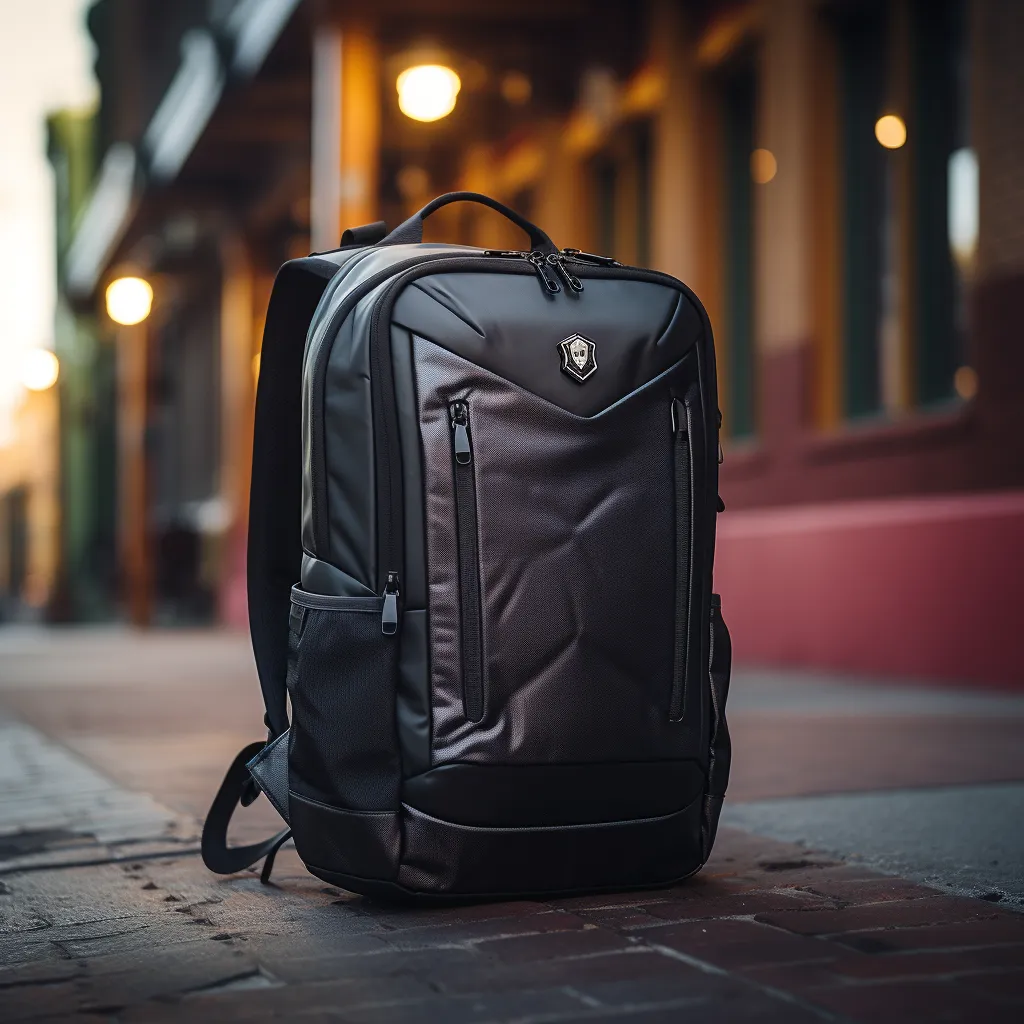
Spec snapshot
A fast engineering view of what matters for sourcing, quoting, and repeatable production.
| Item | Typical | Notes |
|---|---|---|
| Platform type | school / commuter / outdoor / tactical | Defines harness, padding, and reinforcement strategy |
| Load target | 8–12kg (daily) / 15–25kg (technical) | Drives strap anchors, bar-tack count, and base materials |
| Laptop protection | 13–17 inch sleeve options | Suspended sleeve vs foam-panel approach changes thickness and cost |
| Access system | top-load / clamshell / U-zip | Impacts user experience and pattern complexity |
| Organization level | minimal / EDC / travel | Pocket count is a major cost and assembly-time driver |
| Typical MOQ | 500–800 pcs | Depends on custom fabrics, molded parts, and packaging |
| Sampling lead time | 7–15 days | Faster with existing platforms; longer for new harness tooling |
Backpack platform blueprint
Backpacks scale into a product line by modular platform choices: harness, frame, access system, and organization.
| Module | Options | Engineering notes |
|---|---|---|
| Harness & comfort | EVA foam straps, breathable air-mesh, sternum strap | Comfort upgrades must not reduce stitch strength at anchors |
| Back panel system | flat panel / channel-vent panel / frame sheet | Frame sheet improves load transfer; adds tooling and assembly time |
| Access architecture | top-load, clamshell, U-zip, roll-top hybrid | Clamshell improves packing but adds zipper length and complexity |
| Organization pack | laptop sleeve, admin panel, hidden pocket, bottle pockets | Pocket count + binding choices move cost more than fabric changes |
| Base reinforcement | TPU skid panel, Hypalon, double fabric layer | Prevents early wear and returns on travel/school programs |
| Branding package | embroidered patch, rubber label, woven label, reflective | Match branding durability to abrasion and wash expectations |
Capacity & dimensions reference
Standard size options for backpacks. We can also customize dimensions to fit your specific gear.
| Volume | Typical Dimensions | Best For |
|---|---|---|
| 10L - 20L | 40 x 25 x 12 cm | Kids, hydration, minimal daily commute |
| 20L - 35L | 48 x 30 x 18 cm | Standard school, laptop, EDC (Everyday Carry) |
| 40L - 55L | 55 x 35 x 22 cm | Weekend travel, carry-on, short hikes |
| 60L+ | 70+ x 38 x 25 cm | Expeditions, multi-day trekking |
Materials & fabrics
Material choice drives performance, durability, finishing, and target price point.
| Fabric | Waterproof | Cost | Notes |
|---|---|---|---|
| 600D / 900D Polyester | PU Coated (Water-resistant) | $1.50 - $3.00 / m² | Cost-effective, highly durable, and excellent for school or promo bags. |
| Cordura® Nylon (500D/1000D) | DWR Treated | $6.00 - $12.00 / m² | Exceptional abrasion and tear resistance for tactical and outdoor packs. |
| RPET (Recycled Polyester) | PU Coated | $2.50 - $4.50 / m² | Eco-friendly alternative made from recycled plastic bottles (GRS Certified). |
• Zipper Cycle Test: Opening and closing zippers 1,000+ times.
• Color Fastness: Testing against UV exposure and washing.
• Corporate Promotions: Durable laptop bags with high-quality embroidery.
• Outdoor Gear: Weather-resistant fabrics and load-bearing harness systems.
• Tactical/Military: 1000D Cordura, reinforced bar-tacks, and modular webbing.
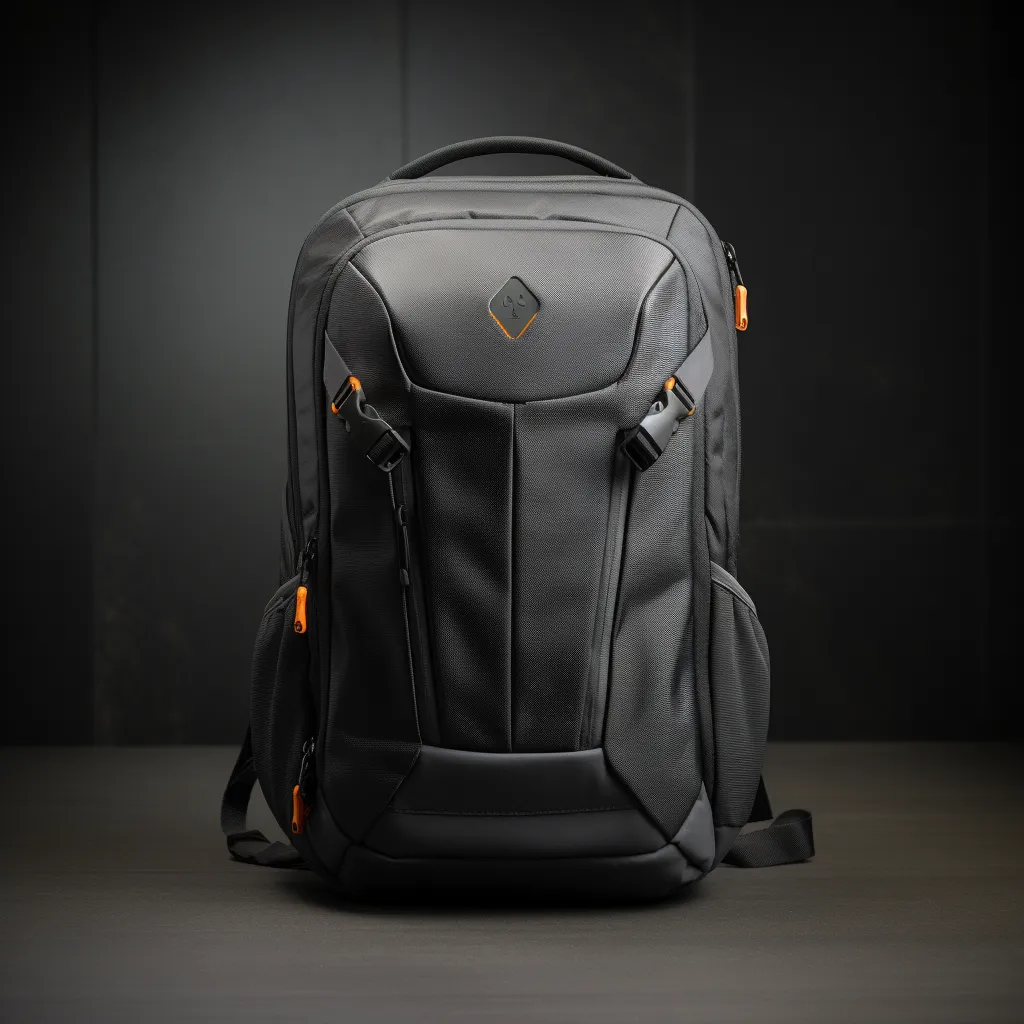

• Capacity range and laptop size requirement (if any)
• Access style preference (top-load/clamshell/U-zip) and organization needs
• Fabric preference (polyester/nylon/Cordura/RPET) + water-resistance requirement
• Branding method + placement + abrasion expectation
• Any special features (RFID pocket, anti-theft, MOLLE, hydration)
• Packaging requirements (retail vs bulk) and target lead time
Start custom backpacks production
Send your requirements and get a structured RFQ checklist and a manufacturing plan.
A backpack looks simple until you try to hold a price point and a durability target at once. Every dollar spent on the harness is a dollar not spent on the shell, and every gram stripped from the back panel resurfaces as a comfort complaint six months after launch. The decisions below are the ones that move cost, weight and field life on a custom backpack programme.
Specification options for custom backpacks
The table below covers the everyday and travel-adjacent backpack programmes we run most often, from a 18 L day pack to a 32 L carry-on-adjacent build. If your target sits outside these ranges, the same grid scales, but the harness and the back panel have to be re-specified rather than stretched.
| Parameter | Day pack | Everyday | Travel-adjacent |
|---|---|---|---|
| Capacity | 18 L | 22–25 L | 28–32 L |
| Overall dimensions | 42 × 28 × 14 cm | 46 × 30 × 16 cm | 50 × 33 × 20 cm |
| Shell fabric | 300D polyester, PU | 420D nylon ripstop, PU + DWR | 600D polyester or 900D, PU + DWR |
| Back panel | 8 mm EVA + air mesh | 10 mm EVA + spacer mesh, moulded | Moulded EVA with airflow channel |
| Shoulder strap | 6 mm foam, 65 mm wide | 10 mm foam, 75 mm wide, S-curve | 12 mm foam, 80 mm, load-lifter |
| Empty weight | 480 g | 620–750 g | 850–950 g |
| Laptop bay | 13 in, padded slip | 14 in, suspended 20 mm | 15.6 in, suspended 25 mm, false bottom |
| Compliance lines | REACH (EC 1907/2006), Proposition 65 | REACH, CPSIA, OEKO-TEX Standard 100 | REACH, CPSIA, Proposition 65, Sedex SMETA |
Two specification choices drive most complaints on returned product. The first is strap foam density: at 6 mm the pack feels fine empty and shoulders hurt at 6 kg. The second is the laptop bay. A slip pocket with a false bottom that lets the device hit the ground is the most common cause of cracked screens, and a 25 mm suspension gap costs almost nothing.
How a custom backpack is built
Patterning starts from the panel count, not the capacity. A three-panel build — front, gusset, back — is cheap to cut and assemble and gives you a soft, slouchy silhouette. A five-panel build with a separate base panel costs more in sewing time but holds shape, stands upright when set down, and lets you put a heavier denier exactly where abrasion concentrates.
The back panel is the structural spine. On anything above 22 L, the load from the shoulder straps has to transfer into a moulded or laminated EVA panel that is stitched to the shell on all four sides, not spot-stitched. Spot stitching lets the panel bag away from the shell under load and is the usual reason a pack feels like it is pulling backwards.
Harness geometry matters more than harness padding. An S-curve strap with a load-lifter strap attached at 45 degrees carries weight better than a straight strap with thicker foam, because it pulls the pack into the wearer's back rather than away from it. We specify strap attachment points reinforced with a bar-tack over a webbing loop that passes under the panel, not just stitched to the top edge.
Seam type is chosen by location. Main shell seams are bound with tape or turned and topstitched; interior pocket seams are overlocked to save bulk. Stitch density runs 8–10 stitches per inch with bonded nylon 69 thread on load-bearing seams and polyester on decorative topstitching, because polyester holds colour better under UV.
Lining is assembled as a separate bag and dropped into the shell, closed at the top edge. This lets the interior pockets be positioned independently of the exterior seam lines. Zipped interior pockets get a zip guard and a lined teeth facing so the slider cannot catch on the lining — a snag that generates disproportionate complaint volume.
Hardware is set last and is the most common place to find cost. A #5 coil zip with a branded puller costs a fraction of a #8 and looks better than an unbranded #8. Webbing is 25 mm polyester on the load path and 15 mm on accessory points, with all cut ends heat-sealed to stop fraying in the field.
Cost drivers and MOQ for custom backpacks
Backpack pricing is a labour story more than a material story. A 22 L pack with three pockets and a laptop bay runs roughly 18 minutes of sewing time; adding a clamshell opening, an organiser panel and a hidden back pocket pushes that to 32 minutes. At our volumes, that difference is worth more than any fabric upgrade you could make.
Runs begin at 500 units per style per colourway, with a 300-unit reorder threshold once a style has been produced. Sampling is 6–10 working days, extending to 12–15 for moulded back panels or custom hardware. Sample fees are USD 50–150, credited against your first bulk order; tooling runs USD 300–2,500.
| Configuration | Indicative FOB | Notes |
|---|---|---|
| 18–22 L day pack, 3 pockets | USD 4.50–6.50 | 300D–420D shell, no laptop bay |
| 22–25 L everyday, laptop bay | USD 6.00–9.00 | 420D ripstop, suspended bay, 5 pockets |
| 28–32 L travel-adjacent | USD 8.50–14.00 | Clamshell, moulded panel, organiser |
Terms are T/T 30/70 against FOB Xiamen, with EXW, CIF and DDP available. A 20GP holds roughly 28 CBM, a 40GP 56 CBM and a 40HQ 68 CBM; a 22 L pack cartons at about 0.045 CBM per six pieces, so most first orders are volumetric rather than weight-limited. Master cartons are drop-tested to ISTA 3A before the first shipment.
Quality gates and acceptance criteria
Inspection is AQL 2.5 throughout: Critical 0, Major 2.5, Minor 4.0, with AQL 1.5 on request. Beyond the visual inspection, four tests do the real work on a backpack programme — loaded strap cycle, seam strength, abrasion on the base panel, and colour fastness to rubbing on dark face fabrics.
Loaded strap cycle runs a 12 kg load through 2,000 lift-and-set cycles on a jig. Failures are almost always at the strap attachment bar-tack or the webbing-to-adjuster interface, not in the foam. Shell tensile is checked to ASTM D5034 and seam strength to ISO 13934-1, with a 180 N floor on main shell seams regardless of fabric denier.
| Check | Method | Acceptance |
|---|---|---|
| Loaded strap cycle | In-house jig, 12 kg, 2,000 cycles | No stitch failure, no webbing slip over 5 mm |
| Abrasion, base and strap | ASTM D3886 or in-house Martindale | No thread break at 10,000 cycles |
| Colour fastness to rubbing | AATCC 8 | Grade 4 dry, 3–4 wet |
| Water resistance | AATCC 22 spray, AATCC 127 hydrostatic | Spray 90+, hydrostatic above 1,000 mm |
| Zip cycle | In-house, 5,000 open/close | No slider wear, no tape delamination |
Branding methods for custom backpacks
Six methods cover almost every brief. Woven labels are the cheapest and read best on the harness and the top grab loop. Rubber and PVC patches survive abrasion and are the standard for streetwear-adjacent programmes. Embroidery gives depth but needs flat panels embroidered before assembly, so your artwork must be locked before the cutting marker is released.
Screen printing and heat transfer both work on the front panel; screen print is cheaper at volume, heat transfer is better for photographic artwork. Silicone and TPU badges sit at the top of the range and hold up on a curved panel. Placement tolerance is ±3 mm on a flat field and ±5 mm across a seam.
Hardware branding is the quiet win: a moulded zip puller, a debossed webbing loop, or a laser-etched adjuster buckle. Tooling is modest, the mark reads at retail, and the same puller can be amortised across your school bag and laptop bag programmes.
Ordering path for custom backpacks
From brief to loaded container, most first programmes run 9–11 weeks. The two places schedules slip are artwork approval and lab-dip approval, so lock both early.
Send capacity, target weight and target FOB and we will come back with a panel layout, a fabric recommendation and an indicative band. Programme structure is explained on cost and MOQ, and the applicable certification pack is listed with every quote.