Your Trusted Custom Neoprene Products Manufacturer
Neoprene product manufacturing for protective and lifestyle accessories. Flexible MOQ planning and consistent finishing for branded programs.
Spec snapshot
A fast engineering view of what matters for sourcing, quoting, and repeatable production.
| Item | Typical | Notes |
|---|---|---|
| Product family | sleeves / wraps / straps / organizers | Family defines thickness, closure, and edge strategy |
| Branding method | sublimation / transfer / embroidery (by spec) | Branding must match surface jersey and flex behavior |
| Comfort target | soft edge / technical seam | Edge and seam choice controls skin contact comfort |
| Bulk consistency | lamination + edge gates | Delamination and edge waviness are the top failure complaints |
| Typical MOQ | 500–1,200 pcs | Depends on artwork coverage and accessory trims |
Neoprene Product Family Map
Neoprene is used across many accessory families. We route thickness, closures, and comfort targets based on how the product is actually used.
| Family | Best For | Thickness | Closure | Notes |
|---|---|---|---|---|
| Protective sleeves | electronics and daily carry | 2–3mm | zip or flap (by spec) | focus on zipper path and corner protection |
| Wraps & supports | sports and fitness | 3–5mm | velcro or strap (by spec) | skin comfort and seam feel are critical |
| Straps & grips | tools and water bottles | 2–4mm | hook/loop or stitched loop | pull points need reinforcement maps |
| Organizers | travel kits | 2–3mm | zip (by spec) | pocket count drives sewing time; avoid over-design |
Thickness Routing Rules
Thickness decisions define comfort, structure, and cost. We route thickness by product family and define QC gates for bulk repeatability.
Edge Finish Menu
Edge finish defines comfort and perceived quality. We choose the edge method based on skin contact, durability target, and retail positioning.
| Finish | Feel | Durability | Notes |
|---|---|---|---|
| Bound edge | premium and smooth | high | best for retail sleeves; more sewing steps |
| Flatlock | technical seam feel | medium-high | good for sports wraps; alignment control required |
| Folded edge + stitch | soft edge | high | reduces abrasion; needs thickness control |
| Raw cut (by spec) | minimalist | medium | requires stable lamination and clear tolerance definition |
Kit Packaging Operations
Neoprene collections often ship as kits. We define SKU architecture, artwork control, labeling, and carton marks so kits stay complete and consistent.
SKU architecture
Artwork versioning
Accessory pairing
Labeling
Carton marks
Custom Neoprene Products catalog
Choose a base style and we will tailor materials, capacity, colors, and branding to your requirements.
Materials & fabrics
Material choice drives performance, durability, finishing, and target price point.
| Fabric | Waterproof | Cost | Notes |
|---|---|---|---|
| Neoprene (various thickness) | water-resistant | varies | Thickness selection based on protection target. |
• bound edges or flatlock stitching
• zipper integration (by spec)
• AQL final inspection
• Promotional products
• Retail neoprene collections
• Neoprene thickness targets and comfort priorities (skin-contact feel)
• Branding method preference and artwork files + color requirements
• Edge finish preference (bound/flatlock/folded/raw) and premium level
• Closure needs (zip/velcro/strap) and reinforcement expectations
• Packaging plan (single SKUs vs kits) and labeling requirements
Start custom neoprene products production
Send your requirements and get a structured RFQ checklist and a manufacturing plan.
Foam-sheet accessories are the most forgiving category to develop and the easiest to get wrong at scale. A can sleeve is one panel and one seam; a bottle carrier is two panels, a base and a bonded handle; a protective case adds a lining, a zip and a fitment. Each step up the ladder changes the process, the tooling and the inspection plan, and the price per unit moves with them.
Specification options for foam-sheet accessories
The families below share a material but not a manufacturing route. Flat-sleeve products are cut, printed and seamed in one pass. Shaped carriers need a base insert and a bonded handle, which introduces an adhesive operation. Structured cases move into lining, zip installation and fitment, which is closer to soft goods assembly than to foam conversion.
| Parameter | Flat sleeve | Shaped carrier | Structured case |
|---|---|---|---|
| Typical footprint | 110 x 100 mm | 90 x 90 x 210 mm | 220 x 120 x 160 mm |
| Foam thickness | 3.0 mm | 4.0 mm | 5.0 mm |
| Face fabric | Sublimation knit | Jersey, bonded | Jersey outer, tricot inner |
| Panel count | 1 | 3 plus base disc | 6 plus lining set |
| Seam type | Overlock, 4-thread | Overlock plus bonded base | Blind stitch plus binding |
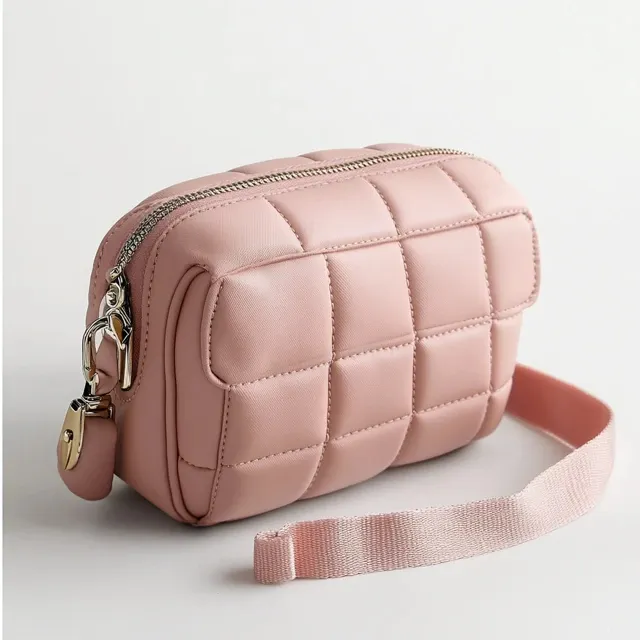
| Closure | None | None or snap tab | #5 coil zip |
| Carry feature | None | Webbing loop, bonded | Wrist strap with swivel clip |
| Decoration | Full-bleed sublimation | Sublimation or transfer | Transfer patch or woven label |
| Unit weight | 22 g | 85 g | 260 g |
| Output per line per day | 3,000 - 5,000 pcs | 1,200 - 2,000 pcs | 500 - 900 pcs |
| Documented compliance | REACH, Proposition 65 | Adds OEKO-TEX Standard 100 | Adds CPSIA, FDA 21 CFR where relevant |
Output figures matter more than unit price for low-cost accessories, because they decide whether a promotional deadline is achievable. A flat sleeve programme can absorb a late artwork change; a structured case programme cannot, since lining and zip installation are scheduled operations with their own lead time.
How foam-sheet accessories are built
Flat products start as printed sheet. Artwork is sublimated onto the face fabric before the foam is laminated, or onto the laminated sheet, depending on the construction, and the print is nested so that the finished panel sits in the marker with the image correctly placed. Registration tolerance is tighter than most buyers expect, so a bleed allowance is built into the artwork template.
Cutting is done with a die where volumes justify the tool, or with a rotary blade or laser for short runs. A die gives identical parts and fast output; laser cutting gives a sealed edge and no tool cost, but it can discolour the cut line on some face fabrics and it is slower per part. We recommend the method based on volume and on whether the edge is visible.
Shaped carriers introduce a base. The base is either a separate disc bonded into the cylinder or a folded gusset, and the folded version is stronger because it removes an adhesive joint. Where a disc is used, the adhesive and cure cycle are validated for peel strength before production, because a carrier that loses its base in a customer's hands is a complete failure.
Handles and straps are the load path in this category, and they are the weakest point by default. A webbing loop stitched to a foam panel pulls through, so loops are bonded over a larger footprint and then stitched through both the webbing and a reinforcement patch. On structured cases the strap is anchored to a binding seam rather than to the panel face.
Structured cases add lining. A tricot or jersey lining is assembled separately, dropped into the shell and joined at the zip line, which hides every interior seam and stops the lining from catching on the contents. Zip installation on foam requires a fabric gutter at the opening, because a zip stitched directly to foam will not run smoothly.
Cost drivers and MOQ for foam accessories
At this price level, three things dominate: material area, print method and labour content. Material area is straightforward - a larger footprint costs more per part. Print method has a fixed set-up component, so sublimation is expensive at 200 pieces and cheap at 5,000. Labour content is the real divider between a 20 cent sleeve and a USD 4 case.
| Configuration | Indicative FOB | Primary cost driver |
|---|---|---|
| Flat sleeve, sublimated | USD 1.10 - 2.20 | Print coverage, nesting yield |
| Shaped carrier, bonded base | USD 2.20 - 3.90 | Base method, handle bonding |
| Structured case, zip and lining | USD 4.40 - 7.00 | Lining set, zip assembly |
| Die-cut tooling per profile | + USD 0.04 - 0.12 amortised | Profile complexity |
| Individual polybag and barcode | + USD 0.08 - 0.20 | Packing method |
Volume rules are the same across the range. Minimum order quantity is 500 units per style and colour, or 300 on a repeat programme, and each colourway in a promotional assortment counts as its own style for planning purposes. Sampling takes 6 to 10 working days, or 12 to 15 where a print strike-off is needed. Mass production is 35 to 50 days after sample approval. Sample fees of USD 50 to 150 are credited against the first bulk order, tooling is quoted at USD 300 to 2,500, quotes return in 24 to 48 hours, and terms are T/T 30/70 FOB Xiamen with EXW, CIF and DDP under Incoterms 2020.
Quality gates and acceptance criteria
Accessories fail in three places: the seam opens, the print rubs off, or a bonded joint lets go. Each has a test. Seam strength is measured to ISO 13934-1 on production samples per shift; print durability is checked by wet and dry crocking to AATCC 8 and by a defined abrasion cycle; bonded joints are peel tested on a cut sample at the start and middle of each run.
- Dimensional check against the approved sample on first-off and at defined intervals, including thickness.
- Fit test on the intended container - can, bottle or device - on ten units per thousand.
- Wash durability to ISO 6330 for products sold as washable, followed by seam and print re-inspection.
- Pilling assessment to ISO 12945 on knit faces after abrasion.
- Restricted substances to REACH (EC 1907/2006), California Proposition 65, CPSIA, OEKO-TEX Standard 100, and FDA 21 CFR for food-contact items.
Colour consistency is the most common commercial dispute in this category, especially across a repeat order. We keep a retained standard from the original approval, and every subsequent run is compared against it under standardised lighting rather than against a memory or a photograph. Final inspection runs to AQL 2.5 (Critical 0, Major 2.5, Minor 4.0), with AQL 1.5 available on request under ISO 2859-1.
Artwork, assortments and promotional calendars
Promotional programmes live and die on artwork discipline. Supply vector artwork with outlined fonts and a defined bleed, and approve a physical strike-off rather than a screen proof, because sublimation shifts colour between screen and fabric in ways that only a strike-off reveals. Where a programme runs across multiple colourways, approve each one - a single approval does not cover a colour change.
Calendar planning matters as much as specification. A seasonal promotion has a hard in-warehouse date, and the clock runs backwards from it: 35 to 50 days production, 6 to 10 or 12 to 15 days sampling, plus freight of 25 to 35 days by sea, 5 to 8 days by air or 3 to 5 days by courier. Tell us the in-warehouse date first and we will tell you when artwork has to be frozen.