Your Trusted Custom Tool Tote Bags Manufacturer
Open-top tool tote manufacturing for fast-access jobsite workflows. Focused on pocket indexing, reinforced base plates, and clean edge finishing.
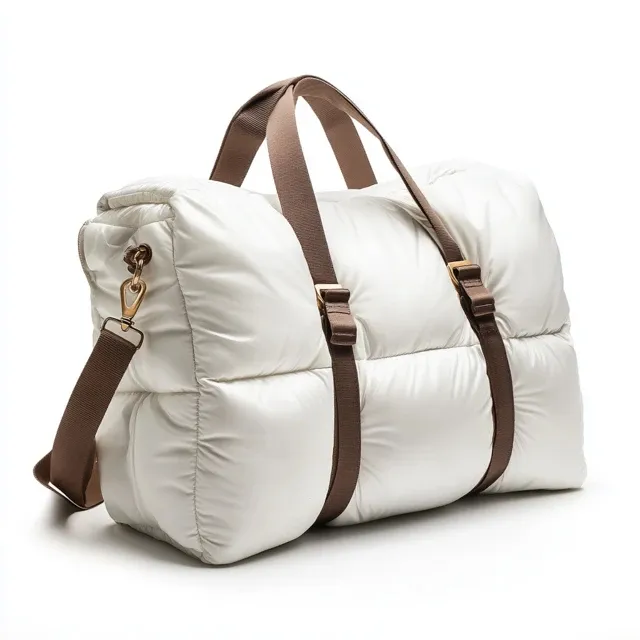
Spec snapshot
A fast engineering view of what matters for sourcing, quoting, and repeatable production.
| Item | Typical | Notes |
|---|---|---|
| Access style | open-top fast access | Designed for quick retrieval and visibility |
| Base strategy | reinforced base plate (by spec) | Controls wear on concrete and improves stability |
| Pocket indexing | outer pocket grid | Pocket depth and stiffness control prevents tipping |
| Handle comfort | webbing handles + wrap (by spec) | Comfort matters under heavy loads |
| Typical MOQ | 500–1,000 pcs | Depends on fabric grade and pocket complexity |
Open-top access map
Open-top totes win on speed and visibility. The details are in mouth structure, edge finishing, and tear-out reinforcement.
| Feature | Benefit | Risk | Control |
|---|---|---|---|
| Rigid mouth (by spec) | keeps opening stable | adds structure parts | structure placement templates and appearance gates |
| Side tool sleeves | fast access to long tools | fray at openings | binding tape and edge reinforcement |
| Front pocket map | one-hand retrieval | pocket tear-out | bar-tacks and stitch density control |
Pocket indexing grid
Pocket indexing is about speed and stability, not pocket count. This grid keeps the tote upright and pockets usable.
| Pocket type | Best for | Control |
|---|---|---|
| Narrow sleeves | drivers and small tools | pocket depth control and edge binding |
| Wide pockets | gloves and tape | stitch symmetry gates and reinforcement at corners |
| Zip mesh pocket (by spec) | small parts | zipper smoothness checks and seam allowance control |
| Hammer loop (by spec) | heavy tool carry | webbing spec and pull checks |
Base plate reinforcement options
Base choices control stability, wear, and perceived quality. Choose a route and validate abrasion and drop behavior in sampling.
| Option | Durability | Tradeoffs | Control |
|---|---|---|---|
| Double-layer base | medium | more weight | corner reinforcement and base alignment gate |
| Skid panel (by spec) | good | adds BOM | abrasion sampling checks and edge finish inspection |
| Rigid base plate (by spec) | high | more parts | plate seat reinforcement and drop sampling checks (by spec) |
Capacity & dimensions reference
Standard size options for tool tote bags. We can also customize dimensions to fit your specific gear.
| Volume | Typical Dimensions | Best For |
|---|---|---|
| Compact tote | quick service carry | light kits and service calls |
| Standard tote | daily jobsite tote | general contractors and technicians |
| Deep tote (by spec) | more vertical pockets | teams carrying long tools |
Materials & fabrics
Material choice drives performance, durability, finishing, and target price point.
| Fabric | Waterproof | Cost | Notes |
|---|---|---|---|
| 1680D polyester / nylon | water-resistant options | varies | Abrasion control for jobsite usage. |
| Skid panels / base plates (by spec) | n/a | varies | Stability and wear control. |
• abrasion checks (by spec)
• AQL final inspection
• Service technicians
• Retail private label tool lines
• Pocket indexing preferences and whether you need a rigid mouth (by spec)
• Base strategy preference (double layer/skid/plate by spec)
• Handle comfort needs and load target
• Branding method and packaging requirements
Start custom tool tote bags production
Send your requirements and get a structured RFQ checklist and a manufacturing plan.
Specification options for open-top tool totes
An open-top tote for tools is a vertical storage problem disguised as a bag. The pattern has to hold tall items upright, keep the mouth wide enough for a gloved hand, and survive being dragged across a floor while loaded, all without the lid, frame, or lining that a closed bag would use for stiffness. That combination pushes the engineering into the base panel, the wall-to-base joint, and the density of exterior pockets.
| Specification | Standard range | Development notes |
|---|---|---|
| External dimensions | 33 × 15 × 25 cm to 60 × 25 × 40 cm | Interior sized against a 5-gallon bucket or tool case |
| Rated load | 8 kg to 30 kg | Above 20 kg the wall-to-base joint needs binding |
| Shell materials | 600D and 900D polyester, 1680D nylon, 14–18 oz canvas, nonwoven laminate | Wall stiffness matters more than tear strength here |
| Wall structure | Single layer, 2–3 mm foam laminated, 4–6 mm PP insert | Inserts stop walls collapsing when partly filled |
| Base build | 6–10 mm board, moulded tray with drain channels, 5–8 feet | Trays handle wet ground and wash-down |
| Mouth treatment | Bound hem, folded hem with hidden stiffener, moulded rim | Rim versions hold shape but add tooling |
| Exterior pockets | 8–18 vertical pockets, 2–4 tool loops, tape-clip strap | Pocket depth graded by tool length |
| Empty weight | 0.5–1.8 kg | Driven by insert and tray choice |
Interior sizing should be written against the hardest object the tote must accept, which in most trade ranges is a 5-gallon bucket, a cordless tool case, or a bundled extension lead. Adding 10–15 mm of clearance over that object prevents the fabric from being stretched permanently at the mouth, and it keeps the walls from bowing outward once the object is in. Height above the object line is then free volume for hand tools and consumables.
Wall stiffness deserves more attention than raw fabric strength here. A tote that is only half full still has to stand on a workbench, which means either a 2–3 mm foam laminate bonded to the shell or a 4–6 mm PP insert in a sleeve at the base of the wall. Both change how the unit folds for shipping, so select them during the brief rather than after the first sample.
How open-top tool totes are built
Pattern work starts at the wall-to-base joint. On a loaded tote, virtually all the vertical force travels down the walls into that seam, so the joint is usually engineered as a bound or piped construction with the binding tape carrying load into the board rather than relying on the stitch line alone. A plain turned seam will hold on a light retail tote and fail on a contractor unit within weeks of daily site use.
The base assembly follows the same logic. A drop-in board distributes point loads from heavy tools across the whole footprint, while a moulded tray adds drain channels and a raised rim so spilled liquid does not immediately wick into the shell. Feet are positioned inboard of the wall line so the load path runs through the stiffest part of the base rather than through the perimeter seam.
Exterior pockets differentiate a tool tote from a shopping tote, and their depth should be graded: deep pockets at the ends take screwdrivers, pry bars, and levels, while shallower face pockets take pencils and small consumables. Pocket corners should be bar-tacked, because that is where field returns cluster.
The mouth is the last structural decision. A bound hem with a hidden stiffener costs little and is the common solution, while a moulded rim gives a crisp retail appearance at a tooling cost in the USD 300–2,500 range. Either way the hem must cover the stiffener join, or the stiffener migrates in transit.
Handles are usually wrap-around webbing continuing under the base. Because the tape runs beneath the load, the floor carries the weight and the stitching above the load line becomes secondary.
Cost drivers and MOQ for open-top tool totes
Price moves with four inputs: shell fabric and any bonded foam, base board or tray tooling, pocket count and depth, and print route. Pocket count is the dominant labour variable — eighteen graded pockets with bar-tacked corners can take longer to assemble than the rest of the bag combined.
| Construction | Typical build | Indicative unit price (USD) |
|---|---|---|
| Light retail tool tote | 600D shell, folded hem, 8 pockets, no board | 3.80–7.00 |
| Standard trade tote | 900D shell, 6 mm base board, 12 graded pockets | 6.50–11.00 |
| Bucket-compatible contractor tote | 1680D shell, moulded tray, wrap-around handle | 10.50–17.50 |
| Foam-laminated structured tote | 900D with 3 mm foam, bound wall-to-base joint | 9.00–15.00 |
| Canvas heritage tote | 16 oz canvas, leather trim, riveted feet | 14.00–26.00 |
Minimums begin at 500 units per style per colour, dropping to 300 for repeat runs once the pattern is proven. Sampling takes 6–10 working days for sewn constructions and 12–15 where trays or bonded panels are involved; production occupies 35–50 days after written approval. Quotations are delivered within 24–48 hours, payment runs T/T 30/70, and pricing is given FOB Xiamen with EXW, CIF, or DDP alternatives available.
Sample fees of USD 50–150 are credited against the first bulk order, and tooling covers rims, trays, and custom feet at USD 300–2,500. Because empty totes nest poorly once an insert is bonded in, ask for a packed carton CBM figure with the quote: a 20GP holds about 28 CBM, a 40GP around 56 CBM, and a 40HQ close to 68 CBM.
Quality gates and acceptance criteria
Incoming material control checks fabric weight, bonded-foam adhesion, and shade consistency against a signed reference. Coated or laminated shells are tested per ASTM D751 for coating adhesion and, where a water-resistance claim is made, per AATCC 22 for spray rating and AATCC 127 for hydrostatic resistance. Woven shells are sampled for grab strength under ASTM D5034 and seam behaviour under ISO 13934-1.
During assembly, attention sits on the wall-to-base joint and pocket corners. Inspectors check binding coverage, stitch density at the joint, and bar-tack placement on every pocket corner on the first pieces of each shift. A loaded stand test follows: the tote is filled to rated load, stood on a level surface for two hours, and measured for wall lean and base deflection.
Final inspection follows AQL 2.5 under ISO 2859-1 with Critical 0, Major 2.5, and Minor 4.0, and AQL 1.5 where a retail vendor agreement requires it. Critical classification includes detached pocket corners, split base joints, exposed stiffener ends, and missing feet. Dyed fabrics are additionally checked for crocking per AATCC 8, and metal components for corrosion resistance under ASTM B117 when the programme targets coastal markets.
Branding and labelling on tool totes
Tool totes offer unusually large flat panels, which makes them a strong branding surface but also exposes weak print choices. Screen print holds up well on 600D and 900D polyester and remains the cheapest route for one or two spot colours. Heat transfer suits photographic or gradient artwork, and a woven label or rubber patch reads more premium on canvas and heritage builds, though a patch adds a stitch operation and needs corner bar-tacks to stay flat.
Placement should follow use, not artwork convenience: panels that rub against a workbench will abrade decoration within weeks, so the highest-visibility area is the upper third of the end panels. Compliance printing — fibre content, country of origin, care instructions — normally sits on a private label inside the mouth, where it survives washing and does not interfere with external artwork.
Ordering path
Six stages from brief to loaded container.