Your Trusted Custom Beach Bags Manufacturer
Beach bag manufacturing for resort, outdoor, and retail programs. Designed for sand management, saltwater durability, drainage, and high-volume carry comfort.
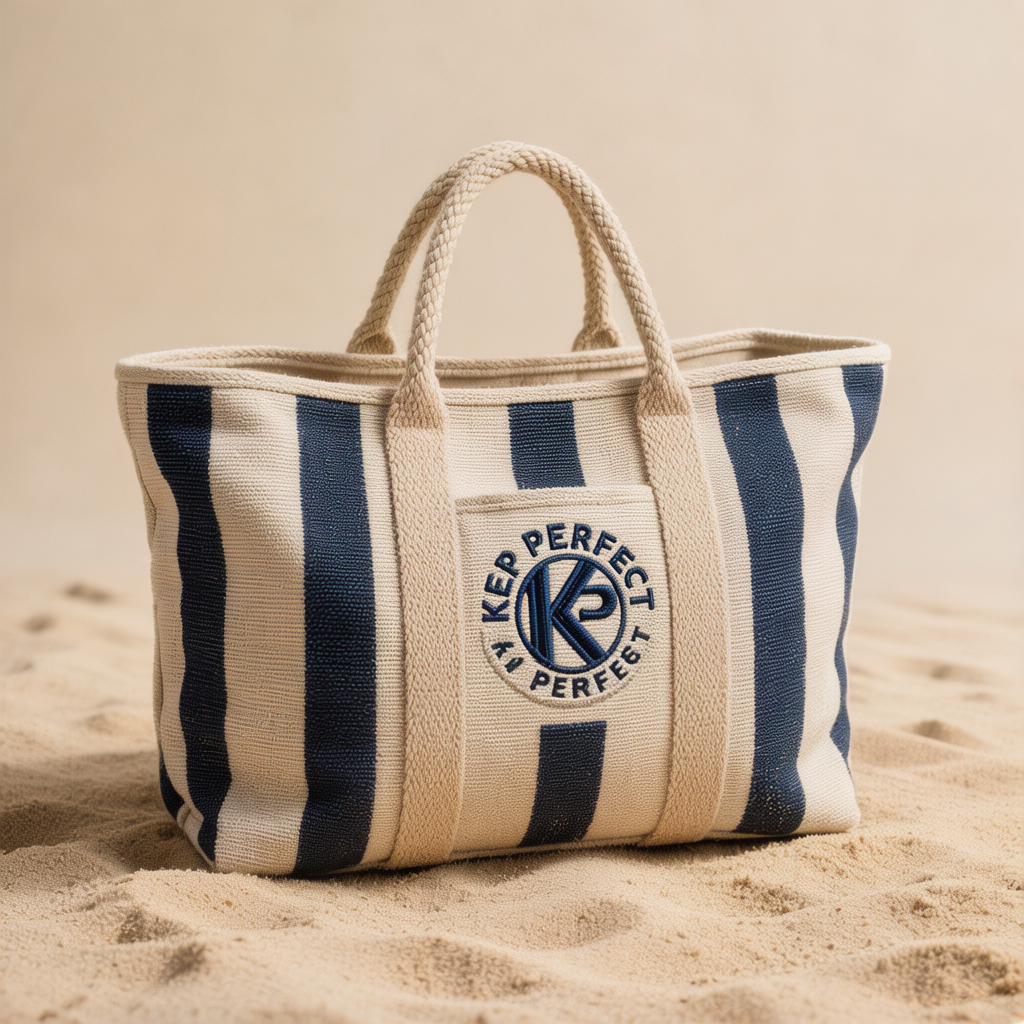
Spec snapshot
A fast engineering view of what matters for sourcing, quoting, and repeatable production.
| Item | Typical | Notes |
|---|---|---|
| Primary use | beach / boat / resort / pool | Use defines drainage and material strategy |
| Sand control | mesh zones + easy-clean surfaces | Avoid sand traps at corners and seams |
| Hardware exposure | saltwater and UV | Define hardware finish and colorfastness expectations |
| Typical MOQ | 500–3000 pcs | Depends on printing and fabric custom colors |
Sand, water & drainage strategy
Beach bags fail in sand and saltwater. This section links materials and structure to drainage, drying, and easy cleaning.
| Zone | Strategy | Notes |
|---|---|---|
| Bottom panel | mesh or drain-friendly panel (by spec) | Allows sand and water to escape; choose based on channel and positioning |
| Corner geometry | avoid deep corners and sand traps | Sand accumulates in corners; optimize fold and binding |
| Wet pocket | separate wet zone with easy-clean liner | Prevents transfer to towels and clothes |
| Handle anchors | reinforcement patches + webbing spec | Wet loads increase stress; validate via pull checks |
• Saltwater accelerates hardware corrosion; choose hardware finishes aligned to channel and price band.
• Mesh selection should balance drainage and tear resistance under load.
• If used on boats, define abrasion zones and base reinforcement expectations.
Handle reinforcement & load rating
Weight capacity depends on handle webbing, stitch pattern, seam allowance, and panel reinforcement — not fabric weight alone.
| Load class | Typical spec | Test method | Notes |
|---|---|---|---|
| 10–15kg daily | standard webbing + X-box stitches | static load + handle pull checks | Good for towels and light carry |
| 15–25kg heavy-duty | wider webbing + reinforcement patch + double stitch lines | cycle lift test + seam inspection | Recommended for boat/resort heavy carry |
Materials & fabrics
Material choice drives performance, durability, finishing, and target price point.
| Fabric | Waterproof | Cost | Notes |
|---|---|---|---|
| Mesh panels | n/a | varies | Sand and water management; define tear resistance grade. |
| Canvas / cotton | n/a | varies | Classic look; align print method to fabric. |
| TPU coated fabric (by spec) | water-resistant | varies | Easy cleaning and wet-use positioning. |
• stitch strength spot checks
• colorfastness checks (by spec)
• AQL final inspection
• Outdoor beach programs
• Corporate gifting for summer campaigns
• Target size and load expectation (kg)
• Mesh ratio and wet-zone pocket requirements
• Printing method and artwork requirements
• Hardware finish preference for saltwater exposure
• Packaging requirements (sets, inserts, barcode labels)
Start custom beach bags production
Send your requirements and get a structured RFQ checklist and a manufacturing plan.
Beach bags fail in predictable ways: the base rots where it sits on wet sand, printed artwork fades within a season, and the lining traps grit that never quite comes out. All three are specification problems, and all three are cheap to solve at the design stage and expensive to solve after launch.
Specification options for custom beach bags
Below is the configuration grid we work from for open-top carryalls, zip-top weekenders and structured resort totes. Capacity is measured to the closure line, not to the brim, because open-top bags otherwise overstate what they hold.
| Parameter | Open tote | Zip weekender | Structured resort |
|---|---|---|---|
| Usable capacity | 35 L | 45 L | 60 L |
| Exterior dimensions | 45 × 18 × 35 cm | 50 × 20 × 38 cm | 58 × 22 × 42 cm |
| Face fabric | 12 oz cotton canvas | 600D polyester, PU + DWR | TPE-coated woven polypropylene |
| Lining | Unlined, bound seams | 210D polyester | Removable PEVA pouch |
| Base | Double-layer canvas | TPE-coated 900D | Moulded EVA with drain channels |
| Closure | Magnetic snap | #8 coil zip | Zip plus roll-top storm flap |
| Strap | 25 mm webbing, 600 mm drop | 12 mm cotton rope | 38 mm padded webbing |
| Documented compliance | REACH (EC 1907/2006), Proposition 65 | REACH, CPSIA, OEKO-TEX Standard 100 | REACH, CPSIA, GRS option, Sedex SMETA |
The base is where beach bags die. Cotton canvas laid double is acceptable for a light retail tote, but a bag that will be set down on wet sand every day needs either a TPE-coated panel or a moulded EVA bottom with drain channels. The difference in unit cost is small; the difference in returns is not.
Closure choice follows the use case. Open-top totes sell well at resort retail because they read as effortless, but they cannot be checked on a flight and they let sand in. Zip-top weekenders cost more and sell better on programmes where the bag doubles as a pool or gym bag.
How a beach bag is built
Canvas builds are cut on a straight grain with the selvedge used where possible, because off-grain canvas twists after washing and the bag will not sit flat. Panels are cut slightly oversize and relaxed before sewing, which costs cutting time but stops the finished bag from shrinking unevenly at the consumer's first wash.
Seams on unlined canvas totes are bound rather than overlocked. A bound seam on a 12 oz canvas needs a 20 mm tape folded twice and stitched with a double-needle machine, and the tape has to be pre-shrunk to match the face fabric or the seam puckers.
Structured builds use a laminated interlining rather than a loose board. A stitched-in base board is cheaper and is the usual reason a structured bag creases permanently the first time it is folded for shipping. Laminated interlining holds its shape through a folded pack and recovers after unpacking.
Strap attachment on a bag that carries a wet towel plus bottles is the highest-stress point on the product. Straps run continuously under the base panel wherever the construction allows; where they cannot, the attachment is reinforced with a bar-tack over webbing that extends at least 80 mm below the join.
Hardware is chosen for salt exposure. A magnetic snap on a beach bag is a corrosion risk unless it is nickel-free and sealed; we specify coated or brass hardware and test to ASTM B117 for 48 hours before approving a finish. Zips are coil rather than metal for the same reason.
Cost drivers and MOQ for beach bags
Face fabric dominates this product in a way it does not on technical bags. Cotton canvas, polyester and TPE-coated woven polypropylene sit in three distinct price tiers, and the face fabric is a large share of the marker because the panels are big and simple. Choose the fabric first and engineer the rest to fit it.
The second driver is print method and coverage. Full-bleed artwork across a 50 cm panel costs several times a centred logo, and on canvas it usually means a pigment print with a hand-feel penalty. If hand feel matters, plan for a smaller placement or a woven label.
Runs start at 500 units per style and colour, dropping to 300 on reorders. Sampling is 6–10 working days, extending to 12–15 for structured builds with moulded bases. Sample fees are USD 50–150 and are credited against your first bulk order; tooling ranges from USD 300–2,500.
| Format | Indicative FOB | Notes |
|---|---|---|
| 35 L canvas tote | USD 3.20–5.50 | 12 oz canvas, bound seams, webbing strap |
| 45 L zip weekender | USD 4.80–7.50 | 600D PU + DWR, lined, rope or webbing strap |
| 60 L structured resort | USD 7.00–11.00 | TPE-coated woven, moulded base, padded strap |
Terms are T/T 30/70 against FOB Xiamen, with EXW, CIF and DDP available. A 20GP holds roughly 28 CBM and a 40HQ about 68 CBM; open-top totes nest flat and are almost always volumetric, so pack planning matters more than weight here.
Quality gates and acceptance criteria
Every programme is inspected to AQL 2.5 — Critical 0, Major 2.5, Minor 4.0 — sampled to ISO 2859-1, with AQL 1.5 on request. The product-specific checks go well beyond a visual pass, because the failure modes are environmental rather than structural.
Colour fastness is the one that decides whether a resort programme reorders. Fabric and print are tested to AATCC 165 for chlorinated water and to AATCC 8 for rubbing, and coatings are checked for adhesion to ASTM D751. Hardware is salt-spray tested to ASTM B117 and nickel release is checked to EN 1811 where the destination market requires it.
| Check | Method | Acceptance |
|---|---|---|
| Colour fastness, chlorinated water | AATCC 165 | Grade 4 after single exposure |
| Colour fastness to rubbing | AATCC 8 | Grade 4 dry, 3–4 wet |
| Water resistance | AATCC 22 spray, AATCC 127 hydrostatic | Spray 90+, hydrostatic above 1,000 mm |
| Coating adhesion | ASTM D751 | No delamination after flex and wet cycle |
| Hardware corrosion | ASTM B117, 48 h | No red rust on functional surfaces |
| Dimensional stability | ISO 6330, one domestic wash | Shrinkage under 3 percent each direction |
Sand, salt and sun: material selection for coastal programmes
Sand behaves like a fine abrasive. A rough-textured face fabric holds grit and will abrade the print off its own surface inside a season; a smooth, tightly woven face releases it. This is the strongest argument for TPE-coated woven polypropylene on resort programmes, ahead of both cost and water resistance.
Salt and chlorine attack coatings first, then dyes. If your bag will live on a pool deck, specify a solution-dyed polyester face rather than a piece-dyed one, because the colour sits in the fibre rather than on it. Where recycled content is required, GRS-certified rPET is available and documented through the transaction certificate.
Ordering path for beach bag programmes
Most first programmes reach shipment in 9–12 weeks. Resort calendars are unforgiving, so production slots should be booked before artwork is final rather than after.
Send format, fabric preference and print coverage and we will come back with a marker plan and an indicative band. Material trade-offs are set out on our custom bag materials page, and programme structure on cost and MOQ.