Your Trusted Custom Nylon Fabrics Manufacturer
Nylon fabric supply and customization support for bag manufacturing programs. We help you choose performance grades, coatings, and finish for your product positioning.
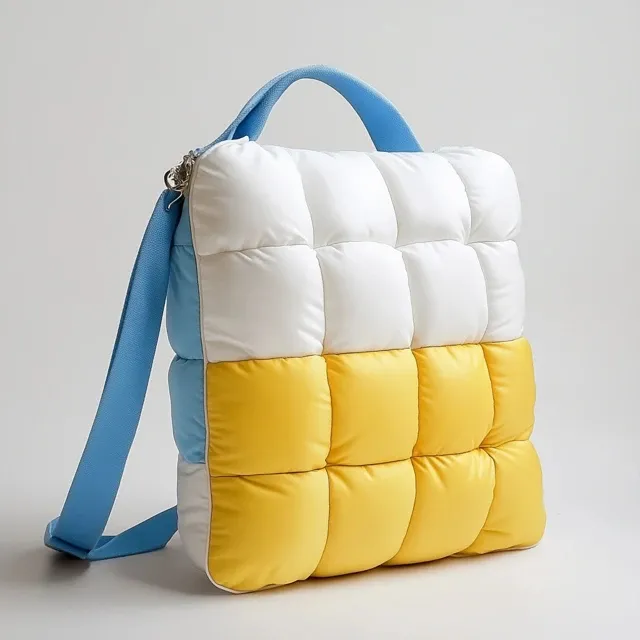
Spec snapshot
A fast engineering view of what matters for sourcing, quoting, and repeatable production.
| Item | Typical | Notes |
|---|---|---|
| Denier & weave | 70D–1680D (by program) | Denier and weave define abrasion, hand-feel, and print behavior |
| Coating strategy | DWR / PU / TPU (by spec) | Coatings change waterproof level, stiffness, and seam/zipper requirements |
| Tear control | ripstop vs plain | Ripstop improves tear propagation resistance with different aesthetics |
| Color control | Pantone match (by MOQ) | Define color delta range and approval method before bulk |
| Typical MOQ | 1000m+ (varies by base) | Depends on base fabric availability, dyeing, and coatings |
Denier & Weave Map
Material selection is a performance decision. We map denier and weave to real bag scenarios so you don’t overpay or under-spec the fabric.
| Grade | Weave | Best For | Notes |
|---|---|---|---|
| 70D–210D | plain / ripstop | packable products, lightweight liners, ultralight bags | best weight; lower abrasion; reinforce wear zones in product design |
| 420D | plain / ripstop | outdoor day packs, travel accessories | balanced durability; good for water-resistant coatings |
| 500D–1000D | Cordura-style | tactical/outdoor shells, high wear zones | higher abrasion; heavier; define stiffness target with coating |
| 1680D (ballistic) | ballistic weave | premium business/travel positioning | stiffer and strong; ensure fold and seam allowances to avoid wrinkling |
Coating & Finish Decision Tree
Water resistance is not a single switch. Coatings change stiffness, bonding behavior, and claim language. We choose finishes that align to your bag construction.
DWR finish
water-resistantPU coating
water-resistant to higher WRTPU lamination
waterproofPerformance Metrics (What We Validate)
We validate the metrics that directly impact product durability and return rates: abrasion, tear, colorfastness, and water resistance.
Custom Nylon Fabrics catalog
Choose a base style and we will tailor materials, capacity, colors, and branding to your requirements.
Materials & fabrics
Material choice drives performance, durability, finishing, and target price point.
| Fabric | Waterproof | Cost | Notes |
|---|---|---|---|
| 500D/1000D nylon | DWR / coating options | varies | Abrasion control for outdoor and tactical. |
| Ripstop nylon | coating options | varies | Lightweight and tear-resistant. |
| TPU laminated nylon | waterproof | varies | For waterproof constructions and premium hand-feel. |
• coating and finish options
• color approvals and tolerance control
• abrasion and tear checks (by spec)
• color fastness checks (by spec)
• Color matching and finish control
• Performance positioning for outdoor products
• Preferred denier range and weave (plain/ripstop/ballistic) with reference samples
• Coating target (DWR/PU/TPU) and waterproof level expectations
• Color requirements (Pantone) and acceptable tolerance range
• Any compliance documents needed (MSDS/REACH/RoHS by spec)
• Order volume and timeline; whether you need stock colors or custom dye
Start custom nylon fabrics production
Send your requirements and get a structured RFQ checklist and a manufacturing plan.
Every bag programme is, underneath, a fabric decision. Denier, weave, coating and finish determine how the finished product wears, how it takes print, how it behaves under a needle, and what it costs - long before a single panel is cut. This page sets out how we specify and qualify nylon and polyester fabrics for conversion into bags, so you can make that decision with numbers rather than with a swatch and a hope.
Specification options for bag fabrics
Fabric selection starts with duty. A lining needs low friction and low weight; a shell needs tensile strength and abrasion resistance; a base needs coating adhesion and puncture resistance. The grid below lists the constructions we run most often, with the numbers that matter for each, measured on the finished coated cloth rather than on greige goods.
| Parameter | 70D ripstop | 420D nylon oxford | 840D ballistic |
|---|---|---|---|
| Nominal weight | 68 g/m2 | 196 g/m2 | 360 g/m2 |
| Weave | Plain with grid reinforcement | Oxford, 2x2 basket | Ballistic, 2x2 basket |
| Grab tensile, warp / weft | 310 N / 280 N | 780 N / 720 N | 1,400 N / 1,300 N |
| Tongue tear, warp | 18 N | 42 N | 95 N |
| Coating options | PU 1 side, silicone | PU 2 sides, TPU back | PU 2 sides, TPU back |
| Hydrostatic head after coating | 800 mm | 1,500 mm | 2,000 mm |
| Spray rating, as finished | 90 | 95 | 100 |
| Abrasion, Martindale to break | 12,000 rubs | 35,000 rubs | 80,000 rubs |
| Typical end use | Linings, stuff sacks | Everyday shells, totes | Base panels, premium shells |
| Documented compliance | REACH, OEKO-TEX Standard 100 | Adds GRS, Proposition 65 | Adds CPSIA, amfori BSCI |
Numbers on a mill sheet are measured on uncoated cloth unless stated otherwise, and coating changes almost all of them. Always specify the tested state: "grab tensile after coating to ASTM D5034" is a different requirement from the same figure on greige. That single clause prevents most disputes at goods-in.
How bag fabrics are specified and qualified
We start from the failure mode, not the fabric name. If the last programme failed by abrasion at the base, the fix is a heavier denier or a coated base panel rather than a global upgrade that adds weight and cost everywhere. If it failed by seam slippage, the answer is often a weave change or a coating that stabilises the yarns, not a heavier cloth.
Coating is where most of the performance lives. Polyurethane is the default: cheap, flexible, available in a range of hand feels, and adequate for most programmes. TPU is more expensive, more abrasion resistant and more hydrolytically stable, which matters in humid climates and for products that will be stored for long periods. PVC is cheapest and heaviest, and increasingly restricted by brand compliance policies.
Finishing follows coating. A durable water repellent finish is applied on top of the coating and is the property measured by a spray test; it wears off and can be renewed, which is why a spray rating has to be specified with a wash-durability expectation attached. Calendering changes the hand and the surface gloss; a soft finish affects how the fabric folds and how it feeds through a sewing machine.
Colour is controlled numerically. A lab dip is approved against a standard under defined lighting, and the production run is checked against that approved standard with a tolerance stated in delta E rather than by eye. Nylon and polyester dye differently even in the same colour name, which is why a two-material bag needs both components approved against the same reference.
Conversion behaviour is tested before the fabric is accepted. Some coated cloths resist needle penetration and cause skipped stitches; some slip under the presser foot and cause ply shift. Our production team runs a sewability trial on any new fabric - needle size, thread, stitch density and feed - before it enters a marker, because a fabric that sews badly costs more in labour than it saves in material.
Cost drivers and MOQ for fabric programmes
Fabric price is driven by yarn cost, weave speed and coating, in that order. Finer deniers cost more per kilogram but use less of it; heavier cloths cost less per kilogram and more per bag. Coating is a separate process with its own cost per metre, and TPU roughly doubles the coating line compared with PU. Colour is the other variable: a stock colourway carries no dye-lot minimum, a custom colour carries one.
| Construction | Indicative price | Primary cost driver |
|---|---|---|
| 70D ripstop, PU coated | USD 1.60 - 2.40 / m | Yarn, silicone finish |
| 210D oxford, PU coated | USD 1.90 - 2.80 / m | Coating weight |
| 420D nylon oxford, PU or TPU | USD 2.40 - 3.60 / m | Coating type, dye lot |
| 840D ballistic, TPU back | USD 4.80 - 6.80 / m | Yarn cost, weave speed |
| Recycled content, GRS certified | + USD 0.30 - 0.90 / m | Feedstock, certification |
Ordering fabric and ordering bags follow different rules. Finished bag programmes start at 500 units per style and colour, or 300 on repeat, and fabric is booked against that order. Fabric-only programmes are quoted by the metre against a colourway minimum set at the volume equivalent of a finished run, since a dye lot below that quantity costs more in set-up than in material.
Development timing is the rest of the picture. Lab dips take 6 to 10 working days, 12 to 15 where a custom weave or coating is developed. Production runs 35 to 50 days after approval. Sample fees of USD 50 to 150 are credited to the first bulk order, tooling and plate charges are quoted at USD 300 to 2,500, quotes return in 24 to 48 hours, and terms are T/T 30/70 FOB Xiamen with EXW, CIF and DDP available under Incoterms 2020.
Quality gates and acceptance criteria
Fabric is inspected on the roll before it reaches a cutting table, and the inspection is quantitative. Tensile and tear are tested to ASTM D5034 and ASTM D5035, coating adhesion by a peel or cross-hatch check, hydrostatic head to AATCC 127, and spray to AATCC 22. AATCC 35 is used where a rain-room or shower test is specified by the buyer.
- Wet and dry crocking to AATCC 8 on dyed and printed cloth, with a wet rating specified separately.
- Pilling and abrasion behaviour to ISO 12945 and Martindale, on face and back.
- Dimensional stability to ISO 6330 washing, plus shade change assessment after laundering.
- Coating adhesion and hydrolysis resistance on TPU and PU backs, aged before testing.
- Restricted substances to REACH (EC 1907/2006), California Proposition 65, CPSIA, OEKO-TEX Standard 100, with GRS transaction certificates on recycled lots.
Roll-to-roll shade variation is checked under standardised lighting at the cutting table, and panels within one bag are cut from the same roll where shade continuity matters. Final inspection of converted goods runs to AQL 2.5 (Critical 0, Major 2.5, Minor 4.0) with AQL 1.5 on request under ISO 2859-1.
Coating, finishing and colour control
Hydrolysis is the failure nobody plans for. Polyurethane coatings break down in warm, humid storage, and a bag that sat in a warehouse through a monsoon season can arrive with a peeling back coating and a sticky hand. Where a programme ships to a humid market or has long storage, specify TPU, or specify a hydrolysis-resistant PU and ask for an aged adhesion test before approval.
Colour control across a repeat order is managed with retained standards and with a stated tolerance. Our team keeps an approved swatch per colourway, references the dye lot number on every roll, and compares production under standardised lighting rather than daylight. If your brand has a corporate colour, send a physical reference - a Pantone number is a starting point, not a specification.