Your Trusted Custom Cooler Backpacks Manufacturer
Insulated cooler backpacks for outdoor, travel, and delivery use. OEM/ODM manufacturing with stable insulation structures, leak-resistant liners, and export-ready packaging.
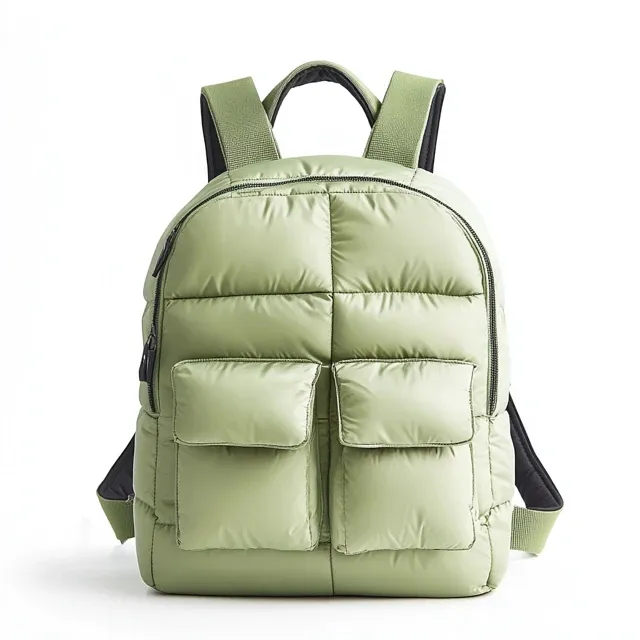
Spec snapshot
A fast engineering view of what matters for sourcing, quoting, and repeatable production.
| Item | Typical | Notes |
|---|---|---|
| Retention target | 6–12h / 24h (by build) | Foam thickness + liner seams + zipper leakage path |
| Leak standard | water-fill + inversion validation (by spec) | Corners and zipper ends are highest risk |
| Carry comfort | strap padding + back panel + load distribution | Delivery programs need long-wear comfort |
| Capacity class | 12–24 cans / 30+ cans (by size) | Internal dimensions drive retention more than external looks |
| Typical MOQ | 500–1,000 pcs | Depends on printing, liner welding, and zipper level |
Delivery workflow benchmarks
Insulated cooler backpacks are built for real rider routines. This workflow maps design requirements to usage and QC.
| Stage | Rider behavior | Bag requirement | QC focus |
|---|---|---|---|
| Pickup | rapid open/close, frequent access | wide-mouth opening + zipper durability + easy-clean liner | zipper alignment + liner seam checks |
| Riding | vibration, weather exposure | reinforced strap anchors + water-resistant shell + stable base | strap pull tests + base reinforcement inspection |
| Drop-off | one-hand handling, quick unzip | puller ergonomics + corner leak control | inversion leak test sampling |
| Cleaning | wipe-down after shifts | liner material choice + rounded corners | material approvals + odor/cleanability checks (by spec) |
Insulation & liner build
Leak control and retention depend on liner seams, foam build, and zipper geometry — especially around corners and base panels.
| Layer | Options | Notes |
|---|---|---|
| Outer shell | 600D polyester / TPU coated options | TPU shells clean easier for delivery programs |
| Insulation foam | EPE/EVA foam (thickness by target hours) | Thicker foam increases retention but adds weight |
| Inner liner | PEVA/TPU liner (welded seams by spec) | Welded seams reduce micro-leaks at corners |
| Zipper path | water-resistant zipper + end reinforcement | Zipper is a thermal leak path; define geometry early |
| Base panel | reinforced base + skid protection | Protects liner and foam compression over time |
Seams & closures (engineering choices)
Waterproof or odor-proof performance usually fails at seams and zippers. This table sets the right expectations early.
| Element | Options | Best for | Notes |
|---|---|---|---|
| Liner seams | welded (by spec) / stitched + taped | leak-focused programs / cost-focused programs | Corners need special attention in both methods |
| Top opening | U-zip / flap + zip | delivery speed / outdoor retention | Opening geometry changes thermal leakage and access time |
| Zipper ends | end-stop reinforcement + seam shaping | high-cycle delivery use | A common failure point in competitor products |
| Drain approach | no drain / drain port (by spec) | outdoor/boat use | Drain adds leakage risk; validate if used |
Capacity & dimensions reference
Standard size options for cooler backpacks. We can also customize dimensions to fit your specific gear.
| Volume | Typical Dimensions | Best For |
|---|---|---|
| 12 Cans (10L) | 30 x 20 x 25 cm | short shifts, personal carry |
| 24 Cans (20L) | 38 x 25 x 30 cm | delivery and day trips |
| 30+ Cans (30L+) | 45 x 28 x 35 cm | longer routes, group picnic |
Materials & fabrics
Material choice drives performance, durability, finishing, and target price point.
| Fabric | Waterproof | Cost | Notes |
|---|---|---|---|
| 600D polyester / Oxford | water-resistant options | varies | Popular shell fabric with good printability. |
| TPU/PVC liner | leak-resistant | varies | Key to leak control; seam strategy is critical. |
| PEVA / aluminum foil insulation | liner dependent | varies | Ice retention is driven by foam thickness and construction. |
• Heat-sealed or stitched liner options
• Water-resistant zipper and binding finish
• Reinforced shoulder straps and handle
• strap pull test
• zipper function test
• AQL final inspection
• Beach & picnic: easy carry with hands-free straps
• Delivery: insulated transport for food and beverages
• Retail: premium cooler backpack programs
.webp)
.webp)
• Capacity target (cans/L) and internal dimensions
• Liner preference (PEVA/TPU) and leak requirement (inversion test scope)
• Opening style (U-zip/flap) and access speed requirement
• Comfort requirements (strap padding, back panel) and max load
• Branding method and placement; cleaning expectations
• Any optional features (bottle pockets, MOLLE, tableware pockets)
Start custom cooler backpacks production
Send your requirements and get a structured RFQ checklist and a manufacturing plan.
An insulated backpack carries the heaviest load of any bag in its size class: twenty-four cans plus ice is close to 12 kg before you add anything else. That single fact drives the harness, the strap anchoring and the zipper choice, and it is why a cooler pack built on a standard daypack pattern comes back with torn webbing inside a season.
Specification options for cooler backpacks
Insulated packs are specified from the liner outward. The liner decides whether the bag is leakproof, the insulation decides how long it holds temperature, and the shell decides how the whole thing survives being set down on gravel. The three tiers below are the configurations we quote most.
| Parameter | Day 18 L | Trail 24 L | Large 30 L |
|---|---|---|---|
| Capacity | 18 L, 18 cans | 24 L, 24 cans | 30 L, 30 cans plus ice |
| Overall dimensions | 42 × 27 × 18 cm | 46 × 30 × 20 cm | 50 × 33 × 22 cm |
| Insulation | 6 mm PE foam, foil facing | 8 mm PE foam, foil, taped seams | 10 mm PE foam, radiant barrier, taped seams |
| Liner | PEVA, sewn, wipe-clean | TPU, RF welded, food-contact | TPU, RF welded, food-contact, drain plug |
| Shell fabric | 420D nylon ripstop, PU | 600D polyester, PU + DWR | 840D with TPU back coat |
| Harness | 8 mm foam, 70 mm straps | 10 mm foam, 75 mm, S-curve | 12 mm foam, 80 mm, load lifter and sternum |
| Closure | #8 coil | #10 coil, water-resistant tape | #10 water-resistant with storm flap |
| Empty weight | 780 g | 1,050 g | 1,350 g |
| Pockets | 2 external slip | 3 external, 2 bottle | 4 external, 1 internal dry zip |
| Documented compliance | FDA 21 CFR liner, REACH | FDA 21 CFR, REACH, Proposition 65 | FDA 21 CFR, REACH, CPSIA, amfori BSCI |
Welded TPU liners are the dividing line between a bag that contains meltwater and one that seeps through its stitch holes. They cost more and need RF tooling, but above 2,000 units they pay for themselves in reduced returns. Sewn PEVA suits short-duration use where the bag stays upright.
How an insulated backpack is assembled
Insulation is cut as discrete panels to net shape and laid into the shell before the liner goes in, not as a continuous wrap. Corners are the failure point: if panels meet with a gap at the base corner, the bag loses temperature there first and the foil facing creases permanently. Panels are taped at every joint, and the tape is specified for the temperature range, not taken from general stock.
The liner is built as a separate box and then floated inside the shell. Floating means the liner is attached at the top edge only, so it can be pulled out for cleaning and so condensation that forms on the outside of the liner does not wick straight into the shell fabric. Bonding the liner to the shell saves a few minutes of labour and makes the bag impossible to dry.
Harness construction has to be sized for the wet load, not for the empty bag. Strap foam is specified by density as well as thickness, because a soft foam that feels luxurious empty compresses to nothing under 12 kg and puts the webbing edge against the wearer's shoulder. Straps are anchored to a reinforcement plate that runs behind the back panel and into the base seam.
Zipper geometry is the detail that separates a usable cooler pack from a frustrating one. A water-resistant coil running around three sides of an insulated box binds at the corners unless the pattern has relief cut into the gusset, and once it binds the slider starts tearing the tape. We build a corner relief and a zip garage at the top, then cycle the closure 3,000 times on the first-piece sample.
Base and external pockets are the last structural decisions. A moulded EVA base with a TPU skid keeps the bag off wet ground; bottle pockets get an elasticated top and a drain grommet, because a pocket holding water becomes a hygiene complaint by day two.
Cost drivers and MOQ for cooler backpacks
The four cost levers are insulation thickness across the total panel area, welded versus sewn liner, harness specification, and pocket count. Welded liners carry RF tooling of USD 300–2,500 depending on cavity count, which is a one-off charge that makes a 500-unit first run materially more expensive per piece than a 2,000-unit reorder of the identical design.
Order lines open at 500 units per style per colour, dropping to 300 for a repeat on an existing tool. Sampling is 6–10 working days where the shell is stock fabric, and 12–15 where a welded liner geometry or a custom moulded base is involved. Sample fees are USD 50–150 and come back to you as a credit on the first bulk order.
| Tier | Typical configuration | Indicative FOB |
|---|---|---|
| Entry | 420D shell, 6 mm foam, sewn PEVA liner, 2 pockets | USD 5.50–7.50 |
| Mid | 600D shell, 8 mm foam, welded TPU liner, 3 pockets | USD 7.50–9.50 |
| Premium | 840D shell, 10 mm foam, welded liner, drain plug, full harness | USD 9.50–12.00 |
Commercial terms are T/T 30/70 on FOB Xiamen, with EXW, CIF and DDP available and Incoterms 2020 applied by default. You will have indicative pricing in 24–48 hours. Transit: 25–35 days sea, 5–8 days air, 3–5 days courier. Insulated packs cube large, so a 40HQ at 68 CBM is usually right above 3,000 units.
Quality gates and acceptance criteria
Batches are inspected at AQL 2.5 per ISO 2859-1, Critical 0, Major 2.5, Minor 4.0, with AQL 1.5 on request for retail programmes. Reports are issued before container loading from our 4,950 m² SGS-verified production floor, and the same criteria are used on reorders so a second season can be compared against the first.
The tests that matter on this product are leak containment, cold retention and the wet-load carry cycle. Ice retention is measured in-house under a stated ambient condition so the number means something; leak performance is a filled-liner hold test rather than a visual check. Liner material is documented to FDA 21 CFR food-contact requirements, and coated fabric is screened to REACH (EC 1907/2006).
| Check | Method | Acceptance |
|---|---|---|
| Liner leak hold | In-house, filled to 80 percent, 30 min on side | No drip, no seam wetting |
| Ice retention | In-house, 2 kg ice, 32 °C ambient | Ice remaining beyond 12 h |
| Wet-load carry cycle | In-house jig, 5,000 cycles at 12 kg | No strap tear, foam loss under 10 percent |
| Liner weld peel | ASTM D751 | Above 25 N per 25 mm |
| Shell tensile and seam | ASTM D5034, ISO 13934-1 | Above 500 N fabric, above 200 N seam |
| Loaded drop | ISTA 3A, 12 kg, 10 drops | No liner split, no hardware fracture |
| Colour fastness to rubbing | AATCC 8 | Grade 4 dry, grade 3–4 wet |
| Hardware corrosion | ASTM B117, 48 h | No red rust on functional surfaces |
Food-contact documentation and branding on insulated shells
Any surface that touches food or drink needs a documented material, and that documentation is requested by the buyer's own compliance team rather than by us. Liner film is declared to FDA 21 CFR food-contact requirements, and the adhesive and ink used inside the liner are declared alongside it. Getting this file assembled before sampling is faster than retrofitting it after a retailer asks.
Branding has a practical constraint: the front panel is usually curved, quilted or laminated. Screen print suits flat shell panels, heat transfer handles small type and gradients, and a TPU badge reads best on a curved face. Embroidery works on external pocket panels before assembly but not through insulation.
Ordering path for cooler backpack programmes
Expect 10–13 weeks from brief to shipment on a first programme, with liner tooling and any moulded base on the critical path.
Send your can count, cold-hold target and harness expectation and we will return a build grid, retention estimate and indicative FOB band within 48 hours. Insulation and liner trade-offs are covered on custom bag materials, and testing scope is set out on quality and certification.