Your Trusted Custom Waist Bags Manufacturer
Waist bags (fanny packs) for travel, outdoor, and lifestyle brands. Focused on fit comfort, zipper durability, and secure pocket layouts.
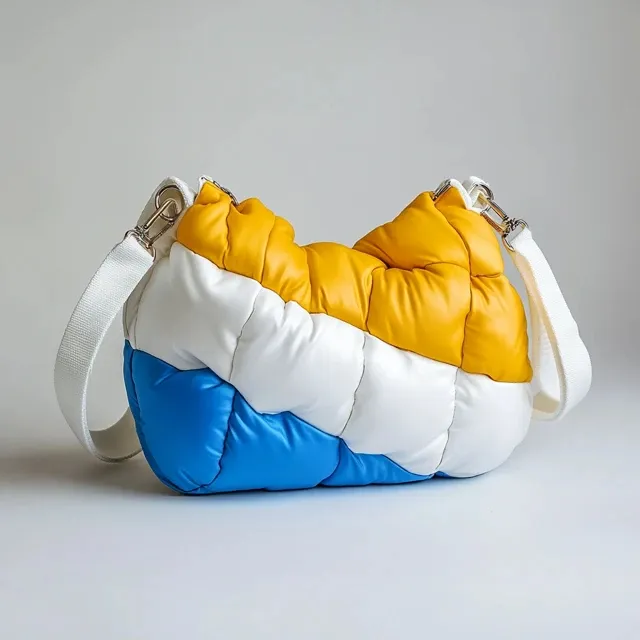
Spec snapshot
A fast engineering view of what matters for sourcing, quoting, and repeatable production.
| Item | Typical | Notes |
|---|---|---|
| Wear style | waist / crossbody / sling (by program) | Wear style affects strap length and buckle placement |
| Carry load | phone + keys / passport + wallet / running gels | Load defines pocket mapping and bounce risk |
| Buckle system | standard / premium (by spec) | Buckle and webbing choice controls durability |
| Typical MOQ | 500–3000 pcs | Depends on printing, webbing colors, and packaging |
Belt ergonomics blueprint
Waist bags win on comfort. Belt geometry, buckle placement, and padding strategy matter more than pocket count.
| Element | Options | Comfort focus | Notes |
|---|---|---|---|
| Belt width | standard to wider belts (by spec) | load distribution and comfort | Wider belts reduce pressure points for heavier loads |
| Buckle position | center / offset | comfort while sitting and bending | Offset placement reduces buckle pressure on abdomen |
| Back panel | air-mesh / padded panel (by spec) | sweat control and comfort | Define channel use: running vs travel |
| Strap adjusters | ladder lock options | fit stability | Slippage causes bounce; control webbing and adjuster pairing |
Buckle & hardware durability
Most failures are buckle cracks, slider issues, and strap pull-outs. This table makes durability controllable by spec and QC.
| Component | Options | Failure risk | Validation |
|---|---|---|---|
| Buckle | standard / higher strength options (by spec) | crack or accidental release | function checks + pull tests by sampling plan |
| Webbing | webbing width and density choices | slip and edge wear | slippage checks and edge fray inspection |
| Zipper ends | end reinforcement | zipper stop failures | zipper run checks and end-stop inspection |
| Hardware finish (by spec) | plating options | color mismatch and corrosion | hardware consistency sampling checks |
Bounce control (running use)
Running waist packs must not bounce. This section maps bounce sources to strap geometry and weight distribution choices.
| Scenario | Bounce source | Design control |
|---|---|---|
| Running | load sits away from body | keep mass close to body + stabilizer geometry (by spec) |
| Walking commute | strap slippage | webbing + adjuster pairing and anti-slip back panel |
| Cycling | bag shifts with movement | wider belt and stable buckle placement (by spec) |
Materials & fabrics
Material choice drives performance, durability, finishing, and target price point.
| Fabric | Waterproof | Cost | Notes |
|---|---|---|---|
| Nylon / polyester | water-resistant options | varies | Lightweight and durable. |
| TPU coated fabric | water-resistant to waterproof | varies | Higher protection for outdoor usage. |
• reinforced zipper ends
• hidden back pocket options
• custom logo patches
• zipper function tests
• AQL final inspection
• Running and sports programs
• Promotional campaigns
• Carry load list and pocket priorities
• Buckle preference and comfort requirements (offset buckle by spec)
• Bounce control requirement for running use
• Fabric preference and water-resistance target
• Branding method and packaging requirements
Start custom waist bags production
Send your requirements and get a structured RFQ checklist and a manufacturing plan.
Specification options for waist-worn carry
Small-format waist carry is the most unforgiving category in the range. There is no structure, no frame, and very little fabric area to hide a weak seam, so every specification decision is visible in the finished unit. The brief usually turns on three numbers: the strap circumference range, the buckle size, and the depth of the main compartment.
| Specification | Standard range | Development notes |
|---|---|---|
| Body dimensions | 18 × 6 × 12 cm to 30 × 12 × 18 cm | Depth over 12 cm pushes the unit off the hip |
| Usable capacity | 1.5–6 L | Nominal volume is small; pocket layout matters more |
| Shell materials | 210D and 420D nylon, 300D and 600D polyester, ripstop, TPU-faced weaves, leather trim | Light shells drape better on small patterns |
| Strap system | 20–38 mm webbing, 60–130 cm adjustable, side-release buckle | Webbing width matched to body size |
| Buckle and hardware | Acetal side-release 20–38 mm, ladderlock, metal D-rings | Acetal avoids nickel-release documentation |
| Main closure | #3 or #5 reverse coil zip, single or double slider | Reverse coil reduces snagging on clothing |
| Lining and security | 190T or 210D lining, hidden back pocket, RFID-blocking layer | Back panels sit against skin and need breathable fabric |
| Empty weight | 120–320 g | Weight drives perceived quality in small formats |
| Compliance lines | CPSIA, REACH (EC 1907/2006), California Proposition 65, EN 1811, OEKO-TEX Standard 100 | Scope set by destination and end-user age group |
Depth is the dimension most often over-specified. A waist unit deeper than about 12 cm stands proud of the hip, catches on doorways, and pushes contents against the wearer when seated, which is why successful programmes sit between 6 and 10 cm and grow in width instead. Width growth is not free either: past roughly 30 cm the pattern needs a shaped back panel rather than a flat one.
Strap circumference should be specified as a range with the buckle mid-travel, not at the end. A 60–130 cm range covers virtually every adult wearer and allows cross-body wear, now the dominant styling for this format. Webbing width follows body size: 20–25 mm suits minimal units, 32–38 mm supports larger builds and distributes weight better.
How waist-worn units are built
Pattern work starts with the back panel, because that is the surface that touches the body and decides whether the unit sits flat. A flat panel is cheaper and works up to about 24 cm in width; beyond that the pattern needs a gentle curve so the panel follows the hip. Spacer mesh on sports programmes must be bound rather than raw-cut or it frays into the zip.
The main compartment is usually a single zip run across a shaped panel, set into a flat section of the pattern because a zip across a curve will wave and jam. Reverse coil chains sit flatter than metal or moulded tooth and do not catch on knit fabrics, and a storm flap is worth the extra seam on any unit sold with a weather claim.
Strap attachment is a genuine load path. Webbing ends should be captured into a reinforced tab stitched into the body seam, with bar-tacks at the stress point; webbing tacked onto the back panel alone peels away within weeks. On removable straps, buckles sit at the sides so the wearer can operate them without taking the unit off.
Interior layout has to be deliberate. A slip pocket against the back panel, an elastic loop for a key or card holder, and one zipped pocket are the practical maximum before the interior becomes unusable, so programmes succeed by grading pocket depth to the actual items rather than adding pockets.
Hidden back pockets add security and cost. The pocket bag, the zip, and the panel seam converge in a small area, and if the pocket bag is cut too shallow the zip sits proud against the wearer back. This is the operation most likely to need a sampling revision on a first programme.
Cost drivers and MOQ for waist-worn units
Unit price on small formats moves with shell fabric, hardware specification, pocket count, and branding method. Hardware is proportionally more expensive here than on any larger bag: a pair of acetal side-release buckles, a ladderlock, and two zip pulls can represent a meaningful share of the material bill.
| Construction | Typical build | Indicative unit price (USD) |
|---|---|---|
| Minimal promotional unit | 210D shell, one zip pocket, 20 mm webbing, printed logo | 2.20–4.20 |
| Standard retail waist pack | 420D shell, back slip pocket, 25 mm strap, woven label | 3.60–6.50 |
| Sports waist unit | Ripstop shell, mesh back panel, 32 mm strap, reflective trim | 5.20–9.00 |
| Travel security unit | 600D shell, hidden back pocket, RFID layer, metal hardware | 7.50–13.00 |
| Premium leather-trim unit | Full-grain trim, branded pulls, lined interior, dust bag | 12.00–24.00 |
Minimums start at 500 units per style per colour and drop to 300 on repeat programmes once the pattern and hardware set are approved. Sampling takes 6–10 working days on sewn builds and 12–15 where bonded mesh panels, welded details, or custom hardware are involved; production requires 35–50 days after written approval. Quotations arrive within 24–48 hours, payment terms run T/T 30/70, and pricing is quoted FOB Xiamen with EXW, CIF, or DDP available.
Sample fees sit at USD 50–150 and are credited to the first bulk order; tooling for custom buckles, pulls, or logo plates ranges USD 300–2,500. Freight is rarely the constraint here because units pack densely and a 500-unit order can be a pallet: a 20GP takes about 28 CBM, a 40GP around 56 CBM, and a 40HQ close to 68 CBM, with transit at 25–35 days by sea, 5–8 days by air, and 3–5 days by courier.
Quality gates and acceptance criteria
Incoming control covers fabric weight and coating, webbing strength, and hardware finish. Woven shells are sampled for grab strength per ASTM D5034, webbing and strap assemblies for tensile behaviour per ISO 13934-1, and coated shells claiming weather resistance for spray rating per AATCC 22 and hydrostatic resistance per AATCC 127. Metal hardware is reviewed for plating quality under ASTM B117 on coastal programmes.
Assembly inspection concentrates on strap anchorage and buckle function. Inspectors confirm bar-tacks at every webbing termination, check that buckles release and re-engage cleanly through repeated cycles, and verify that the zip runs without catching the lining. First pieces of each shift are worn on a test form and loaded with a standard weight set, so strap slip is measured rather than judged by eye.
Chemical and safety scope follows the destination: European programmes are checked against REACH (EC 1907/2006) with nickel-release documentation under EN 1811 for metal components touching skin, while US programmes add CPSIA and California Proposition 65 limits. Final inspection runs at AQL 2.5 under ISO 2859-1 with Critical 0, Major 2.5, and Minor 4.0, and AQL 1.5 on request.
Branding placement on small-format carry
Branding area on this format is measured in square centimetres, so placement decisions carry more weight than usual. A woven label of 20 × 40 mm on the front panel reads as quality and costs little; a rubber or TPU patch adds a stitch operation and needs corner reinforcement; embroidery stiffens the fabric and can pucker if the shell is below about 300D.
Consistency across a range matters more than the individual mark. Programmes that run this format alongside tote or backpack lines usually standardise label dimensions, stitch colour, and hardware finish so the family reads as one collection on a shelf. Hardware branding is often the best value here: a custom moulded zip pull sits in the USD 300–2,500 tooling band.
Ordering path
Six stages from brief to loaded container.