Your Trusted Custom Golf Staff Bags Manufacturer
Tour-style staff bag manufacturing for premium branding programs. Focused on structured panel accuracy, embroidery consistency, and stable hardware finishing.
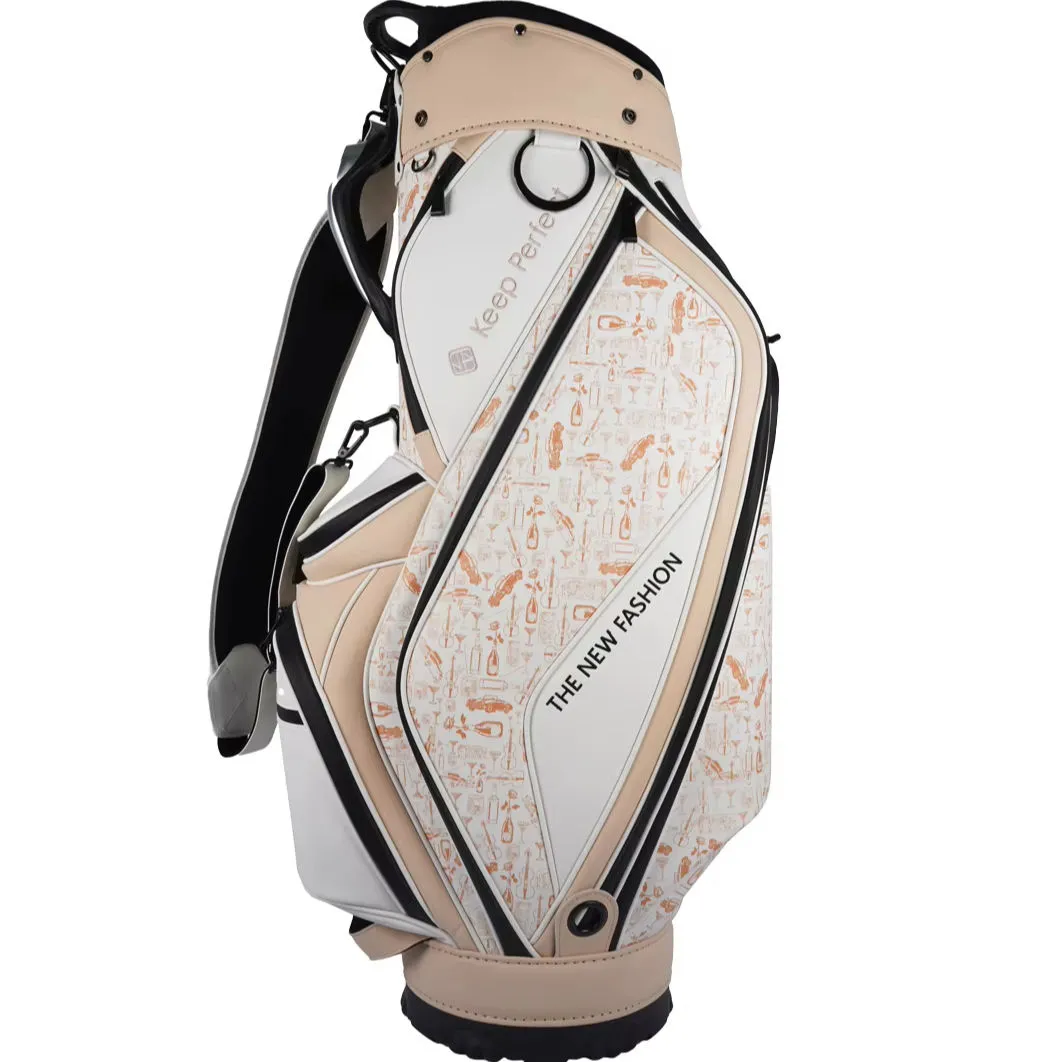
Spec snapshot
A fast engineering view of what matters for sourcing, quoting, and repeatable production.
| Item | Typical | Notes |
|---|---|---|
| Branding area | maximum panel real estate | Staff bags are brand billboards; alignment matters |
| Structure level | high structure + premium panels | Structure parts drive both feel and weight |
| Embroidery package | large-scale embroidery (by spec) | Needs density control and placement templates |
| Hardware finishing | consistent plated hardware (by spec) | Finish drift is highly visible on premium series |
| Typical MOQ | 500–800 pcs | Depends on materials, embroidery, and structure parts |
Tour branding zones
Staff bags are brand billboards. These zones standardize logo methods and the controls that keep alignment consistent in bulk.
| Zone | Method | Risk | Control |
|---|---|---|---|
| Front panel | embroidery / patch | distortion on curved panels | placement templates and density planning (by spec) |
| Side panels | large embroidery | misalignment across seam lines | panel alignment gates and stitch path verification |
| Top cuff / collar | emboss/patch (by spec) | visible finish drift | master sample board and incoming checks |
| Accessory pockets | labels / small logos | crowded visual layout | brand zoning plan and spacing rules |
Staff bag structure parts
Tour-level silhouettes are built from structure parts. This map keeps feel, alignment, and durability consistent across bulk runs.
| Part | Purpose | Risk | Control |
|---|---|---|---|
| Top cuff structure | premium feel and stable openings | rattle and misalignment | tolerance control and finish inspection |
| Body structure boards | stable silhouette | wrinkles and waviness | structure placement templates and stitch symmetry gates |
| Base reinforcement | wear control on carts and floors | abrasion through | skid panel and corner reinforcement strategy |
| Handle set | lift and cart handling | tear-out | reinforcement map and pull tests |
Tournament program operations
Event programs fail at operational details: variants, personalization, accessories, and packout. This playbook keeps shipments consistent.
| Operation | Risk | Control |
|---|---|---|
| Event logo variants | mixed embroidery files | SKU-based artwork naming and approval checklist |
| Player name personalization (by spec) | wrong names | proof gate + list reconciliation before stitching |
| Accessory kits | missing hoods/tags | packing list reconciliation and carton marks |
| Premium packaging | scuffs and deformation | protective wrap and carton spacing rules |
Capacity & dimensions reference
Standard size options for golf staff bags. We can also customize dimensions to fit your specific gear.
| Volume | Typical Dimensions | Best For |
|---|---|---|
| Tour staff | max pocket volume | events, club programs, premium retail lines |
| Staff + cooler (by spec) | insulated pocket zoning | premium tournament gifting |
| Staff + travel hood (by spec) | full kit | brand programs with accessories |
Materials & fabrics
Material choice drives performance, durability, finishing, and target price point.
| Fabric | Waterproof | Cost | Notes |
|---|---|---|---|
| PU leather / microfiber leather | depends on finish | varies | Premium look with stable grain and color control. |
| Premium polyester/nylon | water-resistant options | varies | Durable shells with structured support. |
• appearance checks
• AQL final inspection
• Premium brand series
• Club and distributor programs
• Branding zones and artwork files (embroidery density expectations by spec)
• Material preference (PU/microfiber) and finish tolerance expectations
• Pocket priorities (apparel/valuables/cooler by spec) and accessory kit needs
• Hardware finish tone and any corrosion-aware requirements (by market)
• Packaging requirements and whether you need event personalization (by spec)
Start custom golf staff bags production
Send your requirements and get a structured RFQ checklist and a manufacturing plan.
Staff bags are a branding object before they are a carry object. They are oversized, heavy, and built around flat panels whose only real job is to carry a large embroidered logo straight and centred under television light. That shifts the engineering: the structure has to hold panel registration across a 92 cm body, and the base has to carry five or six kilograms of club and bag without deforming, because these bags never get carried far.
Specification options for custom staff bags
The grid below is what our production team works from. Two lines define the product: the flat branding panel dimensions, and the internal frame that keeps those panels flat once the bag is loaded.
| Parameter | Standard staff | Tour staff | Deluxe staff |
|---|---|---|---|
| Divider configuration | 6-way moulded top, velour-lined | 6-way moulded top, velour, putter well | 7-way moulded top, velour, embossed ports |
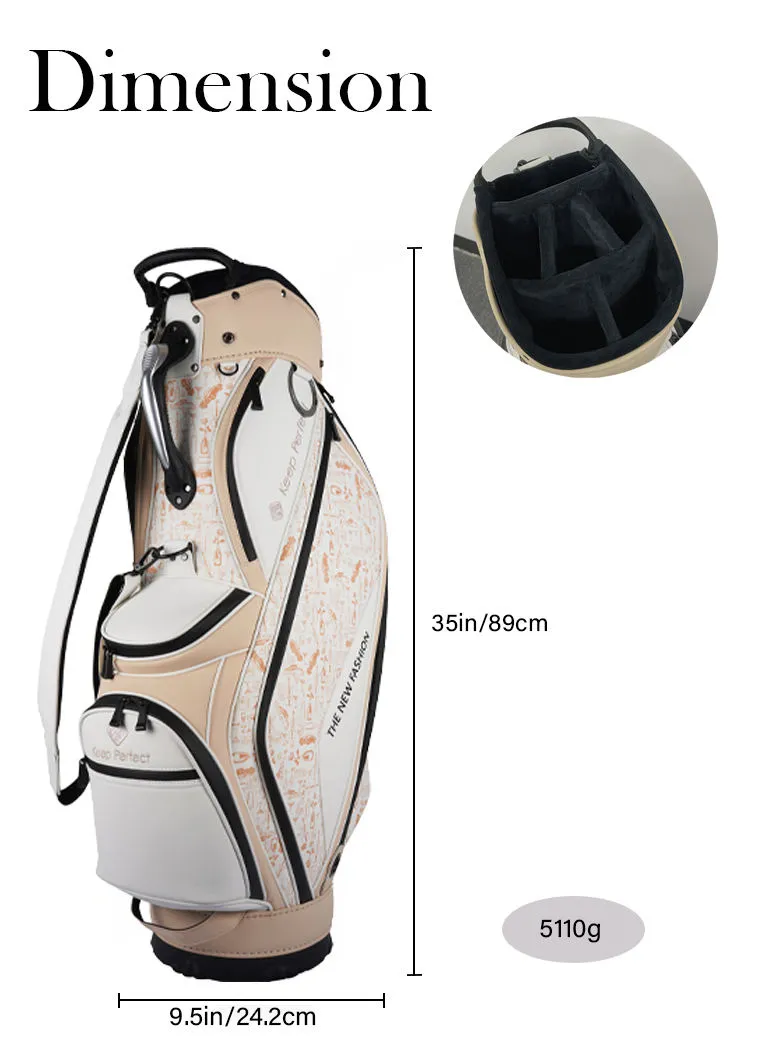
| Top diameter and height | 25 cm, 91 cm | 27 cm, 92 cm | 27 cm, 93 cm |
| Shell fabric | 840D polyester, PU back | 1200D polyester with PU leather panels | 1680D ballistic weave with full PU leather wrap |
| Branding panel | 20 × 25 cm, embroidery to 40,000 stitches | 25 × 30 cm, embroidery to 60,000 stitches | 25 × 35 cm plus PU appliqué panel |
| Pocket count | 8 | 10, including 1 magnetic valuables | 12, including 2 magnetic and 1 insulated |
| Internal frame | 3 mm stiffener board at base | Full-height board plus spine | Moulded spine, board and alloy top ring |
| Base moulding | Flat, 5 feet | Flat with skid plate, 5 replaceable feet | Wide base, moulded skid rails, 6 feet |
| Carry | Single padded strap plus grab handle | Padded strap with hip pad, 3 grab handles | Padded strap, hip pad, 4 grab handles |
| Rain hood | 210D with elastic hem | 210D with cinch cord and drainage | 420D lined hood with structured crown |
| Empty weight | 4.4 kg | 5.6 kg | 6.8 kg |
| Tooling budget | USD 1,200–2,000 | USD 1,800–2,500 | USD 2,000–2,500 |
| Documented compliance | REACH (EC 1907/2006), Proposition 65 | REACH, CPSIA, amfori BSCI | REACH, CPSIA, amfori BSCI, ISO 17075 on leather, OEKO-TEX Standard 100 |
How a staff bag is built
The internal frame is the starting point. A staff bag has to stay upright and square when loaded with a full set, so a full-height stiffener board runs up the back panel and ties into the top ring and the base moulding. Without that spine the body slumps between the top and the base, and slump is what makes an embroidered panel look crooked.
Panels are produced as flat sub-assemblies and set into the shell before pocket assembly. Embroidery is done on hooped panels with a cut-away backing, then the panel is topstitched into the shell opening. This sequence matters: embroidering into a finished bag requires a hoop that will not fit, and the resulting panel is never square to the body.
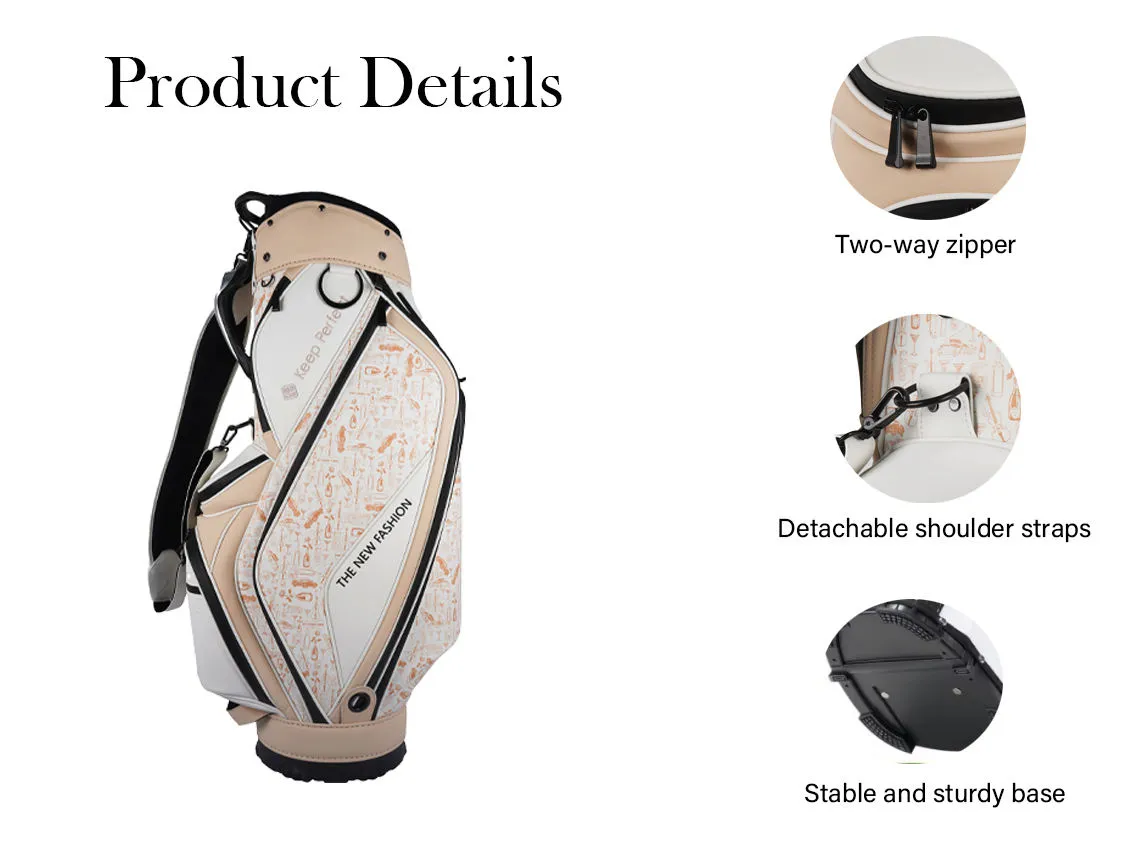
The top cuff on a staff build is moulded with individual ports and lined with velour, because these bags carry graphite shafts that mark easily. Ports are sized with clearance for oversized grips and the putter well is moulded separately at a larger diameter. The cuff then ties into the internal frame through an alloy or moulded ring.
The base carries the whole assembly and is the widest moulding in the category. It includes a flat footprint for trolley stability, a skirt rising 40 to 50 mm up the shell, and replaceable feet, since a staff bag's feet wear unevenly from being pulled on and off trolleys.
Pockets are individually engineered rather than repeated. A magnetic valuables pocket needs a stiffened flap and a concealed magnet pocket, so the magnet does not print through the face fabric; an insulated pocket is a welded liner, as elsewhere; and an apparel pocket on a staff build is usually full-height, which means it needs its own internal stiffener to stop it bowing.
Cost drivers and MOQ for staff bags
Embroidery is the dominant variable cost. A 60,000-stitch panel can cost several times a 20,000-stitch one purely in machine time, and multi-colour artwork adds thread changes on top. Second is the shell: moving from 840D to a full PU leather wrap is a large material step and a large labour step, because leather panels are set with more hand work.
Third is tooling, at USD 1,200–2,500 for a large cuff and base, and fourth is pocket count. Against an opening quantity of 500 units per style per colour, tooling amortisation is material, so staff programmes are usually planned across at least two seasons.
| Tier | Typical configuration | Indicative FOB |
|---|---|---|
| Entry | 840D shell, 6-way velour top, 8 pockets, 40,000 stitches | USD 32.00–48.00 |
| Mid | 1200D with PU panels, 10 pockets, magnetic valuables, 60,000 stitches | USD 48.00–70.00 |
| Premium | 1680D ballistic, full leather wrap, applique, 12 pockets | USD 70.00–95.00 |
Repeats drop to 300 units per style per colour once tooling and markers exist. Sampling runs 6–10 working days where cuff tooling adapts and 12–15 for a new cuff, base or applique die, with sample fees at USD 50–150 credited against the first bulk order. Terms are T/T 30/70 against FOB Xiamen; EXW, CIF and DDP are available under Incoterms 2020, and quotations return within 24–48 hours. Transit is 25–35 days by sea, 5–8 by air and 3–5 by courier, and output across 7 lines, 149 machines and 137 people reaches 200,000 units monthly.
Quality gates and acceptance criteria
Final inspection follows AQL 2.5 under ISO 2859-1, with Critical 0, Major 2.5 and Minor 4.0, tightening to AQL 1.5 on request. Reports are issued from our 4,950 m² SGS-verified production floor before loading, and repeat programmes receive the same format so seasons can be compared.
| Check | Method | Acceptance |
|---|---|---|
| Upright stability, loaded | In-house, 14 kg set, 10 degree incline | No tip, no visible lean |
| Base impact | MIL-STD-810, 300 mm drop, loaded | No crack, feet intact |
| Panel registration | In-house, measured to shell datum | Under 3 mm deviation across the panel |
| Embroidery durability | ISO 12945, 20,000 rubs | No thread break, no backing show-through |
| Seam strength | ISO 13934-1 | Above 350 N on structural seams |
| Fabric tensile | ASTM D5034 | Above 700 N on 1200D shell |
| Grab handle load | In-house, 40 kg static, 60 s | No tear-out at any of the four handles |
| Water repellency | AATCC 22 | Grade 4 as received |
| Plated trim corrosion | ASTM B117, 24 h | No base metal exposure |
| Transit simulation | ISTA 3A | Carton and product pass, no deformation |
Freight, cube and single-carton packing for oversized bodies
A staff bag is close to its own external envelope in a carton: roughly 93 cm tall with a 27 cm cuff, so it neither nests nor collapses. That makes carton cube the dominant freight variable, and it is why staff programmes are frequently quoted on a per-carton basis rather than a per-unit one. Budget against 28 CBM in a 20GP, 56 CBM in a 40GP and 68 CBM in a 40HQ.
Packing specification matters more at this size than on smaller bags. A single-carton pack with a moulded collar at the cuff, corner board at the base and a sleeve over the embroidered panel prevents the two damage modes we see most: crushed cuffs from stacking and scuffed panels from carton movement.
Ordering path for staff bag programmes
Six steps take a staff programme from artwork to shipment, with first builds on new tooling typically at 14–18 weeks. Embroidery and branding options are described under private label bags, and audit documentation is covered on bag quality and certification.
Send your artwork and target panel sizes and you will receive a stitch-count estimate, a tooling figure and an indicative FOB band within 48 hours. General club-carry formats are covered on the product range page.