Your Trusted Custom Waterproof Golf Stand Bags Manufacturer
Waterproof golf stand bags with seam strategies and zipper selection aligned to wet-weather play. OEM/ODM support with QC checkpoints.
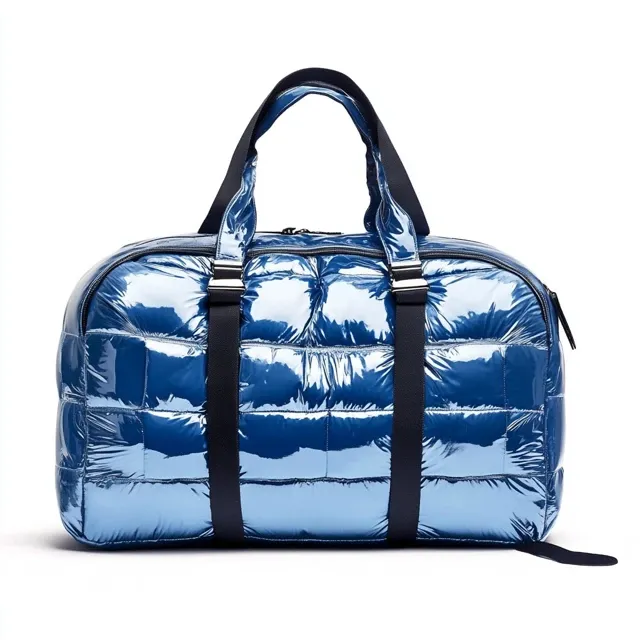
Spec snapshot
A fast engineering view of what matters for sourcing, quoting, and repeatable production.
| Item | Typical | Notes |
|---|---|---|
| Waterproof claim level | water-resistant / waterproof (by spec) | Claim level must match fabric, zippers, seams, and pocket build |
| Zipper strategy | sealed zipper / water-resistant zipper | Zipper ends are the highest leak risk; define end geometry and reinforcement |
| Seam plan | taped seams (by spec) | Tape adhesion and corner sealing are critical QC gates |
| Rain hood system | hood + pocket cover (by spec) | Rain hood and cuff interface reduces water entry at club top |
| Typical MOQ | 500–800 pcs | Depends on waterproof materials, zippers, and seam tape route |
Waterproof chain
Waterproof performance is a chain: laminate, seams, zippers, and pocket build. The weakest link sets real-world leakage behavior.
| Link | Options | Role | Risk | Control |
|---|---|---|---|---|
| Fabric laminate | TPU/PU laminate (by spec) | primary barrier | delamination or creases | bond peel checks (by spec) and appearance gates |
| Seam strategy | tape + corner sealing | closes stitch holes | tape lift at curves | tape width selection and heat/pressure records |
| Zipper geometry | sealed zipper + end reinforcement | fast access with protection | leaks at ends and corners | end-stop reinforcement and water test sampling |
| Pocket build | floating pocket + gasket (by spec) | protects valuables | water pooling in pocket corners | drain/seal decision and inspection gates |
Zipper end leak controls
Zipper ends and corners are the highest leak-risk points. These controls standardize geometry and reinforcement for wet-weather play.
| Point | Failure | Control |
|---|---|---|
| Zipper end stops | micro gaps at corners | end-stop reinforcement patch and shaping template |
| Slider garage (by spec) | water entry at start/end | garage geometry and seam tape overlap validation |
| Curved zippers | puckering and tape lift | radius limit rules and stitch allowance control |
Water ingress test protocol
Wet-weather claims need defined validation. This protocol checks the real risk zones: zipper ends, pockets, and seam tape overlaps.
| Test | Setup | Pass | Note |
|---|---|---|---|
| Spray exposure | simulated rain spray by spec | no visible ingress in defined zones | verify pockets and zipper ends |
| Wipe-down water pooling | pour and wipe simulation | no seepage into pocket interiors | focus on pocket corners and seam tape overlaps |
| Seam tape adhesion aging (by spec) | heat/humidity exposure sampling | no tape lift or delamination | critical for wet-weather claims |
Custom Waterproof Golf Stand Bags catalog
Choose a base style and we will tailor materials, capacity, colors, and branding to your requirements.
Materials & fabrics
Material choice drives performance, durability, finishing, and target price point.
| Fabric | Waterproof | Cost | Notes |
|---|---|---|---|
| Waterproof laminates (by spec) | waterproof | varies | Fabric and seam strategy aligned to target waterproof performance. |
• zipper function checks
• AQL final inspection
• Premium waterproof collections
• Golf retailers
.webp)
.webp)
• Preferred fabric laminate and hand-feel + crease tolerance expectations
• Zipper type preference and any slider garage/end reinforcement requirements
• Seam tape strategy and validation test method expectations (spray/aging by spec)
• Rain hood needs and retail packaging requirements
Start custom waterproof golf stand bags production
Send your requirements and get a structured RFQ checklist and a manufacturing plan.
Specification options for weatherproof stand-supported course carriers
A tall unit that stands unaided, sheds rain, and carries rigid shafts of very different lengths is one of the harder soft-goods programmes to commission. Before fabric or colour is discussed, the brief must answer how many shafts go inside, how far the unit is carried rather than ridden, and what climate it sells into, because those answers drive laminate selection, seam architecture and leg hardware.
| Specification | Standard range | Development notes |
|---|---|---|
| Overall height | 86–95 cm | Set by the longest shaft plus 40–60 mm clearance |
| Cuff and divider | 22–26 cm opening, 4–5 divider ways | More ways reduce crowding but add weight high up |
| Shell laminate | 420D nylon dobby with PU face, 600D polyester, TPU film 0.12–0.20 mm | Coating weight rises toward the base |
| Water resistance | 3,000–10,000 mm hydrostatic head, spray rating 90 or better | Lower panels specified two ratings above uppers |
| Seam construction | Bound seams sealed with 18–22 mm tape, or high-frequency welded joins | Needle holes are the default leak path |
| Base and leg hardware | Moulded EVA or PP tray, aluminium 6061 or composite legs, pivot bushes | Pivot plates must land on both shell faces |
| Weight and closures | 1.9–3.1 kg empty; #8 or #10 coil zips with storm flaps | Every waterproof closure adds grams high up |
| Compliance lines | REACH (EC 1907/2006), California Proposition 65, EN 1811, CPSIA | Finishes and printed panels set most of the scope |
Height behaves like a lever. Every centimetre above the shoulder line increases the moment the harness has to control, so trimming 30 mm makes a long walk noticeably steadier. The counter-pressure is shaft clearance: if the longest item does not clear the cuff comfortably, users force it, and the damage appears first as a torn divider rather than a failed seam.
Water resistance is a system, not a fabric property. A high hydrostatic head is worthless if the closure is a standard coil zip laid flat against the panel, or if the base tray is stitched in with needle-perforated seams that sit in wet grass for hours. The laminate and film options that work here are catalogued under coated fabrics and technical film options.
How weatherproof stand-supported course carriers are built
Panel layout starts from the wet map rather than the pattern shape. The lower third contacts wet ground, cart frames and boot linings, so it is drawn as a separate group cut from a heavier laminate. Upper panels stay lighter, which keeps weight and seam-tape length down. Coating lots are matched across panels, because shade variation is obvious along a long vertical seam.
The cuff divider is assembled as a sub-unit before it meets the shell. Built in place on a tapered cone, dividers end up with uneven channel widths and a twist that cannot be steamed out once the top binding is applied. A semi-rigid insert wrapped in body fabric keeps shafts apart at far less weight than a moulded cup.
Seam strategy is what separates water-resistant from weatherproof. Bound seams with 18–22 mm tape applied under controlled heat, pressure and dwell work well, but every needle hole below the tape line is a leak path. Where immersion performance is required, lower panel joins are high-frequency welded instead, removing needle holes entirely.
The base carries more engineering than buyers expect. A moulded tray stiffens a small area, stops rocking on uneven ground and gives leg pivots something solid to bolt through, but pivot plates must land on both shell faces or the leg will tear out. Drain channels and rust-resistant fasteners are specified together, and our production team runs these assemblies across 7 lines and 149 machines.
Cost drivers and MOQ for weatherproof stand-supported course carriers
Three variables dominate the quotation. The stand mechanism adds legs, pivots, springs and reinforcement in one move, which usually costs more than any fabric upgrade available. Next is seam architecture, because welded lower panels change both tooling and operator skill. Third is coating specification, where moving from a PU face to a TPU laminate raises material cost and sewing difficulty together.
Hardware finish is the quiet fourth driver. Legs, pivots and visible trim in anodised or brushed finishes cost far more than standard plating, and finish interacts with corrosion requirements: a cheap finish passes a visual check and then fails salt spray. Quote the finish and the test standard as one line item.
| Construction | Typical build | Indicative unit price (USD) |
|---|---|---|
| Single-strap taped build | 420D dobby PU face, four-way cuff, taped seams | 20.00–30.00 |
| Twin-strap weatherproof | Moulded tray, waterproof zips, storm flaps | 30.00–44.00 |
| Composite-leg welded build | Composite legs, welded lower panels, reinforced pivots | 44.00–62.00 |
| Premium trim programme | Custom pulls, printed panels, embroidery | 58.00–80.00 |
Development starts at 500 units per style per colour, dropping to 300 on repeat programmes once cuff tooling and patterns exist. Sampling takes 6–10 working days, or 12–15 where moulded trays or leg mechanisms are involved, and mass production runs 35–50 days after written approval. Payment is T/T 30/70, quotations return in 24–48 hours, and dispatch is FOB Xiamen with EXW, CIF or DDP available. Tooling runs USD 300–2,500, and the USD 50–150 sample fee is credited to your first bulk order.
Freight planning matters before booking, because height drives carton orientation more than volume does. Work from 28 CBM in a 20GP, 56 CBM in a 40GP and 68 CBM in a 40HQ, then weigh 25–35 days by sea against 5–8 days by air if a launch is at risk; courier at 3–5 days suits samples. Tier behaviour is set out in our cost and quantity planning reference.
Quality gates and acceptance criteria
Ingress is verified on finished units rather than swatches. Face fabric is tested for hydrostatic head under AATCC 127 and spray resistance under AATCC 22, then assembled bodies go through shower exposure under AATCC 35 with the contents loaded, because an empty unit sits differently under water. Seam tape is checked for adhesion and for unbonded channels at crossover points.
Structural testing targets what fails in use: seam efficiency on long vertical joins to ISO 13934-1, legs and pivots exposed to salt spray under ASTM B117 before finish approval, and leg deployment cycled several hundred times under load. Dark base panels are screened for transfer under AATCC 165 and for crocking under AATCC 8.
Compliance runs in parallel rather than at the end. Metal parts in skin contact are screened under EN 1811, printed and coated areas against California Proposition 65, all inputs against REACH (EC 1907/2006), and children-adjacent SKUs against CPSIA. Finished inspection follows AQL 2.5 under ISO 2859-1 with Critical 0, Major 2.5 and Minor 4.0, with AQL 1.5 campaigns on request, and transit packaging is validated to ISTA 3A.
Drainage, hardware corrosion and cold-weather behaviour
Cold exposes what temperate testing misses. PU coatings stiffen below freezing, seam tape loses flexibility, and a leg spring that deploys smartly at 20 °C can hesitate at 2 °C. For northern markets, request a cold bend check on the coated fabric and a low-temperature deployment cycle; the answer is often a different coating chemistry rather than a thicker one.
Drainage belongs in the same conversation. A base tray that traps water becomes an odour complaint within weeks of retail, so drain channels, non-ferrous fasteners and a quick-drying lining are specified as a group. Where cartons ship sealed to a distribution centre, add a desiccant specification and a venting note. The certificate trail behind these checks sits in our quality and certification overview.
Ordering path
Six stages from a shaft-count brief to cartons on the water.