Your Trusted Custom Medical Bags Manufacturer
Medical bags and first aid organizers for clinics, emergency teams, and healthcare brands. Built for compartment control, cleanability, and reliable labeling.
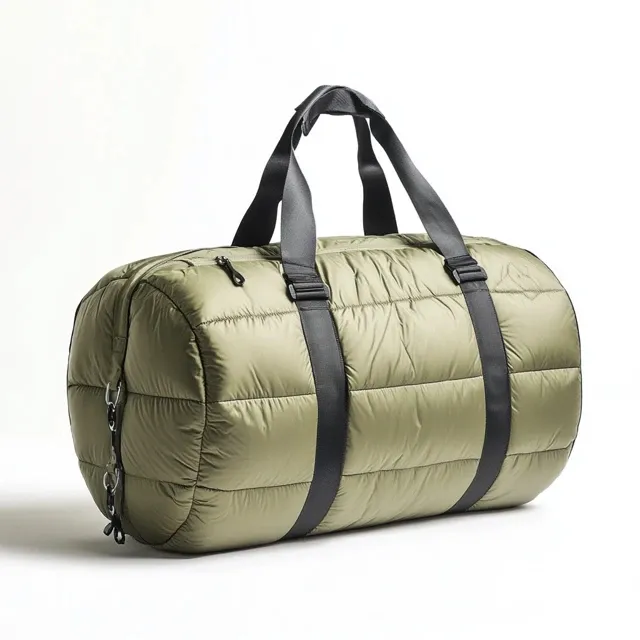
Spec snapshot
A fast engineering view of what matters for sourcing, quoting, and repeatable production.
| Item | Typical | Notes |
|---|---|---|
| Primary use | first aid / EMT / clinic / home-care | Defines layout, labeling, and durability |
| Kit mapping input | item list + quantities + access priority | We design from the kit backward to reduce iterations |
| Cleanability | wipe-down surfaces + easy-clean liners | Material choices must match cleaning agents by program |
| Labeling & traceability | ID windows + barcode labels (by spec) | Supports inventory control and rapid access |
| Cold-chain (optional) | insulated module + gel packs (by spec) | For vaccine/biologic transport programs |
| Typical MOQ | 500–1,000 pcs | Depends on modular inserts and reflective/label systems |
Kit mapping (compartment design)
Medical bags are designed from the item list backward. This mapping makes prototyping faster and avoids expensive rework.
| Zone | Typical items | Design notes |
|---|---|---|
| Rapid-access front | gloves, scissors, gauze, tourniquet | single-hand access layout; elastic loops with grip tolerance control |
| Main compartment | bandages, saline, splints, bulk medical items | modular divider inserts; color-coded pouches to reduce mistakes |
| Label/ID area | patient labels, barcode sheets, penlight | clear ID windows + writable label surface (by spec) |
| Cold-chain pocket (optional) | gel packs + vials/syringes | insulation build + leak-proof liner + easy cleaning |
• Reduce deep seams and hard-to-clean corners in high-contact areas
• Specify colorfast trims and reflective elements that resist fading in cleaning
• Define labeling materials that remain readable after cleaning and abrasion
• Gel-pack organization pockets to keep temperature stable and avoid crushing contents
• Leak-resistant liner strategy for spill control and easier sanitization
• Thermal performance validation plan aligned to your claim language (hours/conditions)
Materials & fabrics
Material choice drives performance, durability, finishing, and target price point.
| Fabric | Waterproof | Cost | Notes |
|---|---|---|---|
| 600D polyester + coating | water-resistant | varies | Easy to wipe clean and durable. |
| TPU/PVC lining | leak-resistant | varies | For internal compartments and easy sanitation. |
| Reflective trims | n/a | varies | Visibility for emergency usage. |
• ID label windows
• easy-clean lining
• reinforced grab handles
• zipper function checks
• AQL final inspection
• Emergency response teams
• Medical device brands and distributors
• Item list and access priority (what must be reachable first)
• Preferred layout style (modular inserts / fixed dividers / elastic loops)
• Cleanability expectation and any restricted materials
• Labeling/traceability needs (ID windows, barcode labels, reflective marks)
• Any cold-chain requirement (retention hours + payload)
• Branding method and color scheme (high-visibility vs brand aesthetic)
Start custom medical bags production
Send your requirements and get a structured RFQ checklist and a manufacturing plan.
A response or clinical carry bag is not judged on how it looks on a shelf. It is judged at 3 a.m. by someone wearing gloves who needs a specific item in under five seconds. That requirement drives everything: compartment geometry, colour coding, wipe-down surfaces, and the documentation pack that lets a procurement team put it into service. The specification below is written for that reality.
Specification options for response and clinical carry bags
Two families sit under this heading. The first is the structured response bag - a wide-mouth, colour-coded, high-visibility build carried to an incident. The second is the home-care or clinic bag, smaller, less reflective, and organised around a defined kit list. The grid covers both, and the differences are mostly in compartment layout and surface finish.
| Parameter | Compact response | Full response | Home-care / clinic |
|---|---|---|---|
| External size (W x D x H) | 330 x 180 x 200 mm | 460 x 240 x 280 mm | 380 x 170 x 260 mm |
| Volume | 12 L | 28 L | 16 L |
| Shell fabric | 600D polyester, PU + DWR | 1000D nylon, PU + TPU back | 420D nylon, PU, wipe-clean |
| Lining | 210D ripstop, light grey | 420D TPU-coated, grey | 210D TPU-coated, white |
| Compartment system | 4 elastic loops, 2 mesh | 10 removable dividers, 24 loops | 6 dividers, 2 clear pouches |
| Opening | 270 degree zip | Full clamshell, twin zip | Twin zip, stay-open lid |
| Visibility | Retroreflective tape, 25 mm | Retroreflective wrap + light patch | Reflective piping, 12 mm |
| Carry | Webbing handle + sling strap | Padded harness, sternum strap | Shoulder strap, 38 mm |
| Empty weight | 0.95 kg | 2.30 kg | 1.10 kg |
| Rated load | 6 kg | 14 kg | 8 kg |
| Documented compliance | REACH, Proposition 65 | Adds CPSIA, OEKO-TEX Standard 100 | Adds FDA 21 CFR material declaration |
Interior colour is a specification line, not a styling choice. A light grey or white lining doubles as a visual check: contamination is visible, and a dark interior hides it. Retroreflective tape is specified by width and by coefficient of retroreflection, and it is applied before assembly on panels rather than after, so the tape ends are captured under binding and cannot lift.
How response and clinical bags are built
Pattern work begins with the kit list. We lay out each item at 1:1, group by frequency of access, and design compartment geometry around the largest item in each group. A divider system that looks tidy in a photograph but forces a user to lift two trays to reach an airway adjunct has failed, and the only way to catch that before tooling is to build the layout around physical items rather than rectangles.
Structure comes from the shell, not the lining. Response bags hold their shape when empty so they can be packed one-handed, which means a laminated foam interlining between shell and lining and a moulded or stiffened base. The interlining is die-cut to the panel and assembled as a unit with the shell before the lining goes in, which keeps corners square and prevents the lining from bunching.
Seams on the interior are bound rather than left raw. A raw seam inside a bag that will be wiped with a disinfectant is both a contamination risk and a delamination point, so internal seams get binding tape or are welded where the material allows it. Where a programme specifies welded interiors, the tooling is quoted at brief stage because it is a per-size investment.
Load paths are reinforced at four points: both strap roots, the handle mount and the base-to-back-panel junction. On a 14 kg rated bag the strap roots carry reinforcing webbing that continues down the back panel to the base stiffener, which converts a point load into a distributed one. This is where generic bags fail, usually within the first month of service.
Closure hardware is chosen for gloved operation. Twin zips with long, oversized pullers, a grab handle at the apex of the lid, and magnetic or hook-and-loop lid stays that hold the bag open on a surface. Any closure that requires fingernail dexterity is replaced during sampling.
Cost drivers and MOQ for medical carry bags
The interior fitment is the cost centre, not the shell. A bag with ten removable dividers, twenty-four elastic loops and two clear pouches carries more labour than the shell itself, and every divider is a cut-and-bind component with its own marker. Standardising divider sizes across the range is the fastest way to reduce unit cost without touching the external specification.
| Configuration | Indicative FOB | Primary cost driver |
|---|---|---|
| 12 L compact, 6 loop interior | USD 9.00 - 13.00 | Reflective tape, lining coating |
| 16 L clinic, clear pouches | USD 12.00 - 17.00 | Pouch welding, divider count |
| 28 L response, full divider set | USD 18.00 - 26.00 | Fitment labour, harness spec |
| Custom colour-coded dividers | + USD 0.60 - 1.40 | Fabric changeovers per colour |
| Embroidered or PVC identification patch | + USD 0.35 - 0.90 | Stitch count or mould cost |
Volume terms are the same across the range. Minimum order quantity is 500 units per style and colour, or 300 on repeat programmes. Sampling takes 6 to 10 working days, extending to 12 to 15 where welded interiors or custom moulded components are involved. Mass production is 35 to 50 days after sample approval, sample fees of USD 50 to 150 are credited against the first bulk order, tooling is quoted at USD 300 to 2,500, and quotes return in 24 to 48 hours. Terms are T/T 30/70 FOB Xiamen, with EXW, CIF and DDP available under Incoterms 2020.
Quality gates and acceptance criteria
Cleanability is tested rather than asserted. Interior surfaces are subjected to a defined wipe protocol using a quaternary disinfectant at the concentration specified by the buyer, for 500 cycles, then inspected for coating loss, colour transfer and seam degradation. That test is the one that separates a wipe-clean TPU liner from a coated polyester that looks identical on day one.
- Load and carry test at rated weight for 2,000 cycles with strap attachment inspection at 500-cycle intervals.
- Hydrostatic resistance to AATCC 127 and spray test to AATCC 22 on the shell.
- Abrasion and tensile checks to ASTM D5034 on shell, ISO 13934-1 on webbing.
- Wet and dry crocking to AATCC 8 on every colourway, including printed panels.
- Restricted substances to REACH (EC 1907/2006), CPSIA and California Proposition 65, with OEKO-TEX Standard 100 on lining.
Reflective performance is verified against the tape supplier certificate and by a visual retroreflection check under defined illumination, and every batch of tape is traceable to its lot. Final random inspection runs to AQL 2.5 (Critical 0, Major 2.5, Minor 4.0), with AQL 1.5 available on request under ISO 2859-1. Where a programme ships filled with a kit, we can pack the contents at the production site under a documented line procedure.
Compliance and documentation packs by destination market
Procurement teams in this sector rarely order on product alone; they order on documentation. We issue a per-style pack that carries material declarations, restricted-substance statements to REACH (EC 1907/2006) and California Proposition 65, food-contact or skin-contact declarations where relevant, and test reports from recognised third-party laboratories. CPSIA documentation is prepared for US distribution, and OEKO-TEX Standard 100 certificates are provided for lining and shell where the buyer requires them.
Plan the documentation at brief stage rather than at shipment. Third-party laboratory testing runs on its own clock, and if your tender requires a report dated within a defined window, the sampling date has to be scheduled backwards from the delivery date. Our 4,950 square metre SGS-verified production base runs 7 lines and 149 machines, so a documentation-heavy programme can be sequenced without displacing production slots.