Tote Bag Lamination: Waterproof & Durable Finish
Understand how to run a custom tote bag oem program for North America: materials, tech pack, sampling, QC and shipping. Get OEM/ODM-ready checklists and quote
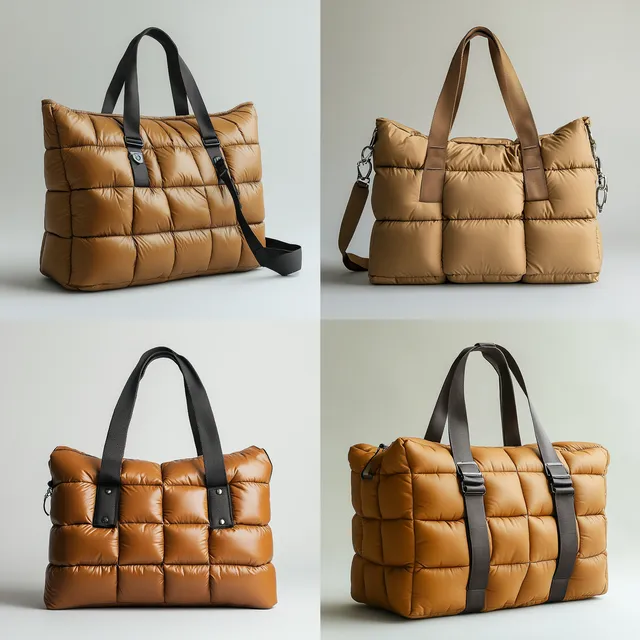
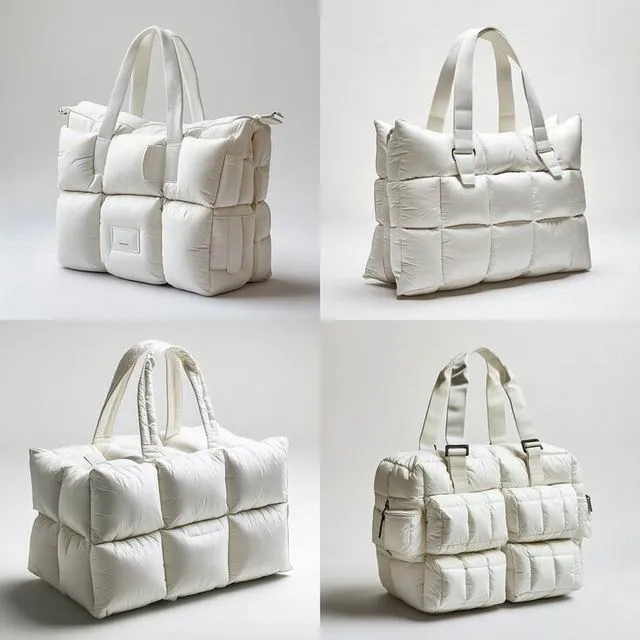
Where a Tote Bag Gets Made, and How It Moves
A professional tote bag program is a controlled workflow: clarify requirements, lock the build route, validate with measurable gates, then scale production with repeatable QC.
Primary SEO focus: custom tote bag oem. Secondary: tote bag manufacturer, private label bags, custom logo bags, OEM ODM bags.
The checkpoints that decide whether bulk runs
Any tour worth taking is a control-point checklist in disguise, not a showroom trip.
How the line handles your SKU
- Lock claim scope, price target and carton rules, and only then sample.
- Within material sourcing, lock by spec: coating/laminate spec, fabric route, trim vendors.
- Pattern work: cut templates, define tolerances, plan the stress-point build-up.
- Cutting stage: check grain direction plus marker efficiency; hold shade lots steady.
- Sewing and welding: hold the line on stitch spec, seam allowance, critical-zone reinforcement.
- At the final assembly stage, placement jigs position logos, hardware and accessories.
- Finish on AQL sampling, correct carton marking and complete documents.
Typical buyer use scenarios
- outdoor sports
- fishing
- boating
- camping
- commuting
Key functions buyers request most
- RF welded seams
- roll-top closure
- airtight zipper option
- lash points
- abrasion reinforcement
Choosing the Best Materials for Custom Tote Bags
| Material | Performance | Cost Range | Top pick For | Upsides & Trade-offs | Risks & How to Control |
|---|---|---|---|---|---|
| TPU laminated nylon | Higher waterproof barrier potential (ISO 811 / AATCC 127 per the specification); good scuff resistance when reinforced (ISO 12947 per spec) | US$1.6–5.5 / meter (per the specification) | Claim-led outdoor SKUs and premium builds | Upsides: strong claim ceiling. Watch-outs: crease sensitivity; higher BOM cost | Control laminate peel, crease tolerance and seam strategy; validate waterproof scope early |
| PVC tarpaulin (to spec) | Upper barrier and wipe-clean surface (ISO 811 / AATCC 127 as specified); strong abrasion resistance tolerance (ISO 12947 per the specification) | US$1.2–6.0 / meter (per spec) | Rugged utility lines and marine use | Upsides: durable surface. Limitations: heavier; sustainability concerns | Define fold/packout rules to avoid scuffs; control weight targets |
| Canvas / cotton (per spec) | Good hand-feel and print; waterproofing depends on finish (AATCC 22 per the specification) | US$1.0–3.5 / meter (as specified) | Retail lifestyle lines, totes and promotions | Advantages: classic look. Trade-offs: heavier; stain risk without finish | Define shrinkage and colorfastness tests (AATCC 61 / ISO 105 as specified); specify lamination if needed |
Triage the material decision
- Decide from the field conditions: rubbing, carrying load and water drive the choice.
- Decide whether the claim covers the whole bag or only zones like the main compartment.
- Every referenced ISO/AATCC/ASTM procedure should be listed, together with the numeric bar for approval.
- Choose route-suitable trims, from zipper type and sliders to buckles and webbing strength.
- Confirm that print and branding suit the specified fabric.
- Scuffing and creasing usually trace to transit, not to stitching defects.
Design, Sampling and Sign-Off
The specification sheet that avoids a second round
What happens first, second and third
- Write down the customer, the price tier and the role it plays.
- Confirm the claim scope and its test plan by spec.
- Artwork placement, tolerance map, measurement table and BOM: four pieces that make the tech pack.
- Fit, structure and material route get validated at prototype sampling.
- Final BOM, final packaging route: the PP stage.
- Sign-off requirement: QC checklists plus the reference sample, ahead of bulk cutting.
Getting the sample right first time
- Confirm fabric shade and coating feel with the actual supplier lot (per the specification).
- Verify artwork location physically on paper before the selected print process runs.
- Load-test every anchor point: webbing, grab handles and D-ring areas, to specification.
- Review the zipper path, then slider feel, then the cycle requirement per spec.
- Open, close and repack the product many times, watching for corner wear and seam creep.
- One PP sample, built with the final BOM and final packing route, is what needs approval.
Reducing back-and-forth before bulk
From first build to annual reorder
Production & Manufacturing Methods for Tote Bags
Weigh MOQ requirements against turnaround duration and price tier using the options table.
Methods and the numbers behind them
Rather than restate a long matrix, this section points to own-brand programmes, where each row carries its method and acceptance value.
Branding Methods and Final Build Steps
Choosing how to apply your logo
Keeping returns down at the last station
- Brand mark alignment check against placement template
- Metal parts function check: buckles, sliders, and snaps
- Zipper end reinforcement and smoothness check
- Visual check for wrinkles, creases, and surface scuffs before packing
Shipping Mode, Cost and Timing
The export sequence, gate by gate
Key Factors to Choose a Reliable Tote Bags Manufacturer
Use this checklist before signing an OEM/ODM contract for tote bags.
What to ask before you place volume
- Do they price the pack and flag every assumption they made?
- Are alternatives by spec offered, and BOM sourcing controlled by them?
- Do they evidence QC checkpoints, IQC to IPQC to FQC, and an AQL plan?
- Without hurting workmanship, can they allow a flexible MOQ?
- Can they give firm lead time commitments and a defined escalation path?
- Do they bring packaging and shipping know-how that fits your market?
What an audit should look at, line by line
Where the value sits
A consolidated table would duplicate itself across every article on this topic, so ours sits on travel bag specifications and gets the updates.
Film choice: PE, EVA and TPU laminates behave very differently
Lamination is a distinct operation from coating. A coating is applied as a liquid and cured; a lamination bonds a pre-formed film to the face fabric with adhesive, hot-melt or extrusion. That difference matters because the film carries the barrier. PE film at 0.02 to 0.04 mm gives a wipe-clean surface at the lowest cost but creases visibly and blocks in storage above about 50 degrees Celsius. EVA film is softer and marginally more flexible. TPU film at 0.05 to 0.08 mm costs more but recovers from folding and stays supple in cold conditions.
Bond strength decides whether any of that survives. Our production team specifies peel strength of at least 10 N per 25 mm measured after three wash cycles at 40 degrees Celsius per ISO 6330, because a laminate that delaminates in laundering fails in the field long after inspection has passed it. Adhesive selection is then matched to the face fabric: a full coverage PU adhesive on woven poly-cotton, a hot-melt on synthetics where airflow through the panel matters for a soft-hand tote.
Peel strength, crease flex and wipe-clean testing
Barrier performance is quoted in hydrostatic head rather than adjectives. A standard PU-coated cotton tote sits around 600 to 1,500 mm when tested to AATCC 127, whereas the same fabric with a TPU laminate reaches 3,000 to 10,000 mm. That jump is what lets a tote carry wet swimwear or a leaking bottle without soaking through to clothing, and it is the reason laminated construction is specified for beach and market totes rather than PU-coated canvas.
| Finish | Hydrostatic head | Trade-off |
|---|---|---|
| PU coating | 600 to 1,500 mm | Breathable, lowest cost, marks under load |
| PE lamination | 1,500 to 3,000 mm | Cheap barrier, creases and blocks when warm |
| EVA lamination | 2,000 to 4,000 mm | Softer hand, moderate durability |
| TPU lamination | 3,000 to 10,000 mm | Best flex and cold behaviour, highest cost |
| Silicone treatment | 1,000 to 2,000 mm | Non-polar, blocks RF welding later |
Crease flex is the check most specifications omit. A laminated panel folded 1,000 times along the same line and then retested should retain at least 70 percent of its original hydrostatic value; below that, the film has micro-cracked and will leak long before the fabric looks worn. Printability is the second omission: PE and PP films are inert and need corona treatment to about 38 dynes before screen inks or transfer films will anchor, so print method and finish must be decided together.
Cost and compliance close it out. Lamination typically adds USD 0.20 to 0.60 per finished tote depending on film and width, and samples take 6 to 10 working days. Restricted substance screening follows REACH (EC 1907/2006) and California Prop 65, with OEKO-TEX Standard 100 available where retail requires it; phthalate plasticisers in PVC-based film remain the most common reason a submission fails. Material behaviour is compared further under custom bag materials, and logo durability on film surfaces is addressed in tote bag logo methods.
Choosing the lamination process, not just the film
Most tote briefs name a film and stop there, but the process that bonds it decides the hand feel, the bond strength and the price. Flame lamination, hot-melt roll coating, extrusion coating and adhesive film bonding all produce a wipe-clean surface; they do not produce the same tote. Process also drives the minimum run, because each method has a set-up waste and a line speed that only makes sense above a certain metreage.
| Process | Add-on (g/m²) | Cost (USD/m) | Hand feel and risk |
|---|---|---|---|
| Flame lamination of PU foam | 25–40 | 0.55–0.85 | Soft, some yellowing risk |
| Hot-melt adhesive roll coating | 18–30 | 0.60–0.95 | Crisp, low odour |
| Extrusion coating with PE | 30–60 | 0.45–0.75 | Stiff, best barrier |
| PU adhesive film bonding | 20–35 | 0.80–1.30 | Softest, highest cost |
Match the process to the tote. A 12 oz cotton canvas with a 30 g/m² hot-melt build gives a wipe-clean shopper that still folds flat in a carton; extrusion coating at 60 g/m² is right for a cooler-lined or beach tote where the barrier matters more than the drape. Whichever route is chosen, write the add-on in g/m² into the specification — it is the only number incoming inspection can verify.
Five failure modes on laminated totes and how to catch each one
Laminated totes fail in predictable ways, and every one of them has a test that catches it before the goods ship. Treat this list as a pre-shipment checklist rather than as theory.
- Blocking after a 25–35 day sea voyage — symptom is panels sticking together; cause is winding before the film has cooled; test is a 60 °C accelerated block check over 24 hours; fix is an anti-blocking additive and full cooling before wind-up.
- Crease whitening at the fold — symptom is white lines where the tote folds; cause is film above 0.15 mm; test is a five-fold crease flex at 23 °C; fix is dropping to 0.10–0.12 mm TPU or EVA.
- Delamination in service — symptom is bubbling after washing; cause is adhesive add-on below 20 g/m²; test is ISO 6330 at 40 °C for five cycles; fix is raising the add-on to 25–30 g/m².
- Print lifting off the film — symptom is flaking logos; cause is low surface energy; test is a cross-hatch tape check plus AATCC 8 crocking at grade 4; fix is corona treatment before printing.
- Seam slippage at the needle holes — symptom is open seams under load; cause is a stiff laminate sewn at 6 stitches per inch; test is ASTM D5034; fix is 8–10 spi with 20 mm binding.
Sampling a revised laminate takes 6–10 working days at MOQ 500, and the accelerated checks above add two or three days. That is a small price against a blocked or delaminated container. Our production team runs the block check and the crease flex on every new laminate before it is released — details of the wider process are on the manufacturing page.
Frequently Asked Questions (FAQs)
What hydrostatic head does laminated tote fabric reach compared with a PU coating?
Tested to AATCC 127, standard PU-coated canvas gives roughly 600 to 1,500 mm. The same base fabric with a TPU laminate reaches 3,000 to 10,000 mm, which is the difference between resisting drizzle and carrying a leaking bottle without soaking through.
Which film should be specified for a tote that must survive repeated folding?
Choose TPU film at 0.05 to 0.08 mm. After 1,000 crease cycles along one line it should still hold at least 70 percent of its original hydrostatic value. PE film at the same duty micro-cracks and visibly whitens at the fold.
What peel strength should be written into a laminated tote specification?
Specify a minimum of 10 N per 25 mm measured after three ISO 6330 wash cycles at 40 degrees Celsius rather than on dry fabric. Bond failures almost always appear in laundering, so a dry-first pass hides defects until the customer washes the bag.
Why do screen-printed logos lift off some laminated finishes?
PE and PP films are inert, so ink anchors poorly without corona treatment to roughly 38 dynes. Specify the treatment before printing, or switch to a heat-transfer film matched to the polymer, then verify with AATCC 8 crocking at grade 4 or better.
Does laminated tote fabric block or stick together in container transit?
Yes if PE film is specified and cartons sit above about 50 degrees Celsius during a 25 to 35 day sea transit. Interleaving tissue, vented 0.04 mm polybags and a desiccant sachet per master carton remove most of the risk cheaply.
How much does lamination add to a finished tote in unit cost?
Expect USD 0.20 to 0.60 per tote depending on film type, thickness and panel width, before any print-adhesion treatment. Tooling is rarely required for flat lamination; shaped panels with a weld bead carry tooling of USD 300 to 2,500.
Which compliance rules apply to laminated film sold into EU and US retail?
Screen to REACH (EC 1907/2006) and California Prop 65, and request OEKO-TEX Standard 100 where required. Phthalate plasticisers in PVC-based film are the most frequent failure source, so phthalate-free compounds clear review faster despite the premium. Budget one screening round per SKU, not per order.
How quickly can a laminated tote be sampled and costed at MOQ 500?
Prototypes take 6 to 10 working days at USD 50 to 150 each, refundable against the order, and pricing is returned within 24 to 48 hours. Adding a printed mock-up on treated film extends the round by two to three working days.
Next Steps and Further Guides
Internal resources
- Request a quote (RFQ)
- Browse products & categories
- Factory capabilities & process
- Download QC checklist
Related blog posts
- How to Perform a Pre-Shipment Inspection for Bags
- How to Plan Lead Times for Seasonal Bag Launches
- How to Print & Embroider Logos on Backpacks
- How to Print Logos on Cooler Bags Without Damaging Insulation
- How to Make Cooler Bags UV-Resistant & Long-Lasting
- How to Make Waterproof Bags More Comfortable to Carry
Next step
• Lock keyword and claim scope for custom tote bag oem
• Build a tech pack with BOM + tolerance map
• Choose materials route and validate tests (by spec)
• Plan sampling gates (lead time 6-10 working days)
• Set MOQ and cost targets (MOQ 500 pcs)
• Define QC plan and AQL checkpoints
• Confirm production + shipping timeline (35-50 days)
Let's scope your next order
Send over your requirements; a manufacturing plan and structured RFQ checklist are prepared for you.
Specifications in this category are normally verified against CPSIA (lead and phthalates), together with OEKO-TEX Standard 100 and ISO 2859-1 (AQL sampling) before a purchase order is released.
Related programme guides: custom tote bags.
Choosing a laminate that survives folding and sunlight
Lamination is what turns a woven tote into something that can be wiped clean, but the three routes available behave very differently once the bag leaves the showroom. Polyurethane coating costs least and breathes best, PVC lamination gives the stiffest hand and the strongest barrier, and TPU film sits in between on price while outperforming both on flex life and cold-temperature behaviour. Picking between them is a question of what the bag will meet in service, not of which line on a swatch card looks nicest.
The most common failure we are asked to fix is not leakage but delamination, and its cause is usually mechanical rather than chemical. A film bonded at high temperature to a loosely woven substrate holds well under flat tension but releases when the bag is folded hard and repeatedly, because the film is stiffer than the weave and the fold concentrates strain at the bond line. Rolling rather than folding, keeping the fold radius generous in the packing instruction, and matching film weight to substrate GSM so neither dominates all reduce the risk. Where a tote is designed to fold flat into a pocket, TPU at 0.15 to 0.25 mm substantially outperforms PVC.
Environmental ageing is the second axis. PVC plastifiers migrate over time, particularly in warm climates, so a laminate that is supple at 20 °C can become stiff and brittle after two summers in a warehouse or a car boot. Restricted phthalate content needs to be documented for most markets regardless, and REACH (EC 1907/2006) declarations, California Proposition 65 for California-bound goods and OEKO-TEX Standard 100 certification where a retailer requires it should all be requested at quotation rather than at inspection. TPU carries no plasticiser and ages better, which explains most of its price premium.
| Property | PU coating | PVC lamination | TPU film |
|---|---|---|---|
| Typical add-on | 15–30 gsm | 0.18–0.35 mm | 0.12–0.30 mm |
| Hand and drape | Softest, keeps fabric character | Stiffest, boardy | Medium, slightly rubbery |
| Hydrostatic head (AATCC 127) | 600–1,500 mm | 3,000–10,000 mm | 5,000–10,000 mm |
| Flex and crease resistance | Good | Poor once plastifier migrates | Excellent |
| Cold performance | Good | Brittle below about minus 10 °C | Good to minus 30 °C |
| Cost signal at 500 units | Base | +0.20 to +0.50 per unit | +0.60 to +1.40 per unit |
| Recyclability and compliance | Easiest with GRS substrates | Restricted plasticiser documentation needed | Cleanest to document |
Specifying finish performance you can actually test
Water resistance claims should be anchored to named methods. Hydrostatic head to AATCC 127 supports a substantive claim; spray testing to AATCC 22 is quick and cheap but only supports a water-repellent statement and degrades as the finish wears; the rain test to AATCC 35 is closer to real use and a good choice for a tote that will genuinely stand in weather. Whichever you nominate, specify it before sampling so that lab slots can be booked alongside prototypes, rather than discovering a week before shipment that the report takes eight days.
Abrasion behaviour deserves equal attention because laminated surfaces show wear differently from fabric. A scuff that would be invisible on cotton becomes a permanent white line on a dark film, and there is no field repair. Films with a coarse emboss hide marks better than gloss finishes, and a textured topcoat adds one more degree of forgiveness for almost no cost. Where the tote has a print, note that most solvent-based inks struggle on low-surface-energy films; a primer or a plasma pre-treatment avoids the adhesion failure that otherwise shows up as a thumbnail-scratch problem.
Finally, decide what happens at the seams. A laminated panel cannot be taped with the same tape used on a coated nylon because adhesion differs, and in many cases a heat-welded seam or a bound slip-stitch is more reliable than tape. Whichever route is chosen, write it into the technical pack along with the peel-strength target so it can be verified. Our production team quotes laminate options within 24 to 48 hours of receiving a specification, with sampling at 6 to 10 working days and standard production 35 to 50 days after approval. Compare substrates at bag materials, and see the seam and weld logic behind this in waterproof bag production steps.
Numbers age badly when copied into dozens of places, so the maintained version of this grid stays on quality control and certification.
Rather than repeat the same matrix here, keep the detailed grading with the central reference on material selection — it lists the acceptance numbers and sampling levels our team works to.