How to Make Waterproof Bags More Comfortable to Carry
Plan how to run a custom waterproof bag oem program for UK & Europe: materials, tech pack, sampling, QC and shipping. Get OEM/ODM-ready checklists and quote


From Pattern to Pallet: Building a Waterproof Bag
What is held to a number, and who signs it
A serious walkthrough follows the paperwork from incoming fabric to sealed carton.
Walking the order through seven stations
- Align on what is claimed, what it costs and how it packs before sampling starts.
- By spec, material sourcing locks the coating/laminate spec, fabric route and trim vendors.
- Make the patterns, agree tolerances and decide the reinforcement layout.
- Manage dye lots, and verify marker yield plus grain alignment while cutting.
- Reinforcement at stress points, then seam and stitch specs applied at the station.
- Fixtures hold placement while hardware, logos and accessories go on.
- Then inspection and packing: AQL draws, carton marks, export papers.
Typical buyer use scenarios
- outdoor sports
- fishing
- boating
- camping
- commuting
Key functions buyers request most
- RF welded seams
- roll-top closure
- airtight zipper option
- lash points
- abrasion reinforcement
Choosing the Best Materials for Custom Waterproof Bags
| Material | Performance | Cost Range | Top pick For | Advantages & Trade-offs | Risks & How to Control |
|---|---|---|---|---|---|
| TPU laminated nylon | Premium waterproof barrier potential (ISO 811 / AATCC 127 per spec); good abrasion resistance when reinforced (ISO 12947 per spec) | US$1.6–5.5 / meter (to spec) | Claim-led outdoor SKUs and premium builds | Advantages: strong claim ceiling. Watch-outs: crease sensitivity; higher BOM cost | Control laminate peel, crease tolerance and seam strategy; validate waterproof scope early |
| PVC tarpaulin (per the specification) | Upper barrier and wipe-clean surface (ISO 811 / AATCC 127 per spec); strong abrasion tolerance (ISO 12947 as specified) | US$1.2–6.0 / meter (to spec) | Rugged utility lines and marine use | Advantages: durable surface. Limitations: heavier; sustainability concerns | Define fold/packout rules to avoid scuffs; control weight targets |
| Canvas / cotton (per spec) | Good hand-feel and print; waterproofing depends on finish (AATCC 22 to spec) | US$1.0–3.5 / meter (as specified) | Retail lifestyle lines, totes and promotions | Upsides: classic look. Limitations: heavier; stain risk without finish | Define shrinkage and colorfastness tests (AATCC 61 / ISO 105 to spec); specify lamination if needed |
Screening fabric options without a lab
- Read the scenario first, then let wear points and wet exposure narrow the options.
- Main compartment only is one option; decide if the claim spans the whole bag or zones.
- Cite the ISO, AATCC or ASTM references in your pack and state what passes.
- Pick trims that suit the chosen route: zipper type, sliders, buckles and webbing strength.
- Print and branding compatibility is confirmed on the real fabric.
- Evaluate transit rubbing risk, because visible creases are freight damage far more often than stitching faults.
Specifying the Product Before Tooling Starts
What makes a pack quotable in 24-48 hours
Order of operations for an OEM or ODM build
- Nail the user, the band and the proposition before anything else.
- Lock claim scope, then confirm the test plan to spec.
- To build it, add the BOM, then the measurement table, then the tolerance map, then artwork placement.
- Prototype sampling validates fit, structure and the material route.
- By PP, BOM and packaging route are final.
- First, sign the QC checklists and golden sample; only then cut bulk.
Before you approve: the sample checklist
Where you need the granular row detail, importing from China carries it with the test methods and sample sizes attached.
How to reach a signed sample faster
What a repeat order should look like
Success example (anonymized): a premium program targeting UK & Europe reduced rework by freezing a single tech pack, running one pre-production sample using the final BOM, and aligning QC checkpoints before cutting. Reproducible builds remove the annual need to qualify someone new when reordering.
Production & Manufacturing Methods for Waterproof Bags
Ordering choices get clearer once you compare lead time, MOQ requirements and cost bands in the table.
Specifying the construction route
- Bonding / lamination requirements and peel strength targets (per spec)
- Stitch density and thread type for load zones (per spec)
- Edge binding method and tolerance for clean finishing
Decoration and Assembly Controls
Marking methods, ranked by durability
Final-stage controls worth enforcing
From Port to Warehouse
Documents and timing gates
Key Factors to Choose a Reliable Waterproof Bags Manufacturer
Use this checklist before signing an OEM/ODM contract for waterproof bags.
Screening questions that separate routes
- Is the quote traceable to your spec, with assumptions listed?
- Can they source the BOM and also suggest alternatives that meet spec?
- Is there an AQL plan, and do QC checkpoints cover IQC through IPQC into FQC?
- Can workmanship survive a flexible MOQ arrangement?
- Can you expect firm lead times and a clear escalation procedure?
- Does their track record include packaging and shipping into your market?
Questions to put to the production team on site
Relative advantages at a glance
Stiff Laminates Change How Load Reaches the Body
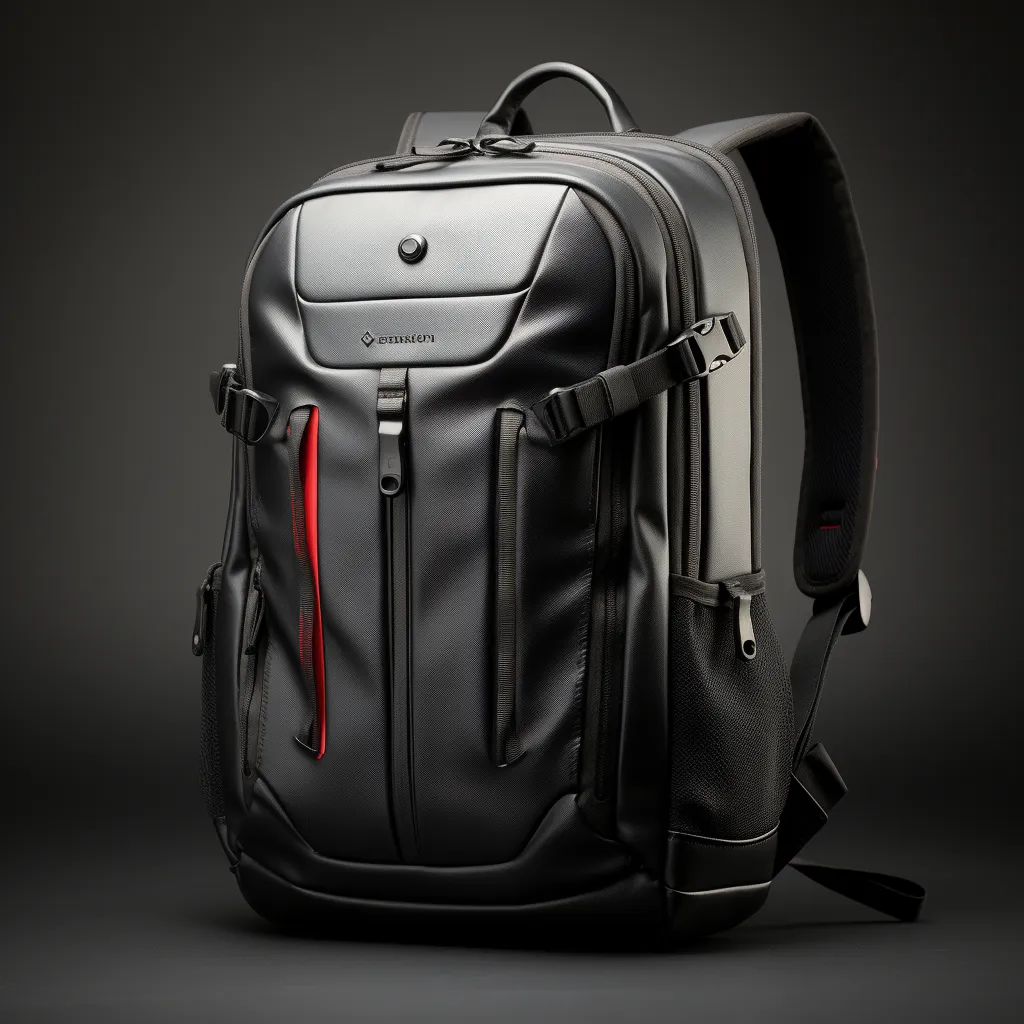
Comfort complaints rarely come from weight alone; they come from pressure. A film-laminated shell does not drape or conform to the back the way an uncoated textile does, so load concentrates along a narrow contact band instead of spreading across the whole panel. The mechanics are straightforward: pressure equals force divided by contact area. The remedy is therefore geometric rather than cosmetic. A contoured back panel with vertical airflow channels, a gently concave profile and a spacer knit facing enlarges the contact zone while still moving air, and that combination is what keeps a loaded unit tolerable during a long carry. Related geometry choices are discussed in our notes on custom backpack development.
The second variable is how padding behaves once it has been used. Open-cell foam feels plush in a showroom and then bottoms out under sustained load, after which the webbing edge does the work and bites into the shoulder. Closed-cell foam with a defined compression profile recovers between outings and holds thickness through a season. Specify foam by density and recovery rather than by hand feel, and keep strap width generous enough that the load spreads beyond the trapezius. Edge construction matters as well, because a hard binding lets the strap behave like a cord against the neck.
Anchoring, Surface Feel and Cold-Weather Behaviour
Every comfort improvement is wasted if the attachment fails, so carry webbing must anchor into the load-bearing structure rather than into the lining or a single cosmetic face panel. Bar-tacked and box-stitched anchors spread peel force across more stitches, and our production team verifies anchor strength against ASTM D5034 while reviewing the shell with ISO 12947 wherever the strap rubs the body during movement. Binding selection also affects clothing: confirm crocking resistance to AATCC 8 so dark pigment does not transfer onto light shirts during a warm carry.
Surface feel and noise are easy to overlook until samples arrive. Raw film against a jacket tends to slip and squeak, which reads as poor quality even when the barrier performs perfectly, so face the back panel and strap underside with a knit or brushed textile and let the exterior take the weather instead. Chemistry also governs winter behaviour, since polyvinyl chloride constructions stiffen noticeably in cold conditions and feel board-like against the back, while thermoplastic polyurethane stays supple. Finally, evaluate together with care in mind: salt, sunscreen and sand abrade contact surfaces.
- Shape the contact panel for area rather than simply adding thickness.
- Specify foam by density and recovery, not by showroom softness.
- Anchor carry webbing into structural panels with bar-tack and stitch boxes.
- Face contact surfaces with textile to remove slip and squeak.
- Re-check stiffness at low temperature before signing off the build.
Finally, validate comfort rather than assuming it. Our production team prepares two strap constructions per sample round, loads both to intended capacity, and asks you to carry them for a working day before approval. Geometry changes such as moving the anchor point or widening the contact panel often outperform simply adding foam thickness, and they cost nothing to test during the 6-10 working day sampling window.
Frequently Asked Questions (FAQs)
Why does a laminated shell feel harsher against the back than textile?
Laminated shells do not drape, so load focuses into a narrow band. Increase contact area with a contoured panel and spacer knit facing, then check rub resistance with ISO 12947. Our team usually proposes thermoplastic polyurethane where drape matters most. Prototype both versions and carry them loaded for a full day before deciding.
How wide should shoulder webbing be on a heavier carry product?
Width spreads load, but density and recovery decide long-term comfort. Combine a wider strap with closed-cell foam, then confirm strength to ASTM D5034 and run a weighted wear trial before bulk approval of your MOQ 500 order. Narrow webbing concentrates load and is the commonest source of shoulder complaints.
Which foam specification stops padding flattening after one season?
Specify closed-cell foam by density and compression recovery instead of softness. Ask for a recovery test after sustained loading and a repeat check following ISO 6330 laundering, so the padding behaviour you approve is the behaviour that ships. Compression set data tells you far more than showroom softness ever will.
What stops carry anchors tearing away from a laminated body?
Anchor into the load-bearing panel rather than the lining, using bar-tack and box patterns to spread peel force. Verify with ASTM D5034 testing at maximum intended load plus margin, and review the strap contact zone using ISO 12947. Samples arrive in 6-10 working days, so weaknesses surface before bulk cutting.
How do I reduce squeaking and slipping against clothing?
Face contact surfaces with knit or brushed textile so raw film never touches clothing, keeping the exterior sealed. Confirm colour transfer with AATCC 8 crocking testing, since a damp, warm carry accelerates dye movement onto light fabrics. Both checks take days at sampling and prevent the most embarrassing kind of return.
Is PVC or TPU better for carrying comfort in cold climates?
Thermoplastic polyurethane stays flexible at low temperatures and drapes better over the back. Polyvinyl chloride stiffens noticeably in the cold and can raise California Prop 65 questions, so most cold-climate programmes specify TPU laminates. Our team prepares both comparison panels so you can flex them after chilling overnight.
How much additional weight is acceptable to improve comfort?
Judge it against carrying duration and freight. Extra padding adds grams and packed cube, which changes cost per container. Our team quotes alternatives side by side on the FOB Xiamen basis so the comfort gain has a visible price. Judging additions against a 25-35 day sea schedule keeps the decision commercially honest.
Which evaluations belong in an approval protocol for a carry system?
Run a weighted wear trial, then confirm webbing strength to ASTM D5034, rub resistance to ISO 12947 and colour transfer to AATCC 8. Samples take 6-10 working days, or 12-15 for complex builds, before bulk runs start. Write the protocol before quoting so every MOQ 500 order is measured identically.
Continue Reading
Internal resources
- Browse products & categories
- Download RFQ template
- Download QC checklist
- Packing format specification guide
Related blog posts
- The Hidden Costs of Custom Bag OEM (And How to Reduce Them)
- The Ultimate Guide to Waterproof Dry Bags for Outdoor Brands
- Tactical Tool Bags for Military & Law Enforcement
- The Complete OEM Bag Production Process From Design to Shipment
- Tote Bag Handles: Strength & Comfort Design
- Tote Bag Lamination: Waterproof & Durable Finish
Next step
• Lock keyword and claim scope for custom waterproof bag oem
• Build a tech pack with BOM + tolerance map
• Choose materials route and validate tests (by spec)
• Plan sampling gates (lead time 6-10 working days)
• Set MOQ and cost targets (MOQ 500 pcs)
• Define QC plan and AQL checkpoints
• Confirm production + shipping timeline (25–35 days)
Get a quote for your next build
Your requirements go in; a structured RFQ checklist and manufacturing plan come out.
Linked programme guides: custom backpacks.
Waterproof Shells Fight Comfort, So Comfort Has to Be Specified
The two properties that make a bag waterproof — a sealed face and a heavy coating — are the same two properties that make it hot, stiff and heavy. Comfort is not rescued by adding padding; it is engineered through harness geometry, airflow and load path.
Start with the load path, because padding on the wrong surface does nothing. A backpack transfers load to the body at three places: the shoulder straps, the back panel, and the hip belt if there is one. The strap is the one that causes pain, and it causes pain for a geometric reason — if the strap leaves the top of the panel and runs straight down, the load pulls the bag away from the body and the shoulder carries all of it. A load-lifter strap set at the correct angle, and a sternum strap that pulls the two straps toward the centre, move a meaningful share of that load onto the back panel where it is carried comfortably.
Strap construction is the next lever. Width should be at least 45 mm at the shoulder for a load over about 5 kg, and narrower than 40 mm will cut in. Foam density matters more than thickness: a soft low-density foam feels good in the shop and bottoms out within an hour, while a medium-density closed-cell foam holds its thickness. On a waterproof shell, add a spacer or mesh facing on the strap underside so the sealed fabric does not sit directly on clothing, because the sweat problem is not the foam, it is the impermeable layer.
The back panel is where waterproof construction most often loses. A flat coated panel against the back is a sweat trap; the fix is a raised channel — two longitudinal pads with an air gap between them, faced in a spacer mesh — which allows air movement without perforating the barrier. This is the one place where you can add comfort without compromising the waterproof claim, because the channels are built on the outside of the sealed shell. Ventilation holes through the shell, by contrast, compromise the claim and should be avoided.
| Component | Comfort specification | Effect on carry | Cost delta | Trade-off |
|---|---|---|---|---|
| Shoulder strap width | 45–65 mm at shoulder | Removes cutting-in under load | plus 1–3% | Bulkier silhouette |
| Strap foam | Medium-density closed cell | Holds thickness all day | plus 1–2% | Firmer first impression |
| Strap facing | Spacer mesh underside | Cuts sweat against clothing | plus 2–4% | Traps grit, needs cleaning |
| Back panel | Twin raised channels | Airflow without perforation | plus 4–7% | Reduces internal depth |
| Load lifters | Angled 30–45 degrees | Shifts load onto the back | plus 1–2% | Extra trim points |
| Hip belt | Padded above 8 kg load | Transfers load off shoulders | plus 5–9% | Not wanted on small daypacks |
Testing Comfort Before the Market Does It for You
Comfort is measurable enough to specify. Run a loaded wear trial at the rated capacity plus a margin, over a stated distance or duration, with a small panel and a simple scoring sheet covering shoulder pressure, back sweat and strap slip. Strap slip is the defect that wear trials catch and bench tests miss: a webbing that creeps through its adjuster under vibration will be re-tightened every ten minutes in the field, which users report as discomfort rather than as a hardware fault. Specify the adjuster with a slip test and a stated load.
Weight interacts with all of it. A waterproof duffel or backpack carries a coating and seam-sealing penalty of several hundred grams over an uncoated equivalent, and every gram lands on the shoulder. Where the programme can afford it, a lighter denier with a high-tenacity yarn recovers some of that without losing abrasion performance, and trimming lining weight is usually the cheapest reduction available. Publish the empty weight honestly, because the reviewer who says "heavier than expected" is reporting a specification you chose.
On programme terms, harness development is worth a dedicated sample round: sampling runs 6–10 working days for a conventional build and 12–15 where a moulded back panel or a formed strap is involved, with mass production 35–50 days after approval against a 500-unit minimum per style and colour. Inspection follows ISO 2859-1 at AQL 2.5 with Critical 0, Major 2.5 and Minor 4.0, and wear trials consume units above that minimum. Harness and panel choices interact with the closure and volume decisions in waterproof duffel design, the substrate options are compared under custom bag materials, and the wider travel range sits at custom travel bags.
Numbers age badly when copied into dozens of places, so the maintained version of this grid stays on quality control and certification.
Rather than repeat the same matrix here, keep the detailed grading with the central reference on material selection — it lists the acceptance numbers and sampling levels our team works to.