Custom Cooler Backpacks: Top Features for Outdoor Brands
Understand how to run a custom cooler backpack oem program for United States: materials, tech pack, sampling, QC and shipping. Get OEM/ODM-ready checklists and
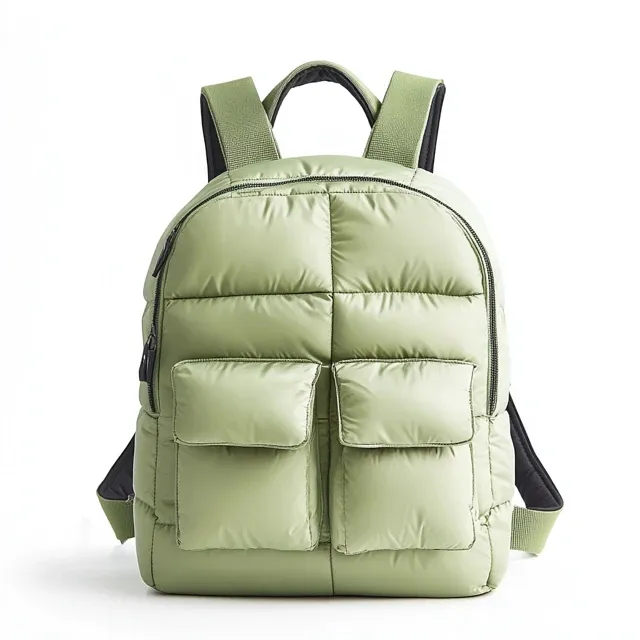

Inside the Build: How a Cooler Backpack Goes From Pack to Carton
A professional cooler backpack program is a controlled workflow: clarify requirements, lock the build route, validate with measurable gates, then scale production with repeatable QC.
Primary SEO focus: custom cooler backpack oem. Secondary: cooler backpack manufacturer, private label bags, custom logo bags, OEM ODM bags.
Control points the build is measured against
The full row-by-row breakdown lives on material selection; this piece keeps the focus on how those figures change the decision you actually have to make.
Any tour worth taking is a control-point checklist in disguise, not a showroom trip.
Stage-by-stage: how the order is worked
- Brief alignment: settle the claim scope, cost target and packing rules before any sample.
- Within material sourcing, lock by spec: coating/laminate spec, fabric route, trim vendors.
- Pattern control: build templates, set a tolerance map, plan the reinforcement.
- Cutting stage: check grain direction plus marker efficiency; hold shade lots steady.
- Sewing and welding: hold the line on stitch spec, seam allowance, critical-zone reinforcement.
- At the final assembly stage, placement jigs position logos, hardware and accessories.
- Close with inspection: AQL sampling, carton marks and the export paperwork.
Typical buyer use scenarios
- picnics
- camping
- food delivery
- beverage brands
- promotions
Key functions buyers request most
- thermal insulation
- leak-proof construction
- food-grade lining
- reinforced handles
- smooth zippers
Choosing the Best Materials for Custom Cooler Backpacks
| Material | Performance | Cost Range | Leading For | Upsides & Watch-outs | Risks & How to Control |
|---|---|---|---|---|---|
| 600D polyester | Even wear life (ISO 13934 tensile per the specification); good scuff resistance (ISO 12947 per the specification); stable for branding | US$1.6–5.5 / meter (to spec) | Running styles with predictable yield | Advantages: versatile. Trade-offs: performance depends on coating/finish | Lock coating spec, color tolerance and print compatibility; confirm reinforcement mapping |
| PU coated polyester (600D, per spec) | Good repellency (ISO 4920 / AATCC 22 per the specification); moderate barrier (ISO 811 to spec) | US$1.2–6.0 / meter (per the specification) | Value/core lines where print clarity matters | Advantages: cost controlled. Limitations: coating wear over time | Define spray rating targets and scuff resistance benchmarks; protect high-wear zones |
| Canvas / cotton (per spec) | Good hand-feel and print; waterproofing depends on finish (AATCC 22 per the specification) | US$1.0–3.5 / meter (as specified) | Retail lifestyle lines, totes and promotions | Upsides: classic look. Trade-offs: heavier; stain risk without finish | Define shrinkage and colorfastness tests (AATCC 61 / ISO 105 as specified); specify lamination if needed |
Narrowing the material route quickly
- Work back from use: where it rubs, where it carries load, and how wet it gets set the route.
- Decide whether the claim covers the whole bag or only zones like the main compartment.
- Every referenced ISO/AATCC/ASTM procedure should be listed, together with the numeric bar for approval.
- Choose route-suitable trims, from zipper type and sliders to buckles and webbing strength.
- Confirm that print and branding suit the specified fabric.
- Scuffing and creasing usually trace to transit, not to stitching defects.
Design and Development: How the Build Is Specified
Tech pack contents that get a fast quote
We keep one authoritative version of this comparison on custom backpack specifications, updated whenever the reference standards move.
The development sequence, as it really runs
- Pin down who buys it, at what retail band, and where it sits.
- Confirm the claim scope and its test plan by spec.
- Artwork placement, tolerance map, measurement table and BOM: four pieces that make the tech pack.
- Fit, structure and material route get validated at prototype sampling.
- Final BOM, final packaging route: the PP stage.
- Sign-off requirement: QC checklists plus the reference sample, ahead of bulk cutting.
Sample-stage checks that prevent expensive rework
- Confirm fabric shade and coating feel with the actual supplier lot (as specified).
- Confirm artwork location physically on paper before the selected print process runs.
- Load-test every anchor point: webbing, grab handles and D-ring areas, to specification.
- Review the zipper path, then slider feel, then the cycle requirement per spec.
- Open, close and repack the product many times, watching for corner wear and seam creep.
- One PP sample, built with the final BOM and final packing route, is what needs approval.
- Lock all changes before bulk cutting; avoid late feature creep.
Fewer sample rounds: what actually helps
Reference figures for this stage are maintained centrally: see custom backpack specifications for the current values and how they were derived.
Why a repeatable build outperforms a hero sample
Success example (anonymized): a value program targeting United States reduced rework by freezing a single tech pack, running one pre-production sample using the final BOM, and aligning QC checkpoints before cutting. A construction that can be duplicated means each season's reorder goes to the same partner.
Production & Manufacturing Methods for Cooler Backpacks
Weigh MOQ requirements against turnaround duration and price tier using the options table.
Reference figures for this stage are maintained centrally: see cost structure and minimum order quantity for the current values and how they were derived.
Build methods worth naming in the pack
- Bonding / lamination requirements and peel strength targets (as specified)
- Foam thickness and density for structure (to spec)
- Stitch density and thread type for load zones (per spec)
- Edge binding method and tolerance for clean finishing
Branding and Final Assembly
Decoration routes available (pick one or two per SKU)
We keep one authoritative version of this comparison on own-brand programmes, updated whenever the reference standards move.
Closing-stage checks that cut return rates
- Trims and hardware function check: buckles, sliders, and snaps
- Zipper end reinforcement and smoothness check
- Visual check for wrinkles, creases, and surface scuffs before packing
Freight, Documents and Delivery
Checkpoints on the shipping leg
Full comparison table and line-by-line spec sheet: see handbag specifications, which sets out tolerances, test methods and acceptance criteria used across programmes of this type.
Key Factors to Choose a Reliable Cooler Backpacks Manufacturer
Use this checklist before signing an OEM/ODM contract for cooler backpacks.
Partner selection checklist
- Will they price off your pack and show what they assumed?
- Are alternatives by spec offered, and BOM sourcing controlled by them?
- Do they evidence QC checkpoints, IQC to IPQC to FQC, and an AQL plan?
- Without hurting workmanship, can they allow a flexible MOQ?
- Can they give firm lead time commitments and a defined escalation path?
- Do they bring packaging and shipping know-how that fits your market?
What to verify when you walk the production site
- Incoming material inspection records and traceability by lot
- Workmanship standards board and defect examples
- Inline QC stations and sampling frequency
- Measurement tools calibration and template storage
- Packing area: carton marking, barcode process, and SKU separation
- Corrective action loop: how issues are documented and closed
- Volume reality: line balance, overtime policy, and peak season plan
Where this build route is strongest
We keep one authoritative version of this comparison on the full manufacturing workflow, updated whenever the reference standards move.
Insulation Build-Ups That Hold Temperature for a Full Day Out
Cooling performance in a soft cooler pack is a function of four variables working together: foam thickness, foam cell structure, the reflective facing, and how well the lid seals. An 8 mm closed-cell PE foam with a foil laminate typically holds contents below 10 degrees Celsius for four to five hours in a 32 degree ambient. Moving to 10 to 12 mm of foam with a 20 mm insulated lid panel extends that to eight hours, which is the figure most outdoor brands want to print on the hangtag.
Ice ratio matters as much as insulation. The standard loading for a test is twelve 330 ml cans pre-chilled to 4 degrees Celsius plus ice at 30 percent of the total load mass; a bag loaded with warm product and a token handful of ice will fail regardless of the foam spec. Open-cell foam is the quiet killer here because it absorbs water and loses roughly half its insulating value once saturated, so closed-cell EPE, EVA or NBR is the only sensible choice.
The liner is the part customers actually notice when it fails. A 0.20 mm welded TPU or PEVA liner built as a vessel, with radio-frequency welded seams rather than needle holes, survives a 24 hour inverted leak test; a sewn liner with taped seams is the budget alternative and typically leaks at a corner within a season. Welds should reach a peel strength of at least 80 percent of the base film under ASTM D751, and the film needs a food-contact statement under FDA 21 CFR and LFGB.
Load Paths, Closures and Field Testing
| Element | Specification | Test |
|---|---|---|
| Wall insulation | 10 to 12 mm closed-cell foam, foil faced | 8 h below 10 degrees Celsius at 32 ambient |
| Lid panel | 20 mm foam, gusseted seal | 1 h temperature loss under 3 degrees Celsius |
| Liner | 0.20 mm TPU, RF welded | 24 h inversion, no drip |
| Straps | 38 mm webbing, 8 mm EVA, spacer mesh | 12 kg static, 30 min, under 3 percent elongation |
| Closure | #8 reverse coil on PU-coated tape | 5,000 cycles, no tooth loss |
Back comfort separates a cooler pack that gets used from one that stays in the garage. A full cooler rides lower and heavier than a daypack, so the back panel needs 8 mm spacer mesh over a 10 mm foam channel with total skin contact held under 40 percent of the lumbar area, and a sternum strap is required rather than decorative. A hip belt adds little on a short carry but is worth specifying on 30 litre and larger formats where the load exceeds 12 kg.
A full 24-can cooler with ice weighs around 12 kg, which puts this category in a different load class from a daypack: 38 mm webbing, bar-tacked strap roots and a sternum strap are not optional. Our production team runs the ice-retention test on a pre-production sample before a buyer commits to tooling, because changing foam thickness after tooling is cut is expensive. QUANZHOU JUNYUAN BAGS works to a 500-piece minimum with 12 to 15 working days for welded-liner sampling and 35 to 50 days for production.
Frequently Asked Questions (FAQs)
How is ice retention measured on a cooler backpack before approval?
Load twelve 330 ml cans pre-chilled to 4 degrees Celsius plus ice at 30 percent of load mass, hold at 32 degrees Celsius ambient, and log core temperature hourly. Acceptance is contents still below 10 degrees Celsius at eight hours, with the curve supplied.
How much insulation is needed to reach eight hours of cooling?
Ten to twelve millimetres of closed-cell foam with a foil facing and a 20 mm insulated lid reaches eight hours. Eight millimetres alone gives four to five hours, and open-cell foam loses about half its value once it absorbs melt water.
Which liner construction makes a cooler genuinely leakproof?
A 0.20 mm TPU or PEVA liner built as a welded vessel, radio-frequency welded at the seams, passes a 24 hour inverted fill test with no drip. Sewn liners with taped seams cost less but usually start leaking at a corner within one season.
What internal volume corresponds to a 24 can cooler?
Twenty-four 330 ml cans plus ice at 30 percent needs roughly 22 to 26 litres, so a 24-can pack is built at about 25 litres. Twelve cans fits in 12 to 14 litres, and six cans in 7 to 8 litres including insulation thickness.
How is the liner checked for food contact compliance?
The film needs an FDA 21 CFR food-contact statement for the United States and an LFGB migration report for the European Union, plus a REACH SVHC declaration below 0.1 percent by weight. PVC-free film avoids phthalate exposure entirely, and weld seams are checked at 80 percent of base film peel strength under ASTM D751.
How much load does a full cooler pack put on the shoulder straps?
Twenty-four cans weigh about 8 kg and ice adds 3 to 4 kg, so straps carry roughly 12 kg. Specify 38 mm webbing rated at 6,500 N, 8 mm EVA padding and bar-tacked roots, and hold elongation under 3 percent at 12 kg static.
Do welded seams outperform sewn seams inside an insulated liner?
Yes. A needle perforates the film and gives a capillary leak path at every stitch, so radio-frequency welding is used instead, accepted at 80 percent of base film peel under ASTM D751. Taped sewn seams are the acceptable second option on low-price styles.
What are the minimum order, tooling and timeline for a welded cooler pack?
Minimum order is 500 pieces and welding dies run USD 300 to 2,500 depending on cavity complexity. Sampling takes 12 to 15 working days because of the liner, production 35 to 50 days, with inspection to AQL 2.5 at ISO 2859-1 level II.
Further Reading and Internal Resources
Internal resources
- Browse products & categories
- Factory capabilities & process
- Download RFQ template
- Download QC checklist
- Packing format specification guide
Related blog posts
- How Seamless RF Welding Improves Waterproof Bag Durability
- How ODM Bag Manufacturing Speeds Up Your Time-to-Market
- How Long Does OEM Bag Manufacturing Take? Realistic Lead Times
- How Insulated Cooler Bags Keep Ice Cold for 24+ Hours
- How 100% Waterproof Bags Are Made (RF Welding vs. Sewing)
- High-Density Embroidery for Luxury Bag Branding
Next step
• Lock keyword and claim scope for custom cooler backpack oem
• Build a tech pack with BOM + tolerance map
• Choose materials route and validate tests (by spec)
• Plan sampling gates (lead time 6-10 working days)
• Set MOQ and cost targets (MOQ 500 pcs)
• Define QC plan and AQL checkpoints
• Confirm production + shipping timeline (35-50 days)

Ready to move on your next build?
Send over your requirements; a manufacturing plan and structured RFQ checklist are prepared for you.
Next guides: custom backpacks.
Insulation, Liner Integrity and Load
A cooler backpack has to reconcile three requirements that pull against each other: it must retain ice for a stated number of hours, stay light enough to be worn comfortably on a trail, and survive being set down on wet ground with a full load inside. Most sample failures we review come from optimising one of those at the expense of the others — typically a thick foam wall that insulates beautifully but makes the pack too heavy and the shell foam too soft to hold its shape. The right sequence is to fix the duty cycle first, then size insulation to match it.
Start with the target ice-retention figure and a realistic test protocol, since cooling performance without one is meaningless. A workable brief states the ice-to-contents ratio, the ambient temperature, whether the pack is opened during the test and the endpoint — usually the moment all ice has melted or the load rises above a defined food-safe temperature. Under a typical 30 °C ambient test with a two-thirds ice fill, a 6 mm closed-cell foam build usually holds retail product acceptable through a day; adding another couple of millimetres buys hours but not proportionally, because heat also enters through the zipper line and the base.
| Element | Common option | Trade-off |
|---|---|---|
| Foam core | EPE 4–8 mm, NBR, or PU | Thicker foam adds bulk and stiffness but little extra performance past roughly 8 mm |
| Liner | PEVA, aluminium foil laminate, or TPU | Foil reflects radiant heat; welded PEVA and TPU give genuinely leakproof seams |
| Seam method | High-frequency weld versus stitched and taped | Welding removes needle holes; stitching is cheaper but needs taping to stay watertight |
| Zipper | Standard coil versus water-resistant coil | Water-resistant chain reduces ingress but must not be folded sharply in storage |
| Base | Single-layer versus laminated board insert | An insert protects the weld line where the loaded bag is set down hardest |
Carry Comfort, Hardware and Field Durability
The second failure cluster is comfort and condensation. A well-insulated body shifts the centre of gravity away from the wearer's back as the load grows, so the suspension has to compensate with a contoured back panel rather than a flat foam pad. Condensation is the other half: a sealed liner traps moisture, and without a small drainage grommet or a wipe-down routine stated on the care label, mildew appears inside the insulation cavity where nobody can clean it. Our production team recommends specifying either a drain detail or an antimicrobial interlining — and being honest in the care instructions about drying before storage.
Hardware and closures carry more of the load than in a standard pack, because the contents are dense and often wet. Buckles from established makers such as Duraflex tolerate impact better than generic equivalents, and the main closure should be tested for cycle life against QB/T zipper standards with the chain kept clean of ice melt and sugar residue. Where a food-contact claim is made for the liner, request documentation against FDA 21 CFR so retailers in North America accept the file; European programmes usually add REACH (EC 1907/2006) statements.
Commercial framing completes the brief. Indicative pricing for cooler bags at a 500-unit minimum falls in the USD 5.50–12.00 FOB Xiamen band, hardware tooling where you commission bespoke parts runs USD 300–2,500, sampling takes 6–10 working days and mass production 35–50 days after approval. Sea freight needs 25–35 days, so seasonal outdoor launches should be planned well ahead of the selling window. Compare the soft-insulated approach used here with the formats covered for picnic, camping and food-service buyers, or browse the wider travel bag range.
Decoration behaves differently on an insulated body. Soft foam behind the face fabric means both prints and embroidery distort slightly once the pack is loaded, so artwork set across a crowned panel looks noticeably different empty than it does full. Keep logos away from the highest-crown area, use a stabiliser behind any embroidery applied over foamed panels, and avoid fine outline detail that will close up as the surface flexes. Heat-applied films work well when they are kept off fold lines and applied at a temperature the face fabric tolerates; we ask which transfer grade suits your expected life so the right film is selected rather than whatever suits the machine that day. If your brand colours must match across a range that also includes non-insulated items, submit physical references instead of colour numbers alone, because lamination changes how the eye perceives tone.
Numbers age badly when copied into dozens of places, so the maintained version of this grid stays on quality control and certification.
Rather than repeat the same matrix here, keep the detailed grading with the central reference on material selection — it lists the acceptance numbers and sampling levels our team works to.