How Insulated Cooler Bags Keep Ice Cold for 24+ Hours
Learn how to run a custom cooler bag oem program for North America: materials, tech pack, sampling, QC and shipping. Get OEM/ODM-ready checklists and quote
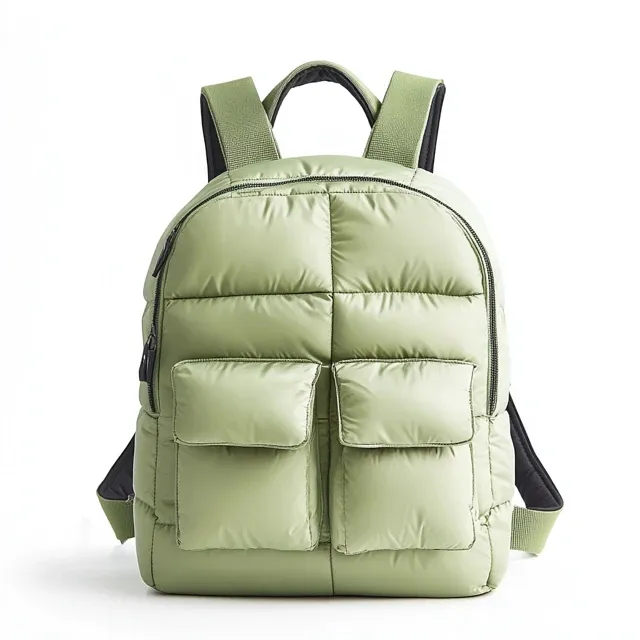

Where a Cooler Bag Gets Made, and How It Moves
The checkpoints that decide whether bulk runs
Detailed thresholds, sampling levels and test references are consolidated on tote bag specifications so one source stays current for every programme.
Any tour worth taking is a control-point checklist in disguise, not a showroom trip.
How the line handles your SKU
- Lock claim scope, price target and carton rules, and only then sample.
- Within material sourcing, lock by spec: coating/laminate spec, fabric route, trim vendors.
- Pattern work: cut templates, define tolerances, plan the stress-point build-up.
- Cutting stage: check grain direction plus marker efficiency; hold shade lots steady.
- Sewing and welding: hold the line on stitch spec, seam allowance, critical-zone reinforcement.
- At the final assembly stage, placement jigs position logos, hardware and accessories.
- Finish on AQL sampling, correct carton marking and complete documents.
Typical buyer use scenarios
- picnics
- camping
- food delivery
- beverage brands
- promotions
Key functions buyers request most
- thermal insulation
- leak-proof construction
- food-grade lining
- reinforced handles
- smooth zippers
Choosing the Best Materials for Custom Cooler Bags
| Material | Performance | Cost Range | Preferred For | Advantages & Watch-outs | Risks & How to Control |
|---|---|---|---|---|---|
| PU coated polyester (600D, as specified) | Good repellency (ISO 4920 / AATCC 22 to spec); moderate barrier (ISO 811 to spec) | US$1.2–6.0 / meter (per spec) | Value/core lines where print clarity matters | Upsides: cost controlled. Limitations: coating wear over time | Define spray rating targets and abrasion resistance benchmarks; protect high-wear zones |
| Recycled RPET (route, per the specification) | Sustainability positioning; performance depends on coating/laminate (ISO 4920 / ISO 811 per spec) | US$1.5–3.8 / meter (as specified) | Eco positioning programs and corporate procurement | Advantages: sustainability narrative. Trade-offs: supply stability and lot drift risks | Lock supplier lots, traceability and color delta; validate print and coating compatibility |
| Canvas / cotton (to spec) | Good hand-feel and print; waterproofing depends on finish (AATCC 22 per spec) | US$1.0–3.5 / meter (per spec) | Retail lifestyle lines, totes and promotions | Upsides: classic look. Trade-offs: heavier; stain risk without finish | Define shrinkage and colorfastness tests (AATCC 61 / ISO 105 per the specification); specify lamination if needed |
Triage the material decision
- Decide from the field conditions: rubbing, carrying load and water drive the choice.
- Decide whether the claim covers the whole bag or only zones like the main compartment.
- Every referenced ISO/AATCC/ASTM procedure should be listed, together with the numeric bar for approval.
- Choose route-suitable trims, from zipper type and sliders to buckles and webbing strength.
- Confirm that print and branding suit the specified fabric.
- Scuffing and creasing usually trace to transit, not to stitching defects.
Design, Sampling and Sign-Off
The specification sheet that avoids a second round
- Measurement table: critical dimensions and tolerances by zone
- Construction notes: stitch type, stitch density, seam allowance, reinforcement mapping
- Branding method: print/embroidery/patch method, backing, and acceptance examples
- Packing format spec: insert, polybag, carton count, carton marking, barcode placement
- QC checkpoints: what to check at IQC/IPQC/FQC and defect examples
- Revision control: version number, change log, and approval record
What happens first, second and third
- Write down the customer, the price tier and the role it plays.
- Confirm the claim scope and its test plan by spec.
- Artwork placement, tolerance map, measurement table and BOM: four pieces that make the tech pack.
- Fit, structure and material route get validated at prototype sampling.
- Final BOM, final packaging route: the PP stage.
- Sign-off requirement: QC checklists plus the reference sample, ahead of bulk cutting.
Getting the sample right first time
- Confirm fabric shade and coating feel with the actual supplier lot (as specified).
- Review artwork location physically on paper before the selected print process runs.
- Review the zipper path, then slider feel, then the cycle requirement per spec.
- Open, close and repack the product many times, watching for corner wear and seam creep.
- One PP sample, built with the final BOM and final packing route, is what needs approval.
- Lock all changes before bulk cutting; avoid late feature creep.
Reducing back-and-forth before bulk
We keep one authoritative version of this comparison on quality control and certification, updated whenever the reference standards move.
From first build to annual reorder
Production & Manufacturing Methods for Cooler Bags
Weigh MOQ requirements against turnaround duration and price tier using the options table.
Methods and the numbers behind them
Branding Methods and Final Build Steps
Choosing how to apply your logo
A consolidated table would duplicate itself across every article on this topic, so ours sits on custom backpack specifications and gets the updates.
Keeping returns down at the last station
Full comparison table and line-by-line spec sheet: see cost structure and minimum order quantity, which sets out tolerances, test methods and acceptance criteria used across programmes of this type.
Shipping Mode, Cost and Timing
The export sequence, gate by gate
Key Factors to Choose a Reliable Cooler Bags Manufacturer
Use this checklist before signing an OEM/ODM contract for cooler bags.
What to ask before you place volume
- Do they price the pack and flag every assumption they made?
- Are alternatives by spec offered, and BOM sourcing controlled by them?
- Do they evidence QC checkpoints, IQC to IPQC to FQC, and an AQL plan?
- Without hurting workmanship, can they allow a flexible MOQ?
- Can they give firm lead time commitments and a defined escalation path?
- Do they bring packaging and shipping know-how that fits your market?
What an audit should look at, line by line
Where the value sits
The Heat Load a Cooler Has to Defeat
Ice retention is a heat balance, not a material property. Cold is lost through three paths: conduction through the wall, radiation across any air gap and through the closure, and the latent heat consumed each time the lid is opened. A specification that only names a foam thickness addresses the first path and ignores the other two, which is why two coolers with identical wall construction can differ by hours in the field.
Conduction is governed by insulation thickness and cell structure. Closed-cell expanded polyethylene at 8 mm gives roughly 8 to 12 hours at 32 °C ambient in a soft-sided build; moving to 10 mm with a reflective inner layer is what carries the same design past 24 hours. Polyurethane foam insulates better per millimetre but is heavier and more costly, and vacuum insulated panels are only viable in hard-sided units.
Radiation is the cheapest gain available. A metallised or foil facing on the inner surface reflects radiant heat back out rather than absorbing it into the wall, and adding it to a 10 mm EPE build typically extends hold time by 15% to 25% for a very small cost and weight increase. It works best when it faces an air gap, so it belongs on the inner liner or the underside of the lid rather than bonded to both faces.
The closure is the largest remaining loss. A horizontal zipper line is a continuous thermal bridge with no insulation at all, and on a soft cooler it is routinely responsible for a third of the total heat load. A baffle or an internal flap over the chain, and a lid gasket rather than a simple fold, are low-cost measures that measurably extend the hold.
Test Protocol, Pre-Chilling and What the Claim Should Say
A retention claim is only meaningful with its conditions attached. The repeatable protocol is: state the ice-to-content ratio, precondition the unit and contents, hold at a fixed ambient, then record time to a defined endpoint. Without those four items, two suppliers can report wildly different numbers for the same bag and both be technically correct.
- Ambient 32 °C, still air, unit out of direct sun.
- Ice-to-content ratio 1:1, or state the ratio used.
- Endpoint: internal temperature above 4 °C, or ice remaining below 25% of start weight.
- Pre-chill the unit for 2 hours before loading.
- Block or cubed ice behaves differently; state which was used.
Field behaviour follows the same physics. Pre-chilling the empty unit for about 2 hours removes the heat stored in the insulation and liner and typically adds 2 to 4 hours to the hold. Block ice melts far more slowly than cubed ice because of its lower surface area, and a full unit holds longer than a part-filled one, since the air space is what carries convection. Draining melt water is debated: leaving it keeps contents at 0 °C longer, while draining it reduces the conductive path. Our production team runs the retention test on the pre-production sample and reports the ratio, ambient and endpoint with the result, so marketing copy can be written against measured data rather than an assumption. Liner materials and welding are discussed under high-capacity cooler construction.
Frequently Asked Questions (FAQs)
How much ice survives 24 hours in a soft cooler at 32 °C?
With a 10 mm closed-cell EPE wall, a reflective inner layer and a 1:1 ice-to-content ratio, expect roughly 40% to 55% of the starting ice weight to remain after 24 hours at 32 °C ambient. Without the reflective layer the same build typically drops below 25%.
What insulation thickness is needed for a 24-hour ice hold?
Plan on 10 mm of closed-cell EPE with a metallised inner facing as the threshold for 24 hours at 32 °C. An 8 mm wall generally gives 8 to 12 hours, and 20 mm of PU foam extends the same design toward 36 to 48 hours at higher cost and weight.
Does a reflective radiant barrier inside the lid really help?
Yes. A metallised foil facing reflects radiant heat rather than absorbing it into the wall and typically extends hold time by 15% to 25%. It works best facing an air gap, so place it on the inner liner or the underside of the lid rather than bonding it to both faces.
How much does the zipper line affect ice retention?
A horizontal lid zipper is a continuous thermal bridge with no insulation and typically accounts for about a third of total heat load on a soft cooler. An internal baffle or storm flap over the chain, plus a lid gasket, measurably reduces that loss at very low cost.
What ice-to-content ratio should a retention test use?
Use a 1:1 ice-to-content ratio by weight and state it on the report, since a ratio of 2:1 roughly doubles hold time. Ambient temperature, ice form and the endpoint definition must be recorded alongside it or the result is not comparable between suppliers.
How much longer does ice last if the unit is pre-chilled first?
Pre-chilling the empty unit for about 2 hours removes heat stored in the insulation and liner and typically adds 2 to 4 hours to the hold. Loading a warm unit is the most common reason a field result falls short of the laboratory figure.
Which closure type loses the least cold on a soft cooler?
A roll-top or a baffled opening with a compressible gasket loses the least, because it removes the continuous zipper bridge. Where a zipper is needed, a PU-coated reverse-coil chain under an internal flap performs substantially better than an exposed chain.
Should melt water be drained or left in the unit?
Leaving melt water keeps contents at 0 °C longer because water conducts cold to the load better than air, while draining reduces the conductive path to the outside. For a 24-hour hold, leaving the water in and minimising lid openings gives the longer result.
Next Steps and Further Guides
Internal resources
Related blog posts
- How to Add Logo Branding to Waterproof Bags Without Leaks
- How Seamless RF Welding Improves Waterproof Bag Durability
- How ODM Bag Manufacturing Speeds Up Your Time-to-Market
- How Long Does OEM Bag Manufacturing Take? Realistic Lead Times
- How to Choose Fabric Thickness for Custom Bags (420D–1680D)
- How to Audit an OEM Bag Factory (Complete Checklist)
Next step
• Lock keyword and claim scope for custom cooler bag oem
• Build a tech pack with BOM + tolerance map
• Choose materials route and validate tests (by spec)
• Plan sampling gates (lead time 6-10 working days)
• Set MOQ and cost targets (MOQ 500 pcs)
• Define QC plan and AQL checkpoints
• Confirm production + shipping timeline (35-50 days)

Let's scope your next order
Send over your requirements; a manufacturing plan and structured RFQ checklist are prepared for you.
Next guides: custom backpacks.
Ice Retention Is a Budget, Not a Feature
Four leak paths spend your cold: conduction through the walls, air exchange at the lid, radiant gain from the sun, and warm contents placed against cold ones. Add insulation last and you have paid for the wrong thing.
Conduction is the obvious path and the one that saturates first. Closed-cell polyethylene foam in the 4–8 mm range does most of the work, and beyond roughly 8 mm the lid, the zipper line and the seam become the dominant losses, so a 12 mm wall on a bag with an ungasketed zipper buys almost nothing. Rank the paths before you buy millimetres. In most cooler constructions the closure is the second-largest loss after the walls, and a roll-top with a compressed gasket outperforms a horizontal zipper on the same foam by a wide margin.
Radiant gain is the path that separates a lab result from a beach result. A dark polyester shell in direct sun can run 15–20 °C above ambient at the surface, and that heat arrives as infrared regardless of how good the foam is. A foil or metallised film layer inside the wall stack reflects a meaningful share of it back out. If the product will be sold for outdoor use, test it under a radiant load rather than in a shaded chamber, or the number on the hangtag will not match the customer's afternoon.
Ice form matters more than most briefs account for. Block ice has far less surface area per kilogram than cubes and melts correspondingly slower, so a programme that specs "2 kg block" instead of "2 kg cubes" can add hours at no material cost. Retained meltwater at 0–2 °C is thermal mass and worth keeping if the contents are cans; if the contents are sandwiches or retail packaging, add a drain shelf so the food sits above the water rather than in it.
| Build | Foam | Closure | Ice form | Hours to 5 °C core | Cost delta |
|---|---|---|---|---|---|
| Entry soft cooler | 4 mm PE | Zip lid | 2 kg cubed | 6–8 h | Baseline |
| Mid retail | 6 mm PE plus foil face | Zip lid | 2 kg cubed | 10–13 h | plus 8–12% |
| Field cooler | 8 mm PE, welded liner | Roll-top and gasket | 2 kg cubed | 16–20 h | plus 18–25% |
| 24 h claim, pre-chilled | 10 mm PE, welded liner | Roll-top and gasket | 2 kg cubed | 24–30 h | plus 25–35% |
| 24 h claim, over-spec | 8 mm PE, welded liner | Roll-top and gasket | 2 kg block | 30–38 h | plus 20–28% |
Proving the Claim Before It Reaches the Hangtag
Write the test as a protocol, not as an aspiration. Condition the chamber at 32 °C ± 2 °C and 50% RH, pre-chill the empty bag for four hours, load 2 kg of ice plus a content mass of 2 kg at ambient, and log core temperature every 15 minutes. A defensible 24-hour claim means core at or below 5 °C at the 24-hour mark with at least 25% of the ice remaining by mass. Run three units, not one, and report the worst of the three — the retail reviewer will test one bag, and it may be your worst.
Field conditions will beat the lab number and you should know by how much before you commit to print. A closed car boot in summer reaches 50–60 °C, which roughly doubles the conduction load; a lid opened every 20 minutes for a drink dumps the cold air each time. If the product is sold for picnic or jobsite use, run a second protocol with six lid openings and quote the shorter of the two figures, or qualify the claim as "up to". Buyers respect a conservative number with a method behind it far more than an optimistic one that fails a retailer's own check.
Two compliance items sit alongside performance. Any liner that contacts food or drink should be specified to FDA 21 CFR food-contact requirements and documented, and the foam, film and adhesive stack should be declared for REACH (EC 1907/2006) purposes if the bag ships into the EU. Inspection follows ISO 2859-1 at AQL 2.5 — Critical 0, Major 2.5, Minor 4.0 — with AQL 1.5 available on request, and destructive thermal testing uses units you must plan for above the 500-unit minimum per style and colour.
On timing, a welded-liner cooler with a formed base samples in 12–15 working days rather than the usual 6–10, because the electrode and the leak test both need a full round; mass production then runs 35–50 days after approval. Freight planning matters in this category because insulation is bulky: a 20GP holds about 28 CBM and a 40HQ about 68 CBM, and a cooler that ships flat-packed or nested can halve your landed cost per unit. The thermal and barrier layers are compared in more depth under custom bag materials, and if your design brief is a backpack rather than a tote, the leak paths are covered in waterproofing insulated cooler backpacks. Send the target retention figure and the intended ambient with your enquiry and we will quote against a measurable build; start on the contact page.
Numbers age badly when copied into dozens of places, so the maintained version of this grid stays on quality control and certification.
Rather than repeat the same matrix here, keep the detailed grading with the central reference on material selection — it lists the acceptance numbers and sampling levels our team works to.