How To Plan Lead Time For Custom Packing Cube
Plan how to run a oem bag manufacturing program for Global: materials, tech pack, sampling, QC and shipping. Get OEM/ODM-ready checklists and quote guidance.
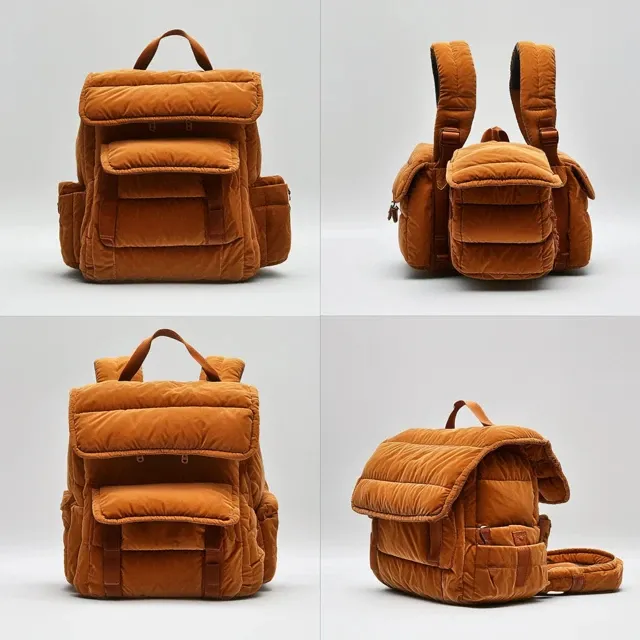

How a Custom Bag Actually Gets Made, Step by Step
What the production team controls (process, not hype)
A useful visit audits control points; it should never feel like a showroom tour.
Workflow on the production floor: step by step
- RFQ alignment: confirm claim scope, target cost, and packout rules before sampling.
- By spec, material sourcing locks the coating/laminate spec, fabric route and trim vendors.
- Pattern & measurement control: create templates, tolerance map, and reinforcement plan.
- Keep shade lots in order; verify marker efficiency and grain direction when cutting.
- Critical-zone reinforcement, then seam allowance and stitch spec, enforced at sewing or welding.
- Use placement jigs during final assembly to install hardware, logos and accessories.
- Inspection & packing: apply AQL sampling, carton marking, and shipping documents.
Typical buyer use scenarios
- brand launches
- wholesale programs
- corporate procurement
- retail distribution
Key functions buyers request most
- custom sizing
- durable construction
- logo branding options
- retail-ready packaging
- consistent QC
Choosing the Best Materials for Custom Bags
| Material | Performance | Cost Range | Top pick For | Upsides & Trade-offs | Risks & How to Control |
|---|---|---|---|---|---|
| PU coated polyester (600D, as specified) | Good repellency (ISO 4920 / AATCC 22 as specified); moderate barrier (ISO 811 per the specification) | US$1.2–6.0 / meter (per spec) | Value/core lines where print clarity matters | Merits: cost controlled. Trade-offs: coating wear over time | Define spray rating targets and scuff resistance benchmarks; protect high-wear zones |
| Recycled RPET (route, as specified) | Sustainability positioning; performance depends on coating/laminate (ISO 4920 / ISO 811 to spec) | US$1.5–3.8 / meter (per spec) | Eco positioning programs and corporate procurement | Advantages: sustainability narrative. Trade-offs: supply stability and lot drift risks | Lock supplier lots, traceability and color delta; validate print and coating compatibility |
| Canvas / cotton (per spec) | Good hand-feel and print; waterproofing depends on finish (AATCC 22 as specified) | US$1.0–3.5 / meter (to spec) | Retail lifestyle lines, totes and promotions | Upsides: classic look. Trade-offs: heavier; stain risk without finish | Define shrinkage and colorfastness tests (AATCC 61 / ISO 105 as specified); specify lamination if needed |
How to shortlist materials fast
- Start from the scenario: abrasion zones, load points, and water exposure define the route.
- Main compartment only is one option; decide if the claim spans the whole bag or zones.
- Cite the ISO, AATCC or ASTM references in your pack and state what passes.
- Pick trims that suit the chosen route: zipper type, sliders, buckles and webbing strength.
- Print and branding compatibility is confirmed on the real fabric.
- Evaluate transit rubbing risk, because visible creases are freight damage far more often than stitching faults.
Custom Design & Development Process
What to include in a buyer-ready tech pack
For the complete spec grid — including the acceptance criteria and lot sizes — read tote bag specifications.
OEM/ODM development flow (practical)
- Define target user, price band and positioning.
- Lock claim scope, then confirm the test plan to spec.
- To build it, add the BOM, then the measurement table, then the tolerance map, then artwork placement.
- Prototype sampling validates fit, structure and the material route.
- By PP, BOM and packaging route are final.
- First, sign the QC checklists and golden sample; only then cut bulk.
Sampling checklist (avoid costly mistakes)
What shortens the sampling loop
Repeatability beats one-off samples
Success example (anonymized): a value program targeting Global reduced rework by freezing a single tech pack, running one pre-production sample using the final BOM, and aligning QC checkpoints before cutting. Reproducible builds remove the annual need to qualify someone new when reordering.
Production & Manufacturing Methods for Bags
Ordering choices get clearer once you compare lead time, MOQ requirements and cost bands in the table.
Manufacturing methods you should specify (by spec)
- Foam thickness and density for structure (per the specification)
- Stitch density and thread type for load zones (per spec)
- Trims and hardware installation: jigs, torque control, and anti-loosening measures (as specified)
Custom Branding, Logo & Final Assembly
Logo methods we can support (select 1–2 per SKU)
Final assembly controls that prevent returns
Shipping, Logistics & Order Fulfillment
Logistics execution gates
- Verify it takes drops and stacking damage as specified.
- Warehouse scanning needs labeling, barcodes and carton counts locked.
- Factor in extra time for the inspection stage and export documents.
Key Factors to Choose a Reliable Bags Manufacturer
Signing an OEM/ODM bags agreement? Clear this checklist beforehand.
Manufacturer selection checklist
- Can they quote from a tech pack and explain assumptions?
- Can they source the BOM and also suggest alternatives that meet spec?
- Is there an AQL plan, and do QC checkpoints cover IQC through IPQC into FQC?
- Can workmanship survive a flexible MOQ arrangement?
- Can you expect firm lead times and a clear escalation procedure?
- Does their track record include packaging and shipping into your market?
Site audit checklist (what to check in person)
Capability summary
Rather than restate a long matrix, this section points to handbag specifications, where each row carries its method and acceptance value.
Where the Weeks Go in a Packing Cube Programme
A packing cube looks like four panels, one zipper and a strip of mesh, but a set multiplies that simplicity. Typical nesting dimensions run from roughly 25 x 18 x 8 cm for the small size, through 33 x 25 x 8 cm for the medium, and up to 40 x 30 x 10 cm for the large, and every size needs its own marker, its own binding length and its own demonstration of how it stacks. Grading the pattern is quick; confirming that three sizes nest inside a carry-on without dead space is the review step most first-time buyers underestimate.
Fabric choice sets the earliest gate. Stocked 210D ripstop polyester or 300D recycled polyester carrying GRS-certified yarn leaves the mill immediately, while a custom Pantone shade triggers lab dips and a dye-lot booking that must finish before cutting begins. Mesh panels, binding tape, #3 nylon coil zippers and webbing pull tabs behave the same way: standard specifications move at once, branded versions do not. A moulded puller or printed webbing enters tooling at USD 300-2,500, and the complete package is quoted within 24-48 hours of receiving a finished tech pack.
Sampling takes 6-10 working days for a plain zippered cube and 12-15 working days once an internal divider, a compression strap or a dual slider enters the design. Sample fees sit at USD 50-150 and are credited against the bulk order. Buyers who approve the first submission reach production sooner than those adjusting panel dimensions, because a dimensional change resets the marker, the cutting plan and the unit cost rather than a single line item.
| Stage | Duration | Gated by |
|---|---|---|
| Quotation | 24-48 hours | Tech pack, sizes, target quantity |
| Sampling | 6-10 or 12-15 working days | Panel count, lining structure, custom trims |
| Bulk production | 35-50 days | Fabric availability, set quantity, line booking |
| Transit | 25-35 days sea, 5-8 days air, 3-5 days courier | Mode selected and carton cube |
Bulk production runs 35-50 days, and the set structure decides where you land inside that window. An order for 5,000 three-piece sets is really 15,000 finished units, so the work is planned across dedicated time on the 7 lines operating inside the 4,950 m² SGS-verified production base, staffed by 137 operators running 149 machines against monthly capacity of 200,000 pieces. Batching matters more here than for single-body products, because a slip affects the retail bundle rather than one SKU.
Inspection follows AQL 2.5 under ISO 2859-1 at general inspection level II with Critical 0, Major 2.5 and Minor 4.0. For cubes, recurring defects are zipper tape misalignment around curved corners, mesh snagging and open binding ends, so each should sit in a written defect classification agreed before bulk rather than being debated at the dock. Seam behaviour is verified with ASTM D5034 grab testing, because cubes are stuffed hard and the side seam takes repeated load at exactly its weakest point.
Packing cubes ship flat, so cube per unit is small: a 40HQ container at about 68 CBM absorbs a substantial set order before freight becomes the constraint, while a 20GP at roughly 28 CBM suits a first run near MOQ 500. Plan backwards from your warehouse date by subtracting 25-35 days sea transit, 35-50 days production, the sampling window and the quotation cycle. Cross-check that calendar against compressing bag schedules without added risk, and compare trim choices inside our travel bag programmes.
Payment structure also belongs on the calendar. Standard terms are T/T 30/70 against FOB Xiamen, with EXW, CIF and DDP negotiable per shipment, and the 70 percent balance falls due after inspection approval and before container release, so releasing drawings late simply moves the bottleneck into documentation rather than removing it.
Frequently Asked Questions (FAQs)
How long does sampling take for a custom packing cube set with three nesting sizes?
Straightforward sets take 6-10 working days, while internal dividers, compression straps or dual sliders extend sampling to 12-15 working days. Sample fees run USD 50-150 and are credited once you release the bulk order, so budget one full approval round per size before reserving line capacity.
Which fabric and zipper choices keep a packing cube programme on the fastest path?
Stocked 210D ripstop or 300D recycled polyester with GRS-certified yarn avoids lab dips and dye-lot booking, and it pairs well with standard #3 nylon coil zippers and stock mesh. A custom-dyed shade adds material preparation before cutting starts, which pushes the whole set weeks later.
How many days should we reserve for bulk production of 5,000 packing cube sets?
Reserve 35-50 days. A 5,000-piece order of three-piece sets equals 15,000 finished units, so multi-line scheduling is normal. Then add 25-35 days by sea, 5-8 days by air or 3-5 days by courier, and book freight space early because slots tighten well before peak season.
Does a moulded zipper puller add both tooling cost and calendar time?
Moulded pullers and printed webbing fall in the USD 300-2,500 tooling band and require toolmaking before the first sample leaves. Stock webbing and standard pull tabs avoid that step completely. Where branding on hardware matters, approve tooling drawings during the 24-48 hour quotation window instead of after sampling.
What inspection criteria matter most for packing cubes built with mesh panels?
Final random inspection runs at AQL 2.5 under ISO 2859-1, general inspection level II, with Critical 0, Major 2.5 and Minor 4.0. Write mesh snagging, open binding ends and zipper tape misalignment into the defect classification beforehand, and confirm side seam behaviour with ASTM D5034 grab results.
How do seasonal peaks change the delivery calendar for nesting cube sets?
Peak months compress because mills and carriers tighten together. Reserve capacity before the busy window and hold material earlier than usual, since Chinese New Year shutdown and pre-holiday cargo pressure typically shift schedules by several weeks. Build that in as a 3-4 week contingency rather than a few days.
Should we choose sea freight or air freight for a packing cube reorder?
Sea freight takes 25-35 days and suits planned replenishment, while air takes 5-8 days and courier 3-5 days for urgent top-ups. Because cubes pack flat, 40HQ capacity of about 68 CBM moves large unit volumes cheaply, so air rarely pays unless the launch date itself is at risk.
What payment structure and trade term suits a first packing cube shipment?
Agree payment as T/T 30/70 with shipment booked on FOB Xiamen, with EXW, CIF and DDP available by arrangement. The balance clears after inspection approval and before container departure, so align internal sign-off dates with that checkpoint to avoid demurrage and storage charges at origin.
Related Blog Posts & Useful Resources
Internal resources
- Request a quote (RFQ)
- Factory capabilities & process
- Download QC checklist
- Retail packing specification guide
Related blog posts
- Cooler Backpacks With Multiple Compartments: Design Tips
- Container Loading & Export Logistics for Bag Orders
- Common OEM Bag Defects & How QC Prevents Them
- Common Bag Defects & How QC Catches Them Early
- Cooler Bag MOQs: Small-Batch vs. Mass Production
- Cooler Bag Materials: PEVA, EPE Foam & Aluminum Foil Explained
Next step
• Lock keyword and claim scope for oem bag manufacturing
• Build a tech pack with BOM + tolerance map
• Choose materials route and validate tests (by spec)
• Plan sampling gates (lead time 6-10 working days)
• Set MOQ and cost targets (MOQ 500 pcs)
• Define QC plan and AQL checkpoints
• Confirm production + shipping timeline (35-50 days)

Want help with your next bag project?
Your requirements go in; a structured RFQ checklist and manufacturing plan come out.
Related programme guides: lead time planning.
A Packing Cube Is a Set, and Sets Change the Whole Calculation
Nobody buys one packing cube. They buy a set of three or four nested sizes, which means the unit of planning is the set, not the bag — and that reframes MOQ, sampling, packing and freight.
Treat the set as one style with several sizes. Our minimum of 500 units per style and colour is normally applied per style, and a four-piece set is best planned as 500 sets rather than 500 pieces of each size, which would be a 2,000-unit commitment. Confirm how the quantity is counted before quoting, because the difference is a factor of four on the purchase order. Where a set shares one fabric and one trim package across all sizes, the material procurement also consolidates, which is the main cost advantage of designing a set rather than four unrelated products.
Size progression is the design decision with the most commercial weight. A common four-piece structure runs small, medium, large and a laundry or shoe bag, with dimensions that nest inside each other and inside a stated suitcase size. Nesting matters twice: once for the customer, who wants the set to pack down when empty, and once for freight, because nested sets ship far more economically than individually boxed ones. Publish the external dimensions of each piece and the suitcase sizes the set is designed to fit, since that is the buying question in this category.
Material and closure are where the cost sits. A lightweight ripstop or 210D–420D polyester shell is standard; a mesh panel on the top or front is what customers look for, and mesh specification matters because a cheap mesh snags and a coated mesh does not breathe. The zipper is the dominant trim cost and the dominant failure point — a #3 or #5 nylon coil with a branded or equivalent slider, run around three sides with a garaged pull. Sample the zipper on the largest size, because the longest run is the one that binds.
| Configuration | Units per set | Order quantity | Packing route | Freight efficiency |
|---|---|---|---|---|
| Three-piece starter | 3 | 500 sets | Nested in one polybag | High |
| Four-piece with laundry bag | 4 | 500 sets | Nested plus printed band | High |
| Four-piece, retail boxed | 4 | 500 sets | Individual cartons | Moderate |
| Single size, bulk | 1 | 500 pieces | Bulk packed | Very high |
| Six-piece premium set | 6 | 300 sets, repeat | Nested in printed box | Moderate |
Where the Time Goes, and How to Take It Back
Mesh and zipper procurement are the two items that can hold a set programme, and both are resolved by specifying them at enquiry stage rather than at sample approval. A stocked mesh in black or white and a stocked coil zipper are available quickly; a specific mesh colour, a specific aperture or a branded slider adds a supplier calendar. Because every size in the set uses the same trim, one decision covers the whole programme, which is why the set is easier to schedule than four separate products — provided the decision is made once.
Sampling a set needs its own plan. Sample every size, not just the medium, because a pattern that works at 30 cm can behave differently at 45 cm in the same fabric, particularly where a binding or a piped edge is involved. Sampling runs 6–10 working days for a conventional construction and 12–15 where a moulded or structured piece is included; mass production then runs 35–50 days after approval. Printing or labelling each size adds a setup per size, so plan artwork as one system with a size mark rather than four separate artworks.
Quality gates should focus on the zipper and the seam, because those are what customers complain about. Specify a cycle test on the closure, a pull test per ISO 13934-1 on the binding and the zipper tape seam, and a dimensional check on each size against the nesting requirement — a large piece that will not accept the medium is a set that does not work. Inspection follows ISO 2859-1 at AQL 2.5 with Critical 0, Major 2.5 and Minor 4.0, and sampling should cover all sizes rather than one. Garment covers in the same programme are covered in garment bag lead time planning, the wider travel category sits at custom travel bags, and the commercial mechanics are on our cost and MOQ page.
Numbers age badly when copied into dozens of places, so the maintained version of this grid stays on quality control and certification.
Rather than repeat the same matrix here, keep the detailed grading with the central reference on material selection — it lists the acceptance numbers and sampling levels our team works to.