How to Design a Commercial-Grade Insulated Cooler Bag
Learn how to run a custom cooler bag oem program for Global: materials, tech pack, sampling, QC and shipping. Get OEM/ODM-ready checklists and quote guidance.
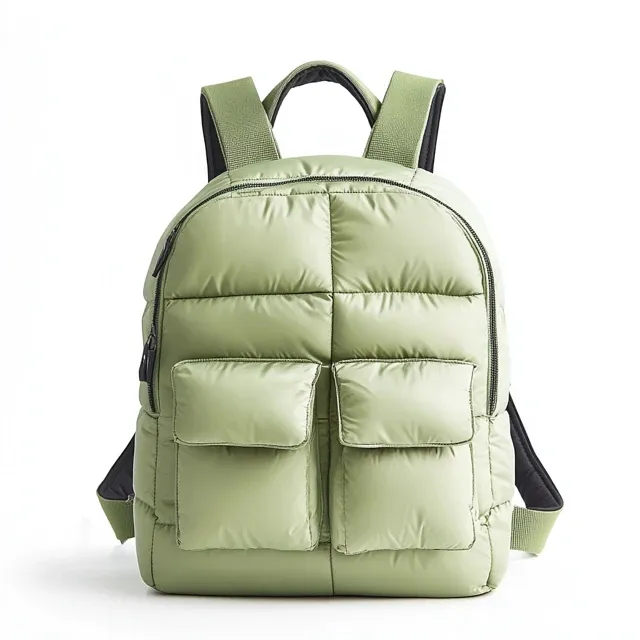

Inside the Build: How a Cooler Bag Goes From Pack to Carton
Control points the build is measured against
Any tour worth taking is a control-point checklist in disguise, not a showroom trip.
Stage-by-stage: how the order is worked
- Brief alignment: settle the claim scope, cost target and packing rules before any sample.
- Within material sourcing, lock by spec: coating/laminate spec, fabric route, trim vendors.
- Pattern control: build templates, set a tolerance map, plan the reinforcement.
- Cutting stage: check grain direction plus marker efficiency; hold shade lots steady.
- Sewing and welding: hold the line on stitch spec, seam allowance, critical-zone reinforcement.
- At the final assembly stage, placement jigs position logos, hardware and accessories.
- Close with inspection: AQL sampling, carton marks and the export paperwork.
Typical buyer use scenarios
- picnics
- camping
- food delivery
- beverage brands
- promotions
Key functions buyers request most
- thermal insulation
- leak-proof construction
- food-grade lining
- reinforced handles
- smooth zippers
Choosing the Best Materials for Custom Cooler Bags
| Material | Performance | Cost Range | Top pick For | Upsides & Trade-offs | Risks & How to Control |
|---|---|---|---|---|---|
| 600D polyester | Even wear life (ISO 13934 tensile per the specification); good abrasion (ISO 12947 to spec); stable for branding | US$1.6–5.5 / meter (as specified) | Running styles with predictable yield | Advantages: versatile. Limitations: performance depends on coating/finish | Lock coating spec, color tolerance and print compatibility; confirm reinforcement mapping |
| PU coated polyester (600D, per spec) | Good repellency (ISO 4920 / AATCC 22 per spec); moderate barrier (ISO 811 as specified) | US$1.2–6.0 / meter (as specified) | Value/core lines where print clarity matters | Upsides: cost controlled. Limitations: coating wear over time | Define spray rating targets and abrasion resistance benchmarks; protect high-wear zones |
| Canvas / cotton (per the specification) | Good hand-feel and print; waterproofing depends on finish (AATCC 22 per the specification) | US$1.0–3.5 / meter (to spec) | Retail lifestyle lines, totes and promotions | Merits: classic look. Limitations: heavier; stain risk without finish | Define shrinkage and colorfastness tests (AATCC 61 / ISO 105 as specified); specify lamination if needed |
Narrowing the material route quickly
- Work back from use: where it rubs, where it carries load, and how wet it gets set the route.
- Decide whether the claim covers the whole bag or only zones like the main compartment.
- Every referenced ISO/AATCC/ASTM procedure should be listed, together with the numeric bar for approval.
- Choose route-suitable trims, from zipper type and sliders to buckles and webbing strength.
- Confirm that print and branding suit the specified fabric.
- Scuffing and creasing usually trace to transit, not to stitching defects.
Design and Development: How the Build Is Specified
Tech pack contents that get a fast quote
The development sequence, as it really runs
- Pin down who buys it, at what retail band, and where it sits.
- Confirm the claim scope and its test plan by spec.
- Artwork placement, tolerance map, measurement table and BOM: four pieces that make the tech pack.
- Fit, structure and material route get validated at prototype sampling.
- Final BOM, final packaging route: the PP stage.
- Sign-off requirement: QC checklists plus the reference sample, ahead of bulk cutting.
Sample-stage checks that prevent expensive rework
- Confirm fabric shade and coating feel with the actual supplier lot (per spec).
- Review the zipper path, then slider feel, then the cycle requirement per spec.
- Three things need checking per lane: rub marks, folding lines, and defence against humidity.
- One PP sample, built with the final BOM and final packing route, is what needs approval.
- Lock all changes before bulk cutting; avoid late feature creep.
Fewer sample rounds: what actually helps
Why a repeatable build outperforms a hero sample
Production & Manufacturing Methods for Cooler Bags
Weigh MOQ requirements against turnaround duration and price tier using the options table.
Build methods worth naming in the pack
Numbers age badly when copied into dozens of places, so the maintained version of this grid stays on handbag specifications.
Branding and Final Assembly
Decoration routes available (pick one or two per SKU)
Closing-stage checks that cut return rates
Freight, Documents and Delivery
Checkpoints on the shipping leg
Key Factors to Choose a Reliable Cooler Bags Manufacturer
Use this checklist before signing an OEM/ODM contract for cooler bags.
Partner selection checklist
- Will they price off your pack and show what they assumed?
- Are alternatives by spec offered, and BOM sourcing controlled by them?
- Do they evidence QC checkpoints, IQC to IPQC to FQC, and an AQL plan?
- Without hurting workmanship, can they allow a flexible MOQ?
- Can they give firm lead time commitments and a defined escalation path?
- Do they bring packaging and shipping know-how that fits your market?
What to verify when you walk the production site
Where this build route is strongest
Numbers age badly when copied into dozens of places, so the maintained version of this grid stays on importing from China.
Insulation Thickness, Liner Integrity, and Verified Retention Testing
A cooler bag that is used commercially every day fails differently from one that is used for a picnic twice each summer. The daily-use product is loaded and unloaded dozens of times per week, sits in a warm vehicle, and is cleaned with sanitiser. Designing for that duty cycle starts with the insulation package. Three constructions dominate: EPE foam of 5 to 8 mm laminated between shell and liner, cross-linked PE foam where crush recovery matters, and PU foam injected into a welded cavity for premium builds. Thickness alone is misleading, so specify density too; EPE below 25 kg per cubic metre compresses permanently under stacked loads and loses performance after roughly one season.
The liner is the second decision and it is also a compliance boundary. PEVA and TPU films are the two credible choices. PEVA is cheaper and phthalate-free but creases and eventually cracks at fold lines; TPU welds cleanly, resists punctures from ice and bottle caps, and survives folding far longer, at roughly 25 to 35 percent higher film cost. Because both contact food or beverage packaging, require declarations and migration evidence covering FDA 21 CFR for United States use, EU 10/2011 plastics rules for Europe, and LFGB where German retail is involved. Reflective surfaces matter as well: an aluminised PET layer faces inward to reflect radiant heat, and it must sit inside the foam rather than outside it, where it would absorb instead.
Retention claims need a written protocol, otherwise marketing and the test house disagree. Record the following before sampling:
- Ambient soak temperature, commonly 32 degrees Celsius, and soak duration before the run
- Ice-to-content ratio by weight, usually 1:1 or 2:1, with the load described in cans or bottles
- Logging interval of 15 minutes from two data loggers placed top and bottom
- Cut-off definition, such as time until internal temperature exceeds 8 degrees Celsius
Capacity, access, and cleaning also determine whether operators keep using the product. Wide-mouth U zips and roll tops behave differently under daily wiping, and welded interiors let staff rinse and dry the bag without leaving trapped water in seam allowances. Carry geometry should follow real loads: 12-can, 24-can, and 36-can blocks need different footprints and strap anchorage. Finally specify how the base protects against wet ground, since standing water wicks into the shell and ruins the insulation over time. Costing is returned by QUANZHOU JUNYUAN BAGS within 24 to 48 hours; samples take 6 to 10 working days and 12 to 15 with RF-welded liners, and bulk production runs 35 to 50 days at MOQ 500 per colourway.
Carry duty also needs numbers rather than impressions. A filled 24-can unit often exceeds 12 kg, so strap anchorage and base reinforcement should be specified against that figure, with webbing carried past its stitch zone into the body panel. If users must lift the unit one-handed, add a grab handle reinforced with a hidden webbing loop rather than relying on the binding alone. Comparable reinforcement logic appears in our custom travel bags notes.
Frequently Asked Questions (FAQs)
How thick should the insulation be for a daily-use delivery cooler?
Specify 5 to 8 mm EPE with density above 25 kg per cubic metre, or cross-linked PE where crush recovery matters. Thickness alone is not enough; low-density foam compresses under stacked loads and loses most performance within about one season.
Should the liner be PEVA or TPU for a commercial cooler bag?
TPU costs roughly 25 to 35 percent more but resists punctures and folding cracks and welds cleanly. PEVA is acceptable for light duty and is phthalate-free by nature, though it tends to crease permanently where the bag folds for storage.
Which food-contact regulations apply to cooler bag linings?
United States programmes need FDA 21 CFR compliance evidence, European Union shipments require EU 10/2011 plastics documentation, and German retail generally asks for LFGB testing. Keep updated declarations per shipment, since many buyers audit within 12 months. Renew those declarations whenever the film supplier changes.
How is an ice retention claim measured without disputes later?
Fix the protocol first: soak at 32 degrees Celsius, declare the ice-to-content ratio such as 1:1, log every 15 minutes from two points, and define the cut-off as internal temperature exceeding 8 degrees Celsius. Then quote hours only under those conditions.
Where should the reflective layer sit inside the insulation package?
The aluminised PET layer belongs on the inner face, between liner and foam, so it reflects radiant heat back toward contents. Placed outside the foam it absorbs heat instead, which is why some thick designs still underperform in direct sun.
How do we stop the cooler developing odours in daily service?
Use welded rather than sewn interiors so water cannot enter seam allowances, add a drain grommet on units above 24-can size, and choose films that tolerate sanitiser. Specifying a wipe-down procedure in the care label also reduces complaints. Units above 24-can capacity benefit most from a 12 mm drain grommet.
What sampling and tooling cost should we budget for a welded build?
RF welding plates and cutting dies fall in the USD 300 to 2,500 range, with a proto fee of USD 50 to 150 refunded on bulk order. Allow 12 to 15 working days for welded proto construction versus 6 to 10 days for sewn.
What are the order and shipping parameters for a first commercial run?
MOQ is 500 pieces per colourway with bulk production of 35 to 50 days and inspection to AQL 2.5 under ISO 2859-1. Pricing is FOB Xiamen on T/T 30/70 terms, sea freight taking 25 to 35 days for a 20GP container of approximately 28 CBM.
Further Reading and Internal Resources
Internal resources
Related blog posts
- How To Plan Lead Time For Custom Packing Cube
- How To Plan Lead Time For Custom Plush Products
- How To Plan Lead Time For Custom Garment Bag
- How To Plan Lead Time For Custom Leather Goods
- How To Plan Lead Time For Custom Cosmetic Bag
- How To Plan Lead Time For Custom Cotton Bag
Next step
• Lock keyword and claim scope for custom cooler bag oem
• Build a tech pack with BOM + tolerance map
• Choose materials route and validate tests (by spec)
• Plan sampling gates (lead time 6-10 working days)
• Set MOQ and cost targets (MOQ 500 pcs)
• Define QC plan and AQL checkpoints
• Confirm production + shipping timeline (35-50 days)

Ready to move on your next build?
Send over your requirements; a manufacturing plan and structured RFQ checklist are prepared for you.
Next guides: custom backpacks.
Commercial Duty Is a Different Product From Retail Duty
A bag sold to a catering operation or a delivery fleet is opened forty times a day, hosed down at the end of a shift, and judged on whether it still closes properly in month six. Weekend-use construction fails on all three counts.
Frequency of opening is the first design input. Every lid cycle dumps the cold air mass and replaces it with ambient air, so a commercial cooler is really a closure problem wearing an insulation problem. A horizontal zipper across the top is the fastest route in and out and the worst performer; a roll-top with a compressed gasket is slower per access and dramatically better at holding temperature between accesses. The rule we apply: if the contents are picked more than about ten times an hour, specify a zipper and buy your retention back with foam thickness; below that, a roll-top or a gasketed flap pays for itself.
The second input is cleaning, and it dictates liner chemistry. Commercial users wipe with detergent, sometimes with a sanitiser, and occasionally with something abrasive. A welded TPU liner withstands that; a printed PVC liner chalks and cracks at the fold lines, and a laminated fabric liner with a sewn corner lets cleaning fluid into the foam where it stays wet and grows odour. Specify the liner as a welded, seamless tray with corners radiused rather than mitred, and require a documented food-contact declaration for the film against FDA 21 CFR requirements.
Structural load is the third input and the one least visible in a spec sheet. Commercial bags are dropped, stacked, and carried by a strap while loaded well past the retail-fill assumption. Insulation foam contributes almost nothing to load bearing, so the shell fabric, the base panel and the strap attachment carry everything. Reinforce the base with a bonded board or an injection-moulded foot, bring the webbing down the body rather than tacking it to the shell at one point, and test the loaded drop before the thermal test, because a bag that splits at the base will never get far enough to be judged on ice retention.
| Element | Retail-grade choice | Commercial-grade choice | Failure that appears if you choose retail |
|---|---|---|---|
| Lid closure | Horizontal #8 zipper | Roll-top with gasket, or zipper plus storm flap | Temperature loss between picks, then warm contents |
| Liner | Sewn laminated fabric | RF-welded TPU tray, radiused corners | Cleaning fluid into foam, odour, delamination |
| Insulation | 4 mm PE foam | 8 mm PE foam plus foil face | Short hold time once the lid cycles |
| Base | Fabric with binding | Bonded board plus moulded feet | Base split on loaded drop, foam saturation |
| Strap attachment | Tacked at two points | Webbing run to base, bar-tacked | Strap tear-out under constant load |
| Hardware | Standard zinc alloy | Stainless or coated, ASTM B117 tested | Corrosion from sanitiser and salt |
Acceptance Criteria for a Bag That Works for a Living
Write four tests into the specification and quote the pass number for each. A loaded drop test — fill to rated capacity with a representative mass and drop from a stated height onto a hard surface on each of the six faces and the base corner — with no split at any seam. A load test on the strap at a multiple of rated capacity held for a stated duration. A thermal run at a declared ambient, with the chamber figure and the field figure reported separately. And a cleanability cycle: a defined number of wipe-downs with a stated detergent after which the liner shows no cracking, no delamination and no odour retention.
Sampling follows ISO 2859-1 at AQL 2.5 with Critical 0, Major 2.5 and Minor 4.0, and destructive testing consumes units you must plan for above the 500-unit minimum per style and colour. Material declarations matter as much as the physical tests in this category: the liner needs its food-contact documentation, and the foam, film and adhesive stack should be declared for REACH (EC 1907/2006) if the bag enters the EU. Cleaning chemistry also interacts with UV and with print durability, so if the bag lives outdoors or in a vehicle, read the exposure guidance in making cooler bags UV-resistant before you finalise the shell. The barrier and thermal layers are compared in detail under custom bag materials, and the inspection and certification requirements sit on our quality and certification page.
Numbers age badly when copied into dozens of places, so the maintained version of this grid stays on quality control and certification.
Rather than repeat the same matrix here, keep the detailed grading with the central reference on material selection — it lists the acceptance numbers and sampling levels our team works to.