How To Choose Materials For Custom Waterproof Backpack
Understand how to run a custom waterproof backpack oem program for Global: materials, tech pack, sampling, QC and shipping. Get OEM/ODM-ready checklists and
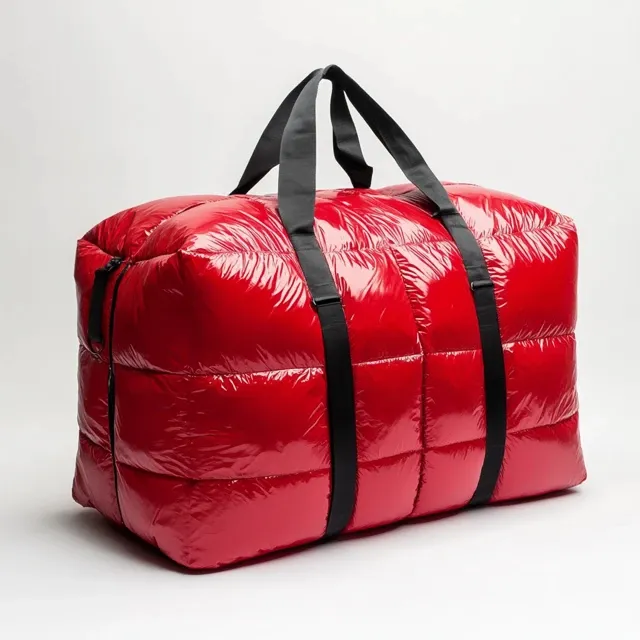

The Production Path a Waterproof Backpack Follows
A professional waterproof backpack program is a controlled workflow: clarify requirements, lock the build route, validate with measurable gates, then scale production with repeatable QC.
Primary SEO focus: custom waterproof backpack oem. Secondary: waterproof backpack manufacturer, private label bags, custom logo bags, OEM ODM bags.
Process controls behind a repeatable build
Full comparison table and line-by-line spec sheet: see cost structure and minimum order quantity, which sets out tolerances, test methods and acceptance criteria used across programmes of this type.
Any tour worth taking is a control-point checklist in disguise, not a showroom trip.
Each stage, in the order it happens
- Get the brief straight first: claim, cost target and packing spec, then cut samples.
- Within material sourcing, lock by spec: coating/laminate spec, fabric route, trim vendors.
- Templates, tolerance bands and a reinforcement plan come next.
- Cutting stage: check grain direction plus marker efficiency; hold shade lots steady.
- Sewing and welding: hold the line on stitch spec, seam allowance, critical-zone reinforcement.
- At the final assembly stage, placement jigs position logos, hardware and accessories.
- Inspect to AQL, mark the cartons and raise the shipping documents.
Typical buyer use scenarios
- outdoor sports
- fishing
- boating
- camping
- commuting
Key functions buyers request most
- RF welded seams
- roll-top closure
- airtight zipper option
- lash points
- abrasion reinforcement
Choosing the Best Materials for Custom Waterproof Backpacks
| Material | Performance | Cost Range | Preferred For | Advantages & Limitations | Risks & How to Control |
|---|---|---|---|---|---|
| PVC tarpaulin (to spec) | Higher barrier and wipe-clean surface (ISO 811 / AATCC 127 to spec); strong abrasion resistance tolerance (ISO 12947 per spec) | US$1.2–6.0 / meter (as specified) | Rugged utility lines and marine use | Merits: durable surface. Trade-offs: heavier; sustainability concerns | Define fold/packout rules to avoid scuffs; control weight targets |
| Recycled RPET (route, as specified) | Sustainability positioning; performance depends on coating/laminate (ISO 4920 / ISO 811 per spec) | US$1.5–3.8 / meter (as specified) | Eco positioning programs and corporate procurement | Advantages: sustainability narrative. Watch-outs: supply stability and lot drift risks | Lock supplier lots, traceability and color delta; validate print and coating compatibility |
| Canvas / cotton (as specified) | Good hand-feel and print; waterproofing depends on finish (AATCC 22 per spec) | US$1.0–3.5 / meter (per the specification) | Retail lifestyle lines, totes and promotions | Upsides: classic look. Watch-outs: heavier; stain risk without finish | Define shrinkage and colorfastness tests (AATCC 61 / ISO 105 per spec); specify lamination if needed |
Getting to two or three candidate fabrics
- Let the use case lead: abrasion, load paths and moisture pick the fabric for you.
- Decide whether the claim covers the whole bag or only zones like the main compartment.
- Every referenced ISO/AATCC/ASTM procedure should be listed, together with the numeric bar for approval.
- Choose route-suitable trims, from zipper type and sliders to buckles and webbing strength.
- Confirm that print and branding suit the specified fabric.
- Scuffing and creasing usually trace to transit, not to stitching defects.
Development Sequence for a Custom Build
Fields your tech pack cannot skip
Development steps in working order
- Set the buyer, the price bracket and the slot it fills.
- Confirm the claim scope and its test plan by spec.
- Artwork placement, tolerance map, measurement table and BOM: four pieces that make the tech pack.
- Fit, structure and material route get validated at prototype sampling.
- Final BOM, final packaging route: the PP stage.
- Sign-off requirement: QC checklists plus the reference sample, ahead of bulk cutting.
Sampling pitfalls and how to close them
- Confirm fabric shade and coating feel with the actual supplier lot (per spec).
- Review artwork location physically on paper before the selected print process runs.
- Load-test every anchor point: webbing, grab handles and D-ring areas, to specification.
- Review the zipper path, then slider feel, then the cycle requirement per spec.
- Open, close and repack the product many times, watching for corner wear and seam creep.
- Three things need checking per lane: rub marks, folding lines, and defence against humidity.
- Lock all changes before bulk cutting; avoid late feature creep.
Where sample rounds get saved
A programme that reorders cleanly
Production & Manufacturing Methods for Waterproof Backpacks
Weigh MOQ requirements against turnaround duration and price tier using the options table.
Which method, and why it matters
Detailed thresholds, sampling levels and test references are consolidated on own-brand programmes so one source stays current for every programme.
How the Mark Goes On, and What Closes the Bag
Branding options and where each fits
Assembly checks before the carton closes
Logistics and Fulfilment
Freight milestones to hold
Key Factors to Choose a Reliable Waterproof Backpacks Manufacturer
Use this checklist before signing an OEM/ODM contract for waterproof backpacks.
Due diligence, item by item
- Can they work from a pack and tell you what they inferred?
- Are alternatives by spec offered, and BOM sourcing controlled by them?
- Do they evidence QC checkpoints, IQC to IPQC to FQC, and an AQL plan?
- Without hurting workmanship, can they allow a flexible MOQ?
- Can they give firm lead time commitments and a defined escalation path?
- Do they bring packaging and shipping know-how that fits your market?
Audit points to tick before you commit volume
Strengths worth weighing
Coatings, Seam Joining, and Verification Testing for Water Resistance
Water protection in a backpack is created by three decisions working together: the coating or laminate on the shell, the way panels are joined, and the closure type. Treating any one of them in isolation produces a product that leaks. Start with the shell. A standard 420D nylon with a PU coating rated at 3,000 mm hydrostatic head handles urban rain but will wet through when a loaded pack presses against a wet surface, because pressure drives water through the coating. TPU lamination performs better under sustained load and resists hydrolysis, which matters if the bag is stored damp. Specify film thickness in millimetres as well, since moving from 0.35 mm to 0.5 mm changes stiffness, unit weight, and cost noticeably. PVC tarpaulin at 500D or 1000D gives the strongest barrier of the three and is the usual choice for river and paddle-sport use, at the cost of roughly 30 to 40 percent more shell weight and a distinct odour if low-grade resin is used.
Coating numbers only mean something with a test method attached. Require hydrostatic results to ISO 811 or AATCC 127, where the fabric is held under increasing water pressure until three penetration points appear, and require the value after flexing rather than only on pristine cloth. For surface behaviour, ask for AATCC 22 spray test results above 90 initial and 80 after five washes according to ISO 6330. Coating durability is equally important: many failures labelled as leaking are actually delamination, so demand an adhesion check by ASTM D751 after accelerated ageing at 70 degrees Celsius and 70 percent relative humidity for seven days.
Seams and openings decide whether the shell performance is realised:
- RF or hot-air welded seams on tarpaulin and TPU laminates replace needle holes entirely
- Sewn seams need heat-applied tape, usually 20 to 22 mm wide, pressed at controlled temperature and speed
- Roll-top closures give the most reliable seal and should specify three folds minimum plus a 30 mm webbing strap
- Reverse-coil zippers with a PU film face plus a storm welt are the realistic option where a zipper is required
A compression strap system is worth specifying, because limiting internal shift reduces seam stress when the pack is carried fully loaded over rough ground. It also lowers peak coating pressure at the lower corners, which is where field failures usually begin.
Hardware must match the environment. Metal hardware near salt water corrodes; specify nickel-plated or POM hardware validated to ASTM B117 for 48 hours and confirm nickel release to EN 1811 if the part touches skin. QUANZHOU JUNYUAN BAGS runs RF and hot-air welding equipment sized for orders starting at 500 pieces, which is worth confirming while sourcing. Finally write the acceptance test into the tech pack and into inspection: a full-submersion check on one piece per 500 with no internal moisture after 30 minutes, plus inspection to AQL 2.5 under ISO 2859-1 general level II with Critical 0, Major 2.5, and Minor 4.0. MOQ starts at 500 pieces, samples take 6 to 10 working days with complex builds at 12 to 15 days, and bulk production runs 35 to 50 days. Related article: designing a weatherproof duffel, and our quality certification overview.
Frequently Asked Questions (FAQs)
What hydrostatic head rating should we specify for a roll-top commuter pack?
Ask for at least 3,000 mm verified to ISO 811 or AATCC 127 after flexing rather than only on flat cloth. Loaded pockets press the panel against wet surfaces, so consider TPU lamination if the bag will carry more than about 8 kg.
Why do packs labelled water resistant start leaking after one season?
Most failures are coating delamination, not tear damage. Verify adhesion to ASTM D751 after ageing at 70 degrees Celsius and 70 percent relative humidity for seven days, and request spray ratings above 90 initial and 80 after five washes. Specify re-testing once per production year, roughly every 12 months.
Should we choose welded seams or sewn seams with taped construction?
Tarpaulin and TPU laminates allow RF or hot-air welding, removing needle holes entirely and giving the strongest result. Where panels must be sewn, insist on heat-applied tape 20 to 22 mm wide applied at a controlled temperature and speed. Verify seam peel strength to ASTM D751 after welding.
What minimum spec keeps a zippered compartment usable in heavy rain?
Use a reverse-coil chain with a PU film face, add a storm welt of about 10 mm, and specify the protector to cover the slider garage. Also require 5,000-cycle testing referenced to ASTM D2061 so the film does not crack with use.
Which hardware finishes survive saltwater and wet-field conditions?
Avoid bare steel. Use POM or marine-grade plated parts validated to ASTM B117 for 48 hours without red rust, and check nickel release to EN 1811 where the hardware rests against skin or clothing during long carries. Anodised finishes perform better than painted coatings here.
How should incoming water protection be verified at the inspection stage?
Write a full-submersion test into the inspection protocol: one piece per 500 units submerged for 30 minutes with zero internal moisture. Combine this with AQL 2.5 sampling under ISO 2859-1 general level II, Critical 0, Major 2.5, Minor 4.0.
What does TPU lamination cost against PVC tarpaulin on a mid-size pack?
TPU usually adds roughly 20 to 30 percent on shell cost versus 500D PVC tarpaulin, but it avoids plasticiser concerns and resists hydrolysis. Decide using intended storage conditions; packs stored damp fail fastest in PVC after about two seasons. Balance that against your target retail price band.
How long does it take to get a tested sample and a quoted cost?
Costed material options arrive within 24 to 48 hours. A single proto takes 6 to 10 working days, extending to 12 to 15 days for welded builds with printed panels, and bulk production then runs 35 to 50 days at MOQ 500 per colourway.
Related Guides
Internal resources
- Factory capabilities & process
- Download RFQ template
- Download QC checklist
- Packing format specification guide
Related blog posts
- Zipper And Hardware Selection For Custom Beach Towels
- Zipper And Hardware Selection For Custom Camera Bag
- Pattern Making Basics For Custom Rolling Backpack
- Pattern Making Basics For Custom Waterproof Pouch
- Pattern Making Basics For Custom Hats & Caps
- Pattern Making Basics For Custom Pet Carrier Bag
Next step
• Lock keyword and claim scope for custom waterproof backpack oem
• Build a tech pack with BOM + tolerance map
• Choose materials route and validate tests (by spec)
• Plan sampling gates (lead time 6-10 working days)
• Set MOQ and cost targets (MOQ 500 pcs)
• Define QC plan and AQL checkpoints
• Confirm production + shipping timeline (35-50 days)

Start your next bag programme
Send over your requirements; a manufacturing plan and structured RFQ checklist are prepared for you.
Related programme guides: custom bag materials · custom backpacks.
Buy the Closure Before You Buy the Fabric
On a sealed backpack the fabric rarely decides whether water gets in. The closure and the strap anchors do, and they should be chosen before the shell is specified.
Two leak paths dominate. The first is the main opening. A conventional coil zipper leaks through the teeth under sustained rain regardless of how good the tape is; a water-resistant reverse coil with a storm flap helps; a roll-top closure with at least three folds and a compression buckle is the only configuration that reliably survives immersion. Choose the closure from the use case — weather resistance for a commute bag, roll-top for anything that may be submerged or strapped to a rack — and only then pick a fabric that can be sealed to it.
The second path is the harness. Shoulder straps and a back pad are anchored to the shell, and on a sealed bag every anchor is a candidate leak. The solutions are to anchor into a reinforced welded panel rather than through the barrier, or to run the straps from a continuous welded band that never penetrates the interior. This is also the point where a waterproof shell gets heavy: a fully welded harness attachment costs more and adds operations, but a sewn anchor with sealant is a warranty claim waiting for the first real downpour.
| Construction | Hydrostatic head | Seam method | Weight, 25 L shell | Cost delta | Fit |
|---|---|---|---|---|---|
| 420D nylon, PU coated, taped | 1,500–2,500 mm | Sewn plus 20 mm tape | 420–520 g | Baseline | Commute, shower proof |
| 500D PVC tarpaulin | 5,000–10,000 mm | RF welded, 20 mm | 700–900 g | plus 15–25% | Rack-mounted, immersion |
| 420D face, TPU laminate | 3,000–6,000 mm | RF welded, 18 mm | 480–620 g | plus 20–30% | All-weather daily carry |
| 840D TPU-laminated nylon | 6,000–10,000 mm | RF welded, 20 mm | 750–950 g | plus 30–45% | Expedition, professional |
| 210D ripstop, silicone treated | 1,000–1,800 mm | Sewn plus sealant | 280–360 g | minus 5 to plus 10% | Packable emergency shell |
Testing Levels, Hardware and the Weight You Are Signing Up For
Test to the claim, not to the maximum. If the product will be described as shower resistant, a spray test per AATCC 22 plus a rain test per AATCC 35 is proportionate and cheap. If it will be described as submersible, require a hydrostatic result per AATCC 127 at a stated head, a 24-hour loaded immersion, and a weld peel value from production coupons. Aligning the test with the marketing language is what prevents the mismatch where a bag passes everything and still gets returned because the hangtag promised more than the construction delivered.
Hardware behaves differently on a sealed shell. Coated zippers need a garage and a storm flap to work; metal hardware in contact with a welded film abrades it, so specify a reinforcement patch under every rivet or plate; and plastic hardware gets brittle in cold weather, which matters for a bag sold in northern markets. Where the design uses buckles, acetal from a named source such as Duraflex holds its impact strength below freezing far better than a generic moulding.
Weight is the trade-off most buyers discover late. A welded PVC build at 25 litres is 200–400 g heavier than a taped polyester equivalent, and on a backpack that weight is carried on the shoulders every day. If the bag is sold as a lightweight packable product, a silicone-treated ripstop with sealed seams is the right answer and immersion performance has to be dropped from the claim. If it is sold as professional equipment, weight is acceptable and the TPU-laminated build is the better product.
Put the acceptance criteria in the purchase order rather than in an email. State the hydrostatic value, the rain-test duration, the AQL level — 2.5 standard with Critical 0, Major 2.5 and Minor 4.0, or 1.5 on request — and the number of units that will be consumed by destructive testing on top of the 500-unit minimum per style and colour. Sampling takes 6–10 working days for a sewn and taped build and 12–15 where a formed welding electrode is needed; mass production runs 35–50 days after approval. Substrate options are compared under custom bag materials, general backpack material selection is covered in choosing materials for a custom backpack, and the seam-versus-weld decision is set out in how 100% waterproof bags are made.
Numbers age badly when copied into dozens of places, so the maintained version of this grid stays on quality control and certification.
Rather than repeat the same matrix here, keep the detailed grading with the central reference on material selection — it lists the acceptance numbers and sampling levels our team works to.