Pattern Making Basics For Custom Gym Bag
Plan how to run a custom custom bag oem program for Global: materials, tech pack, sampling, QC and shipping. Get OEM/ODM-ready checklists and quote guidance.
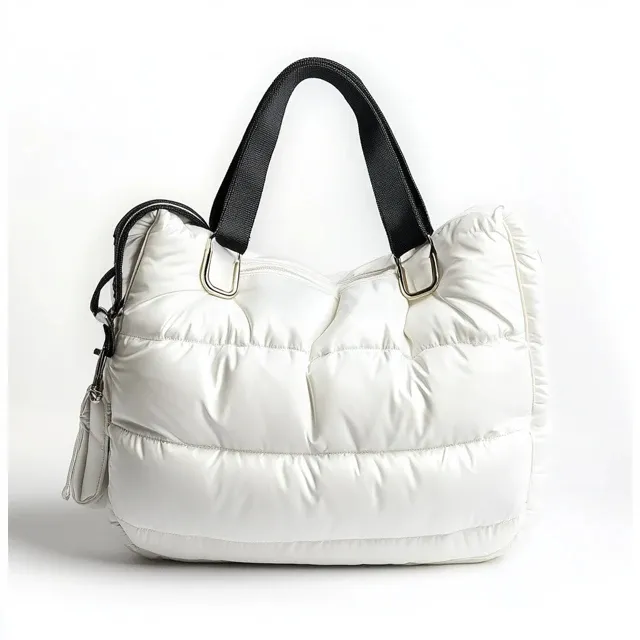

Where a Custom Bag Gets Made and How It Moves
The checkpoints that decide whether bulk runs
Any tour worth taking is a control-point checklist in disguise, not a showroom trip.
How the line handles your SKU
- Lock claim scope, price target and carton rules, and only then sample.
- Within material sourcing, lock by spec: coating/laminate spec, fabric route, trim vendors.
- Pattern work: cut templates, define tolerances, plan the stress-point build-up.
- Cutting stage: check grain direction plus marker efficiency; hold shade lots steady.
- Sewing and welding: hold the line on stitch spec, seam allowance, critical-zone reinforcement.
- At the final assembly stage, placement jigs position logos, hardware and accessories.
- Finish on AQL sampling, correct carton marking and complete documents.
Typical buyer use scenarios
- brand launches
- wholesale programs
- corporate procurement
- retail distribution
Key functions buyers request most
- custom sizing
- durable construction
- logo branding options
- retail-ready packaging
- consistent QC
Choosing the Best Materials for Custom Bags
| Material | Performance | Cost Range | Leading For | Upsides & Trade-offs | Risks & How to Control |
|---|---|---|---|---|---|
| nylon | Even-handed service life (ISO 13934 tensile per the specification); good scuff resistance (ISO 12947 per the specification); stable for branding | US$1.6–5.5 / meter (to spec) | Main line items with predictable yield | Upsides: versatile. Watch-outs: performance depends on coating/finish | Lock coating spec, color tolerance and print compatibility; confirm reinforcement mapping |
| PU coated polyester (600D, per spec) | Good repellency (ISO 4920 / AATCC 22 as specified); moderate barrier (ISO 811 per the specification) | US$1.2–6.0 / meter (per spec) | Value/core lines where print clarity matters | Upsides: cost controlled. Limitations: coating wear over time | Define spray rating targets and abrasion resistance benchmarks; protect high-wear zones |
| Canvas / cotton (to spec) | Good hand-feel and print; waterproofing depends on finish (AATCC 22 per spec) | US$1.0–3.5 / meter (as specified) | Retail lifestyle lines, totes and promotions | Upsides: classic look. Watch-outs: heavier; stain risk without finish | Define shrinkage and colorfastness tests (AATCC 61 / ISO 105 per spec); specify lamination if needed |
Triage the material decision
- Decide from the field conditions: rubbing, carrying load and water drive the choice.
- Decide whether the claim covers the whole bag or only zones like the main compartment.
- Every referenced ISO/AATCC/ASTM procedure should be listed, together with the numeric bar for approval.
- Choose route-suitable trims, from zipper type and sliders to buckles and webbing strength.
- Confirm that print and branding suit the specified fabric.
- Scuffing and creasing usually trace to transit, not to stitching defects.
Design, Sampling and Sign-Off
The specification sheet that avoids a second round
What happens first, second and third
- Write down the customer, the price tier and the role it plays.
- Confirm the claim scope and its test plan by spec.
- Artwork placement, tolerance map, measurement table and BOM: four pieces that make the tech pack.
- Fit, structure and material route get validated at prototype sampling.
- Final BOM, final packaging route: the PP stage.
- Sign-off requirement: QC checklists plus the reference sample, ahead of bulk cutting.
Getting the sample right first time
- Confirm fabric shade and coating feel with the actual supplier lot (per spec).
- Load-test every anchor point: webbing, grab handles and D-ring areas, to specification.
- Review the zipper path, then slider feel, then the cycle requirement per spec.
- Open, close and repack the product many times, watching for corner wear and seam creep.
- Three things need checking per lane: rub marks, folding lines, and defence against humidity.
- Lock all changes before bulk cutting; avoid late feature creep.
Reducing back-and-forth before bulk
From first build to annual reorder
Production Options at Each Volume
Weigh MOQ requirements against turnaround duration and price tier using the options table.
Methods and the numbers behind them
- Seam construction and reinforcement mapping (anchors, corners, zipper ends, base wear zones)
- Stitch density and thread type for load zones (per the specification)
- Fittings installation: jigs, torque control, and anti-loosening measures (as specified)
Branding Methods and Final Build Steps
Choosing how to apply your logo
Keeping returns down at the last station
- Brand mark alignment check against placement template
- Zipper end reinforcement and smoothness check
- Visual check for wrinkles, creases, and surface scuffs before packing
Shipping Mode, Cost and Timing
The export sequence, gate by gate
Questions to Settle Before Signing
Check every point here prior to signing your OEM/ODM bag contract.
What to ask before you place volume
- Do they price the pack and flag every assumption they made?
- Are alternatives by spec offered, and BOM sourcing controlled by them?
- Do they evidence QC checkpoints, IQC to IPQC to FQC, and an AQL plan?
- Without hurting workmanship, can they allow a flexible MOQ?
- Can they give firm lead time commitments and a defined escalation path?
- Do they bring packaging and shipping know-how that fits your market?
What an audit should look at, line by line
Rather than restate a long matrix, this section points to custom backpack specifications, where each row carries its method and acceptance value.
Where the value sits
Separating wet and dry zones inside one shell
A gym bag earns its price on compartmentalisation, and compartmentalisation is a pattern problem before it is a sewing problem. The shoe compartment is drafted as a separate enclosure with its own lining piece, not as a divider dropped into the main cavity, because a divider lets odour and moisture migrate through the seam at the base. QUANZHOU JUNYUAN BAGS dimensions the shoe enclosure so it can be wiped clean without inverting the whole bag.
The lining used inside that enclosure is a wipe-clean coated material rather than the shell fabric. Where the lining meets the shell, the seam is drafted so the coated face is not folded back on itself, which would create a stiff ridge along the compartment mouth and make the zipper bind.
Ventilation, mesh and closure details
Ventilation is specified as grommet count and placement rather than left to interpretation. Grommets are positioned near the top of the compartment where warm air collects, and spaced so the panel between them does not flex inward when the bag is packed tight. A mesh panel is an alternative, but mesh is dimensioned for snag resistance as well as airflow.
- Grommets placed high on the compartment, spaced to stop panel flex
- Mesh specified by denier and aperture, not by appearance alone
- Zipper garage drafted at the compartment end to protect the slider
- Wet pocket lining welded or seam-sealed where leak resistance is required
The wet pocket is the detail most often under-specified. If it is meant to hold a damp towel, the seam is welded or seam-sealed and the pattern carries a generous turn at the mouth so the closure lies flat. A sewn pocket with a standard seam will wick, and that shows as dampness on the bag exterior.
Odour control is also a material decision reflected in the pattern. A shoe compartment lined with a coated wipe-clean fabric resists odour far better than an uncoated lining, and the pattern dimensions that lining with enough ease that it can be pulled out and wiped rather than cleaned in place.
Exterior pocket placement follows from how the bag is carried. A quick-access pocket on the end panel is reachable when the bag is slung over a shoulder, while one on the body panel is not; the pattern places it accordingly, and the pocket mouth is drafted with a bound edge so it does not gape open when the bag is compressed.
Tolerance across compartments is where bulk drift shows. A compartment that is 5 mm narrow will not accept the intended shoe size, so compartment interior dimensions are measured on the pre-production sample and recorded, then rechecked during final inspection under the AQL 2.5 plan.
Where a gym bag shares a base model with a duffel, the shell and base panels can be reused but the compartment set is re-drafted, because the internal load path changes once a separate shoe enclosure is introduced. Pattern revisions typically run two or three rounds before the pre-production sample is released.
Sampling runs 6 to 10 working days, with 12 to 15 working days where welded seams or custom hardware are involved. QUANZHOU JUNYUAN BAGS returns pattern and tooling pricing within 24 to 48 hours. Compartment options are also discussed under custom gym bags, and quality checkpoints sit in custom bag quality certification.
Marker yield: how much fabric a gym bag actually consumes
Pattern work is judged twice: once when the sample is approved, and again when the marker yield is printed. A gym bag has more small parts than its size suggests — shell panels, a lined wet compartment, mesh vents, binding, webbing loops and a base board — and each group carries a different nesting efficiency. Yield below 80 percent on the shell group means the panel shapes, not the fabric width, are the problem.
| Panel group | Pieces per bag | Linear metres at 150 cm | Marker yield |
|---|---|---|---|
| Shell body panels | 4 | 1.05 | 86 percent |
| Wet compartment lining | 2 | 0.32 | 88 percent |
| Air mesh vent panels | 3 | 0.24 | 80 percent |
| Webbing loops and binding | 12 | 3.60 | 92 percent |
| Total per bag | 21 | 5.21 | 84 percent average |
Multiply the total by the unit fabric price and the arithmetic becomes a negotiation tool. At MOQ 500, a three-point yield gain on the shell group saves roughly 16 linear metres of shell cloth, which is usually more than the cost of one extra pattern revision. It also changes the freight picture: 500 flat-packed gym bags occupy about 3.4 CBM, so a single 20GP at 28 CBM carries the order with room for a mixed size run.
Sign-off sequence for a gym bag pattern set
A pattern is only finished when the graded size set nests as well as the base size. The order below is what our production team runs before a gym bag enters the pre-production stage; each step has a numeric gate so a dispute later can be settled against the tech pack rather than against opinion.
- Step 1 — tech pack freeze: panel dimensions at ±3 mm tolerance, seam allowance stated as 10 mm on bound seams and 12 mm on load-bearing seams, plus a stitch density of 8–9 per inch.
- Step 2 — first pattern and fit sample inside 6–10 working days; load the sample to 8 kg and hang it for 24 hours, then measure seam creep at the handle roots.
- Step 3 — two revision rounds are budgeted as normal; a third round almost always means the tech pack is incomplete rather than the pattern being wrong.
- Step 4 — grade the size set in 5 cm steps and re-nest every size, because yield drops 1–2 points away from the base size on a curved shell.
- Step 5 — pre-production sample cut from bulk fabric with bulk hardware, then AQL 2.5 inspection per ISO 2859-1 with Critical 0 / Major 2.5 / Minor 4.0 before the 35–50 day bulk run.
Keep the revision comments in one numbered list rather than in several emails. Two rounds at 6–10 working days each is the planned path; scattered comments stretch the same work across five weeks. The 4,950 m² SGS-verified production floor runs seven lines, so a pattern that is signed off cleanly can be cut within days of approval — see the manufacturing process for the downstream stations.
Frequently Asked Questions (FAQs)
How is a separate shoe compartment patterned into a gym bag shell?
It is drafted as its own enclosure with a separate lining piece, not as a divider dropped into the main cavity. A divider lets moisture and odour migrate through the base seam. The enclosure is dimensioned so it can be wiped clean without inverting the whole bag.
Where should ventilation grommets be placed on a shoe compartment?
High on the compartment, where warm air collects, and spaced so the panel between them does not flex inward when the bag is packed tight. Grommet count and placement are specified in the tech pack rather than decided on the line.
What mesh specification balances airflow against snag resistance?
Mesh is specified by denier and aperture rather than appearance. A tighter aperture resists snagging from shoe hardware but reduces airflow, so the panel is sized to compensate. ISO 12947 abrasion testing is referenced when mesh sits on an exterior face.
Can a wet pocket lining be welded instead of sewn?
Yes, and it is the better choice where the pocket holds damp kit. Welded or seam-sealed construction stops wicking through the needle holes. The pattern carries a generous turn at the mouth so the closure lies flat and does not force the seam open.
Can a gym bag share shell panels with an existing duffel base model?
The shell and base panels can be reused, but the compartment set is re-drafted. Adding a separate shoe enclosure changes the internal load path, so reusing the duffel interior pattern without revision produces distortion at the compartment mouth. Compartment interior dimensions are measured on the pre-production sample and rechecked at final inspection under AQL 2.5.
How are zipper garage and puller details drafted into the shell?
The garage is drafted at the compartment end as a small folded tab that shields the slider, and its allowance is included in the panel rather than added later. Puller length is dimensioned so it clears the garage when the zipper is fully closed.
How many pattern revisions are typical before a pre-production sample?
Two or three rounds is typical. The first resolves compartment geometry, the second resolves seam bulk at the lining junction, and the third confirms closure alignment. Sampling runs 6 to 10 working days, or 12 to 15 where welding is involved.
Does specifying welded seams change the minimum order or the schedule?
The 500-piece minimum order quantity is unchanged. Sampling moves from 6 to 10 working days toward 12 to 15 working days because weld parameters have to be dialled in, and bulk production stays within the 35 to 50 day window after approval.
Next Steps and Further Guides
Internal resources
- Browse products & categories
- Factory capabilities & process
- Download RFQ template
- Packaging specification guide
Related blog posts
- Tool Bag Hardware: Metal Buckles & Plastic Base Feet
- Tool Bag Production: Quality Control for Heavy Use
- Tote Bag Handles: Strength & Comfort Design
- Tote Bag Lamination: Waterproof & Durable Finish
- Tactical Tool Bags for Military & Law Enforcement
- The Complete OEM Bag Production Process From Design to Shipment
Next step
• Lock keyword and claim scope for custom custom bag oem
• Build a tech pack with BOM + tolerance map
• Choose materials route and validate tests (by spec)
• Plan sampling gates (lead time 6-10 working days)
• Set MOQ and cost targets (MOQ 500 pcs)
• Define QC plan and AQL checkpoints
• Confirm production + shipping timeline (25–35 days)

Let's scope your next order
Send over your requirements; a manufacturing plan and structured RFQ checklist are prepared for you.
Specifications in this category are normally verified against ISO 6330 (domestic laundering), together with AATCC 127 (hydrostatic head) and ISO 2859-1 (AQL sampling) before a purchase order is released.
Related programme guides: custom gym bags.
Separating wet from dry: the pattern work behind a gym bag
A gym bag is a duffel with a hygiene problem. Damp kit, used shoes and a drinks bottle share one cavity with a phone and a clean shirt, so the pattern is less about silhouette and more about how many independent compartments you can build without adding an operation per compartment. The two answers that scale are a drop-in lined pocket on the end panel and a full separate base chamber, and they differ sharply in labour and in leak performance.
A drop-in pocket is cut from a single rectangle of welded TPU or PVC-backed lining, folded once, and sewn into the end panel seam so the structural seam and the pocket seam are the same operation. It is cheap, it adds less than a minute of labour, and it contains damp kit adequately. It does not contain liquid: the corners of a folded rectangle are the leak path, and a leaking bottle will find them. A separate base chamber is cut as a box with a bound or welded base, dropped into the main body before the end panels close, and it will hold standing water if the seams are welded rather than sewn. It costs noticeably more and it eats 15 to 20 mm of headroom, so the main compartment has to be re-specified around it.
Ventilation is the third decision and it is usually under-specified. Two 8 mm grommets in an end panel do almost nothing. A usable airflow path needs an intake low on one face and an exit high on another, each in the range of 20 to 30 cm² of open area, positioned so they are not blocked when the bag is set down on the vented face. Eyelets need the same reinforcement logic as any other hardware: a patch extending 15 mm past the flange, or the eyelet will ovalise and tear within a season of being stuffed.
| Compartment | Construction | Leak performance | Added labour | Volumes it suits |
|---|---|---|---|---|
| End drop-in pocket | Folded welded lining in panel seam | Damp kit only | Under 1 minute | Promotional, 500 to 3,000 |
| Base box chamber | Bound or welded box, dropped in | Holds standing water | 3 to 5 minutes | Retail, 1,000 plus |
| Side bottle sleeve | Elastic-bound panel, drain grommet | Drains, does not seal | 1 to 2 minutes | Any |
| Full wipe-clean body | TPU laminate throughout | Fully washable | Material-led cost | Team and club orders |
What fails on a gym bag and the tests that catch it early
Four failures dominate returns. Seam slippage at the end panel under a packed bag is first, and it shows up when the fabric is a loose-weave polyester below about 200 gsm; the fix is either a heavier body or a bound seam rather than an overlocked one. Second is lining delamination in a chamber built from a bonded TPU film, where the adhesive has not been matched to the hydrolysis conditions of a damp bag stored closed; an adhesive with known hydrolysis resistance and a controlled press window is the control. Third is odour retention in foam padding that never dries, which is solved by specifying open-cell foam with a drainage path rather than closed-cell.
Fourth is hardware corrosion. A gym bag lives in a humid environment, and zamak hardware with a thin plating will spot within weeks. Specify a salt-fog result against ASTM B117 for any metal part on a bag intended for this use, and hold colour-fastness of the printed or dyed body to AATCC 8 for crocking, because a wet bag rubbed against a light gym shirt is exactly the scenario the test simulates.
Acceptance testing should be written into the purchase order rather than negotiated afterwards. Our production team quotes to AQL 2.5 with critical defects at zero, major at 2.5 and minor at 4.0, and can work to AQL 1.5 where a retail programme requires a tighter gate; sampling runs 6 to 10 working days, 12 to 15 where a welded chamber is involved, and mass production takes 35 to 50 days after sample approval. Material selection interacts with every compartment decision, so start with the materials guide, and fold the test list into your wider quality and certification plan. For a travel-oriented version of the same body, see the duffel pattern notes.
Numbers age badly when copied into dozens of places, so the maintained version of this grid stays on quality control and certification.
Rather than repeat the same matrix here, keep the detailed grading with the central reference on material selection — it lists the acceptance numbers and sampling levels our team works to.