Cost Drivers Explained For Custom Polyester Fabric
Learn how to run a custom custom bag oem program for United States: materials, tech pack, sampling, QC and shipping. Get OEM/ODM-ready checklists and quote
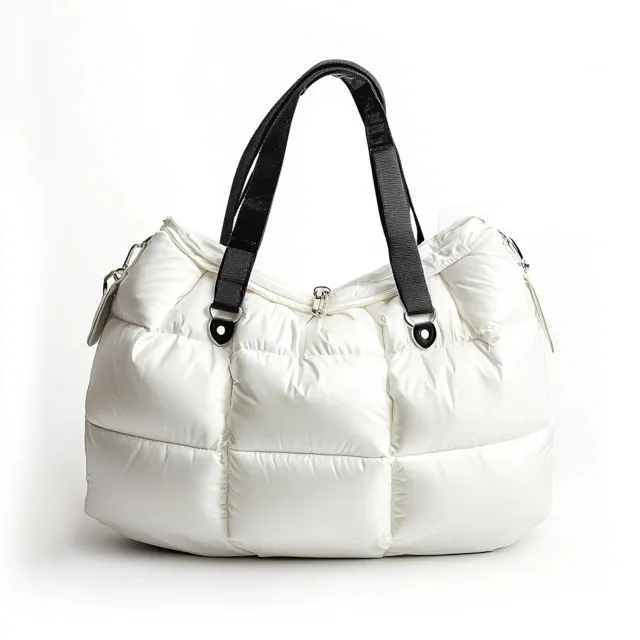

Where a Custom Bag Gets Made and How It Moves
If you are targeting United States with a mid-range positioning, the key is to prevent variance: materials, trims, workmanship and packout rules must be written and checked.
Primary keyword for SEO: custom bag OEM. Private-label bags, custom logo bags, OEM ODM bags and custom bag manufacturer make up the secondary list.
The checkpoints that decide whether bulk runs
Condensed here by design — the extended comparison belongs to custom backpack specifications, alongside the rest of the reference data.
Any tour worth taking is a control-point checklist in disguise, not a showroom trip.
How the line handles your SKU
- Lock claim scope, price target and carton rules, and only then sample.
- Within material sourcing, lock by spec: coating/laminate spec, fabric route, trim vendors.
- Pattern work: cut templates, define tolerances, plan the stress-point build-up.
- Cutting stage: check grain direction plus marker efficiency; hold shade lots steady.
- Sewing and welding: hold the line on stitch spec, seam allowance, critical-zone reinforcement.
- At the final assembly stage, placement jigs position logos, hardware and accessories.
- Finish on AQL sampling, correct carton marking and complete documents.
Typical buyer use scenarios
- brand launches
- wholesale programs
- corporate procurement
- retail distribution
Key functions buyers request most
- custom sizing
- durable construction
- logo branding options
- retail-ready packaging
- consistent QC
Choosing the Best Materials for Custom Bags
| Material | Performance | Cost Range | Leading For | Advantages & Watch-outs | Risks & How to Control |
|---|---|---|---|---|---|
| nylon | Balanced wear resistance (ISO 13934 tensile to spec); good abrasion (ISO 12947 to spec); stable for branding | US$1.6–5.5 / meter (per the specification) | Main line items with predictable yield | Upsides: versatile. Watch-outs: performance depends on coating/finish | Lock coating spec, color tolerance and print compatibility; confirm reinforcement mapping |
| PU coated polyester (600D, per spec) | Good repellency (ISO 4920 / AATCC 22 to spec); moderate barrier (ISO 811 to spec) | US$1.2–6.0 / meter (to spec) | Value/core lines where print clarity matters | Advantages: cost controlled. Limitations: coating wear over time | Define spray rating targets and abrasion benchmarks; protect high-wear zones |
| Canvas / cotton (per spec) | Good hand-feel and print; waterproofing depends on finish (AATCC 22 per the specification) | US$1.0–3.5 / meter (per the specification) | Retail lifestyle lines, totes and promotions | Advantages: classic look. Watch-outs: heavier; stain risk without finish | Define shrinkage and colorfastness tests (AATCC 61 / ISO 105 per spec); specify lamination if needed |
Triage the material decision
- Decide from the field conditions: rubbing, carrying load and water drive the choice.
- Decide whether the claim covers the whole bag or only zones like the main compartment.
- Every referenced ISO/AATCC/ASTM procedure should be listed, together with the numeric bar for approval.
- Choose route-suitable trims, from zipper type and sliders to buckles and webbing strength.
- Confirm that print and branding suit the specified fabric.
- Scuffing and creasing usually trace to transit, not to stitching defects.
Design, Sampling and Sign-Off
The specification sheet that avoids a second round
- Artwork files: vector format, color codes, size, and placement coordinates
- Branding method: print/embroidery/patch method, backing, and acceptance examples
- Packing format spec: insert, polybag, carton count, carton marking, barcode placement
- Testing plan: references and pass criteria (ISO/AATCC/ASTM to spec)
- QC checkpoints: what to check at IQC/IPQC/FQC and defect examples
- Revision control: version number, change log, and approval record
What happens first, second and third
- Write down the customer, the price tier and the role it plays.
- Confirm the claim scope and its test plan by spec.
- Artwork placement, tolerance map, measurement table and BOM: four pieces that make the tech pack.
- Fit, structure and material route get validated at prototype sampling.
- Final BOM, final packaging route: the PP stage.
- Sign-off requirement: QC checklists plus the reference sample, ahead of bulk cutting.
Getting the sample right first time
- Confirm fabric shade and coating feel with the actual supplier lot (per spec).
- Verify the zipper path, then slider feel, then the cycle requirement per spec.
- Open, close and repack the product many times, watching for corner wear and seam creep.
- Three things need checking per lane: rub marks, folding lines, and defence against humidity.
- One PP sample, built with the final BOM and final packing route, is what needs approval.
- Lock all changes before bulk cutting; avoid late feature creep.
Reducing back-and-forth before bulk
We keep one authoritative version of this comparison on the full manufacturing workflow, updated whenever the reference standards move.
From first build to annual reorder
Success example (anonymized): a mid-range program targeting United States reduced rework by freezing a single tech pack, running one pre-production sample using the final BOM, and aligning QC checkpoints before cutting. A construction that can be duplicated means each season's reorder goes to the same partner.
Production Options at Each Volume
Weigh MOQ requirements against turnaround duration and price tier using the options table.
| Production Type | Lead Time | MOQ | Cost Level | Top pick For |
|---|---|---|---|---|
| ODM catalog customization | 6-10 working days + 35-50 days | low–medium (per spec) | low–medium | Fast launches and proven silhouettes |
| Small-batch pilot run | 6-10 working days + 35-50 days | 500 pcs | medium | Startups, corporate gifting, SKU validation |
| Standard OEM mass production | 35-50 days | medium–high (per the specification) | optimized | Retail replenishment and stable demand |
| Expedited production program | 15–25 days (as specified) | by program | higher | Time-critical launches |
Methods and the numbers behind them
Reference figures for this stage are maintained centrally: see material selection for the current values and how they were derived.
Branding Methods and Final Build Steps
Choosing how to apply your logo
Condensed here by design — the extended comparison belongs to own-brand programmes, alongside the rest of the reference data.
Keeping returns down at the last station
- Logo alignment check against placement template
- Metal parts function check: buckles, sliders, and snaps
- Visual check for wrinkles, creases, and surface scuffs before packing
Shipping Mode, Cost and Timing
The export sequence, gate by gate
The full row-by-row breakdown lives on material selection; this piece keeps the focus on how those figures change the decision you actually have to make.
Questions to Settle Before Signing
Check every point here prior to signing your OEM/ODM bag contract.
What to ask before you place volume
- Do they price the pack and flag every assumption they made?
- Are alternatives by spec offered, and BOM sourcing controlled by them?
- Do they evidence QC checkpoints, IQC to IPQC to FQC, and an AQL plan?
- Without hurting workmanship, can they allow a flexible MOQ?
- Can they give firm lead time commitments and a defined escalation path?
- Do they bring packaging and shipping know-how that fits your market?
What an audit should look at, line by line
- Workmanship standards board and defect examples
- Needle control and metal detection process (if required to spec)
- Inline QC stations and sampling frequency
- Packing area: carton marking, barcode process, and SKU separation
- Load space reality: line balance, overtime policy, and peak season plan
Where the value sits
The full row-by-row breakdown lives on importing from China; this piece keeps the focus on how those figures change the decision you actually have to make.
Reading a Polyester Fabric Quote: Denier, Weave, Coating and Finish
Polyester is the default shell material for custom bags, and it is also the line item most often compared incorrectly. Two quotes both reading 600D polyester can differ by more than 30 percent, because denier describes yarn thickness rather than fabric performance. QUANZHOU JUNYUAN BAGS breaks polyester costing into four decisions, covering yarn, weave, coating and finish, so a buyer can see which one is actually moving the number.
Yarn and weave come first. 300D, 420D, 600D, 900D and 1680D are the common steps, and price rises with denier and with yarn quality; a 600D made from recycled chip is priced differently from a 600D made from virgin chip. Weave matters just as much: plain weave is cheapest, ripstop adds a grid yarn that raises tear strength substantially for a small premium, and dobby or jacquard weaves add texture and price together. A 420D ripstop routinely beats a plain 600D on tear while costing less per metre.
Coating is where water-resistance claims are made and paid for. A single light PU pass adds little; two passes, or a PU thickness of 0.08 to 0.12 mm, adds more and raises hydrostatic head. PVC coating is cheaper per metre but heavier, less flexible in cold conditions and raises REACH and California Prop 65 documentation requirements. TPU lamination is the most expensive route and is specified where weldability, low-temperature flexibility and a PVC-free declaration are all required.
| Decision | Common options | Cost direction | Typical test |
|---|---|---|---|
| Yarn | 300D / 420D / 600D / 900D | Higher denier costs more per metre | ASTM D5034 |
| Weave | Plain / ripstop / dobby | Ripstop adds a small premium | ASTM D3884 |
| Coating | PU / PVC / TPU laminate | TPU highest, PVC lowest | AATCC 127 |
| Finish | DWR / flame retardant / antimicrobial | Each finish adds per metre | AATCC 22 |
Finish is the fourth driver and the most variable one. A durable water repellent treatment, an antimicrobial finish for gym and shoe applications, a flame-retardant finish for promotional lines and a UV-resistant finish for outdoor programmes each add cost per metre, and each needs its own test evidence. Repellency is checked under AATCC 22 and hydrostatic resistance under AATCC 127, which is the number retail buyers actually ask to see.
Colour and printing add a second layer. Stock colours carry no dye-lot minimum; a custom dyed shade usually requires a mill minimum and adds 10 to 15 days to the schedule. Sublimation printing on polyester gives photographic coverage at a modest premium, while yarn-dyed checks and stripes require woven minimums that rarely suit a 500-unit order.
Testing and certification close the picture. Abrasion is measured to ASTM D3884 or ISO 12947; colourfastness to washing under ISO 6330 and to rubbing under AATCC 8; restricted substances to REACH (EC 1907/2006), California Prop 65 and OEKO-TEX Standard 100. GRS-certified rPET carries a transaction certificate fee but supports a recycled content claim on-pack.
Material selection interacts directly with unit economics, so compare this against custom bag cost and MOQ before locking a specification. Our production team returns a full fabric and trim quotation within 24 to 48 hours against MOQ 500.
Frequently Asked Questions (FAQs)
Why do two suppliers quote differently for what looks like the same 600D polyester?
Denier describes yarn thickness, not performance. Differences usually come from coating thickness, weave type, yarn origin and finishing. Ask for coating weight, hydrostatic head and abrasion cycles rather than denier alone.
Is 420D ripstop polyester stronger than plain 600D for bag shells?
On tear strength, frequently yes. The ripstop grid yarn stops propagation, so a 420D ripstop can beat a plain 600D while costing less per metre. Abrasion resistance, however, still favours the heavier yarn.
How much does TPU lamination add compared with a standard PU coating?
TPU lamination typically adds USD 0.90 to 2.20 per metre over a standard two-pass PU coating. It buys weldability, cold-flex performance and a PVC-free declaration that PU and PVC routes cannot both offer.
Which test number proves a polyester shell is water resistant enough?
Quote hydrostatic head under AATCC 127 and spray rating under AATCC 22. Retail programmes commonly ask for 1,000 to 3,000 mm hydrostatic head and a spray rating of 90 or above on the finished shell.
Does specifying recycled rPET polyester require extra certification cost?
GRS-certified rPET carries a transaction certificate fee per shipment plus a small fabric premium. Budget for both, because the certificate is what allows a recycled percentage to appear legally on packaging.
When is a custom dyed polyester colour worth the mill minimum?
Once a colourway runs across multiple stock units or repeats seasonally. A custom dye adds a mill minimum and 10 to 15 days, so on a single 500-unit run a stock shade is usually the better economic choice.
What finish should be added for a polyester bag used outdoors daily?
Add a durable water repellent finish plus UV resistance, then confirm performance after ISO 6330 laundering. Verify the spray rating to AATCC 22 on the finished fabric, not on greige goods before finishing.
How fast can a polyester fabric option be sampled and costed at MOQ 500?
Fabric options are costed within 24 to 48 hours, and a sewn sample follows in 6 to 10 working days. Complex welded or laminated builds take 12 to 15 days, with sample fees of USD 50 to 150, credited on order.
Next Steps and Further Guides
Internal resources
Related blog posts
- Pattern Making Basics For Custom Rolling Backpack
- Pattern Making Basics For Custom Pet Carrier Bag
- Pattern Making Basics For Custom Hats & Caps
- Pattern Making Basics For Custom Gym Bag
- Zipper And Hardware Selection For Custom Clear Drawstring Bag
- Zipper And Hardware Selection For Custom Camera Bag
Next step
• Lock keyword and claim scope for custom custom bag oem
• Build a tech pack with BOM + tolerance map
• Choose materials route and validate tests (by spec)
• Plan sampling gates (lead time 6-10 working days)
• Set MOQ and cost targets (MOQ 500 pcs)
• Define QC plan and AQL checkpoints
• Confirm production + shipping timeline (35-50 days)

Let's scope your next order
Send over your requirements; a manufacturing plan and structured RFQ checklist are prepared for you.
Related programme guides: custom bag cost structure · bag fabric options.
Denier, Weave and Coating Set the Price Before Anyone Cuts Anything
Polyester shell fabric is priced on three variables, and denier is only the one buyers know. Denier is the yarn thickness, so a 600D cloth uses thicker yarn than a 300D one and carries more resin and more weight per metre. Weave is the second variable: a plain Oxford, a ripstop grid and a dobby jacquard made from the same yarn differ in loom time, in tear behaviour and in price. Coating is the third, and it moves cost more than most briefs assume, because the choice between PVC, PU and TPU changes water resistance, hand feel, print adhesion and weldability at the same time.
These variables trade against each other, which is where the savings usually hide. A 420D ripstop can outperform a 600D plain Oxford on tear resistance at a lower weight and a comparable price, because the grid construction stops a tear from propagating. That matters on a bag that will be dragged across a floor or over-packed, and it is the reason a well-specified lighter fabric can be both cheaper and more durable than the heavier default.
| Construction | Typical gsm | Relative cost index | Best application |
|---|---|---|---|
| 210D ripstop, PU coated | 70–90 | 85 | Liners, packing cubes, ultralight shells |
| 300D Oxford, PU coated | 110–140 | 95 | Daypacks, promotional bags, price-led ranges |
| 420D ripstop, PU coated | 150–180 | 100 (baseline) | Everyday backpacks where tear strength matters |
| 600D Oxford, PVC or PU backed | 210–260 | 108 | School, work and cooler bags, structured bodies |
| 900D and 1680D ballistic weave | 320–450 | 125–140 | Base panels, abrasion zones, premium ranges |
Coatings, Finishes and the Dye-Lot Minimum
Coating choice is a performance decision disguised as a cost one. PVC backing is cheap, stiff and highly water-resistant, and it welds poorly while carrying plasticiser scrutiny in some markets. PU coating is softer, lighter and better for print, and it costs slightly more. TPU laminate is the premium option: it welds cleanly, stays flexible in the cold and takes abrasion well, and it is worth its price only where the design genuinely uses those properties. Add a water-repellent finish on top and verify it with AATCC 22 spray rather than with a marketing claim, since finishes degrade with abrasion long before the fabric does.
Recycled content changes the sourcing calendar more than the price. rPET shells carry a modest premium over virgin polyester, and the premium has been narrowing as supply has grown, but GRS documentation has to be requested when the fabric is booked, because transaction certificates are raised against a specific lot. Retro-fitting certification to a finished lot is slow and often impossible, so treat it as a booking-stage requirement rather than a shipping-stage question.
The most underrated cost driver in fabric is the dye-lot minimum. Custom colours are dyed to a minimum length, typically several hundred metres per colour, and a programme that wants four custom colours across a small range may end up buying far more fabric than the order consumes. The alternatives are straightforward: consolidate to a shared shell colour across styles, use a stock colour from the mill's shade card, or reserve custom dyeing for the hero SKU and carry the rest of the range in stock shades.
Specify the acceptance tests at the same time as the fabric. ISO 13934-1 covers tensile properties, ISO 12945 the pilling and fuzzing that changes how a colour reads after use, ASTM D751 the behaviour of coated cloth, and AATCC 8 the rub fastness that catches deep and saturated shades. Writing these into the specification turns a subjective fabric dispute into a pass or fail, and it gives a repeat order something to be matched against.
Commercial mechanics follow the standard frame: 500 units per style per colour, 300 discussable on a repeat once the pattern has run a full bulk cycle, sampling at 6–10 working days, and mass production 35–50 days after written sample approval. Quotes return in 24–48 hours once the brief names denier, weave, coating and colour route, because those four items determine most of the fabric number.
Work through the full option set in the material selection guide, and if you are weighing polyester against natural cloth, compare with the denim bag cost drivers, where the cost sits in processing rather than in the fabric itself.
Numbers age badly when copied into dozens of places, so the maintained version of this grid stays on quality control and certification.
Rather than repeat the same matrix here, keep the detailed grading with the central reference on material selection — it lists the acceptance numbers and sampling levels our team works to.