Turnkey Bag Manufacturing: What It Means for Your Brand
Compare how to run a custom custom bag oem program for North America: materials, tech pack, sampling, QC and shipping. Get OEM/ODM-ready checklists and quote
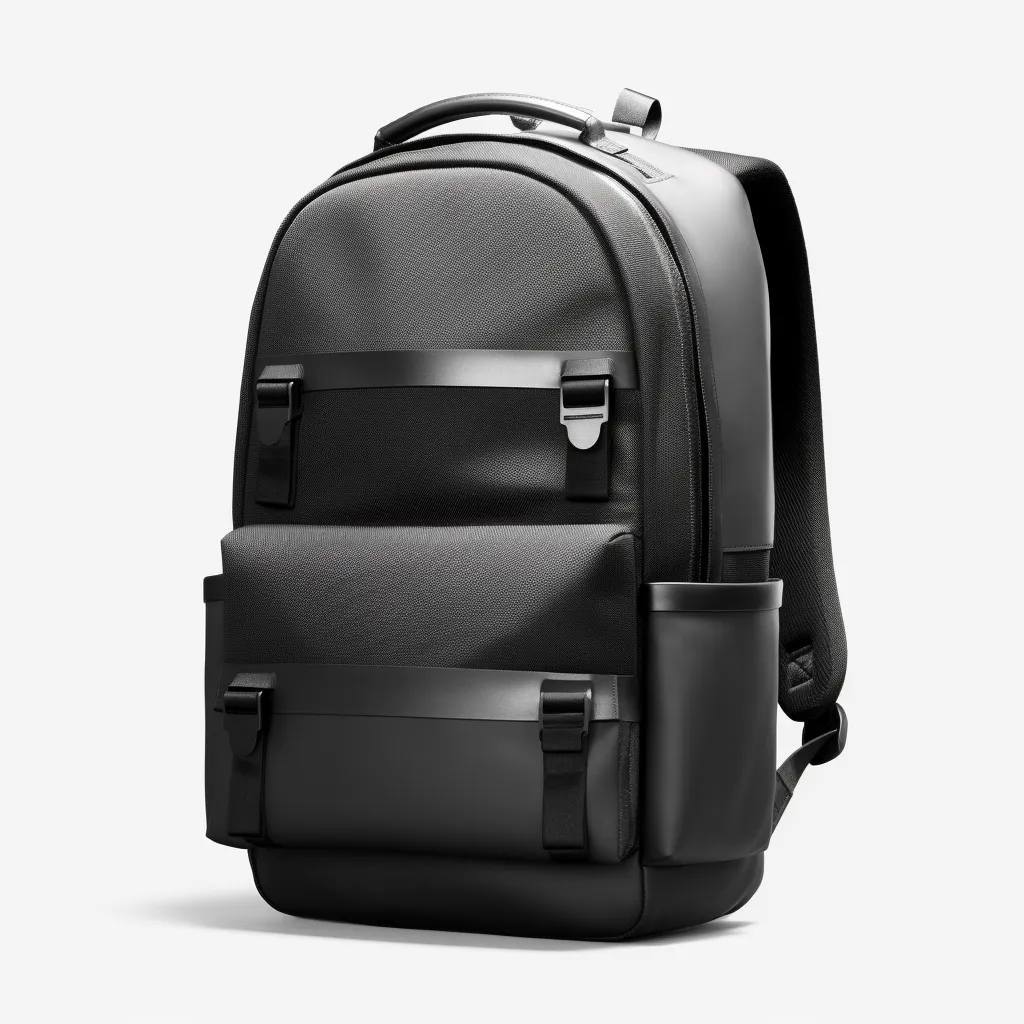
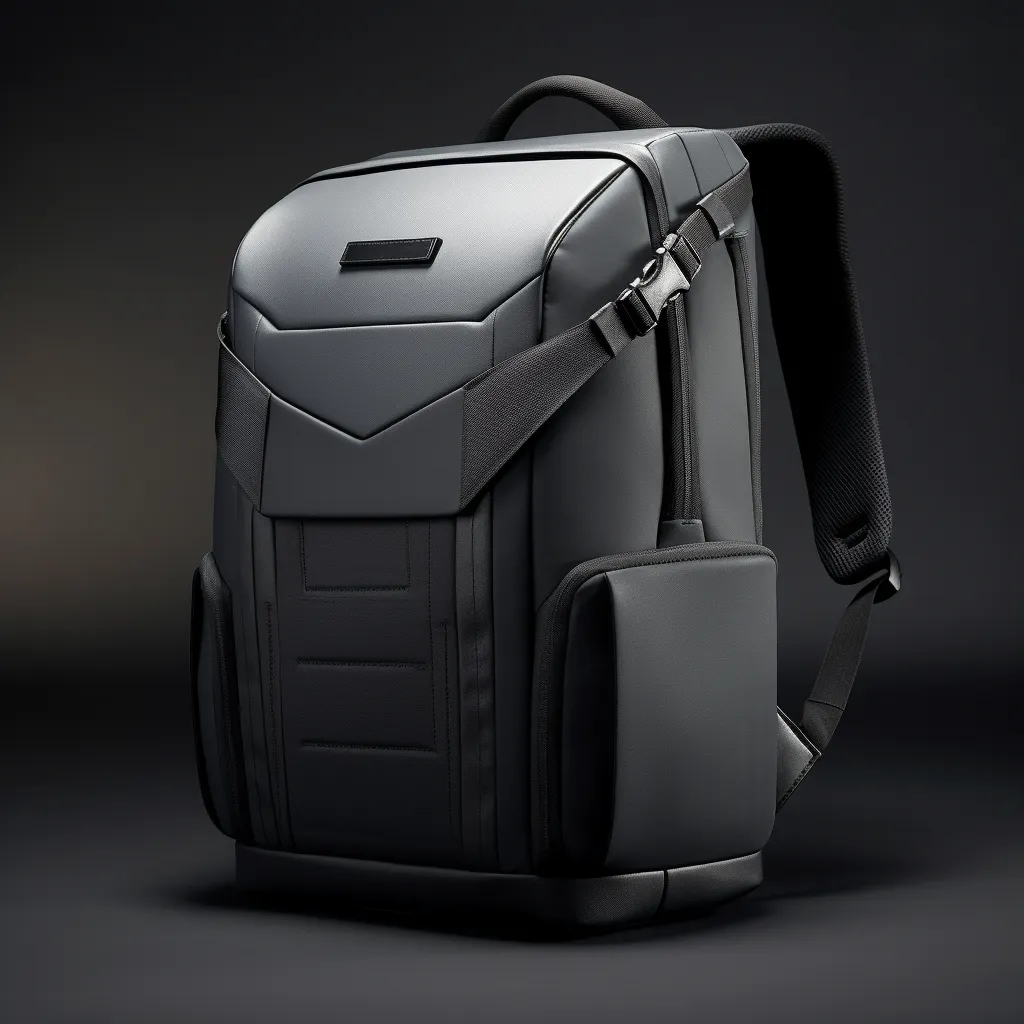
The Production Path a Custom Bag Follows
Process controls behind a repeatable build
Any tour worth taking is a control-point checklist in disguise, not a showroom trip.
Each stage, in the order it happens
- Get the brief straight first: claim, cost target and packing spec, then cut samples.
- Within material sourcing, lock by spec: coating/laminate spec, fabric route, trim vendors.
- Templates, tolerance bands and a reinforcement plan come next.
- Cutting stage: check grain direction plus marker efficiency; hold shade lots steady.
- Sewing and welding: hold the line on stitch spec, seam allowance, critical-zone reinforcement.
- At the final assembly stage, placement jigs position logos, hardware and accessories.
- Inspect to AQL, mark the cartons and raise the shipping documents.
Typical buyer use scenarios
- brand launches
- wholesale programs
- corporate procurement
- retail distribution
Key functions buyers request most
- custom sizing
- durable construction
- logo branding options
- retail-ready packaging
- consistent QC
Choosing the Best Materials for Custom Bags
| Material | Performance | Cost Range | Leading For | Upsides & Trade-offs | Risks & How to Control |
|---|---|---|---|---|---|
| nylon | Even-handed wear resistance (ISO 13934 tensile as specified); good abrasion (ISO 12947 as specified); stable for branding | US$1.6–5.5 / meter (as specified) | Volume styles with predictable yield | Upsides: versatile. Watch-outs: performance depends on coating/finish | Lock coating spec, color tolerance and print compatibility; confirm reinforcement mapping |
| Recycled RPET (route, to spec) | Sustainability positioning; performance depends on coating/laminate (ISO 4920 / ISO 811 per spec) | US$1.5–3.8 / meter (to spec) | Eco positioning programs and corporate procurement | Advantages: sustainability narrative. Limitations: supply stability and lot drift risks | Lock supplier lots, traceability and color delta; validate print and coating compatibility |
| Canvas / cotton (per the specification) | Good hand-feel and print; waterproofing depends on finish (AATCC 22 to spec) | US$1.0–3.5 / meter (per spec) | Retail lifestyle lines, totes and promotions | Upsides: classic look. Trade-offs: heavier; stain risk without finish | Define shrinkage and colorfastness tests (AATCC 61 / ISO 105 per spec); specify lamination if needed |
Getting to two or three candidate fabrics
- Let the use case lead: abrasion, load paths and moisture pick the fabric for you.
- Decide whether the claim covers the whole bag or only zones like the main compartment.
- Every referenced ISO/AATCC/ASTM procedure should be listed, together with the numeric bar for approval.
- Choose route-suitable trims, from zipper type and sliders to buckles and webbing strength.
- Confirm that print and branding suit the specified fabric.
- Scuffing and creasing usually trace to transit, not to stitching defects.
Development Sequence for a Custom Build
Fields your tech pack cannot skip
Development steps in working order
- Set the buyer, the price bracket and the slot it fills.
- Confirm the claim scope and its test plan by spec.
- Artwork placement, tolerance map, measurement table and BOM: four pieces that make the tech pack.
- Fit, structure and material route get validated at prototype sampling.
- Final BOM, final packaging route: the PP stage.
- Sign-off requirement: QC checklists plus the reference sample, ahead of bulk cutting.
Sampling pitfalls and how to close them
- Confirm fabric shade and coating feel with the actual supplier lot (per the specification).
- Verify artwork location physically on paper before the selected print process runs.
- Load-test every anchor point: webbing, grab handles and D-ring areas, to specification.
- Verify the zipper path, then slider feel, then the cycle requirement per spec.
- Three things need checking per lane: rub marks, folding lines, and defence against humidity.
- Lock all changes before bulk cutting; avoid late feature creep.
Where sample rounds get saved
A programme that reorders cleanly
How the Order Is Actually Produced
Weigh MOQ requirements against turnaround duration and price tier using the options table.
Which method, and why it matters
How the Mark Goes On, and What Closes the Bag
Branding options and where each fits
Assembly checks before the carton closes
Logistics and Fulfilment
Freight milestones to hold
How to Vet a Bag Production Route
Check every point here prior to signing your OEM/ODM bag contract.
Due diligence, item by item
- Can they work from a pack and tell you what they inferred?
- Are alternatives by spec offered, and BOM sourcing controlled by them?
- Do they evidence QC checkpoints, IQC to IPQC to FQC, and an AQL plan?
- Without hurting workmanship, can they allow a flexible MOQ?
- Can they give firm lead time commitments and a defined escalation path?
- Do they bring packaging and shipping know-how that fits your market?
Audit points to tick before you commit volume
Strengths worth weighing
Numbers age badly when copied into dozens of places, so the maintained version of this grid stays on tote bag specifications.
What is actually inside a turnkey scope
Turnkey means one contracted party carries a style from brief to loaded container, so that the buyer is not brokering between a fabric mill, a hardware vendor, a printer and a shipping agent. In practice the scope covers interpretation of the brief into a buildable tech pack, material and component sourcing, tooling and sampling, pre-production approval, bulk manufacturing, inline and final inspection, labelling, packing, export documentation and freight booking. It does not make anyone responsible for decisions that belong to the brand.
The timeline is fixed by whichever stage slips. Quotation is returned within 24 to 48 hours, prototyping takes 6 to 10 working days and 12 to 15 for complex multi-compartment builds, and bulk production runs 35 to 50 days from an approved pre-production sample at MOQ 500. Tooling for custom hardware or plates falls in the USD 300 to 2,500 band, and prototypes cost USD 50 to 150 each, refundable against the order.
What stays your responsibility, and the handover points
Brand-side obligations are narrower than most buyers expect but they are immovable. Trademark clearance and artwork ownership stay with the brand, as does the accuracy of retail copy on hangtags and the classification used for duty at destination. Nothing in a turnkey scope transfers liability for intellectual property, and no amount of process discipline substitutes for confirming colour against a physical reference rather than a screen proof, agreed within a measured difference of Delta E 2.0 under D65.
| Stage | Owner | Duration |
|---|---|---|
| Brief and tech pack | Shared, brand approves | One to three days |
| Quotation | Production team | 24 to 48 hours |
| Prototyping | Production team | 6 to 10 days, complex 12 to 15 |
| Pre-production approval | Brand signs off | One visit or sample set |
| Bulk production | Production team | 35 to 50 days |
| Inspection and export | Production team | ISO 2859-1 at AQL 2.5 |
Documentation is where the turnkey model earns its keep. A complete shipment file carries the commercial invoice, packing list, bill of lading or airway bill, certificate of origin, test reports against REACH (EC 1907/2006), California Prop 65, CPSIA and EN 71-3 where applicable, plus audit evidence such as amfori BSCI or Sedex SMETA where a retailer requires it. Recycled-content claims are supported with a GRS transaction certificate tied to the specific lot, not a generic brand-level certificate.
Marine insurance is worth agreeing explicitly at this stage. Cover is often assumed to sit inside a turnkey arrangement when it does not, and the gap only becomes visible once cargo is damaged in transit, which is the worst possible moment to discover who was responsible for declaring the value.
Cost behaviour is the last piece to understand. Turnkey does not mean cheapest; it means predictable. consolidating invoicing into one counterparty removes the courier costs, duplicate markups and schedule conflicts that arise when four vendors each optimise locally. Inspection is single-source under ISO 2859-1 at AQL 2.5 with Critical 0, Major 2.5 and Minor 4.0, and shipments leave FOB Xiamen with transit running 25 to 35 days by sea, 5 to 8 by air or 3 to 5 by express. Scope detail continues under sourcing bags from China and bag manufacturing process.
What unbundling a turnkey scope actually costs
A turnkey engagement is often compared against a hypothetical cheaper alternative in which the brand buys each input itself. That comparison is almost never made properly, because the visible prices are compared and the invisible work is not. Unbundling moves a set of coordination tasks onto the buyer, and those tasks consume people, calendar and freight options in ways that never appear on a supplier quotation.
The honest way to compare is to price the coordination, not just the goods. Every additional party adds a minimum quantity to negotiate, a sample to approve, an invoice to reconcile and a booking to align. Two suppliers quoting lower unit prices can still lose to one quoting higher once the buyer counts the internal hours, duplicated tooling and re-inspection visits a split chain generates.
| Workstream | Unbundled: what the brand absorbs | Integrated: what is carried for you | Where the difference shows up |
|---|---|---|---|
| Material buying | A mill minimum negotiated per component, per colour | One lot plan across shell, lining and trim | Fabric lot splits and shade drift |
| Tooling | Screens and moulds billed separately by each vendor | One consolidated USD 300-2,500 tooling line | Repeat styles and second seasons |
| Sampling | A new freight and duty cost per round, per supplier | One 6-10 working day loop in a single place | Complex builds running 12-15 days |
| Inspection | Third-party visits booked and paid per day | ISO 2859-1 AQL 2.5 built into the run | Re-inspection after a failed first visit |
| Freight | A forwarder margin applied on each leg | One booking through to FOB Xiamen | Roll-over risk in peak season |
The row that surprises procurement teams most is sampling: a split chain turns one sample into three packages crossing three borders, and each adds days no expediting recovers. The row that surprises finance most is tooling, because a plate paid for twice rarely costs less than one consolidated line. QUANZHOU JUNYUAN BAGS keeps these workstreams under one contract so the trade is visible in one document. Timelines are set out in custom bag lead times.
The review gates that keep a turnkey programme on the calendar
A turnkey programme does not slip evenly; it slips at handovers. Naming the gates, and the condition each one has to meet before the next starts, is what turns a schedule into something a buyer can manage rather than hope for.
- Gate 1, brief and tech pack. Allow one to three days, and do not open the next gate until measurements, materials and hardware callouts are written down rather than described.
- Gate 2, quotation. Returned within 24-48 hours against a complete tech pack; a quotation issued against an incomplete pack is an estimate and should be treated as one.
- Gate 3, prototype. 6-10 working days, or 12-15 for complex multi-compartment builds, with one physical reference retained under D65 for later colour comparison.
- Gate 4, pre-production approval. The brand signs off a sample made on production tooling and materials; this is the last point at which a change is cheap.
- Gate 5, bulk and inspection. 35-50 days, with inline checks and a final inspection to ISO 2859-1 at AQL 2.5, Critical 0, Major 2.5, Minor 4.0.
- Gate 6, documentation and handover. Carton specification, packing list and export documents released against the FOB Xiamen point, with 25-35 days of sea transit booked before the run closes.
Two rules make the gates work. First, no gate starts before the previous one has a signed artefact, not a verbal agreement. Second, any change raised after Gate 4 is costed and scheduled before it is accepted, because by then the change touches booked material and a booked line rather than a drawing. Payment follows the same rhythm, with T/T 30/70 split across the deposit and the balance before handover, which gives both sides a clean reference point for where the programme stands.
Frequently Asked Questions (FAQs)
What stages does a turnkey bag programme cover from brief to shipment?
It covers tech pack development, material and component sourcing, tooling, prototyping, pre-production approval, bulk production, AQL 2.5 inspection, labelling, packing, export documentation and freight booking under one contract rather than five separate vendor relationships. Duty payment at destination and retail pricing stay outside it.
What obligations stay with the brand even under a turnkey agreement?
Trademark clearance, artwork ownership, accuracy of retail hangtag copy and duty classification at destination remain yours. A turnkey scope transfers process responsibility, never intellectual property liability or how your product is classified by customs. Confirm each boundary in writing first.
How long does a turnkey programme run from first enquiry to loaded container?
Quotation takes 24 to 48 hours, prototyping 6 to 10 working days or 12 to 15 when complex, and bulk production 35 to 50 days from approved pre-production sample. Add 25 to 35 days sea transit after loading at FOB Xiamen.
Which documents should be expected in a complete turnkey shipment file?
Commercial invoice, packing list, bill of lading, certificate of origin, and test reports covering REACH (EC 1907/2006), California Prop 65, CPSIA and EN 71-3 as applicable. Recycled content requires a GRS transaction certificate tied to the specific lot, and barcodes are scan verified at the packing line before loading.
Is a social compliance audit included in a turnkey scope?
Audit evidence such as amfori BSCI or Sedex SMETA reports is supplied when a retailer requires it, but the audit itself is arranged separately. Ask for the current report before placing the order, since expired reports stall vendor onboarding for weeks.
Can the brand nominate its own fabric mill and still use a turnkey service?
Yes, though it adds a handover point. Nominated material must arrive with mill certificates and lead time confirmed, and any shortage then becomes your risk. Most programmes nominate only speciality prints and leave commodity shells to the programme, which keeps the mill minimum off your balance entirely.
How is cost predictability improved if the unit price is not lower?
Single-source invoicing removes duplicate markups, sample courier costs and schedule conflicts between vendors. Inspection happens once under ISO 2859-1 at AQL 2.5 with Critical 0, Major 2.5 and Minor 4.0, rather than five times with five parties.
Does a turnkey arrangement still apply the same MOQ and payment terms?
Yes. Standard minimum is 500 units per style, payment is T/T 30/70, and the default trade term is FOB Xiamen with EXW, CIF or DDP available by agreement. Tooling sits at USD 300 to 2,500 and prototypes at USD 50 to 150, refundable.
Related Guides
Internal resources
Related blog posts
- Pattern Making Basics For Custom Pet Carrier Bag
- Pattern Making Basics For Custom Rolling Backpack
- Pattern Making Basics For Custom Gym Bag
- Pattern Making Basics For Custom Hats & Caps
- Pattern Making Basics For Custom Drawstring Backpack
- Pattern Making Basics For Custom Duffel Bag
Next step
• Lock keyword and claim scope for custom custom bag oem
• Build a tech pack with BOM + tolerance map
• Choose materials route and validate tests (by spec)
• Plan sampling gates (lead time 6-10 working days)
• Set MOQ and cost targets (MOQ 500 pcs)
• Define QC plan and AQL checkpoints
• Confirm production + shipping timeline (35-50 days)
Start your next bag programme
Send over your requirements; a manufacturing plan and structured RFQ checklist are prepared for you.
Next guides: custom backpacks.
What sits outside a turnkey scope, stated plainly
"Turnkey" is used loosely enough to mean almost anything, and the gap between what a brand expects and what is actually included usually shows up at about week six of a programme. Defined honestly, a turnkey engagement means one party carries the chain from technical development through material buying, production, inspection, documentation and booking to the chosen Incoterms point. It does not mean unlimited design iterations, and it does not mean every cost is inside the unit price.
The cleanest way to buy it is as a set of named responsibilities. Development owns drawings, pattern making and samples; sourcing owns substrate, hardware and trim with mill minimums managed; production owns cutting, sewing, decoration and packing; compliance owns testing, restricted substance documentation and audit evidence; logistics owns carton specification, documentation set and booking. When each has an owner on both sides, handover delays stop happening because nobody is waiting for a decision from someone who does not know they own it.
Costs that sit outside the unit price need listing on page one rather than in an email. Hard tooling for bespoke mouldings is USD 300 to 2,500 per tool; sample fees run USD 50 to 150 and are credited against your first bulk order; third-party testing is commonly USD 150 to 600 per report depending on the standard; and shipping is costed separately on every FOB quote by definition. None are unusual, but a programme feels very different when they are forecast rather than discovered.
| Stage | Included in a turnkey scope | Billed separately | Typical figure |
|---|---|---|---|
| Development | Pattern making, two sample rounds | Additional rounds beyond the agreed number | USD 50–150 per sample |
| Tooling | Standard cutting dies | Custom buckles, moulded pulls, bespoke plates | USD 300–2,500 |
| Materials | Standard ranges and booking management | Custom dye below mill minimum | USD 0.15–0.60 per unit |
| Testing | In-house checks and in-line control records | Third-party laboratory reports | USD 150–600 per report |
| Compliance | ISO 9001 and ISO 14001 process evidence | amfori BSCI or Sedex SMETA audits | Quoted per audit |
| Logistics | Export packing, documents, port delivery on FOB | Freight beyond the agreed Incoterms 2020 point | Sea 25–35, air 5–8, courier 3–5 days |
When a turnkey model earns its keep, and when it does not
A few conditions make it clearly worthwhile. If you lack sourcing capability in Asia, agreeing two nominated mills and an approved hardware list up front gives you repeatability without losing visibility, and that combination is easier to manage than trying to buy fabric yourself from a different time zone. If your launch window is tight, having an integrated programme means parallel rather than sequential work: materials booked while the second sample is being reviewed, testing scheduled alongside the first bulk run, and the container planned when the sample is locked rather than after it.
The model is a poor fit in two cases. If you already have strong direct relationships with mills and a trusted inspection partner, you are paying for management you do not need, and a component-level quote is more transparent. If your design is genuinely novel and you expect to iterate eight or ten times, the cost of iteration is better handled under a development agreement with an hourly or per-round structure than folded into a unit price that will be renegotiated anyway.
Communication cadence is the part that most often determines whether a buyer feels a programme is being run well. A standing weekly report covering open development items, material arrival dates, production percentage complete and any open test lowers the number of unsolicited chasing emails to nearly zero, and it costs one hour of a merchandiser's time per week. Agree the template at kick-off and ask that anything changed on the bill of materials be flagged in writing the day it is identified rather than at inspection.
Either way the numbers should include volume and calendar: 500 units per style per colourway as standard, often discussable at 300 for repeat programmes, with sampling at 6 to 10 working days and mass production at 35 to 50 days after approval. Payment is T/T 30 deposit with the 70 balance before shipment, quoted FOB Xiamen, with EXW, CIF and DDP available when you want a single landed line. Discuss your own split at sourcing from China or request a scoped plan via contact.
Numbers age badly when copied into dozens of places, so the maintained version of this grid stays on quality control and certification.
Rather than repeat the same matrix here, keep the detailed grading with the central reference on material selection — it lists the acceptance numbers and sampling levels our team works to.