Golf Bag Materials: Microfiber Leather & Waterproof Fabrics
Understand how to run a custom golf bag oem program for Global: materials, tech pack, sampling, QC and shipping. Get OEM/ODM-ready checklists and quote
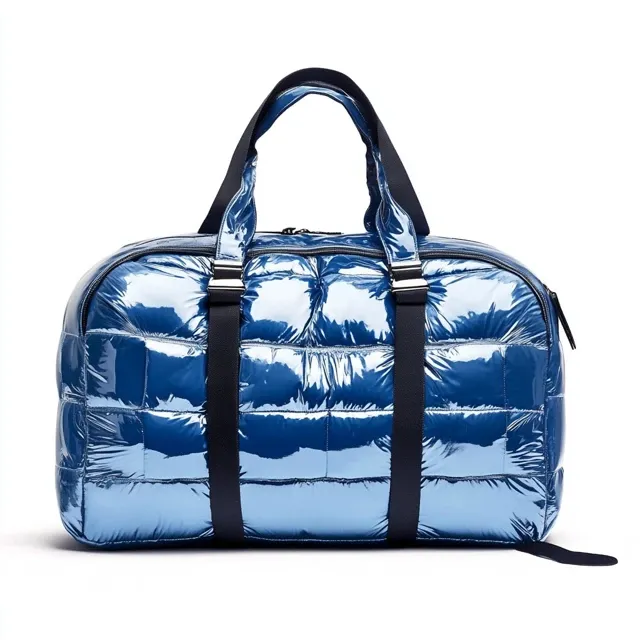
.webp)
Inside the Build: How a Golf Bag Goes From Pack to Carton
A professional golf bag program is a controlled workflow: clarify requirements, lock the build route, validate with measurable gates, then scale production with repeatable QC.
Primary SEO focus: custom golf bag oem. Secondary: golf bag manufacturer, private label bags, custom logo bags, OEM ODM bags.
Control points the build is measured against
Any tour worth taking is a control-point checklist in disguise, not a showroom trip.
Stage-by-stage: how the order is worked
- Brief alignment: settle the claim scope, cost target and packing rules before any sample.
- Within material sourcing, lock by spec: coating/laminate spec, fabric route, trim vendors.
- Pattern control: build templates, set a tolerance map, plan the reinforcement.
- Cutting stage: check grain direction plus marker efficiency; hold shade lots steady.
- Sewing and welding: hold the line on stitch spec, seam allowance, critical-zone reinforcement.
- At the final assembly stage, placement jigs position logos, hardware and accessories.
- Close with inspection: AQL sampling, carton marks and the export paperwork.
Typical buyer use scenarios
- outdoor sports
- fishing
- boating
- camping
- commuting
Key functions buyers request most
- RF welded seams
- roll-top closure
- airtight zipper option
- lash points
- abrasion reinforcement
Choosing the Best Materials for Custom Golf Bags
| Material | Performance | Cost Range | Preferred For | Advantages & Watch-outs | Risks & How to Control |
|---|---|---|---|---|---|
| TPU laminated nylon | Higher waterproof barrier potential (ISO 811 / AATCC 127 per spec); good abrasion resistance when reinforced (ISO 12947 as specified) | US$1.6–5.5 / meter (per the specification) | Claim-led outdoor SKUs and premium builds | Advantages: strong claim ceiling. Watch-outs: crease sensitivity; higher BOM cost | Control laminate peel, crease tolerance and seam strategy; validate waterproof scope early |
| PVC tarpaulin (to spec) | Higher barrier and wipe-clean surface (ISO 811 / AATCC 127 as specified); strong abrasion tolerance (ISO 12947 per the specification) | US$1.2–6.0 / meter (per spec) | Rugged utility lines and marine use | Advantages: durable surface. Watch-outs: heavier; sustainability concerns | Define fold/packout rules to avoid scuffs; control weight targets |
| Recycled RPET (route, per spec) | Sustainability positioning; performance depends on coating/laminate (ISO 4920 / ISO 811 per spec) | US$1.5–3.8 / meter (to spec) | Eco positioning programs and corporate procurement | Advantages: sustainability narrative. Trade-offs: supply stability and lot drift risks | Lock supplier lots, traceability and color delta; validate print and coating compatibility |
Narrowing the material route quickly
- Work back from use: where it rubs, where it carries load, and how wet it gets set the route.
- Decide whether the claim covers the whole bag or only zones like the main compartment.
- Every referenced ISO/AATCC/ASTM procedure should be listed, together with the numeric bar for approval.
- Choose route-suitable trims, from zipper type and sliders to buckles and webbing strength.
- Confirm that print and branding suit the specified fabric.
- Scuffing and creasing usually trace to transit, not to stitching defects.
Design and Development: How the Build Is Specified
Tech pack contents that get a fast quote
Rather than repeat the same matrix here, keep the detailed grading with the central reference on importing from China — it lists the acceptance numbers and sampling levels our team works to.
The development sequence, as it really runs
- Pin down who buys it, at what retail band, and where it sits.
- Confirm the claim scope and its test plan by spec.
- Artwork placement, tolerance map, measurement table and BOM: four pieces that make the tech pack.
- Fit, structure and material route get validated at prototype sampling.
- Final BOM, final packaging route: the PP stage.
- Sign-off requirement: QC checklists plus the reference sample, ahead of bulk cutting.
Sample-stage checks that prevent expensive rework
- Confirm fabric shade and coating feel with the actual supplier lot (to spec).
- Verify artwork location physically on paper before the selected print process runs.
- Verify the zipper path, then slider feel, then the cycle requirement per spec.
- Three things need checking per lane: rub marks, folding lines, and defence against humidity.
- One PP sample, built with the final BOM and final packing route, is what needs approval.
- Lock all changes before bulk cutting; avoid late feature creep.
Fewer sample rounds: what actually helps
Why a repeatable build outperforms a hero sample
Success example (anonymized): a value program targeting Global reduced rework by freezing a single tech pack, running one pre-production sample using the final BOM, and aligning QC checkpoints before cutting. A construction that can be duplicated means each season's reorder goes to the same partner.
Production & Manufacturing Methods for Golf Bags
Weigh MOQ requirements against turnaround duration and price tier using the options table.
The full row-by-row breakdown lives on tote bag specifications; this piece keeps the focus on how those figures change the decision you actually have to make.
Build methods worth naming in the pack
Branding and Final Assembly
Decoration routes available (pick one or two per SKU)
We keep one authoritative version of this comparison on handbag specifications, updated whenever the reference standards move.
Closing-stage checks that cut return rates
Freight, Documents and Delivery
Checkpoints on the shipping leg
Key Factors to Choose a Reliable Golf Bags Manufacturer
Use this checklist before signing an OEM/ODM contract for golf bags.
Partner selection checklist
- Will they price off your pack and show what they assumed?
- Are alternatives by spec offered, and BOM sourcing controlled by them?
- Do they evidence QC checkpoints, IQC to IPQC to FQC, and an AQL plan?
- Without hurting workmanship, can they allow a flexible MOQ?
- Can they give firm lead time commitments and a defined escalation path?
- Do they bring packaging and shipping know-how that fits your market?
What to verify when you walk the production site
- Incoming material inspection records and traceability by lot
- Inline QC stations and sampling frequency
- Measurement tools calibration and template storage
- Packing area: carton marking, barcode process, and SKU separation
- Corrective action loop: how issues are documented and closed
- Usable capacity reality: line balance, overtime policy, and peak season plan
Where this build route is strongest
Choosing Between Microfiber Leather and Coated Shell Fabrics
Material choice on a golf bag is a trade between appearance, weight and weather performance, and the three pull in different directions. Microfiber leather, a non-woven substrate impregnated with polyurethane, gives a consistent grain and a premium hand at 0.8 mm to 1.2 mm, weighing roughly 380 to 520 g/m². It accepts embossing and high-density embroidery cleanly, which is why it dominates cart bag side panels where branding is the visual anchor.
Abrasion is where the two families separate. Microfiber leather is tested to ISO 12947 Martindale and a specification of 30,000 to 50,000 cycles to breakdown is realistic for a panel that rubs against a cart strap. Coated nylon shells are measured differently: the base cloth carries the strength while the coating carries the weather, so ASTM D751 coated fabric tests and ASTM D3884 rotary platform abrasion are the more meaningful references.
Weather performance is written as hydrostatic head. A shower-resistant shell tested to AATCC 127 at 1,000 mm to 1,500 mm will shed a light round; a fabric at 3,000 mm and above with taped seams holds up in sustained rain. Polyurethane coating ages differently from PVC: PU is lighter and softer but vulnerable to hydrolysis in humid storage, while PVC is heavier, stiffer and cold-cracks earlier.
Base cloth selection runs from 420D for a lightweight carry shell to 840D and 1680D ballistic nylon for cart bags and base panels. A 1680D ballistic weave adds roughly 250 g/m² over a 420D construction, which matters when a stand bag is specified to stay under 2.5 kg. Ripstop grids in 70D to 210D are used for pocket linings and rain hoods where tear propagation matters more than abrasion.
Colour, Chemistry and the Weather Tests That Actually Matter
Colour transfer is a silent defect. A dark shell rubbed against light coloured golf apparel is checked to AATCC 8 crocking, with a dry and wet rating of 4 or better expected on a bag sold at retail. AATCC 22 spray rating of 80 before wash and 70 after is a reasonable acceptance line for a durable water repellent finish, and the finish should be re-testable after ISO 6330 laundering when a care label claims washability.
- Microfiber leather 0.8 to 1.2 mm: cart bag panels, embroidery zones, structured tops.
- 420D to 600D PU-coated nylon: stand bag shells and rain hoods.
- 840D to 1680D ballistic nylon: base panels, abrasion collars, cart strap paths.
- TPU laminated fabrics: welded pockets and seams needing no taping.
- 70D to 210D ripstop: linings, dividers, accessory pouches.
Chemical compliance applies to the coating, not just the cloth. Our SGS-verified production base specifies REACH (EC 1907/2006) and California Prop 65 conformity on coated fabrics and checks leather and coated substrates for chromium VI against ISO 17075 at a 3 mg/kg limit. Our production team also holds sealed reference swatches for 12 months so a shade or coating drift can be traced. Fabric selection interacts with closure choices discussed under custom bag materials.
Frequently Asked Questions (FAQs)
What thickness of microfiber leather suits a golf cart bag side panel?
Specify 0.8 mm to 1.2 mm microfiber leather, roughly 380 to 520 g/m², for cart bag side panels. Below 0.8 mm the panel shows substrate telegraphing after embroidery, and above 1.2 mm the added weight is noticeable without improving abrasion performance.
How is abrasion resistance reported for microfiber leather versus coated nylon?
Microfiber leather is reported in Martindale cycles to ISO 12947, with 30,000 to 50,000 cycles typical for a cart bag panel. Coated nylon is reported by weight loss after ASTM D3884 rotary abrasion plus ASTM D751 for coating adhesion and bonded seam strength.
What hydrostatic head should a golf bag shell fabric reach?
AATCC 127 hydrostatic head of 1,000 mm to 1,500 mm gives shower resistance for a light round. For sustained rain, specify 3,000 mm or higher together with taped or welded seams, because the fabric rating is meaningless if water enters through needle holes.
Is TPU lamination better than PVC coating on a golf bag?
TPU lamination is lighter, stays flexible below minus 20 °C and can be radio frequency welded, so seams need no tape. PVC coating is cheaper and more abrasion tolerant but adds weight and stiffens in cold weather, which is why it suits cart bags more than carry bags.
How is hydrolysis resistance tested on polyurethane coated material?
Hydrolysis resistance is checked by conditioned ageing, commonly 70 °C at 95% relative humidity for 7 to 14 days, followed by a peel or bend check for coating flaking. A PU coating that survives 14 days without surface cracking is generally considered acceptable for humid climates.
What crocking rating prevents dye transfer onto light golf apparel?
Expect a dry and wet crocking rating of 4 or better to AATCC 8 on any dark shell or trim that contacts clothing. Ratings of 3 or below on the wet scale indicate loose surface dye, which will mark light coloured garments carried in the same bag or cart.
Which base cloth weight keeps a stand bag under 2.5 kilograms?
A 420D to 600D shell with a 210D lining typically keeps an empty stand bag at 2.0 to 2.5 kg. Moving to 1680D ballistic nylon adds about 250 g/m² and pushes the same design above 3 kg, so heavier cloth is better limited to the base and abrasion collars.
Which chemical restrictions apply to coated golf bag fabrics?
Coated fabrics and trim must meet REACH (EC 1907/2006) restricted substances and California Prop 65. Leather and coated substrates are additionally screened for chromium VI to ISO 17075 at a 3 mg/kg limit, and metal hardware for nickel release to EN 1811.
Further Reading and Internal Resources
Internal resources
- Request a quote (RFQ)
- Browse products & categories
- Factory capabilities & process
- Download QC checklist
Related blog posts
- Waterproof Bag Packaging for Export & Retail
- Waterproof Bag Materials: Nylon, TPU, PVC & More Compared
- Waterproof Bag Thickness Guide: 500D vs. 840D vs. 1000D
- Waterproof Bag Production: Cutting, Welding & Assembly Steps
- Turnkey Bag Manufacturing: What It Means for Your Brand
- Travel Backpacks With Hidden Pockets: Anti-Theft Design
Next step
• Lock keyword and claim scope for custom golf bag oem
• Build a tech pack with BOM + tolerance map
• Choose materials route and validate tests (by spec)
• Plan sampling gates (lead time 6-10 working days)
• Set MOQ and cost targets (MOQ 500 pcs)
• Define QC plan and AQL checkpoints
• Confirm production + shipping timeline (35-50 days)
.webp)
Ready to move on your next build?
Send over your requirements; a manufacturing plan and structured RFQ checklist are prepared for you.
Specifications in this category are normally verified against ISO 17075 (leather chromium VI), together with REACH (EC 1907/2006) and EN 1811 (nickel release) before a purchase order is released.
Related programme guides: custom bag materials.
Microfiber Leather Versus Coated Woven: What Each One Is Good At
Microfiber synthetic leather buys appearance and cleanability. Coated woven fabric buys tear strength and repairability. The right answer depends on where the bag is carried and how often it gets wet.
Microfiber PU leather is a non-woven or knitted base impregnated with polyurethane, and it behaves differently from the PVC-coated fabrics it replaced. It is softer in the hand, it does not stiffen as sharply in cold weather, and it wipes clean instead of absorbing. The weaknesses are abrasion at high-wear points and UV stability over a long outdoor life — a microfiber panel on a bag that sits in direct sun for four hours a round will show finish breakdown sooner than a coated woven at the same position.
Coated woven fabrics — 600D, 900D and 1680D polyester with a PU or PVC face — win on tear resistance and on the ability to be repaired or re-coated. They lose on hand-feel and on the premium read. The practical compromise in most programmes is a hybrid: coated woven on the structural body and high-wear zones, microfiber on the panels the eye lands on. That hybrid costs more in cutting and sewing than a single-fabric body, because it adds seams and material handling, so it needs the volume to justify it.
| Material | Weight | Tensile reference | Water performance | Cold-weather behaviour |
|---|---|---|---|---|
| Microfiber PU, 0.8 mm | 380–450 gsm | ASTM D5034 strip, 300 N plus | Beads, wipe clean | Stays supple below 0 °C |
| PVC leather, 0.9 mm | 520–600 gsm | ASTM D751 coating adhesion | Waterproof surface | Stiffens noticeably |
| 600D polyester, PU coat | 210–240 gsm | ASTM D5034, 400 N plus | 800–1,200 mm head | Stable |
| 1680D ballistic polyester | 420–480 gsm | ASTM D5034, 800 N plus | 1,200–2,000 mm head | Stable |
| 420D nylon with TPU laminate | 180–220 gsm | High tear per weight | 3,000–5,000 mm head | Stays flexible |
Failure Modes and the Controls Worth Specifying
Four defects account for most material-related returns in this category. Hydrolysis is first: PU finishes break down in warm, humid storage, which is a real issue for a bag shipped by sea through tropical routes and then stored in a non-climate-controlled warehouse. Control it by specifying a hydrolysis-resistant grade and by requiring humidity-controlled storage where the programme justifies it. Second is coating adhesion failure, tested per ASTM D751 — a coating that passes in the lab and delaminates after a season of flexing was never bonded, just applied.
Third is colour transfer. Dark microfiber panels against a light-coloured garment can crock, and AATCC 8 is the cheap screen that catches it; AATCC 165 covers transfer to upholstery, which matters for a bag that rides in a car boot or a cart basket. Fourth is hardware corrosion, because a bag stored damp is a bag with a permanently wet environment around its metal parts; salt spray exposure per ASTM B117 separates a plated fitting that pits in a season from one that does not.
How the panels are joined matters as much as what they are made of. Microfiber accepts a fine needle and shows it, so stitch density and thread choice are visible in a way they are not on a textured woven shell; a slightly lower stitches-per-inch count with a finer needle usually reads better than a dense line that puckers the surface. Colour consistency across panels is the second trap — microfiber takes dye in batches, and panels cut from different lots will not match on a bag where they sit side by side. Require a single dye lot per colourway, or a cut sequence that keeps adjacent panels together.
Compliance sits underneath all of it. Microfiber and PVC substrates need restricted-substance screening under REACH (EC 1907/2006) and California Proposition 65, and where the bag is sold alongside leather goods, ISO 17075 confirms chromium VI is not present in any leather trim. Indicative FOB Xiamen pricing depends heavily on the substrate mix, and a hybrid construction typically sits above a single-fabric body. Substrate holdings are listed on our material library page, and the structural side of this product class is covered in divider and stand design. Sampling is 6–10 working days, or 12–15 where a new substrate has to be sourced.
Numbers age badly when copied into dozens of places, so the maintained version of this grid stays on quality control and certification.
Rather than repeat the same matrix here, keep the detailed grading with the central reference on material selection — it lists the acceptance numbers and sampling levels our team works to.