Duffel Bag Manufacturing: Weekend & Gym Bag Designs
Understand how to run a custom duffel bag oem program for EU & US: materials, tech pack, sampling, QC and shipping. Get OEM/ODM-ready checklists and quote
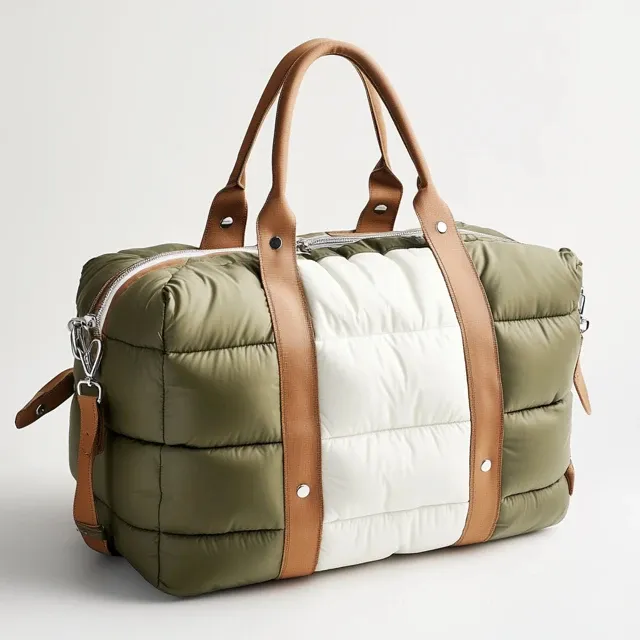
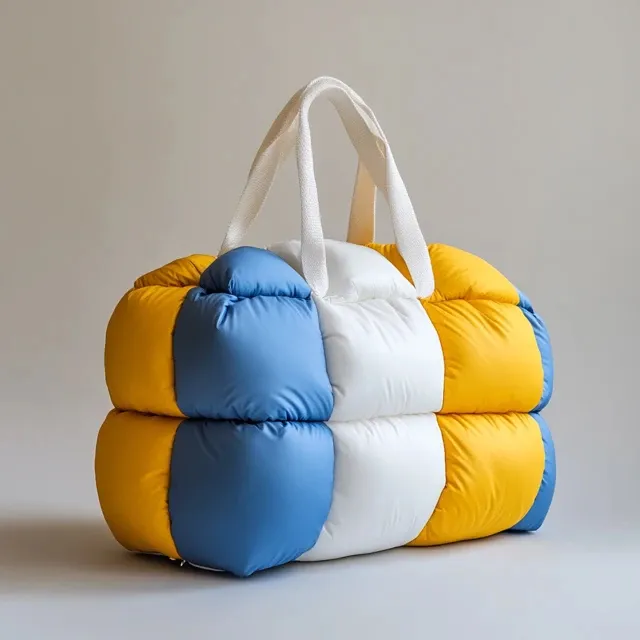
The Production Path a Duffel Bag Follows
A professional duffel bag program is a controlled workflow: clarify requirements, lock the build route, validate with measurable gates, then scale production with repeatable QC.
Primary SEO focus: custom duffel bag oem. Secondary: duffel bag manufacturer, private label bags, custom logo bags, OEM ODM bags.
Process controls behind a repeatable build
We keep one authoritative version of this comparison on the full manufacturing workflow, updated whenever the reference standards move.
Any tour worth taking is a control-point checklist in disguise, not a showroom trip.
Each stage, in the order it happens
- Get the brief straight first: claim, cost target and packing spec, then cut samples.
- Within material sourcing, lock by spec: coating/laminate spec, fabric route, trim vendors.
- Templates, tolerance bands and a reinforcement plan come next.
- Cutting stage: check grain direction plus marker efficiency; hold shade lots steady.
- Sewing and welding: hold the line on stitch spec, seam allowance, critical-zone reinforcement.
- At the final assembly stage, placement jigs position logos, hardware and accessories.
- Inspect to AQL, mark the cartons and raise the shipping documents.
Typical buyer use scenarios
- brand launches
- wholesale programs
- corporate procurement
- retail distribution
Key functions buyers request most
- custom sizing
- durable construction
- logo branding options
- retail-ready packaging
- consistent QC
Choosing the Best Materials for Custom Duffel Bags
| Material | Performance | Cost Range | Preferred For | Advantages & Watch-outs | Risks & How to Control |
|---|---|---|---|---|---|
| nylon | Balanced wear resistance (ISO 13934 tensile to spec); good scuff resistance (ISO 12947 per spec); stable for branding | US$1.6–5.5 / meter (to spec) | Main line items with predictable yield | Advantages: versatile. Trade-offs: performance depends on coating/finish | Lock coating spec, color tolerance and print compatibility; confirm reinforcement mapping |
| PU coated polyester (600D, per spec) | Good repellency (ISO 4920 / AATCC 22 per the specification); moderate barrier (ISO 811 to spec) | US$1.2–6.0 / meter (per spec) | Value/core lines where print clarity matters | Merits: cost controlled. Trade-offs: coating wear over time | Define spray rating targets and scuff resistance benchmarks; protect high-wear zones |
| Recycled RPET (route, as specified) | Sustainability positioning; performance depends on coating/laminate (ISO 4920 / ISO 811 to spec) | US$1.5–3.8 / meter (as specified) | Eco positioning programs and corporate procurement | Upsides: sustainability narrative. Limitations: supply stability and lot drift risks | Lock supplier lots, traceability and color delta; validate print and coating compatibility |
Getting to two or three candidate fabrics
- Let the use case lead: abrasion, load paths and moisture pick the fabric for you.
- Decide whether the claim covers the whole bag or only zones like the main compartment.
- Every referenced ISO/AATCC/ASTM procedure should be listed, together with the numeric bar for approval.
- Choose route-suitable trims, from zipper type and sliders to buckles and webbing strength.
- Confirm that print and branding suit the specified fabric.
- Scuffing and creasing usually trace to transit, not to stitching defects.
Development Sequence for a Custom Build
Fields your tech pack cannot skip
- Artwork files: vector format, color codes, size, and placement coordinates
- Branding method: print/embroidery/patch method, backing, and acceptance examples
- Packing format spec: insert, polybag, carton count, carton marking, barcode placement
- Testing plan: references and pass criteria (ISO/AATCC/ASTM as specified)
- QC checkpoints: what to check at IQC/IPQC/FQC and defect examples
- Revision control: version number, change log, and approval record
Development steps in working order
- Set the buyer, the price bracket and the slot it fills.
- Confirm the claim scope and its test plan by spec.
- Artwork placement, tolerance map, measurement table and BOM: four pieces that make the tech pack.
- Fit, structure and material route get validated at prototype sampling.
- Final BOM, final packaging route: the PP stage.
- Sign-off requirement: QC checklists plus the reference sample, ahead of bulk cutting.
Sampling pitfalls and how to close them
- Confirm fabric shade and coating feel with the actual supplier lot (as specified).
- Review artwork location physically on paper before the selected print process runs.
- Open, close and repack the product many times, watching for corner wear and seam creep.
- Three things need checking per lane: rub marks, folding lines, and defence against humidity.
- One PP sample, built with the final BOM and final packing route, is what needs approval.
Where sample rounds get saved
Reference figures for this stage are maintained centrally: see own-brand programmes for the current values and how they were derived.
A programme that reorders cleanly
Success example (anonymized): a premium program targeting EU & US reduced rework by freezing a single tech pack, running one pre-production sample using the final BOM, and aligning QC checkpoints before cutting. A construction that can be duplicated means each season's reorder goes to the same partner.
Production & Manufacturing Methods for Duffel Bags
Weigh MOQ requirements against turnaround duration and price tier using the options table.
Which method, and why it matters
- Seam construction and reinforcement mapping (anchors, corners, zipper ends, base wear zones)
- Stitch density and thread type for load zones (per spec)
- Fittings installation: jigs, torque control, and anti-loosening measures (per the specification)
How the Mark Goes On, and What Closes the Bag
Branding options and where each fits
Rather than restate a long matrix, this section points to own-brand programmes, where each row carries its method and acceptance value.
Assembly checks before the carton closes
- Brand mark alignment check against placement template
- Zipper end reinforcement and smoothness check
- Visual check for wrinkles, creases, and surface scuffs before packing
Logistics and Fulfilment
Freight milestones to hold
Numbers age badly when copied into dozens of places, so the maintained version of this grid stays on quality control and certification.
Key Factors to Choose a Reliable Duffel Bags Manufacturer
Use this checklist before signing an OEM/ODM contract for duffel bags.
Due diligence, item by item
- Can they work from a pack and tell you what they inferred?
- Are alternatives by spec offered, and BOM sourcing controlled by them?
- Do they evidence QC checkpoints, IQC to IPQC to FQC, and an AQL plan?
- Without hurting workmanship, can they allow a flexible MOQ?
- Can they give firm lead time commitments and a defined escalation path?
- Do they bring packaging and shipping know-how that fits your market?
Audit points to tick before you commit volume
Strengths worth weighing
Condensed here by design — the extended comparison belongs to material selection, alongside the rest of the reference data.
Where Weekender and Gym Constructions Diverge
A weekender and a gym bag are both soft cylindrical carriers, but they pull a pattern in two different directions. The weekender is built to hold its shape when half full: a structured base, a firm interlining behind the shell, a wide top opening and an internal layout that separates clean clothing from shoes. Volumes run 30 to 55 litres, dimensions around 50 x 28 x 28 cm, and the silhouette is expected to look deliberate on a hotel luggage stand.
The gym bag is built around moisture. It is smaller at 20 to 35 litres, collapses flat for locker storage, uses a wipe-clean lining and carries a ventilated compartment for wet kit or shoes. Weight matters more than structure, so interlining is limited to the base and the handle panel. Anti-odour finishes on the lining and grommet or mesh venting at the shoe pocket are standard requests rather than upgrades.
Shell choice follows function. 600D polyester with a PU backing is the gym default because it wipes clean and costs less per square metre; 900D and 1680D polyester and 420D ripstop nylon serve weekender shells where abrasion resistance and hand feel are judged on the shelf. Coated shells are checked to ISO 12947 for abrasion, with 20,000 rubs acceptable for a gym shell and 30,000 to 50,000 for a weekender that will be dragged through airports.
Structure, Hardware and Inside Detail
The parts that generate warranty claims are the same on both families: the base, the strap roots and the main closure. A 4 mm PE or EVA board sits in the base with five or six metal studs on structured versions; bound internal seams stop fraying on unstructured ones; strap roots are box-stitched and bar-tacked over a reinforcement patch. The main closure is a #8 on a medium bag and a #10 on anything above 45 litres, because a loaded lid pushes against the chain.
- Shoe compartment: 6 to 10 litres, two vent grommets or a mesh panel, welded liner.
- Wet pocket: PEVA or TPU laminate liner, radio-frequency welded, no needle holes.
- Trolley sleeve: 20 cm wide, zipped at the bottom so it converts to a pocket.
- Shoulder strap: 38 mm webbing, 5 kg jiggle test, removable with a spring hook.
- Interior: two slip pockets and one zipped pocket under the lid.
Panel count is the main cost driver: a two-panel gym bag and an eight-panel weekender with a separate shoe compartment can differ by 40 percent in cutting and sewing time. Programmes start at MOQ 500 per version, with sampling in 6 to 10 working days, extending to 12 to 15 when a multi-compartment pattern or a welded wet pocket is involved. Bulk runs 35 to 50 days, acceptance is AQL 2.5 under ISO 2859-1 general level II, payment is T/T 30/70 and shipment is FOB Xiamen. Shell selection is covered under custom bag materials.
Frequently Asked Questions (FAQs)
What volume separates a weekender duffel from a gym bag?
Weekenders run 30 to 55 litres at roughly 50 x 28 x 28 cm and are structured enough to hold shape when half full. Gym bags run 20 to 35 litres and are designed to collapse flat for locker storage, so interlining is limited to the base panel.
How should a shoe compartment be vented and lined?
Give the compartment 6 to 10 litres, line it with welded PEVA or TPU rather than sewn nylon, and add two vent grommets or a mesh panel of at least 60 square centimetres. Welded seams keep odour and moisture out of the main body.
How thick should the base board be on a structured duffel?
A 4 mm PE or EVA board is standard, rising to 6 mm above 45 litres or when the bag carries shoes and toiletries. Five or six metal studs lift the shell off the ground, and the board is held in a separate sleeve so it can be removed for washing.
Which zipper gauge suits a duffel main opening?
A #8 chain covers bags up to about 45 litres; above that, or where the lid works against a packed shape, specify #10. The slider should be auto-lock so the chain does not creep open under load, and the tape should be polyester for stability.
What load should a duffel shoulder strap be tested to?
The 38 mm strap is jigged at 5 kg for 2,000 cycles and held at 15 kg static for 30 minutes. The attachment must reach 70 percent of the webbing breaking strength, because in practice the box stitch and reinforcement patch fail before the webbing does.
Which lining materials wipe clean and stay free of plasticiser concerns?
PEVA and TPU laminates wipe clean and avoid the plasticisers associated with PVC, which is restricted at 0.1 percent by weight under REACH Annex XVII. Linings intended for food or toiletries contact are additionally checked against EU 10/2011 overall migration limits.
How long does sampling take for a multi-compartment duffel?
A simple two-panel gym bag samples in 6 to 10 working days. A weekender with a separate shoe compartment, welded wet pocket and structured base takes 12 to 15 working days, with a sample fee of USD 50 to 150 refunded against the bulk order.
Where is the best print position on a duffel bag?
The end panel is the cleanest flat area and prints at up to 20 x 15 cm with one screen, while the long side panel allows a 30 x 12 cm mark but curves at the ends. Screen and setup charges run USD 300 to 2,500 per artwork and colour.
Related Guides
Internal resources
Related blog posts
- Tactical Backpack Manufacturing: MOLLE Webbing & Durability
- Submersible Waterproof Bags: Engineering & Testing
- The Complete OEM Bag Production Process From Design to Shipment
- Tactical Tool Bags for Military & Law Enforcement
- The Ultimate Guide to Waterproof Dry Bags for Outdoor Brands
- The Hidden Costs of Custom Bag OEM (And How to Reduce Them)
Next step
• Lock keyword and claim scope for custom duffel bag oem
• Build a tech pack with BOM + tolerance map
• Choose materials route and validate tests (by spec)
• Plan sampling gates (lead time 6-10 working days)
• Set MOQ and cost targets (MOQ 500 pcs)
• Define QC plan and AQL checkpoints
• Confirm production + shipping timeline (25–35 days)
Start your next bag programme
Send over your requirements; a manufacturing plan and structured RFQ checklist are prepared for you.
Specifications in this category are normally verified against ISO 6330 (domestic laundering), together with AATCC 127 (hydrostatic head) and ISO 2859-1 (AQL sampling) before a purchase order is released.
Related programme guides: custom travel bags · custom gym bags.
Two Use Cases That Look Alike and Spec Very Differently
A weekend duffel and a gym duffel share a silhouette and almost nothing else. Decide which one you are buying before the fabric is ordered, because the difference lives in the lining and the ventilation.
The two products get drawn the same and get returned for different reasons. A weekend bag fails because a damp lining trapped a wet jacket for two days and the bag arrived home smelling. A gym bag fails for exactly that reason plus one more: the user expects the shoe compartment to be genuinely isolated, not a fabric flap that lets a muddy sole touch a clean shirt. Those two complaints point at different bills of materials, and the cheapest moment to choose between them is at the tech pack stage.
Capacity conventions differ too. Weekend buyers read litres and expect 35–55 L for a two-night trip; gym buyers read "fits a pair of size 46 shoes plus kit" and rarely care about the number. Print both if the SKU is genuinely dual-purpose, but do not print a litre figure you have not measured by the water-displacement or bead-fill method, because a disputed capacity claim is one of the easiest ways to generate returns in a category with generous return windows.
Where the Unit Price Actually Moves
Three decisions dominate the quote, and only one of them is the fabric. Start with closure: a standard #5 coil zipper on the main opening is the baseline, while a #8 or a water-resistant reverse coil adds material cost and usually a slower sewing operation. Second is the base — an unprotected fabric base is the cheapest option and the first thing to abrade on a locker-room floor, so most programmes stepping above entry level specify a moulded or laminated baseboard. Third is the wet compartment, which is a lining change, a seam-sealing operation and in welded versions a radio-frequency tool.
- If the bag lives in a car boot or an overhead locker, prioritise packability: softer baseboard, wider mouth, compression straps, and accept less structure.
- If it lives on a gym floor, prioritise isolation and cleanability: welded or taped wet pocket, antimicrobial or wipe-clean liner, abrasion-resistant base fabric.
- If it carries shoes, size the compartment to a stated shoe size rather than a generic "shoe pocket", and give it a vent path to the exterior.
- If the brand sells on logo real estate, reserve one flat, unquilted panel of at least 180 × 120 mm for printing or embroidery before you add pockets.
- If it ships as a gift-with-purchase, design to a freight cube first; an unstructured duffel that packs at 90 units per carton beats a structured one at 55 on landed cost.
Proportion is the decision that gets least attention and costs the most to reverse. A short, deep duffel dumps its contents into one corner and a long, shallow one wastes volume on unusable ends, so the ratio has to be read against what actually goes inside. A duffel at roughly 2.2:1 length-to-diameter carries comfortably on the shoulder and drops into most locker benches; push it towards 3:1 and it reads as a holdall, swings against the leg when carried, and stops fitting the shelf the retailer planned for. Decide the ratio from the storage target rather than from the silhouette drawing, and confirm it against the packed carton dimensions before the pattern is graded. Detachable padded straps suit bags that get carried more than 300 m at a time and are unnecessary weight on a boot-only weekend bag.
On timing, a straightforward shell with a printed logo samples in 6–10 working days and runs 35–50 days after approval. Add a welded wet compartment or a moulded baseboard and you should plan for tooling in the USD 300–2,500 band plus a longer approval cycle. Minimums sit at 500 units per style and colour, with 300 discussable on a genuine repeat programme; the commercial mechanics are laid out on our bag costing and MOQ page, and the material trade-offs are covered under custom gym bag production. Volume also changes the factory conversation: at 20,000 units a month spread across seven lines, a gym programme with one shared shell across three colourways is far easier to schedule than three separate constructions, and it keeps your per-unit price stable across reorders.
Numbers age badly when copied into dozens of places, so the maintained version of this grid stays on quality control and certification.
Rather than repeat the same matrix here, keep the detailed grading with the central reference on material selection — it lists the acceptance numbers and sampling levels our team works to.