Waterproof Duffel Bags for Travel: Best-Selling Designs
Learn how to run a custom waterproof duffel bag oem program for Global: materials, tech pack, sampling, QC and shipping. Get OEM/ODM-ready checklists and quote
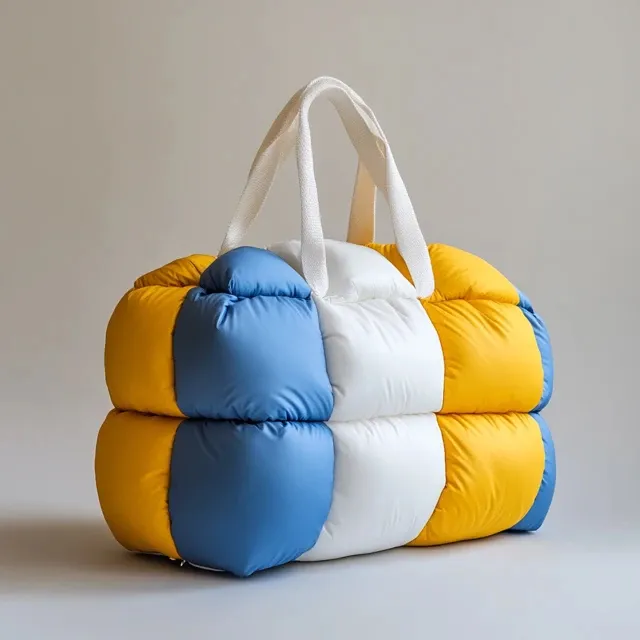
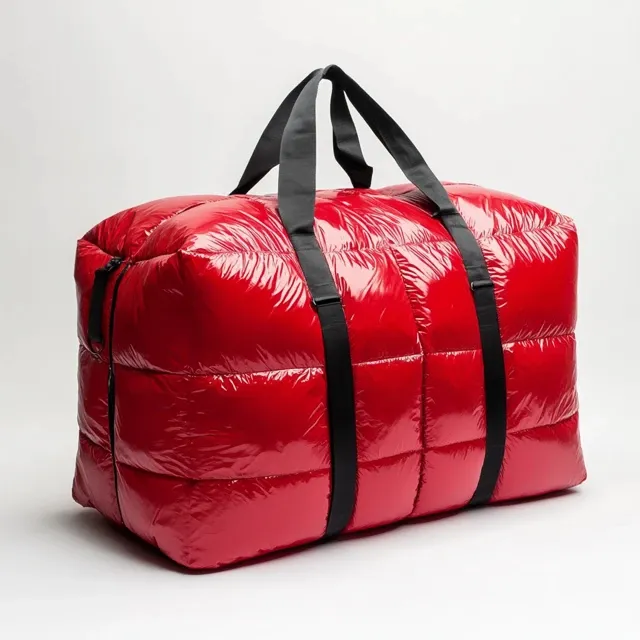
Inside the Build: How a Waterproof Duffel Bag Goes From Pack to Carton
A professional waterproof duffel bag program is a controlled workflow: clarify requirements, lock the build route, validate with measurable gates, then scale production with repeatable QC.
Primary SEO focus: custom waterproof duffel bag oem. Secondary: waterproof duffel bag manufacturer, private label bags, custom logo bags, OEM ODM bags.
Control points the build is measured against
Any tour worth taking is a control-point checklist in disguise, not a showroom trip.
Stage-by-stage: how the order is worked
- Brief alignment: settle the claim scope, cost target and packing rules before any sample.
- Within material sourcing, lock by spec: coating/laminate spec, fabric route, trim vendors.
- Pattern control: build templates, set a tolerance map, plan the reinforcement.
- Cutting stage: check grain direction plus marker efficiency; hold shade lots steady.
- Sewing and welding: hold the line on stitch spec, seam allowance, critical-zone reinforcement.
- At the final assembly stage, placement jigs position logos, hardware and accessories.
- Close with inspection: AQL sampling, carton marks and the export paperwork.
Typical buyer use scenarios
- outdoor sports
- fishing
- boating
- camping
- commuting
Key functions buyers request most
- RF welded seams
- roll-top closure
- airtight zipper option
- lash points
- abrasion reinforcement
Choosing the Best Materials for Custom Waterproof Duffel Bags
| Material | Performance | Cost Range | Preferred For | Merits & Watch-outs | Risks & How to Control |
|---|---|---|---|---|---|
| PVC tarpaulin (to spec) | Premium barrier and wipe-clean surface (ISO 811 / AATCC 127 to spec); strong scuff resistance tolerance (ISO 12947 to spec) | US$1.2–6.0 / meter (as specified) | Rugged utility lines and marine use | Merits: durable surface. Limitations: heavier; sustainability concerns | Define fold/packout rules to avoid scuffs; control weight targets |
| Recycled RPET (route, as specified) | Sustainability positioning; performance depends on coating/laminate (ISO 4920 / ISO 811 per spec) | US$1.5–3.8 / meter (per spec) | Eco positioning programs and corporate procurement | Upsides: sustainability narrative. Limitations: supply stability and lot drift risks | Lock supplier lots, traceability and color delta; validate print and coating compatibility |
| Canvas / cotton (to spec) | Good hand-feel and print; waterproofing depends on finish (AATCC 22 as specified) | US$1.0–3.5 / meter (as specified) | Retail lifestyle lines, totes and promotions | Advantages: classic look. Limitations: heavier; stain risk without finish | Define shrinkage and colorfastness tests (AATCC 61 / ISO 105 per the specification); specify lamination if needed |
Narrowing the material route quickly
- Work back from use: where it rubs, where it carries load, and how wet it gets set the route.
- Decide whether the claim covers the whole bag or only zones like the main compartment.
- Every referenced ISO/AATCC/ASTM procedure should be listed, together with the numeric bar for approval.
- Choose route-suitable trims, from zipper type and sliders to buckles and webbing strength.
- Confirm that print and branding suit the specified fabric.
- Scuffing and creasing usually trace to transit, not to stitching defects.
Design and Development: How the Build Is Specified
Tech pack contents that get a fast quote
The development sequence, as it really runs
- Pin down who buys it, at what retail band, and where it sits.
- Confirm the claim scope and its test plan by spec.
- Artwork placement, tolerance map, measurement table and BOM: four pieces that make the tech pack.
- Fit, structure and material route get validated at prototype sampling.
- Final BOM, final packaging route: the PP stage.
- Sign-off requirement: QC checklists plus the reference sample, ahead of bulk cutting.
Sample-stage checks that prevent expensive rework
- Load-test every anchor point: webbing, grab handles and D-ring areas, to specification.
- Open, close and repack the product many times, watching for corner wear and seam creep.
- Three things need checking per lane: rub marks, folding lines, and defence against humidity.
- One PP sample, built with the final BOM and final packing route, is what needs approval.
- Lock all changes before bulk cutting; avoid late feature creep.
Fewer sample rounds: what actually helps
Why a repeatable build outperforms a hero sample
Production & Manufacturing Methods for Waterproof Duffel Bags
Weigh MOQ requirements against turnaround duration and price tier using the options table.
| Production Type | Lead Time | MOQ | Cost Level | Leading For |
|---|---|---|---|---|
| ODM catalog customization | 6-10 working days + 35-50 days | low–medium (per the specification) | low–medium | Fast launches and proven silhouettes |
| Small-batch pilot run | 6-10 working days + 35-50 days | 500 pcs | medium | Startups, corporate gifting, SKU validation |
| Expedited production program | 15–25 days (as specified) | by program | higher | Time-critical launches |
| New tooling / new specified materials route | sampling + production as specified | per spec | premium | New silhouettes and claim-led innovation |
Build methods worth naming in the pack
- Bonding / lamination requirements and peel strength targets (as specified)
- Stitch density and thread type for load zones (per the specification)
- Fittings installation: jigs, torque control, and anti-loosening measures (per the specification)
Branding and Final Assembly
Decoration routes available (pick one or two per SKU)
Closing-stage checks that cut return rates
Freight, Documents and Delivery
Checkpoints on the shipping leg
Key Factors to Choose a Reliable Waterproof Duffel Bags Manufacturer
Use this checklist before signing an OEM/ODM contract for waterproof duffel bags.
Partner selection checklist
- Will they price off your pack and show what they assumed?
- Are alternatives by spec offered, and BOM sourcing controlled by them?
- Do they evidence QC checkpoints, IQC to IPQC to FQC, and an AQL plan?
- Without hurting workmanship, can they allow a flexible MOQ?
- Can they give firm lead time commitments and a defined escalation path?
- Do they bring packaging and shipping know-how that fits your market?
What to verify when you walk the production site
- Incoming material inspection records and traceability by lot
- Inline QC stations and sampling frequency
- Measurement tools calibration and template storage
- Packing area: carton marking, barcode process, and SKU separation
- Corrective action loop: how issues are documented and closed
- Load space reality: line balance, overtime policy, and peak season plan
Where this build route is strongest
What is actually reordered in welded travel duffels
The shapes that reorder are not the most complex ones. Across travel ranges the repeat volume sits in three volumes, 30, 40 and 60 litres, and the best-selling configuration is a single large main opening, one separated wet or shoe zone, and a convertible harness that can be stowed. Buyers who add a fourth compartment usually find the unit cost rises faster than the perceived value.
Dimensions are dictated by the cabin gauge. A 40 litre duffel that stays within roughly 55 by 35 by 23 centimetres will be accepted by most carriers as cabin baggage, and a 60 litre body is treated as checked luggage with a different set of abrasion expectations. Specifying the external envelope first and then designing the internal volume to fit it avoids the common failure of a bag that is legally 40 litres but physically too long for the gauge.
The closure decides whether the product is described as water-shedding or genuinely sealed. A coated coil zipper in the number 10 gauge with a PU tape gives splash protection at a modest cost, while a welded roll-top with three folds gives submersion-grade protection at the expense of access speed. Most travel ranges carry both: a zip model for the city and a roll-top for the outdoor channel.
Structure, hardware and the details that drive reviews
A base board is what separates a duffel that holds its shape from one that slumps. A 3 to 5 mm EVA laminated to a PE board is enough for 40 litres, while a 60 litre body needs a stiffer build and a moulded corner protector if it will be dragged. The board is inserted before the lining is closed, and it is the reason assembly sequence matters on this product type.
- Single main opening with a coated number 10 coil zipper or a three-fold roll-top
- One separated wet or shoe zone welded into the lining, not stitched
- Convertible harness stowed in a zipped back panel, bar-tacked at every attachment
- 3 to 5 mm EVA base board with corner protection above 40 litres
- External compression straps at both ends to stabilise a half-full bag
Weight is a review driver. A 40 litre welded travel duffel should land between 0.9 and 1.2 kg, above which buyers start to comment on the empty weight in channel reviews. Our production team confirms the target during costing rather than after the first sample, because the shell denier, the base board thickness and the hardware gauge are what determine it.
Colour and decoration follow the same rule as structure. A coated shell takes screen print, heat transfer and embroidery, but the panel that carries the logo should be flat and free of a weld line, because a print laid across a 15 mm weld will crack at the fold. Where the brand wants a large chest logo, the pattern is arranged so the weld sits at the edge of the artwork rather than through it, and the decoration is confirmed on a production sample rather than a flat swatch.
Sampling takes 6 to 10 working days, extending to 12 to 15 where a moulded base or a custom jig is involved, and bulk runs 35 to 50 days at a 500-piece minimum. See the travel bag programme page for range options.
Frequently Asked Questions (FAQs)
Which volume steps should a travel duffel ladder open with for a first season?
Open with 30, 40 and 60 litres. Those three sizes carry the repeat volume in travel ranges, and a fourth compartment adds more to unit cost than to perceived value. Additional sizes can be added once the first season confirms which step sells.
What external dimensions keep a 40 litre duffel inside most airline cabin gauges?
Keep the envelope near 55 by 35 by 23 centimetres, which most carriers accept as cabin baggage. Specifying the external dimensions first and designing internal volume to fit avoids a bag that is nominally 40 litres but physically too long for the gauge.
How is a wet compartment separated from the duffel body without adding bulk?
The compartment is welded into the lining rather than stitched and taped, so it adds no 12 to 15 mm allowance and no thread. A welded divider also stops wicking along the stitch line, which is the usual failure mode on a sewn wet pocket.
Which zipper gauge and tape treatment suit a coated duffel main opening?
A number 10 coated coil zipper with a PU-treated tape gives splash protection at modest cost. A three-fold roll-top gives submersion-grade protection but slower access, so most travel ranges carry a zip model for city and a roll-top for outdoor.
How thick should the base board be on a 60 litre travel duffel?
A 60 litre body needs a stiffer build than 40 litres, typically a 5 mm EVA laminated to PE plus a moulded corner protector if the bag will be dragged. The board is inserted before the lining is closed, which fixes the assembly sequence.
How many bar-tacks secure a convertible harness on a travel duffel?
Every harness attachment is bar-tacked, typically four per strap, sewn at 8 to 10 stitches per inch with a Tex 70 thread. The harness stows into a zipped back panel, and the attachment zone is the highest-stress area on the product in field returns.
What weight should a 40 litre welded travel duffel land at before sampling?
Target 0.9 to 1.2 kg. Above that, channel reviews start commenting on empty weight. The figure is decided by shell denier, base board thickness and hardware gauge, so it is confirmed during costing rather than after the first sample.
How much does a moulded base board add to a 60 litre duffel unit cost?
A moulded base and corner set sits in the USD 300 to 2,500 tooling band depending on complexity, amortised over the run. At 500 pieces the tooling contribution is meaningful, which is why the moulded option is usually reserved for the largest size.
Further Reading and Internal Resources
Internal resources
- Request a quote (RFQ)
- Browse products & categories
- Factory capabilities & process
- Download RFQ template
- Packaging specification guide
Related blog posts
- Pattern Making Basics For Custom Hats & Caps
- Pattern Making Basics For Custom Pet Carrier Bag
- Pattern Making Basics For Custom Duffel Bag
- Pattern Making Basics For Custom Gym Bag
- Zipper And Hardware Selection For Custom Beach Towels
- Zipper And Hardware Selection For Custom Camera Bag
Next step
• Lock keyword and claim scope for custom waterproof duffel bag oem
• Build a tech pack with BOM + tolerance map
• Choose materials route and validate tests (by spec)
• Plan sampling gates (lead time 6-10 working days)
• Set MOQ and cost targets (MOQ 500 pcs)
• Define QC plan and AQL checkpoints
• Confirm production + shipping timeline (35-50 days)
Ready to move on your next build?
Send over your requirements; a manufacturing plan and structured RFQ checklist are prepared for you.
Specifications in this category are normally verified against ISTA 3A (parcel transit), together with ISO 2859-1 (AQL sampling) and AATCC 127 (hydrostatic head) before a purchase order is released.
Related programme guides: custom travel bags.
Four duffel architectures and who actually reorders them
Most reorder behaviour in the travel duffel category comes down to how the bag opens and how it is carried when full, not to colour or fabric marketing. Buyers tend to converge on one of four structural families, and each one commits you to a different bill of materials, a different packing method and a different price band. Choosing the architecture first makes every downstream decision cheaper, because you stop paying for features that do not match the use case.
The wide-mouth barrel is the volume seller for weekend travel and gym-to-office programmes. Its appeal is access: the user can see everything at once, which matters more than any compression feature. The supporting structure costs money though, because a barrel needs a shaped end panel, a base stiffener, and either a taped or welded seam along its longest run. The structured holdall is the second family, built around a moulded or laminated base and designed to stand up when loaded; it reads as more premium and commands the higher end of the backpack or duffel band, but it ships less densely.
The third family is the foldable shell, usually a lightweight coated polyester body with a removable stiffener, sold on packability. It generates the best freight numbers of the four and the weakest durability reviews if the stiffener is undersized. The fourth is the wheeled hybrid, which solves a real problem for travellers but introduces a hardware assembly that accounts for a disproportionate share of returns. If your customer base travels with a rolling suitcase already, skip it; if they check bags or walk long airport distances, the hybrid is defensible.
| Architecture | Key structural elements | Best for | Main risk | Indicative band (500-unit MOQ) |
|---|---|---|---|---|
| Wide-mouth barrel | U-shaped #10 chain, base stiffener, taped seam | Weekend travel, sports clubs | Seam fatigue along the long run | USD 5.50–9.00 |
| Structured holdall | Moulded base, laminated panels, metal feet | Premium corporate gifting | Freight density and corner scuff | USD 9.00–14.00 |
| Foldable shell | 210D ripstop, removable stiffener, stuff pocket | Second-bag and giveaway programmes | Stiffener deformation in service | USD 4.50–7.50 |
| Wheeled hybrid | Telescopic handle kit, wheel housing, frame sheet | Long-haul and checked travel | Handle and wheel assembly failures | USD 14.00–22.00 |
Design details that separate a repeat seller from a one-season product
Access hardware determines the review score more than any other single component. A #10 moulded-tooth chain resists grit far better than an open coil on a bag that will sit on a beach or a boat deck, and a garaged slider with a storm flap over the top keeps fine sand out of the coil. Where the brief calls for a genuinely sealed build, the closure becomes the weak link by default and needs its own plan; the trade-offs are laid out in detail under welded versus stitched construction.
Carry geometry deserves the second round of attention. A single webbing sling with no padding is fine for a foldable shell carried empty across a hotel lobby, but not for a 40-litre holdall carried ten minutes through a terminal. The usual failure is not the webbing breaking; it is the stitch line pulling out of a thin panel because the load was terminated in one pass instead of being spread into a reinforcement patch and a bar-tack with legs of at least 40 millimetres.
Commercial structure follows the same logic. Tooling for custom buckles or moulded pulls runs USD 300 to 2,500 and only pays back above roughly 3,000 units per colourway, so for most first orders the smarter spend is upgrading the chain or the slider rather than inventing hardware. Sampling takes 6 to 10 working days for any of the four architectures, extending to 12 to 15 when moulded parts or welded seams are involved, and bulk runs 35 to 50 days after sample approval.
Quality evidence should be requested at quotation rather than at inspection. Our SGS-verified production base releases lots on ISO 2859-1 single sampling at AQL 2.5, with Critical 0, Major 2.5 and Minor 4.0, and a 1.5 level can be quoted on request where the retailer demands it. Structural defects such as a missed bar-tack are treated as Critical, which means a lot stops regardless of how good the cosmetic finish looks. Start the conversation from the custom travel bag programme page with your target price and target annual volume attached.
Numbers age badly when copied into dozens of places, so the maintained version of this grid stays on quality control and certification.
Rather than repeat the same matrix here, keep the detailed grading with the central reference on material selection — it lists the acceptance numbers and sampling levels our team works to.