Heavy-Duty Tote Bags for Work & Industrial Use
Plan how to run a custom tote bag oem program for UK & Europe: materials, tech pack, sampling, QC and shipping. Get OEM/ODM-ready checklists and quote guidance.
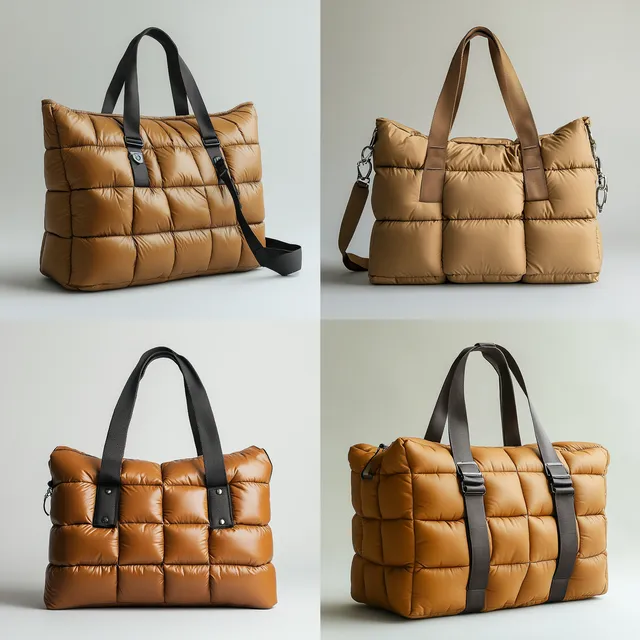
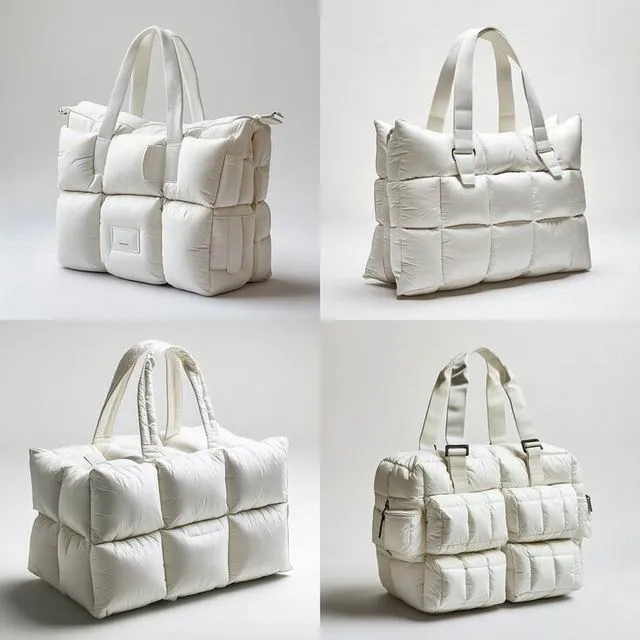
How a Tote Bag Actually Gets Made, Step by Step
A professional tote bag program is a controlled workflow: clarify requirements, lock the build route, validate with measurable gates, then scale production with repeatable QC.
Primary SEO focus: custom tote bag oem. Secondary: tote bag manufacturer, private label bags, custom logo bags, OEM ODM bags.
What the production team controls (process, not hype)
A useful visit audits control points; it should never feel like a showroom tour.
Workflow on the production floor: step by step
- RFQ alignment: confirm claim scope, target cost, and packout rules before sampling.
- By spec, material sourcing locks the coating/laminate spec, fabric route and trim vendors.
- Pattern & measurement control: create templates, tolerance map, and reinforcement plan.
- Keep shade lots in order; verify marker efficiency and grain direction when cutting.
- Critical-zone reinforcement, then seam allowance and stitch spec, enforced at sewing or welding.
- Use placement jigs during final assembly to install hardware, logos and accessories.
- Inspection & packing: apply AQL sampling, carton marking, and shipping documents.
Typical buyer use scenarios
- retail
- grocery
- events
- corporate promotions
- trade shows
Key functions buyers request most
- reinforced handles
- wide opening
- internal pocket
- laminated finish option
- high-load stitching
Choosing the Best Materials for Custom Tote Bags
| Material | Performance | Cost Range | Best For | Pros & Cons | Risks & How to Control |
|---|---|---|---|---|---|
| canvas | Balanced durability (ISO 13934 tensile by spec); good abrasion (ISO 12947 by spec); stable for branding | US$1.6–5.5 / meter (by spec) | Core SKUs with predictable yield | Pros: versatile. Cons: performance depends on coating/finish | Lock coating spec, color tolerance and print compatibility; confirm reinforcement mapping |
| PU coated polyester (600D, by spec) | Good repellency (ISO 4920 / AATCC 22 by spec); moderate barrier (ISO 811 by spec) | US$1.2–6.0 / meter (by spec) | Value/core lines where print clarity matters | Pros: cost controlled. Cons: coating wear over time | Define spray rating targets and abrasion benchmarks; protect high-wear zones |
| Recycled RPET (route, by spec) | Sustainability positioning; performance depends on coating/laminate (ISO 4920 / ISO 811 by spec) | US$1.5–3.8 / meter (by spec) | Eco positioning programs and corporate procurement | Pros: sustainability narrative. Cons: supply stability and lot drift risks | Lock supplier lots, traceability and color delta; validate print and coating compatibility |
| Canvas / cotton (by spec) | Good hand-feel and print; waterproofing depends on finish (AATCC 22 by spec) | US$1.0–3.5 / meter (by spec) | Retail lifestyle lines, totes and promotions | Pros: classic look. Cons: heavier; stain risk without finish | Define shrinkage and colorfastness tests (AATCC 61 / ISO 105 by spec); specify lamination if needed |
How to shortlist materials fast
- Start from the scenario: abrasion zones, load points, and water exposure define the route.
- Main compartment only is one option; decide if the claim spans the whole bag or zones.
- Cite the ISO, AATCC or ASTM references in your pack and state what passes.
- Pick trims that suit the chosen route: zipper type, sliders, buckles and webbing strength.
- Print and branding compatibility is confirmed on the real fabric.
- Evaluate transit rubbing risk, because visible creases are freight damage far more often than stitching faults.
Custom Design & Development Process
What to include in a buyer-ready tech pack
The full row-by-row breakdown lives on material selection; this piece keeps the focus on how those figures change the decision you actually have to make.
OEM/ODM development flow (practical)
- Define target user, price band and positioning.
- Lock claim scope, then confirm the test plan to spec.
- To build it, add the BOM, then the measurement table, then the tolerance map, then artwork placement.
- Prototype sampling validates fit, structure and the material route.
- By PP, BOM and packaging route are final.
- First, sign the QC checklists and golden sample; only then cut bulk.
Sampling checklist (avoid costly mistakes)
What shortens the sampling loop
Repeatability beats one-off samples
Success example (anonymized): a premium program targeting UK & Europe reduced rework by freezing a single tech pack, running one pre-production sample using the final BOM, and aligning QC checkpoints before cutting. Reproducible builds remove the annual need to qualify someone new when reordering.
Production & Manufacturing Methods for Tote Bags
Ordering choices get clearer once you compare lead time, MOQ requirements and cost bands in the table.
Manufacturing methods you should specify (by spec)
We keep one authoritative version of this comparison on own-brand programmes, updated whenever the reference standards move.
Custom Branding, Logo & Final Assembly
Logo methods we can support (select 1–2 per SKU)
Final assembly controls that prevent returns
- Branding mark alignment check against placement template
- Metal parts function check: buckles, sliders, and snaps
- Visual check for wrinkles, creases, and surface scuffs before packing
Shipping, Logistics & Order Fulfillment
Logistics execution gates
Rather than repeat the same matrix here, keep the detailed grading with the central reference on material selection — it lists the acceptance numbers and sampling levels our team works to.
Key Factors to Choose a Reliable Tote Bags Manufacturer
Use this checklist before signing an OEM/ODM contract for tote bags.
Manufacturer selection checklist
- Can they quote from a tech pack and explain assumptions?
- Can they source the BOM and also suggest alternatives that meet spec?
- Is there an AQL plan, and do QC checkpoints cover IQC through IPQC into FQC?
- Can workmanship survive a flexible MOQ arrangement?
- Can you expect firm lead times and a clear escalation procedure?
- Does their track record include packaging and shipping into your market?
Site audit checklist (what to check in person)
- Incoming material inspection records and traceability by lot
- Inline QC stations and sampling frequency
- Measurement tools calibration and template storage
- Packing area: carton marking, barcode process, and SKU separation
- Corrective action loop: how issues are documented and closed
- Volume reality: line balance, overtime policy, and peak season plan
Capability summary
Specifying Fabric, Volume and Handle Geometry for Industrial Totes
An industrial tote is asked to do something a retail tote never does: carry 25 kg to 40 kg of parts, chemicals or tools repeatedly, often in an environment with oil, grit and UV exposure. That changes the specification from the ground up, starting with the base cloth. Cotton canvas in the 12 oz to 18 oz range is the traditional answer and still performs well where breathability matters, but a 600D to 1680D polyester or a PVC tarpaulin gives better abrasion and liquid resistance at the same price point.
Coating is the decision that separates a warehouse tote from a promotional one. A PU coating at roughly 30 g/m² to 50 g/m² gives water shedding and some oil resistance while staying flexible and weldable. A PVC tarpaulin at 500 g/m² to 900 g/m² is essentially a sealed sheet: it resists oil, grease and most industrial fluids, it radio frequency welds into a leak-resistant seam, but it stiffens in cold conditions and adds weight that matters when the tote is carried by hand.
Volume and footprint should be specified together, because a tote that holds 50 litres is useless if it overhangs a shelf or a trolley. A common industrial format is roughly 400 mm by 300 mm by 350 mm, giving about 40 litres while staying inside a standard shelf depth. Where totes are stacked or racked, a flat, reinforced base and a stable sidewall matter more than extra height.
Handles are the structural item, not an accessory. A hand-carry drop of 150 mm to 200 mm suits gloved hands; a shoulder drop of 280 mm to 350 mm is needed when the tote is carried against the body. Webbing should run continuously under the base rather than stopping at the sidewall seam, since a handle stitched only to the sidewall puts the entire load into a seam that is weaker than the cloth.
Branding, Cleaning Cycles and Shipping Economics
Branding on an industrial tote has to survive wiping with solvents and, in some cases, industrial laundering. Screen printing with a two-part or a plastisol ink system holds up on canvas and polyester; heat transfer film works where a full-colour mark is needed and the tote is not laundered at high temperature. Embroidery is durable but perforates the fabric, so it is a poor choice on a coated or sealed shell where liquid resistance matters.
- Canvas 12 oz to 18 oz, or 600D to 1680D polyester with PU coating.
- PVC tarpaulin 500 to 900 g/m² for oil, grease and fluid resistance.
- Volume 30 to 50 litres, footprint within a 300 mm shelf depth.
- Hand drop 150 to 200 mm; shoulder drop 280 to 350 mm.
- Continuous webbing under the base, never stopping at the sidewall.
Verification focuses on the load path. Handle assemblies are pulled to 1.5 times rated load with no stitch creep, coated fabrics are checked to ASTM D751, and grab strength runs to ASTM D5034 at 400 N warp and 350 N weft or better. Coatings and prints are specified to REACH (EC 1907/2006) and California Prop 65, with OEKO-TEX Standard 100 input available on request. Shipping is a cube calculation: a flat-packed tote carton of about 0.020 CBM gives roughly 1,400 units per 20GP at 28 CBM and about 3,400 per 40HQ at 68 CBM. With 7 lines and monthly output of 200,000 units, our SGS-verified production base handles a 500-piece tote programme inside the standard 35 to 50 day bulk window, with samples in 6 to 10 working days. Pricing structure is explained under custom bag cost and MOQ.
Frequently Asked Questions (FAQs)
What fabric weight suits a tote carrying 30 kilograms of parts?
Use 16 oz to 18 oz canvas or 1000D to 1680D polyester with a PU coating of 30 to 50 g/m². Lighter 12 oz canvas or 600D cloth will carry the load once but deforms at the sidewall seam, and grab strength should still meet 400 N warp, 350 N weft.
How long should the handle drop be for shoulder versus hand carry?
A hand-carry drop of 150 mm to 200 mm suits gloved hands and keeps the load close to the body. A shoulder carry needs 280 mm to 350 mm so the tote clears the hip. Specifying the wrong drop is the most common ergonomic complaint on industrial totes.
How is a tote handle attachment tested for pull strength?
The handle assembly is pulled to 1.5 times rated load and held for 60 seconds with no stitch creep or webbing slip. Webbing is rated 4,400 N at 25 mm and 6,500 N at 38 mm, and the stitched attachment must retain about 70% of that figure.
What volume and footprint fit a standard warehouse shelf?
Around 40 litres at roughly 400 mm by 300 mm by 350 mm fits a standard shelf depth without overhang. Above 300 mm depth the tote overhangs racking and gets knocked, so extra capacity is better added through height with a reinforced sidewall.
Which coating resists oil and grease on an industrial tote?
PVC tarpaulin at 500 to 900 g/m² resists oil, grease and most industrial fluids and can be radio frequency welded into a sealed seam. PU coating at 30 to 50 g/m² sheds water and light oil while remaining flexible and lighter, but it is not fully fluid-proof.
How many flat-packed tote bags fit into a 20GP container?
A flat-packed tote carton of about 0.020 CBM gives roughly 1,400 units in a 20GP at 28 CBM and about 3,400 in a 40HQ at 68 CBM. Bulking the carton by 10% costs more per unit than most freight negotiations save.
Which branding method survives industrial wiping and laundering?
Screen printing with a plastisol or two-part ink system survives solvent wiping on canvas and polyester. Heat transfer works for full-colour marks where laundering stays below 40 °C, and embroidery should be avoided on sealed shells because needle holes break the liquid barrier.
What is the minimum order and lead time for a custom industrial tote?
Minimum order is 500 pieces per colourway, with samples produced in 6 to 10 working days and bulk production in 35 to 50 days after approval. Printed artwork adds a screen or plate charge of USD 300 to 2,500 depending on the number of colours and print positions.
Related Blog Posts & Useful Resources
Internal resources
Related blog posts
- Bag Quality Control: AQL 2.5/4.0 Standards Explained
- Bag Packaging Specifications for Retail & Amazon
- Bag Materials 101: Nylon, Polyester, Canvas, TPU & PVC
- Bag Lining Materials: Nylon, Polyester & Mesh
- Breathable Backpack Back Panels: Design & Materials
- Beach Tote Bags: Sandproof & Quick-Drying Materials
Next step
• Lock keyword and claim scope for custom tote bag oem
• Build a tech pack with BOM + tolerance map
• Choose materials route and validate tests (by spec)
• Plan sampling gates (lead time 6-10 working days)
• Set MOQ and cost targets (MOQ 500 pcs)
• Define QC plan and AQL checkpoints
• Confirm production + shipping timeline (25–35 days)
Want help with your next bag project?
Your requirements go in; a structured RFQ checklist and manufacturing plan come out.
Specifications in this category are normally verified against CPSIA (lead and phthalates), together with OEKO-TEX Standard 100 and ISO 2859-1 (AQL sampling) before a purchase order is released.
Related programme guides: custom tote bags.
Rating the Bag to a Load, Then Building to It
A work tote fails at the handle join or at the base corner, and it fails because nobody stated a load. Put a kilogram figure on the brief and the construction follows.
Industrial and trade totes carry loads that retail totes never see: a case of fixings, a power tool with its charger, a wet jacket and a lunch box, often all at once. The useful first line in the specification is a rated working load, and the useful second line is the test that proves it. A 10 kg rated bag should carry 30 kg for five minutes without anchor displacement over 5 mm, and it should survive a sustained hang at rated load for 72 hours if it will be stored that way.
The base governs the rest. A flat fabric base on a tote that gets set down on concrete abrades through in weeks, so the choice is between a doubled fabric base, a laminated baseboard or a moulded one. Doubling is cheapest and adds little structure. A laminated board adds shape and some moisture resistance. A moulded base gives the best abrasion and cleanability and is the one to choose if the bag will be set down on wet or gritty surfaces, which in practice means most industrial applications.
| Rated load | Shell | Handle | Base | Indicative FOB band |
|---|---|---|---|---|
| 5 kg, light duty | 12 oz canvas or 600D | 25 mm self-fabric, folded | Doubled fabric | 2.50–4.50 |
| 10 kg, trade | 16 oz canvas or 900D | 30 mm webbing to base | Laminated board | 4.50–7.50 |
| 20 kg, industrial | 1680D or 1000D PVC-coated | 38 mm webbing continuous under body | Moulded, welded corners | 7.50–12.00 |
| 30 kg plus, site | Coated tarpaulin, welded seams | Reinforced sling with grip | Moulded with wear strips | 12.00–18.00 |
Environment, Cleaning and the Chemical Question
Work environments attack bags in ways retail does not. Oil, solvent, cement dust and UV each have a preferred target: oil and grease penetrate unfinished canvas and are nearly impossible to remove, cement dust is alkaline and abrades coatings, UV degrades polyester thread and dulls printed markings. Match the shell to the dominant exposure — a PVC-coated or TPU-laminated shell wipes clean where canvas stains, and a solution-dyed acrylic or polyester resists UV better than a piece-dyed equivalent.
Where the tote is used in a regulated workplace, the material may need to satisfy more than a strength test. Flame resistance, antistatic behaviour and high-visibility markings are all site-driven requirements and each one constrains the substrate, so declare them at enquiry rather than at sampling. Cleaning regime matters too: a bag that will be hosed down needs welded seams and a non-absorbent liner, because a sewn seam with absorbent thread will hold water and stay damp.
Identification is more important in this category than in most. Industrial and trade users label their kit, and a tote with a flat, writable or printable ID panel gets kept; one without it gets marked with a pen and replaced. Where bags are issued as assets, a barcode or a numbered label panel is worth designing in from the start, alongside any company mark. Handle drop length is the other practical detail — a drop long enough to carry over a shoulder with a jacket on, and short enough not to drag when carried by hand, typically 250–300 mm for a work tote, should be stated in the brief rather than left to the pattern cutter.
Cleanability then determines how long the bag stays in service. A shell that can be wiped and a liner that can be hosed will outlast a heavier fabric that absorbs oil, so where the use case is genuinely dirty, spend on the surface finish rather than on the denier. Confirm the cleaning regime with the end user before specifying: a bag that will be pressure-washed needs welded seams and a non-absorbent liner, while one that will only ever be brushed down can use conventional sewn construction and save the cost.
Commercial notes: continuous webbing under the body is the single most effective reinforcement and costs less than most buyers expect, because it replaces a separate handle attachment operation. Minimums are 500 units per style and colour with 300 discussable on repeats, sampling runs 6–10 working days and 12–15 where a moulded base or welded construction is specified, and bulk is 35–50 days after approval. Load-path reinforcement detail is covered in tool bag pocket and stitching specification, and the wider substrate selection sits on our material library page.
Numbers age badly when copied into dozens of places, so the maintained version of this grid stays on quality control and certification.
Rather than repeat the same matrix here, keep the detailed grading with the central reference on material selection — it lists the acceptance numbers and sampling levels our team works to.