Bag Quality Control: AQL 2.5/4.0 Standards Explained
Plan how to run a custom custom bag oem program for Global: materials, tech pack, sampling, QC and shipping. Get OEM/ODM-ready checklists and quote guidance.
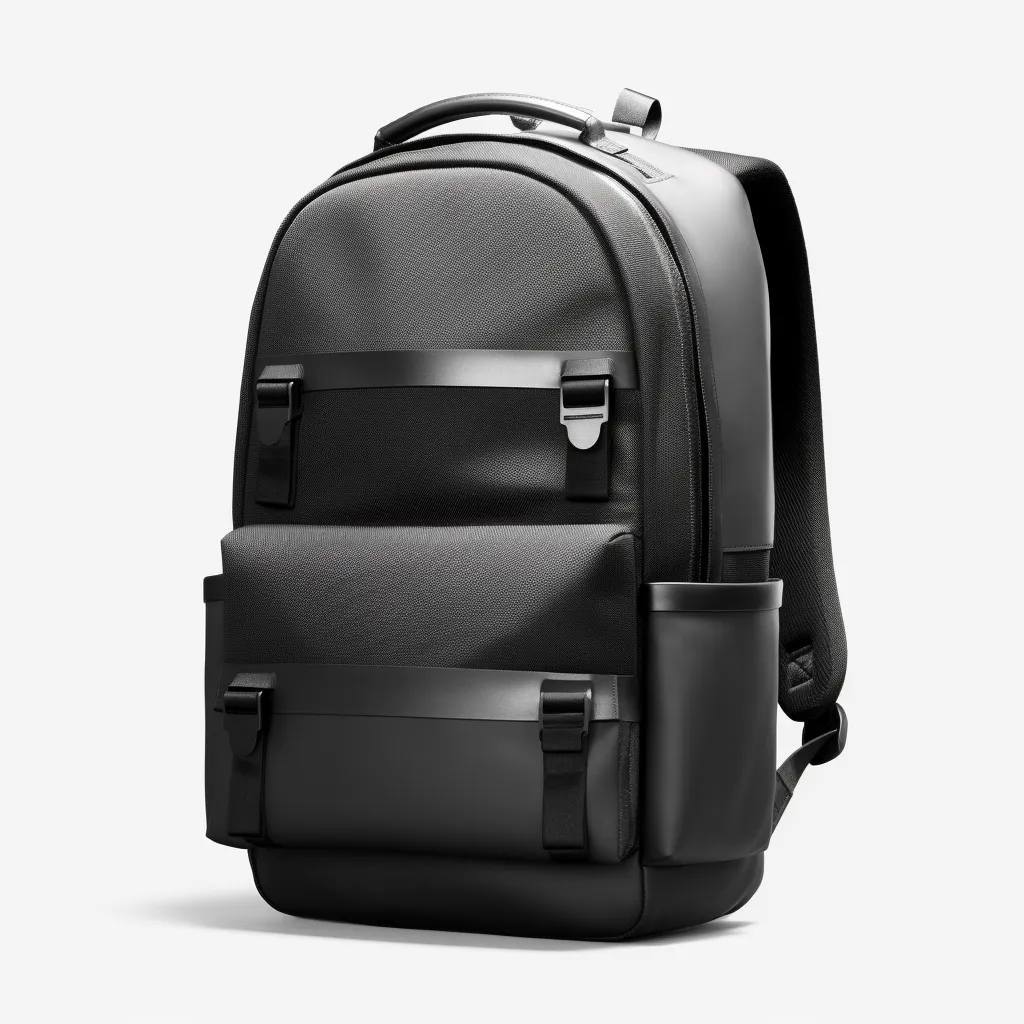
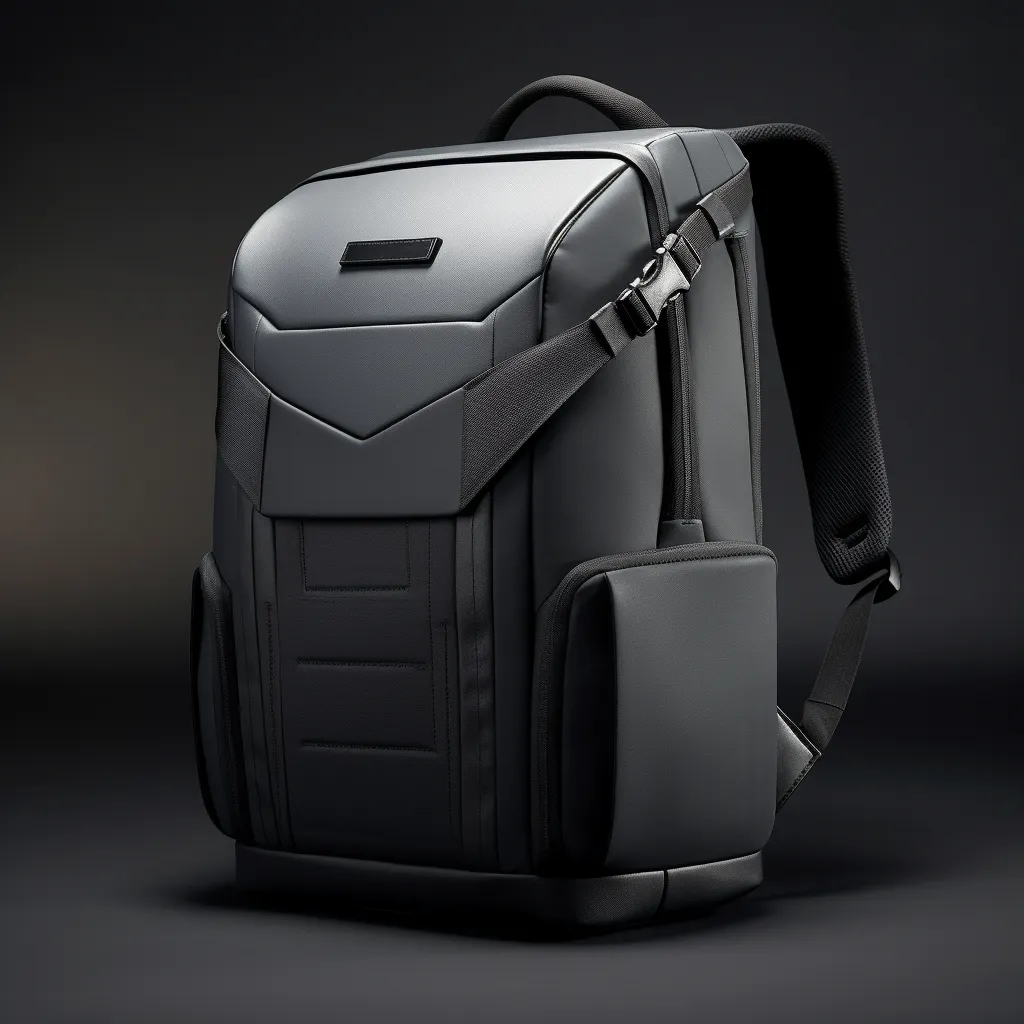
What Happens Between Your PO and the Loading Bay
If you are targeting Global with a mid-range positioning, the key is to prevent variance: materials, trims, workmanship and packout rules must be written and checked.
SEO priority: custom bag OEM. Secondary: bag quality control, custom bag manufacturer, private label bags, custom logo bags, OEM ODM bags.
Which variables the programme actually locks down
- 15+ years experience in custom sports & outdoor bag manufacturing
- Full customization: logo, size, material, color, structure, packaging
- Free professional design & 3D rendering service
Judge the visit by the records you are shown, not by the display wall.
The sequence from cutting table to carton
- Start by agreeing claim scope, budget band and packout, then sample.
- By spec, material sourcing locks the coating/laminate spec, fabric route and trim vendors.
- Draft the patterns, fix the tolerances and map where reinforcement goes.
- Control shade lots, then confirm marker efficiency and grain at cutting.
- Build up the load points, then apply the seam and stitch specification on the line.
- Jig the placement so hardware, branding and accessories land in the same spot every time.
- Final stage: AQL sampling, carton marking and the shipping set.
Typical buyer use scenarios
- brand launches
- wholesale programs
- corporate procurement
- retail distribution
Key functions buyers request most
- custom sizing
- durable construction
- logo branding options
- retail-ready packaging
- consistent QC
Choosing the Best Materials for Custom Bags
| Material | Performance | Cost Range | Preferred For | Advantages & Watch-outs | Risks & How to Control |
|---|---|---|---|---|---|
| PU coated polyester (600D, per spec) | Good repellency (ISO 4920 / AATCC 22 to spec); moderate barrier (ISO 811 to spec) | US$1.2–6.0 / meter (per spec) | Value/core lines where print clarity matters | Merits: cost controlled. Trade-offs: coating wear over time | Define spray rating targets and scuff resistance benchmarks; protect high-wear zones |
| Recycled RPET (route, per spec) | Sustainability positioning; performance depends on coating/laminate (ISO 4920 / ISO 811 per spec) | US$1.5–3.8 / meter (per spec) | Eco positioning programs and corporate procurement | Advantages: sustainability narrative. Trade-offs: supply stability and lot drift risks | Lock supplier lots, traceability and color delta; validate print and coating compatibility |
| Canvas / cotton (to spec) | Good hand-feel and print; waterproofing depends on finish (AATCC 22 per the specification) | US$1.0–3.5 / meter (to spec) | Retail lifestyle lines, totes and promotions | Advantages: classic look. Limitations: heavier; stain risk without finish | Define shrinkage and colorfastness tests (AATCC 61 / ISO 105 per spec); specify lamination if needed |
A fast way to cut the material list
- Begin with the conditions: scuff zones, stress points and water contact decide the material.
- Main compartment only is one option; decide if the claim spans the whole bag or zones.
- Cite the ISO, AATCC or ASTM references in your pack and state what passes.
- Pick trims that suit the chosen route: zipper type, sliders, buckles and webbing strength.
- Print and branding compatibility is confirmed on the real fabric.
- Evaluate transit rubbing risk, because visible creases are freight damage far more often than stitching faults.
From Brief to Approved Sample
Building a pack a production team can quote from
- Artwork files: vector format, color codes, size, and placement coordinates
- Construction notes: stitch type, stitch density, seam allowance, reinforcement mapping
- Metal parts specs: zipper type and size, slider, buckle strength class, metal vs plastic
- Packing format spec: insert, polybag, carton count, carton marking, barcode placement
- Testing plan: references and pass criteria (ISO/AATCC/ASTM per spec)
- Revision control: version number, change log, and approval record
How an OEM/ODM build is taken from brief to bulk
- Start with the end user, the shelf price and the positioning.
- Lock claim scope, then confirm the test plan to spec.
- To build it, add the BOM, then the measurement table, then the tolerance map, then artwork placement.
- Prototype sampling validates fit, structure and the material route.
- By PP, BOM and packaging route are final.
- First, sign the QC checklists and golden sample; only then cut bulk.
What to clear before you sign a sample
- Confirm fabric shade and coating feel with the actual supplier lot (per spec).
- The mark's location gets a template check against the actual print method first.
- Run the open/close and pack cycle many times: corner wear and seam creep are what to watch.
- A final BOM and a final packing route go into the PP sample awaiting approval.
Cutting re-sampling out of the calendar
- Flexible MOQ for small brands & corporate orders
- Bulk production: 35-50 days from confirmed sample and material receipt
- Global shipping: FOB, CIF, DDP available
The case for building it the same way twice
Success example (anonymized): a mid-range program targeting Global reduced rework by freezing a single tech pack, running one pre-production sample using the final BOM, and aligning QC checkpoints before cutting. Reproducible builds remove the annual need to qualify someone new when reordering.
Manufacturing Methods, Lead Times and MOQ
Ordering choices get clearer once you compare lead time, MOQ requirements and cost bands in the table.
| Production Type | Lead Time | MOQ | Cost Level | Leading For |
|---|---|---|---|---|
| ODM catalog customization | 6-10 working days + 35-50 days | low–medium (to spec) | low–medium | Fast launches and proven silhouettes |
| Standard OEM mass production | 35-50 days | medium–high (to spec) | optimized | Retail replenishment and stable demand |
| Expedited production program | 15–25 days (per the specification) | by program | higher | Time-critical launches |
Construction routes to call out explicitly
- Seam construction and reinforcement mapping (anchors, corners, zipper ends, base wear zones)
- Stitch density and thread type for load zones (to spec)
- Edge binding method and tolerance for clean finishing
- Metal parts installation: jigs, torque control, and anti-loosening measures (as specified)
Logo Application and Closing Operations
How the mark can be applied
- Screen print / heat transfer (best for clean graphics and scale)
- Woven/TPU/rubber patch (durable, consistent placement with jigs)
- Custom zipper puller / metal logo (premium trims, longer lead time)
What to verify at final assembly
- Logo alignment check against placement template
- Thread trimming and burn control (no loose ends, no scorch marks)
- Zipper end reinforcement and smoothness check
Getting It Loaded, Cleared and Delivered
What has to clear before the vessel sails
- Confirm it takes drops and stacking damage as specified.
- Warehouse scanning needs labeling, barcodes and carton counts locked.
- Factor in extra time for the inspection stage and export documents.
What to Weigh Before You Commit Volume
Signing an OEM/ODM bags agreement? Clear this checklist beforehand.
Questions to put on the table first
- Do they quote against the spec and state their assumptions?
- Can they source the BOM and also suggest alternatives that meet spec?
- Is there an AQL plan, and do QC checkpoints cover IQC through IPQC into FQC?
- Can workmanship survive a flexible MOQ arrangement?
- Can you expect firm lead times and a clear escalation procedure?
- Does their track record include packaging and shipping into your market?
On-site checks worth the flight
The full row-by-row breakdown lives on the full manufacturing workflow; this piece keeps the focus on how those figures change the decision you actually have to make.
What the programme is set up to do well
- Sustainable options: RPET, recycled nylon, eco-friendly fabrics
- Multi-stage QC system: incoming material → inline → pre-shipment
- Strong at structured bags: stand bags, hard-base bags, specialized tooling
Accept and Reject Numbers Under ISO 2859-1
The sample size table is only half of ISO 2859-1. The other half is the accept and reject pair attached to a given sample size and a given AQL, and that is where two buyers reading the same report reach different conclusions. Under General Inspection Level II, the sample code letter is set by lot size, and the accept and reject numbers are then read across. The table below gives the working values for the two AQLs used in bag programmes: 2.5 for Major and 4.0 for Minor, with Critical held at zero. Notice how slowly the sample grows against the lot. A 3,200-unit order and a 10,000-unit order differ by a factor of three in volume and by 75 units in inspection effort, which is the whole point of a statistically defensible sampling plan. It also means that declaring one large run as several small lots is not a neutral administrative choice.
| Lot size | Sample size | AQL 2.5 accept and reject | AQL 4.0 accept and reject |
|---|---|---|---|
| 151 to 280 units | 32 | 2 accept, 3 reject | 3 accept, 4 reject |
| 281 to 500 units | 50 | 3 accept, 4 reject | 5 accept, 6 reject |
| 501 to 1,200 units | 80 | 5 accept, 6 reject | 7 accept, 8 reject |
| 1,201 to 3,200 units | 125 | 7 accept, 8 reject | 10 accept, 11 reject |
| 3,201 to 10,000 units | 200 | 10 accept, 11 reject | 14 accept, 15 reject |
| 10,001 to 35,000 units | 315 | 14 accept, 15 reject | 21 accept, 22 reject |
A single finding above the accept number rejects the lot for that defect class. A lot can therefore pass on Major and still be rejected on Minor, and a lot that passes both is still rejected if one Critical defect is found.
Five Ways Sampling Plans Get Misused
These are the failures seen most often in audits of the inspection record itself.
- Lot splitting: declaring a 12,000-unit run as separate 1,000-unit lots moves the sample from 315 to 80 per lot and disables the switching rules. ISO 2859-1 requires each lot to be homogeneous and separately identified.
- Class mixing: a broken needle fragment or a sharp exposed edge is Critical and is never folded into the Major count. Critical 0 means any single critical finding rejects the lot regardless of the accept number.
- Ignoring switching rules: two rejected lots in a row should move the programme to tightened inspection. Staying on normal inspection after a rejection is the most common audit finding in this category.
- Premature reduced inspection: reduced status needs ten consecutive accepted lots at a steady production rate. Applying it in a first season hides drift that only shows up at re-order.
- No sealed reference: without three sealed units from the approved prototype, the phrase matches sample cannot be judged, and subjective defects become unresolvable arguments.
QUANZHOU JUNYUAN BAGS issues the inspection report with the sample code letter, the accept and reject numbers and the defect classification all stated, so the result is reproducible by a third party. Programme minimums are 500 units per style per colour, sampling takes 6 to 10 working days, and mass production runs 35 to 50 days. See the four-step QC process.
What a Rejected Lot Costs Under AQL 2.5
An AQL plan is a cost-control document as much as a quality one, and the arithmetic belongs before the order rather than after the result. Under ISO 2859-1, mirrored by ANSI ASQ Z1.4, General Inspection Level II gives a 500-unit lot a 50-piece sample with 3 accepted and 4 rejected at AQL 2.5. A rejection triggers full sorting, a re-inspection, and a line slot already booked for the next order.
| Outcome | Direct cost | Schedule cost |
|---|---|---|
| Accepted lot | Inspection time | None |
| Rejected and sorted | Sorting labour plus re-inspection | Restarts the 35 to 50 day window |
| Two rejections | Tightened inspection | Five accepted lots needed to exit |
Read the third column before arguing about the second. Sorting 500 units costs far more than the inspection that would have caught the shift earlier, and a first-article check on the opening 50 pieces catches most of what a final rejection would find. Tightened inspection costs nothing per unit and is expensive in calendar, because five consecutive accepted lots are needed to return to normal.
Our production team runs incoming, in-process and pre-shipment checkpoints to ISO 2859-1 AQL 2.5 with Critical 0 and documents the result per lot. Reports are issued before the T/T 30/70 balance falls due, and shipments leave on FOB Xiamen terms. QUANZHOU JUNYUAN BAGS quotes within 24 to 48 hours; see request a quote.
Frequently Asked Questions (FAQs)
What is a realistic MOQ for custom bag OEM?
MOQ varies with material route, trims and the branding package. Corporate orders and emerging labels can both be accommodated: 500 pcs is the practical range, with MOQ is 500 units.
Getting an exact quote depends on which details?
How much time should you budget for sampling and production?
Depending on how intricate the design is and on material availability, expect 6-10 working days to sample and 35-50 days to produce at scale.
What governs quality once an order is bulk?
Does ODM fall within your private label offering?
What stops IP and confidential artwork leaking?
Are eco-friendly materials offered?
Yes. Supply stability needs and performance targets are served by RPET and recycled nylon choices.
Can DDP terms include drop-off at our warehouse?
Yes. You can ship FOB, CIF or DDP, subject to where it goes and what compliance requires.
More Guides and Where to Go Next
Internal resources
Related blog posts
- How to Plan Lead Times for Seasonal Bag Launches
- How to Print & Embroider Logos on Backpacks
- How to Match Bag Materials to Your Target Market
- How to Perform a Pre-Shipment Inspection for Bags
- How to Make Waterproof Bags More Comfortable to Carry
- How to Manage Quality in Overseas OEM Bag Production
Next step
• Lock keyword and claim scope for custom custom bag oem
• Build a tech pack with BOM + tolerance map
• Choose materials route and validate tests (by spec)
• Plan sampling gates (lead time 6-10 working days)
• Set MOQ and cost targets (MOQ 500 pcs)
• Define QC plan and AQL checkpoints
• Confirm production + shipping timeline (35-50 days)
Talk to us about your next programme
Your requirements go in; a structured RFQ checklist and manufacturing plan come out.
Related programme guides: bag certification standards.
AQL Is Not a Quality Level
It is a sampling plan, and reading it as a quality target is the most expensive misunderstanding in bag buying.
AQL stands for acceptable quality limit and it describes the worst tolerable process average when a continuing series of lots is submitted. It does not promise that a shipment contains fewer than 2.5 percent defective units. What it does is define how many units to open, and how many defects of each class allow the lot to pass. Understanding that distinction changes how you write the specification, because the sampling plan is a risk allocation, The practical consequence is worth stating plainly. At AQL 2.5 with a sample of 50 units, a lot passes with up to three major defects found. That does not mean the shipment contains only three defective bags; it means the plan accepts the risk that the process average sits at or below the limit. Buyers who need certainty rather than a risk allocation should specify AQL 1.5, or 100 percent checking on a single critical feature. and you choose where the risk sits.
| Lot size | Sample size | AQL 2.5 accept / reject | AQL 4.0 accept / reject |
|---|---|---|---|
| 51–90 | 13 | 1 / 2 | 1 / 2 |
| 91–150 | 20 | 1 / 2 | 2 / 3 |
| 151–280 | 32 | 2 / 3 | 3 / 4 |
| 281–500 | 50 | 3 / 4 | 5 / 6 |
| 501–1200 | 80 | 5 / 6 | 7 / 8 |
| 1201–3200 | 125 | 7 / 8 | 10 / 11 |
| 3201–10000 | 200 | 10 / 11 | 14 / 15 |
| 10001–35000 | 315 | 14 / 15 | 21 / 22 |
Notice how the sample size grows slowly while the lot size grows quickly. A 500-unit order and a 3,200-unit order differ by a factor of six in volume and by 75 units in inspection effort. That is the point of ISO 2859-1: it gives a statistically defensible view without opening every carton. It also means Inspection level is the other lever. General level II is the default and is what the table above reflects. Level I cuts the sample roughly in half and suits low-value, low-risk items, while level III roughly doubles it and is appropriate where the cost of a defect is high, such as a bag with a welded seam or a structural load path. Level is chosen alongside the AQL, and stating both in the order removes another source of dispute. the plan is only as good as the defect classification behind it.
Classification is where programmes succeed or fail. Critical defects are zero tolerance and cover anything unsafe or illegal: a broken needle fragment, a sharp exposed edge, a missing choking-hazard warning. Major defects are those a customer would return the product for: a failed zipper, a torn seam, a visible stain on the front panel. Minor defects are workmanship issues that annoy but do not drive a return: a loose thread, slight print misalignment within tolerance. Writing examples of each into the tech pack before inspection Borderline classifications cause the arguments. Is a 3 mm print misalignment minor or major, and is a slightly crooked label acceptable? The answer depends on the channel: a corporate gift with a printed logo makes alignment critical, while a plain promotional tote makes it minor. Writing three examples per class into the specification, agreed before inspection, converts a two-day argument into a tick box. removes the argument that costs the most time.
Switching rules are the part buyers rarely use and should. ISO 2859-1 moves between normal, tightened and reduced inspection based on recent history. Two consecutive rejected lots should move you to tightened inspection, which increases scrutiny at no additional unit cost. Consistently clean lots can move to reduced inspection, which lowers inspection cost on mature programmes. Asking for the switching history tells you more about a programme's stability Choosing the AQL is a commercial decision rather than a technical one. AQL 2.5 at Major and 4.0 at Minor suits most programmes. A programme carrying a retail chargeback for returns, or a welded or structural feature that cannot be reworked, justifies AQL 1.5, and the additional inspection time is trivial against a rejected container. Where the product is low-value and disposable, moving to 4.0 lowers inspection cost without meaningful risk. than any single report.
Where the risk tolerance is lower, AQL 1.5 is available on request and is worth specifying for programmes with a high retail penalty, such as anything sold through a marketplace where returns are charged back. The trade-off is a larger sample and a slightly longer inspection window, which is trivial against the cost of a receiving rejection. The wider inspection sequence is described in our four-step QC process, and documentation requirements are set out under quality and certification.