Fashion Tote Bags: Trendy Designs for Retail Brands
Plan how to run a custom tote bag oem program for EU & US: materials, tech pack, sampling, QC and shipping. Get OEM/ODM-ready checklists and quote guidance.
From Pattern to Pallet: Building a Tote Bag
A professional tote bag program is a controlled workflow: clarify requirements, lock the build route, validate with measurable gates, then scale production with repeatable QC.
Primary SEO focus: custom tote bag oem. Secondary: tote bag manufacturer, private label bags, custom logo bags, OEM ODM bags.
What is held to a number, and who signs it
A serious walkthrough follows the paperwork from incoming fabric to sealed carton.
Walking the order through seven stations
- Align on what is claimed, what it costs and how it packs before sampling starts.
- By spec, material sourcing locks the coating/laminate spec, fabric route and trim vendors.
- Make the patterns, agree tolerances and decide the reinforcement layout.
- Manage dye lots, and verify marker yield plus grain alignment while cutting.
- Reinforcement at stress points, then seam and stitch specs applied at the station.
- Fixtures hold placement while hardware, logos and accessories go on.
- Then inspection and packing: AQL draws, carton marks, export papers.
Typical buyer use scenarios
- retail
- grocery
- events
- corporate promotions
- trade shows
Key functions buyers request most
- reinforced handles
- wide opening
- internal pocket
- laminated finish option
- high-load stitching
Choosing the Best Materials for Custom Tote Bags
| Material | Performance | Cost Range | Best For | Pros & Cons | Risks & How to Control |
|---|---|---|---|---|---|
| canvas | Balanced durability (ISO 13934 tensile by spec); good abrasion (ISO 12947 by spec); stable for branding | US$1.6–5.5 / meter (by spec) | Core SKUs with predictable yield | Pros: versatile. Cons: performance depends on coating/finish | Lock coating spec, color tolerance and print compatibility; confirm reinforcement mapping |
| PU coated polyester (600D, by spec) | Good repellency (ISO 4920 / AATCC 22 by spec); moderate barrier (ISO 811 by spec) | US$1.2–6.0 / meter (by spec) | Value/core lines where print clarity matters | Pros: cost controlled. Cons: coating wear over time | Define spray rating targets and abrasion benchmarks; protect high-wear zones |
| Recycled RPET (route, by spec) | Sustainability positioning; performance depends on coating/laminate (ISO 4920 / ISO 811 by spec) | US$1.5–3.8 / meter (by spec) | Eco positioning programs and corporate procurement | Pros: sustainability narrative. Cons: supply stability and lot drift risks | Lock supplier lots, traceability and color delta; validate print and coating compatibility |
| Canvas / cotton (by spec) | Good hand-feel and print; waterproofing depends on finish (AATCC 22 by spec) | US$1.0–3.5 / meter (by spec) | Retail lifestyle lines, totes and promotions | Pros: classic look. Cons: heavier; stain risk without finish | Define shrinkage and colorfastness tests (AATCC 61 / ISO 105 by spec); specify lamination if needed |
Screening fabric options without a lab
- Read the scenario first, then let wear points and wet exposure narrow the options.
- Main compartment only is one option; decide if the claim spans the whole bag or zones.
- Cite the ISO, AATCC or ASTM references in your pack and state what passes.
- Pick trims that suit the chosen route: zipper type, sliders, buckles and webbing strength.
- Print and branding compatibility is confirmed on the real fabric.
- Evaluate transit rubbing risk, because visible creases are freight damage far more often than stitching faults.
Specifying the Product Before Tooling Starts
What makes a pack quotable in 24-48 hours
Reference figures for this stage are maintained centrally: see cost structure and minimum order quantity for the current values and how they were derived.
Order of operations for an OEM or ODM build
- Nail the user, the band and the proposition before anything else.
- Lock claim scope, then confirm the test plan to spec.
- To build it, add the BOM, then the measurement table, then the tolerance map, then artwork placement.
- Prototype sampling validates fit, structure and the material route.
- By PP, BOM and packaging route are final.
- First, sign the QC checklists and golden sample; only then cut bulk.
Before you approve: the sample checklist
- Confirm fabric shade and coating feel with the actual supplier lot (to spec).
- The mark's location gets a template check against the actual print method first.
- Testing to spec means stressing the webbing, the handles and each D-ring junction.
- Sign off cycles per spec only after zipper path and slider feel are checked.
- Test method pack resistance to scuff resistance, folding, and dampness before trusting it on the lane.
- Changes stop at freezing, so bulk cutting runs without late feature creep.
How to reach a signed sample faster
What a repeat order should look like
Success example (anonymized): a value program targeting EU & US reduced rework by freezing a single tech pack, running one pre-production sample using the final BOM, and aligning QC checkpoints before cutting. Reproducible builds remove the annual need to qualify someone new when reordering.
Production & Manufacturing Methods for Tote Bags
Ordering choices get clearer once you compare lead time, MOQ requirements and cost bands in the table.
Specifying the construction route
Decoration and Assembly Controls
Marking methods, ranked by durability
Condensed here by design — the extended comparison belongs to handbag specifications, alongside the rest of the reference data.
Final-stage controls worth enforcing
For the complete spec grid — including the acceptance criteria and lot sizes — read cost structure and minimum order quantity.
From Port to Warehouse
Documents and timing gates
Key Factors to Choose a Reliable Tote Bags Manufacturer
Use this checklist before signing an OEM/ODM contract for tote bags.
Screening questions that separate routes
- Is the quote traceable to your spec, with assumptions listed?
- Can they source the BOM and also suggest alternatives that meet spec?
- Is there an AQL plan, and do QC checkpoints cover IQC through IPQC into FQC?
- Can workmanship survive a flexible MOQ arrangement?
- Can you expect firm lead times and a clear escalation procedure?
- Does their track record include packaging and shipping into your market?
Questions to put to the production team on site
Relative advantages at a glance
Full comparison table and line-by-line spec sheet: see tote bag specifications, which sets out tolerances, test methods and acceptance criteria used across programmes of this type.
Silhouette, Trim and Labelling for a Retail Tote Programme
A retail tote is not a promotional tote. It has to hold a price ladder, survive a customer handling it in store, and carry compliant labelling in every market it ships to. Most retail programmes run three tiers: an entry canvas or rPET shopper at the opening price, a mid-tier structured style with lining and internal organisation, and a hero style in PU leather or a plant-derived sheet material at the top of the ladder.
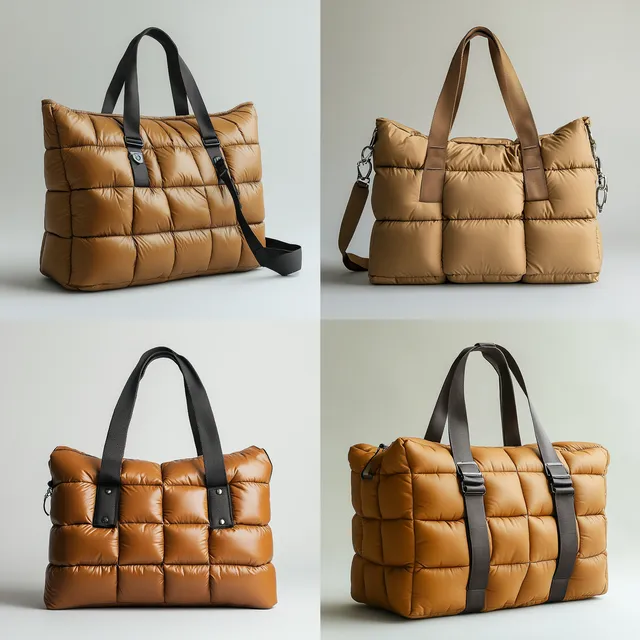
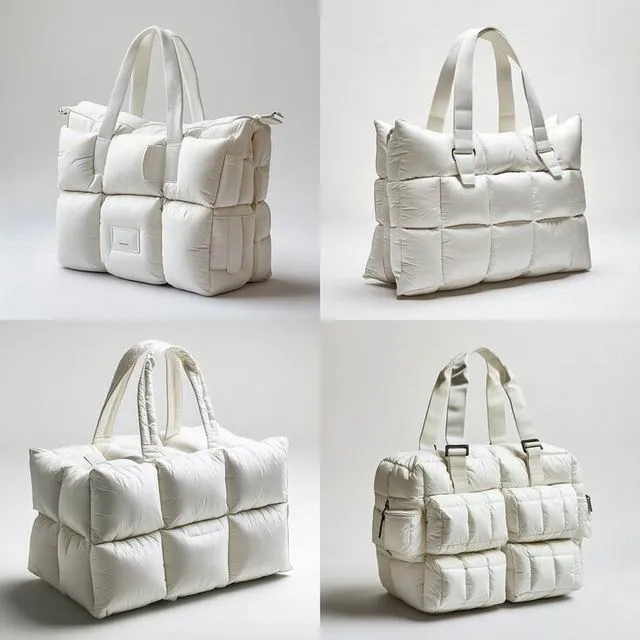
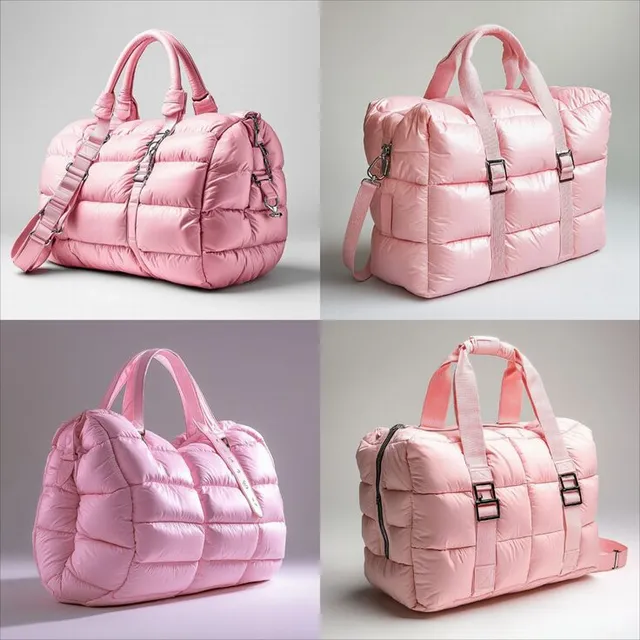
Silhouette direction for the coming seasons sits in four families: the structured east-west boxy tote that stands upright on a shelf, the slouchy hobo with a soft top line, the mini tote at roughly 30 x 28 x 12 cm, and the quilted padded tote. Medium retail sizes cluster at 38 x 35 x 14 cm with a 25 cm handle drop for shoulder carry, while hand-carry versions use a 12 cm drop. Whatever the silhouette, the two handles of a pair must match within 3 mm.
Material choice is judged on hand feel as much as on test data. Polyurethane leather at 0.6 to 0.9 mm gives a consistent grain and a controlled price; premium grades are hydrolysis-tested for a five-year equivalent and standard grades for two to three years. Recycled canvas at about 340 g/m² reads honest and takes print well; 420D recycled nylon with a PFAS-free finish gives a technical look and packs small. Linings are 190T recycled polyester taffeta.
Retail Compliance, Packaging and Ship-Ready Detail
Labelling is a legal requirement, not a design choice. Fibre composition is declared under EU Regulation 1007/2011 with a permitted tolerance, country of origin is marked under 19 CFR 134 for the US with a permanently attached label, and care instructions follow 16 CFR 423. California Prop 65 may require a warning where a listed substance is present, and intentionally added PFAS in textile articles is restricted under California AB 1817 from 2025.
- Polybag: recycled LDPE at 30 to 50 microns, or paper; suffocation warning printed.
- Hangtag: FSC-certified board, GS1 EAN-13 barcode, scan-verified at packing.
- Carton: single-wall with stated ECT, weight held under 18 kg, no overfill.
- Transit: ISTA 3A where the same carton ships direct to a consumer.
- Marking: fibre content, country of origin, care symbols, batch code.
Closures are the detail customers test in store: a magnetic snap should hold at about 1.5 kg pull, a #5 zip top should run for 5,000 cycles, and a turnlock should survive 1,000 openings without loosening. Our production team checks closure function on every inspection sample, not just on appearance. Programmes start at MOQ 500 per colourway, with sampling in 6 to 10 working days at USD 50 to 150 refundable, bulk in 35 to 50 days, acceptance to AQL 2.5 under ISO 2859-1 general level II with Critical at zero, Major at 2.5, Minor at 4.0, payment T/T 30/70 and shipment FOB Xiamen with sea transit of 25 to 35 days.
Frequently Asked Questions (FAQs)
Which tote dimensions sell best in a retail programme?
Medium retail totes cluster at 38 x 35 x 14 cm with a 25 cm handle drop for shoulder carry, while mini totes run about 30 x 28 x 12 cm with a 12 cm drop. Handle pairs are matched within 3 mm so the bag hangs straight on display.
How does polyurethane leather compare with recycled canvas on durability?
PU leather at 0.6 to 0.9 mm gives a consistent grain but is hydrolysis-limited, with premium grades tested to a five-year equivalent and standard grades to two or three years. Recycled canvas at about 340 g/m² runs 20,000 rubs to ISO 12947 and ages visibly.
Which labels are legally required on a retail tote bag?
Fibre composition under EU Regulation 1007/2011, country of origin under 19 CFR 134 for the US with a permanent attached label, and care instructions under 16 CFR 423. Children's articles additionally need CPSIA tracking information and lead testing at 100 ppm.
When is a California Prop 65 warning needed on a bag?
When a listed substance such as lead, a phthalate or PFAS is present above the applicable safe-harbour level and no exemption applies. The warning must be given before the sale, so it is printed on the hangtag or a sticker at packing rather than added later.
What polybag specification is accepted by major retailers?
Recycled LDPE at 30 to 50 microns or a paper alternative, with the suffocation warning printed legibly and any ventilation holes specified. Retailers increasingly require recycled content in the film itself, and barcode legibility through the bag is checked at packing.
How are retail barcodes and hangtags verified before shipment?
Hangtags carry a GS1-registered EAN-13 and are scan-verified at the packing line at a 100 percent rate, with a scan failure rate above 0.5 percent triggering reprint. Board is FSC-certified and the print is checked for rub to AATCC 8 at grade 4.
What carton specification should a retail tote order use?
Single-wall cartons with a stated edge crush test value, gross weight held under 18 kg for manual handling, and no overfill that bows the flaps. Where the same carton ships direct to a consumer, the pack is validated to ISTA 3A before booking.
What are MOQ and lead time for a three-tier retail tote programme?
MOQ 500 pieces per style and colourway, sampling in 6 to 10 working days at USD 50 to 150 refundable, and bulk in 35 to 50 days. Three tiers sharing one shell fabric book into one production slot, which keeps shade consistent across the ladder.
Continue Reading
Internal resources
- Browse products & categories
- Factory capabilities & process
- Download RFQ template
- Download QC checklist
- Packing format specification guide
Related blog posts
- How to Transition From ODM to Full OEM Bag Production
- How to Track Your Bag Order From Factory to Port
- Inline Production QC (IPQC) for Bags: Key Checkpoints
- Incoming Material Inspection (IQC) for Bag Factories
- Insulated Cooler Bag Production Process Step by Step
- Insulated Bag Lining Materials: Safe & Food-Grade Options
Next step
• Lock keyword and claim scope for custom tote bag oem
• Build a tech pack with BOM + tolerance map
• Choose materials route and validate tests (by spec)
• Plan sampling gates (lead time 6-10 working days)
• Set MOQ and cost targets (MOQ 500 pcs)
• Define QC plan and AQL checkpoints
• Confirm production + shipping timeline (35-50 days)
Get a quote for your next build
Your requirements go in; a structured RFQ checklist and manufacturing plan come out.
Specifications in this category are normally verified against CPSIA (lead and phthalates), together with OEKO-TEX Standard 100 and ISO 2859-1 (AQL sampling) before a purchase order is released.
Related programme guides: custom tote bags.
Design Decisions That Survive a Retail Season
A tote that photographs well and a tote that survives eight weeks on a shop floor are different products. Retail programmes fail on scuffing, handle stretch and hangtag friction far more often than on silhouette.
Retail has a set of failure conditions that e-commerce does not. The bag is handled by dozens of people before it is bought, it is hung or stacked in a way that puts permanent load on the handles, and it is judged against the one next to it under flat overhead lighting. That last point kills a lot of designs: a fabric with a subtle sheen can look rich in a studio shot and cheap under retail lighting, while a matte surface with visible weave texture photographs consistently. Test the chosen substrate under the lighting the retailer actually uses before committing the colourway.
Handle geometry is the second retail-specific decision. A narrow webbing handle concentrates load on the shoulder and reads as inexpensive; a wider, rolled or folded handle distributes it and reads as considered. The trade-off is cost and bulk, because a rolled handle needs more fabric and an extra operation. For a tote sold at a mid price point, a folded self-fabric handle at 25–30 mm finished width is usually the best compromise between perceived quality and unit cost.
- If the bag hangs on a fixture, load-test the handle for a sustained 72-hour hang at 5 kg; retail display is a slow-motion version of the durability test.
- If it stacks flat on a table, prioritise recovery from folding — a heavy interlining that creases permanently will be marked down before it sells.
- If the brand sells on print, reserve a flat panel of at least 200 × 250 mm and keep quilting or topstitching out of it.
- If the retailer enforces a price ceiling, spend on hardware and handle finish before spending on fabric gsm; the eye reads metal first.
- If the SKU must reorder, avoid a seasonal trim or a mill-specific shade that a reorder next year cannot match.
Pricing to the Shelf, Then Building to the Price
Retail buyers work from a landed cost target, not from a construction. The productive sequence is to fix the target FOB, subtract packaging, labelling and freight-per-unit, and then see what construction the remainder supports. Indicative FOB Xiamen for a printed tote sits at 1.80–4.50 at the 500-unit minimum, and where a programme needs to land at the bottom of that band the savings come from reducing operations, not from thinning the fabric — dropping an interior pocket saves more than moving from 12 oz to 10 oz canvas, and shoppers notice the fabric first.
Packaging is routinely underestimated in that arithmetic. A retail-ready polybag with a printed insert, a barcode label and a hangtag can add a meaningful fraction to a low-unit-price tote, and retailers frequently mandate specific label placement and barcode symbology. Confirm the pack spec with the buyer before quoting, because discovering it after the first bulk is an expensive rework.
Closure choice sets both the price read and the return rate. An open-top tote is the cheapest to build and the most likely to be returned by a shopper who expected security; a full zip across the mouth adds a zipper, a tape and an operation, and it lifts the perceived tier noticeably. A magnetic snap sits between the two and reads well only if the magnet is properly housed — a magnet that clicks through a thin lining looks unfinished and fails in wear. Interior organisation should follow the same logic: one zipped valuables pocket is expected at mid price points and its absence is noticed.
Reorder logic closes the loop. A fashion tote that sells through in six weeks will be reordered, and the reorder has to match the original in shade, hand-feel and hardware finish. That argues for standardising on a shade with a specified tolerance and recording the fabric batch reference on the tech pack. Minimums are 500 units per style and colour, with 300 discussable on a repeat; sampling runs 6–10 working days and bulk 35–50 days after approval. Standard constructions are catalogued under custom tote bags, and the season-level planning is covered in fashion bag trend forecasting for 2026–2027.
Numbers age badly when copied into dozens of places, so the maintained version of this grid stays on quality control and certification.
Rather than repeat the same matrix here, keep the detailed grading with the central reference on material selection — it lists the acceptance numbers and sampling levels our team works to.