Custom Tote Bags: Canvas, RPET, Cotton & Jute Compared
Discover how to run a custom tote bag oem program for North America: materials, tech pack, sampling, QC and shipping. Get OEM/ODM-ready checklists and quote
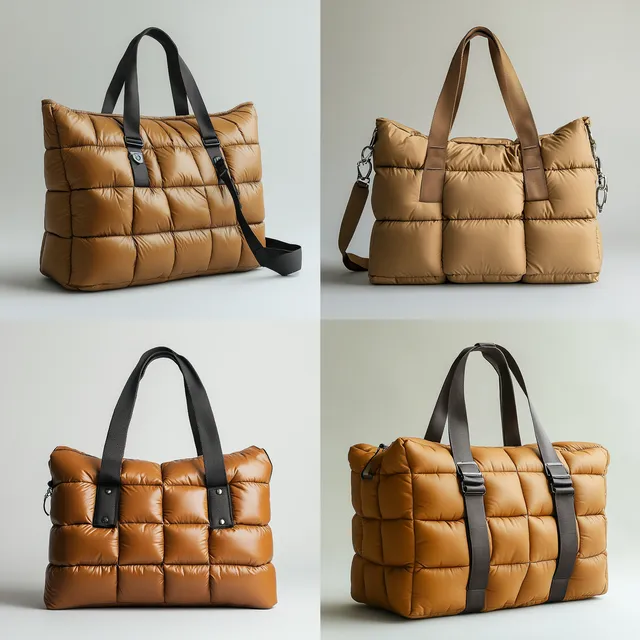
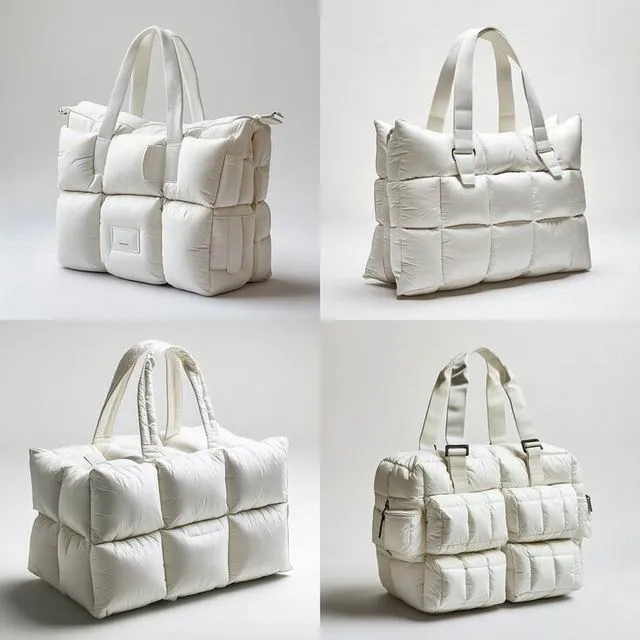
From Pattern to Pallet: Building a Tote Bag
A professional tote bag program is a controlled workflow: clarify requirements, lock the build route, validate with measurable gates, then scale production with repeatable QC.
Primary SEO focus: custom tote bag oem. Secondary: bag material comparison, tote bag manufacturer, private label bags, custom logo bags, OEM ODM bags.
What is held to a number, and who signs it
For the complete spec grid — including the acceptance criteria and lot sizes — read own-brand programmes.
A serious walkthrough follows the paperwork from incoming fabric to sealed carton.
Walking the order through seven stations
- Align on what is claimed, what it costs and how it packs before sampling starts.
- By spec, material sourcing locks the coating/laminate spec, fabric route and trim vendors.
- Make the patterns, agree tolerances and decide the reinforcement layout.
- Manage dye lots, and verify marker yield plus grain alignment while cutting.
- Reinforcement at stress points, then seam and stitch specs applied at the station.
- Fixtures hold placement while hardware, logos and accessories go on.
- Then inspection and packing: AQL draws, carton marks, export papers.
Typical buyer use scenarios
- retail
- grocery
- events
- corporate promotions
- trade shows
Key functions buyers request most
- reinforced handles
- wide opening
- internal pocket
- laminated finish option
- high-load stitching
Choosing the Best Materials for Custom Tote Bags
| Material | Performance | Cost Range | Best For | Pros & Cons | Risks & How to Control |
|---|---|---|---|---|---|
| canvas | Balanced durability (ISO 13934 tensile by spec); good abrasion (ISO 12947 by spec); stable for branding | US$1.6–5.5 / meter (by spec) | Core SKUs with predictable yield | Pros: versatile. Cons: performance depends on coating/finish | Lock coating spec, color tolerance and print compatibility; confirm reinforcement mapping |
| PU coated polyester (600D, by spec) | Good repellency (ISO 4920 / AATCC 22 by spec); moderate barrier (ISO 811 by spec) | US$1.2–6.0 / meter (by spec) | Value/core lines where print clarity matters | Pros: cost controlled. Cons: coating wear over time | Define spray rating targets and abrasion benchmarks; protect high-wear zones |
| Recycled RPET (route, by spec) | Sustainability positioning; performance depends on coating/laminate (ISO 4920 / ISO 811 by spec) | US$1.5–3.8 / meter (by spec) | Eco positioning programs and corporate procurement | Pros: sustainability narrative. Cons: supply stability and lot drift risks | Lock supplier lots, traceability and color delta; validate print and coating compatibility |
| Canvas / cotton (by spec) | Good hand-feel and print; waterproofing depends on finish (AATCC 22 by spec) | US$1.0–3.5 / meter (by spec) | Retail lifestyle lines, totes and promotions | Pros: classic look. Cons: heavier; stain risk without finish | Define shrinkage and colorfastness tests (AATCC 61 / ISO 105 by spec); specify lamination if needed |
Screening fabric options without a lab
- Read the scenario first, then let wear points and wet exposure narrow the options.
- Main compartment only is one option; decide if the claim spans the whole bag or zones.
- Cite the ISO, AATCC or ASTM references in your pack and state what passes.
- Pick trims that suit the chosen route: zipper type, sliders, buckles and webbing strength.
- Print and branding compatibility is confirmed on the real fabric.
- Evaluate transit rubbing risk, because visible creases are freight damage far more often than stitching faults.
Specifying the Product Before Tooling Starts
What makes a pack quotable in 24-48 hours
- Bill of input materials (BOM): fabric route, coating/laminate, lining, foam, webbing, thread, binding, trims
- Construction notes: stitch type, stitch density, seam allowance, reinforcement mapping
- Branding method: print/embroidery/patch method, backing, and acceptance examples
- Retail packing spec: insert, polybag, carton count, carton marking, barcode placement
- QC checkpoints: what to check at IQC/IPQC/FQC and defect examples
- Revision control: version number, change log, and approval record
Order of operations for an OEM or ODM build
- Nail the user, the band and the proposition before anything else.
- Lock claim scope, then confirm the test plan to spec.
- To build it, add the BOM, then the measurement table, then the tolerance map, then artwork placement.
- Prototype sampling validates fit, structure and the material route.
- By PP, BOM and packaging route are final.
- First, sign the QC checklists and golden sample; only then cut bulk.
Before you approve: the sample checklist
- Testing to spec means stressing the webbing, the handles and each D-ring junction.
- Sign off cycles per spec only after zipper path and slider feel are checked.
- Run the open/close and pack cycle many times: corner wear and seam creep are what to watch.
- Verification pack resistance to abrasion resistance, folding, and dampness before trusting it on the lane.
- A final BOM and a final packing route go into the PP sample awaiting approval.
How to reach a signed sample faster
For the complete spec grid — including the acceptance criteria and lot sizes — read importing from China.
What a repeat order should look like
Success example (anonymized): a value program targeting North America reduced rework by freezing a single tech pack, running one pre-production sample using the final BOM, and aligning QC checkpoints before cutting. Reproducible builds remove the annual need to qualify someone new when reordering.
Production & Manufacturing Methods for Tote Bags
Ordering choices get clearer once you compare lead time, MOQ requirements and cost bands in the table.
Specifying the construction route
Numbers age badly when copied into dozens of places, so the maintained version of this grid stays on material selection.
Decoration and Assembly Controls
Marking methods, ranked by durability
Final-stage controls worth enforcing
- Branding mark alignment check against placement template
- Fittings function check: buckles, sliders, and snaps
- Visual check for wrinkles, creases, and surface scuffs before packing
From Port to Warehouse
Documents and timing gates
Rather than restate a long matrix, this section points to travel bag specifications, where each row carries its method and acceptance value.
Key Factors to Choose a Reliable Tote Bags Manufacturer
Use this checklist before signing an OEM/ODM contract for tote bags.
Screening questions that separate routes
- Is the quote traceable to your spec, with assumptions listed?
- Can they source the BOM and also suggest alternatives that meet spec?
- Is there an AQL plan, and do QC checkpoints cover IQC through IPQC into FQC?
- Can workmanship survive a flexible MOQ arrangement?
- Can you expect firm lead times and a clear escalation procedure?
- Does their track record include packaging and shipping into your market?
Questions to put to the production team on site
Relative advantages at a glance
Canvas, RPET, Cotton and Jute: What the Numbers Actually Say
Four fabrics dominate promotional and retail tote programmes, and each one is sold on a different promise. Cotton canvas is bought for hand feel and printability, RPET for the recycled claim, cotton sheeting for the lowest entry price, and jute for a natural, rigid look. The decision becomes easy once you put weight, shrinkage, print route and certification side by side, because the differences are measurable rather than aesthetic.
Weight is the first filter. Canvas is sold in ounces per square yard: 10 oz is roughly 340 g/m², 12 oz about 407 g/m², and 16 oz about 542 g/m². Cotton sheeting runs 6 oz (about 200 g/m²) to 16 oz. RPET is specified by denier instead — 300D or 600D polyester woven from post-consumer bottle flake, typically 180–260 g/m². Jute sits at 340–450 g/m² before lamination, and the PP or PE film used to stabilise it adds 20–30 g/m².
Shrinkage separates the naturals from the synthetics. Unfinished cotton canvas moves 3–8% on the first wash under ISO 6330, so any bag sold with a wash claim must be pre-shrunk or sanforised to hold movement under 3%. RPET and other polyester constructions move under 1%. Colour fastness is the companion test: AATCC 61 laundering at grade 4 and AATCC 8 crocking at grade 4 dry and 3–4 wet are the normal retail acceptance lines.
Print route follows the fibre. Water-based and plastisol screen print bond well to canvas and cotton; heat transfer is the safe route on RPET because dispersion inks sublimate into polyester; and jute only prints cleanly after lamination, because the raw bast fibre is too coarse and absorbent. Lamination also lets a jute bag hold shape on a shelf, which is the main reason brands accept the extra 20–30 g/m².
| Fabric | Weight range | First-wash shrinkage | Certification route |
|---|---|---|---|
| Cotton canvas | 340–542 g/m² | 3–8% unless pre-shrunk | OEKO-TEX Standard 100 |
| RPET 300D/600D | 180–260 g/m² | Under 1% | GRS transaction certificate |
| Cotton sheeting | 200–400 g/m² | 3–8% unless pre-shrunk | OEKO-TEX Standard 100 |
| Laminated jute | 360–480 g/m² | Not laundered | REACH (EC 1907/2006) |
Handles decide whether any of this survives use. A tote carrying 8–12 kg needs 25 mm webbing or a self-fabric handle sewn with a 20 mm box bar-tack and an X-box at the root, and the join should be tested rather than eyeballed. Grab tensile under ASTM D5034 is the fabric-side number; the handle pull test is the assembly-side number, and both belong in the tech pack.
Commercial terms: QUANZHOU JUNYUAN BAGS quotes in 24–48 hours, holds MOQ at 500 pieces per colourway, and samples in 6–10 working days, or 12–15 when a dyed-to-match jute lamination or custom weave is required. Bulk runs 35–50 days with final inspection at AQL 2.5. Our production team handles all four fabrics across 7 lines, and the recycled-content paperwork is covered in the materials reference with retail packaging notes in the tote bag overview.
Frequently Asked Questions (FAQs)
Which tote fabric gives the lowest unit cost at a 500-piece minimum order?
Cotton sheeting at 6 oz, about 200 g per square metre, is usually the cheapest at 500 pieces, with RPET 300D close behind. Canvas at 10-12 oz costs noticeably more because of fabric weight, and laminated jute sits at the top of the four.
How do we prove an RPET tote is genuinely made from recycled bottles?
Require a GRS transaction certificate accompanying each shipment, traceable to the yarn lot. The certificate is the only evidence most retailers accept; a supplier statement alone is not enough. Pair it with REACH (EC 1907/2006) screening for the finished fabric.
How much will cotton canvas shrink in the first wash, and how is it controlled?
Unfinished canvas moves 3-8 percent under ISO 6330. Pre-shrinking or sanforising holds movement under 3 percent, which is the line most retail specifications set. Always cut the approved sample after the shrink process, not before, or the size drifts.
Can jute totes be screen printed without laminating the fabric first?
Not reliably. Raw jute is coarse and highly absorbent, so ink bleeds along the fibre. Lamination with PP or PE film adds 20-30 g per square metre, stabilises the bag on a shelf and gives a printable surface with far sharper edge definition.
What crocking grade should a dyed canvas tote be specified to reach?
Hold AATCC 8 crocking at grade 4 dry and 3-4 wet, and AATCC 61 colour fastness to laundering at grade 4. Dark navy, black and red shades are the usual offenders, so pigment-dyed canvas should be tested before the bulk dye lot is released.
Can one 500-piece order mix two different tote fabrics or colourways?
MOQ is 500 pieces per colourway, so a mixed programme needs 500 of each variant. The practical workaround is a common handle, size and print artwork across fabrics, which lets our production team run both variants through one cutting and print setup.
How long does a four-fabric comparison sample set take to produce?
A comparison set takes 6-10 working days once the tech pack is approved; dyed-to-match jute lamination or a custom weave extends it to 12-15 working days. Sample fees of USD 50-150 per fabric are refunded against the bulk order.
Which chemical rules apply to tote bags handed out at United States events?
California Prop 65 is assessed for lead and phthalates in inks and coatings, REACH (EC 1907/2006) covers the EU, and OEKO-TEX Standard 100 is the usual textile certificate. If the tote is marketed to children, CPSIA adds 100 ppm lead and 0.1 percent phthalates.
Continue Reading
Internal resources
- Browse products & categories
- Factory capabilities & process
- Download RFQ template
- Download QC checklist
- Packing format specification guide
Related blog posts
- ODM Bag Design Trends for 2026–2027
- ODM vs. OEM for Startups: Budget & Timeline Comparison
- Needle Detector & Safety Testing for Export Bags
- ODM Bag Catalogs: How to Customize Ready Designs Effectively
- Mass Production vs. Small-Batch OEM Bags: Pros & Cons
- Master Carton Marking for International Bag Shipments
Next step
• Lock keyword and claim scope for custom tote bag oem
• Build a tech pack with BOM + tolerance map
• Choose materials route and validate tests (by spec)
• Plan sampling gates (lead time 6-10 working days)
• Set MOQ and cost targets (MOQ 500 pcs)
• Define QC plan and AQL checkpoints
• Confirm production + shipping timeline (35-50 days)
Get a quote for your next build
Your requirements go in; a structured RFQ checklist and manufacturing plan come out.
Specifications in this category are normally verified against CPSIA (lead and phthalates), together with OEKO-TEX Standard 100 and ISO 2859-1 (AQL sampling) before a purchase order is released.
Related programme guides: bag fabric options · custom tote bags.
Four Substrates, Four Different Bags
Canvas, RPET, cotton and jute are often quoted against each other on price. They differ far more on print, wash and structure.
Canvas is a weave and a weight question. A 12 oz cotton canvas is the retail standard — heavy enough to stand up on a shelf, light enough to fold. Below 10 oz the bag drapes and looks cheap; above 16 oz it becomes stiff and expensive to print. Cotton canvas takes water-based screen print beautifully and shrinks in the wash, which means the print placement has to be calculated against a washed dimension, not a cut dimension. Ask for shrinkage data per ISO 6330 before you set the artwork.
RPET is a polyester made from recycled bottle flake, and its selling point is documentation rather than feel. A GRS transaction certificate is what makes the claim defensible at retail, and it has to cover the specific fabric lot. RPET prints well with heat transfer and holds colour tightly, but it does not have the natural hand that a lifestyle brand usually wants, and it can feel slippery in a shoulder carry.
| Material | Typical weight | Print method | Wash behaviour | Indicative FOB band |
|---|---|---|---|---|
| Cotton canvas | 10–16 oz | Screen, water-based | Shrinks 3–6 per cent | USD 2.20–4.50 |
| RPET polyester | 190–280 gsm | Heat transfer, sublimation | Stable | USD 1.80–3.20 |
| Cotton sheeting | 140–180 gsm | Screen, digital | Shrinks, creases | USD 1.80–3.00 |
| Laminated jute | 280–400 gsm | Screen, limited detail | Spot clean only | USD 2.60–4.50 |
Choosing by Use Case, Not by Swatch
Apply a rule rather than a preference. If the bag is sold at retail and has to look expensive on a hook, choose 12–16 oz cotton canvas and budget for a washed label. If the programme is tied to a sustainability commitment, choose RPET and secure the GRS certificate for the lot before production starts, because retroactive certification is not available. If the artwork has fine gradients or photography, choose smooth cotton or RPET and print by transfer. If the bag needs to hold a shape while standing, choose laminated jute and accept that it cannot be machine washed.
Jute deserves a specific warning. It is a natural bast fibre with a coarse surface, so print detail above roughly 40 lpi is lost, and unlaminated jute sheds and creases permanently. Lamination with a PE film fixes structure and makes the bag wipeable, but it changes the environmental story, which is usually the reason jute was chosen. Where unlaminated jute is required, test colour transfer per AATCC 8 — natural jute can crock onto light clothing.
Hand feel is the argument that decides most tote briefs and the hardest one to specify. A 12 oz canvas that has been washed or softened has a dry, substantial hand; unwashed, the same fabric feels boardy and looks cheaper than it is. If the bag is a retail product, budget for a softening finish and approve the hand on a washed sample, because the fabric behaves differently before and after. Where the brief wants a soft drape at low cost, a lighter 8–10 oz canvas with a turned and double-stitched top hem reads better than a heavy fabric cut without structure.
Handle specification is shared across all four and is the most common failure point. A tote that carries 5 kg needs a handle at least 25 mm wide with the webbing or self-fabric running down the body of the bag as a continuous sling, cross-stitched at the top. A handle tacked onto the top edge tears out. Where the bag is a retail product rather than a giveaway, reinforce with a bar-tack and test at 2.5 times rated load. Specify the top edge too — a self-fabric hem of 25 mm or a turned binding — because a raw turned edge is the first thing to fray and on a retail bag it is visible from the shelf.
Cost planning is straightforward here: indicative FOB Xiamen for a tote at the 500-unit minimum sits around USD 1.80–4.50, and the spread is driven almost entirely by fabric weight and handle construction rather than by print. Repeat styles can be discussed down to 300 units once the pattern has completed a full bulk cycle. Full silhouettes are shown in the tote bag range, with fabric data in the materials reference. For the cheapest promotional alternative, see these notes on low-minimum runs.
Numbers age badly when copied into dozens of places, so the maintained version of this grid stays on quality control and certification.
Rather than repeat the same matrix here, keep the detailed grading with the central reference on material selection — it lists the acceptance numbers and sampling levels our team works to.