Custom Duffel Bags for Travel Brands & Airlines
Understand how to run a custom duffel bag oem program for Global: materials, tech pack, sampling, QC and shipping. Get OEM/ODM-ready checklists and quote
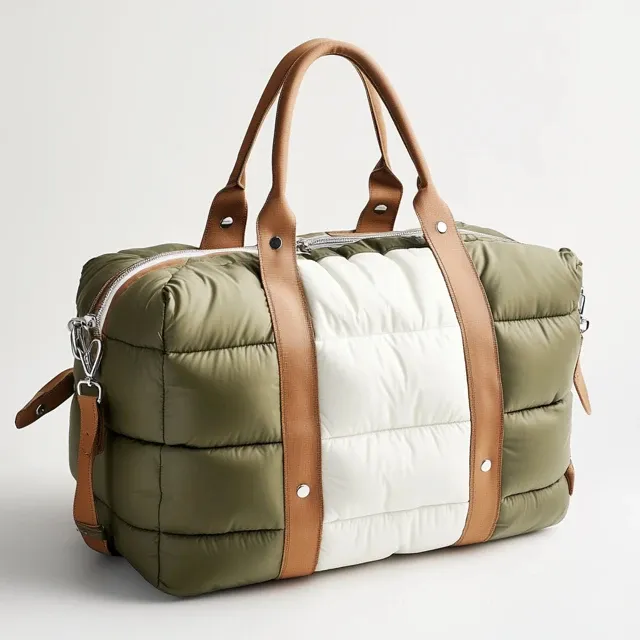
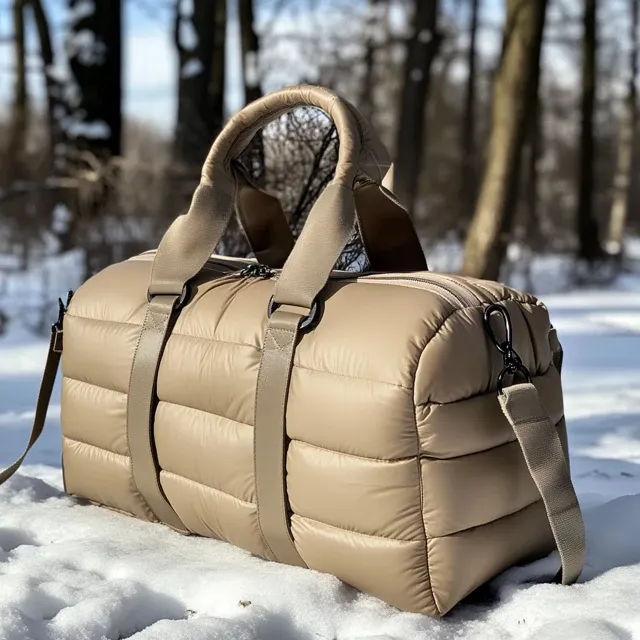
The Production Path a Duffel Bag Follows
A professional duffel bag program is a controlled workflow: clarify requirements, lock the build route, validate with measurable gates, then scale production with repeatable QC.
Primary SEO focus: custom duffel bag oem. Secondary: duffel bag manufacturer, private label bags, custom logo bags, OEM ODM bags.
Process controls behind a repeatable build
Where you need the granular row detail, tote bag specifications carries it with the test methods and sample sizes attached.
Any tour worth taking is a control-point checklist in disguise, not a showroom trip.
Each stage, in the order it happens
- Get the brief straight first: claim, cost target and packing spec, then cut samples.
- Within material sourcing, lock by spec: coating/laminate spec, fabric route, trim vendors.
- Templates, tolerance bands and a reinforcement plan come next.
- Cutting stage: check grain direction plus marker efficiency; hold shade lots steady.
- Sewing and welding: hold the line on stitch spec, seam allowance, critical-zone reinforcement.
- At the final assembly stage, placement jigs position logos, hardware and accessories.
- Inspect to AQL, mark the cartons and raise the shipping documents.
Typical buyer use scenarios
- brand launches
- wholesale programs
- corporate procurement
- retail distribution
Key functions buyers request most
- custom sizing
- durable construction
- logo branding options
- retail-ready packaging
- consistent QC
Choosing the Best Materials for Custom Duffel Bags
| Material | Performance | Cost Range | Leading For | Upsides & Trade-offs | Risks & How to Control |
|---|---|---|---|---|---|
| nylon | Even wear life (ISO 13934 tensile to spec); good scuff resistance (ISO 12947 as specified); stable for branding | US$1.6–5.5 / meter (to spec) | Running styles with predictable yield | Upsides: versatile. Limitations: performance depends on coating/finish | Lock coating spec, color tolerance and print compatibility; confirm reinforcement mapping |
| Recycled RPET (route, per the specification) | Sustainability positioning; performance depends on coating/laminate (ISO 4920 / ISO 811 per spec) | US$1.5–3.8 / meter (as specified) | Eco positioning programs and corporate procurement | Advantages: sustainability narrative. Limitations: supply stability and lot drift risks | Lock supplier lots, traceability and color delta; validate print and coating compatibility |
| Canvas / cotton (per spec) | Good hand-feel and print; waterproofing depends on finish (AATCC 22 per spec) | US$1.0–3.5 / meter (per the specification) | Retail lifestyle lines, totes and promotions | Advantages: classic look. Limitations: heavier; stain risk without finish | Define shrinkage and colorfastness tests (AATCC 61 / ISO 105 per the specification); specify lamination if needed |
Getting to two or three candidate fabrics
- Let the use case lead: abrasion, load paths and moisture pick the fabric for you.
- Decide whether the claim covers the whole bag or only zones like the main compartment.
- Every referenced ISO/AATCC/ASTM procedure should be listed, together with the numeric bar for approval.
- Choose route-suitable trims, from zipper type and sliders to buckles and webbing strength.
- Confirm that print and branding suit the specified fabric.
- Scuffing and creasing usually trace to transit, not to stitching defects.
Development Sequence for a Custom Build
Fields your tech pack cannot skip
For the complete spec grid — including the acceptance criteria and lot sizes — read own-brand programmes.
Development steps in working order
- Set the buyer, the price bracket and the slot it fills.
- Confirm the claim scope and its test plan by spec.
- Artwork placement, tolerance map, measurement table and BOM: four pieces that make the tech pack.
- Fit, structure and material route get validated at prototype sampling.
- Final BOM, final packaging route: the PP stage.
- Sign-off requirement: QC checklists plus the reference sample, ahead of bulk cutting.
Sampling pitfalls and how to close them
- Review artwork location physically on paper before the selected print process runs.
- Load-test every anchor point: webbing, grab handles and D-ring areas, to specification.
- Verify the zipper path, then slider feel, then the cycle requirement per spec.
- Open, close and repack the product many times, watching for corner wear and seam creep.
- Three things need checking per lane: rub marks, folding lines, and defence against humidity.
Where sample rounds get saved
A programme that reorders cleanly
Success example (anonymized): a premium program targeting Global reduced rework by freezing a single tech pack, running one pre-production sample using the final BOM, and aligning QC checkpoints before cutting. A construction that can be duplicated means each season's reorder goes to the same partner.
Production & Manufacturing Methods for Duffel Bags
Weigh MOQ requirements against turnaround duration and price tier using the options table.
| Production Type | Lead Time | MOQ | Cost Level | Leading For |
|---|---|---|---|---|
| Small-batch pilot run | 6-10 working days + 35-50 days | 500 pcs | medium | Startups, corporate gifting, SKU validation |
| Standard OEM mass production | 35-50 days | medium–high (to spec) | optimized | Retail replenishment and stable demand |
| Expedited production program | 15–25 days (per spec) | by program | higher | Time-critical launches |
| New tooling / new input materials route | sampling + production as specified | as specified | premium | New silhouettes and claim-led innovation |
Which method, and why it matters
We keep one authoritative version of this comparison on importing from China, updated whenever the reference standards move.
How the Mark Goes On, and What Closes the Bag
Branding options and where each fits
Assembly checks before the carton closes
- Metal parts function check: buckles, sliders, and snaps
- Zipper end reinforcement and smoothness check
- Visual check for wrinkles, creases, and surface scuffs before packing
Logistics and Fulfilment
Freight milestones to hold
Key Factors to Choose a Reliable Duffel Bags Manufacturer
Use this checklist before signing an OEM/ODM contract for duffel bags.
Due diligence, item by item
- Can they work from a pack and tell you what they inferred?
- Are alternatives by spec offered, and BOM sourcing controlled by them?
- Do they evidence QC checkpoints, IQC to IPQC to FQC, and an AQL plan?
- Without hurting workmanship, can they allow a flexible MOQ?
- Can they give firm lead time commitments and a defined escalation path?
- Do they bring packaging and shipping know-how that fits your market?
Audit points to tick before you commit volume
Strengths worth weighing
Reference figures for this stage are maintained centrally: see own-brand programmes for the current values and how they were derived.
Building a Travel Duffel Around the Cabin Envelope
Travel brands and airline programmes start from a size envelope, not a fabric. Most carriers publish a carry-on limit near 56 x 36 x 23 cm and a personal item limit near 40 x 30 x 15 cm, so a duffel is designed to sit inside the smaller figure when under-packed and to compress into the larger one when full. Volume lands at 30-45 L for a weekender and 50-70 L for a crew bag that has to swallow uniforms, shoes and a wash kit in one load.
Opening geometry comes next. A U-shaped zip across the top gives the widest access and the cleanest brand panel; a D-shaped diagonal opening lets the lid fold fully back out of the way. The main zip is #8 or #10 with a reverse coil tape and a garage at each end, because a duffel opening works against a loaded shape rather than a flat one. Secondary openings take #5. Sliders get a moulded or cord puller, which is also where brand tooling is cheapest to apply.
Carrying systems decide whether crew use the bag at all. A duffel is carried three ways: by two grab handles that must close with a padded wrap, by a detachable padded shoulder strap, and by stowable backpack straps on a convertible model. Handle roots and strap ends are bar-tacked over a reinforcement plate; a convertible strap on a 50 L bag gets two bar-tacks per end plus a box stitch. A trolley pass-through sleeve is cut 20-22 cm wide with a bound top edge that slides over a cabin handle without snagging.
Interior layout matters as much as the shell. Crew and travel users need separation: a lined wet pocket, a shoe or laundry compartment, and a document sleeve against the back panel. Lining is 210D or 420D, with a wipeable TPU-laminated lining wherever toiletries travel. A contrast lining colour is a cheap way to make the interior readable in a dim cabin, but the darker shade has to pass AATCC 8 crocking first.
Materials and testing follow the duty cycle. 600D polyester with PU backing is the workhorse, 900D and 1680D are used where abrasion is high, and ripstop nylon saves weight on a carry model. Shell abrasion is checked to ISO 12947, grab strength to ASTM D5034, water shedding to AATCC 22, hardware to ASTM B117 salt spray, and master cartons are qualified to ISTA 3A for the distribution cycle.
QUANZHOU JUNYUAN BAGS returns a costed quote within 24-48 hours. MOQ is 500 pieces per colourway, sampling takes 6-10 working days and 12-15 with a new moulded puller or custom fabric, tooling runs USD 300-2,500 and sample fees of USD 50-150 are credited back on order. Bulk runs 35-50 days, inspection is AQL 2.5 with Critical 0, Major 2.5 and Minor 4.0 under ISO 2859-1 level II, payment is T/T 30/70 and shipment is FOB Xiamen with 25-35 days of sea transit.
See travel bag programmes, and compare the shoe compartment variant for sports and crew use.
Frequently Asked Questions (FAQs)
What carry-on envelope should a travel brand duffel be built around?
Most carriers publish a carry-on limit near 56 x 36 x 23 cm and a personal item near 40 x 30 x 15 cm. A duffel is cut to sit inside the smaller figure when under-packed and to compress into the larger one when full.
How many bar-tacks secure a convertible backpack strap on a 50 litre duffel?
Two bar-tacks per strap end plus a box stitch, backed by a reinforcement plate inside the shell. A 50 L duffel loaded to 12-15 kg puts real peel load on that joint, so a single bar-tack is not enough for crew use.
Which abrasion count should a 600D shell reach before it is airline-ready?
The shell is run to ISO 12947 Martindale, with 20,000 cycles the common acceptance figure for a crew bag and 10,000 for a light weekender. Grab strength is confirmed separately to ASTM D5034 on the same fabric lot.
How is a trolley pass-through sleeve dimensioned to fit cabin luggage handles?
The sleeve is cut 20-22 cm wide with a bound top edge that slides over a cabin handle without snagging, and it is closed at the sides so the bag cannot rotate. An open-bottom design also doubles as a slip pocket.
What load test applies to the main grab handle of a travel duffel?
Handles are static and dynamic loaded to several multiples of the packed weight, with a 15 kg loaded duffel tested at the handle root. The wrap closure and the reinforcement plate behind it are inspected after the pull.
How does AQL 2.5 handle a duffel shipment that covers three colourways?
Each colourway is treated as a separate lot under ISO 2859-1 general level II, with Critical 0, Major 2.5 and Minor 4.0. Sample size scales with lot quantity, so three colourways mean three sample pulls and three reports.
Which lead time fits a launch order of 5,000 travel duffels?
Sampling takes 6-10 working days, extending to 12-15 with a new moulded puller or custom fabric, then bulk runs 35-50 days. Add 25-35 days for sea transit from FOB Xiamen, or 5-8 days by air for a fixed launch date.
How much does a woven label add versus an embroidered logo at 500 units?
A woven label adds a small per-unit cost with no tooling, while an embroidered logo of 8,000-15,000 stitches is priced on stitch count plus a digitising fee. Silicone patches sit between the two and carry a mould cost.
Related Guides
Internal resources
- Request a quote (RFQ)
- Browse products & categories
- Download RFQ template
- Download QC checklist
- Packing format specification guide
Related blog posts
- How to Ensure Long-Lasting Waterproof Performance
- How to Get Accurate Quotes From Custom Bag OEM Factories
- How to Maintain Consistent Bag Quality in Mass Production
- How to Make Cooler Bags UV-Resistant & Long-Lasting
- How to Design a Custom Laptop Backpack That Sells Online
- How to Design a Waterproof Duffel Bag That Sells
Next step
• Lock keyword and claim scope for custom duffel bag oem
• Build a tech pack with BOM + tolerance map
• Choose materials route and validate tests (by spec)
• Plan sampling gates (lead time 6-10 working days)
• Set MOQ and cost targets (MOQ 500 pcs)
• Define QC plan and AQL checkpoints
• Confirm production + shipping timeline (25–35 days)
Start your next bag programme
Send over your requirements; a manufacturing plan and structured RFQ checklist are prepared for you.
Specifications in this category are normally verified against ISTA 3A (parcel transit), together with ISO 2859-1 (AQL sampling) and AATCC 127 (hydrostatic head) before a purchase order is released.
Related programme guides: custom travel bags.
Dimension Before Capacity, Always
Travel brands sell litres; airlines enforce centimetres. Those two units rarely agree, and reconciling them is the first work on any duffel programme. Define the external dimensions against the most restrictive gate your customer will pass, then derive capacity from the resulting shell — working in the opposite direction produces bags that hold plenty and get stopped at boarding.
Practically, that means fixing a carrier's published carry-on allowance as the design constraint, and remembering two things buyers forget: allowances are quoted including wheels and handles, and separate personal-item limits are smaller still. Crew, cavalry-hard mobile staff and check-in bags have no such constraint, which is why those programmes can favour larger formats. Specify the internal frame as honestly external or internal, because soft-sided duffels compress and a nominally oversized bag often squeezes into a gauge while a framed one will not.
| Class | Typical dimensions | Capacity | Structure needed |
|---|---|---|---|
| Personal item | 40 × 25 × 20 cm | 18–22 L | Minimal; soft body with light interlining |
| Cabin carry-on duffel | 55 × 35 × 25 cm | 35–45 L | Light internal base board, shaped handles |
| Weekender | 60 × 35 × 30 cm | 50–60 L | Base board plus compression straps |
| Crew or airline issue | Programme specific | 45–70 L | Reinforced base, identification panel, trolley sleeve |
| Checked expedition | 70–90 cm long | 80–110 L | Full frame sheet, stowable shoulder straps |
Load Testing, Branding and Wear Points
A duffel's weakest moments are predictable: the moment it is lifted one-handed, the moment the shoulder strap takes the full weight diagonally, and every rotation across a conveyor belt. Reinforce accordingly. Handles should be joined into a continuous webbing loop running beneath the body rather than stitched onto the panel — a continuous loop distributes load and eliminates the single most common catastrophic failure. Detachable shoulder straps need hardware rated above the filled weight and an attachment point verified to ISO 13934-1 tensile.
Their branding is usually larger and more permanent than in other categories, because travel product tends to be retained for years. Embroidery is the default for airline and licensed logos; a densely digitised crest below roughly 8,000 stitches keeps cost proportionate on mid-priced units. If you print instead, keep artwork away from fold lines and expect some creasing after packing. Also consider trolley pass-through sleeves and, importantly, whether the design compresses for storage — travel brands increasingly ask for packable behaviour, and that requirement has to be designed in rather than hoped for.
Acceptance criteria should be written rather than implied. Typical programmes combine a strap and handle load verification under ISO 13934-1, abrasion checks against ISO 12945 for coated bottoms, cycle testing of zippers to QB/T zipper standards, and ISTA 3A drop and vibration testing of the packed carton to protect arrivals. Indicative travel bag pricing at a 500-unit minimum generally runs USD 7.00–14.00 FOB Xiamen for structured laptop-capable formats, with standard sampling at 6–10 working days and mass production 35–50 days after approval. Explore the wider travel bag range or the specialist duffel with shoe compartment build.
Professional-use programmes need features that rarely appear on retail product, and they are worth naming explicitly: an identification window with a removable card, a lockable main slider, a bright internal lining so contents stay visible in a dim hotel room, a detachable padded shoulder strap, and reinforced end grabs so the unit can be pulled out of an overhead bin one-handed. Add each deliberately, because every one carries operations cost — the window is trivial, a moulded end grab can involve tooling — and we recommend sorting them into features that must survive three years versus those that only matter at purchase, since airline life punishes the first group and ignores the second. Where a corporate crest is applied, ask for it embroidered onto a removable panel; replacement patches are far cheaper than replacing a bag.
Packing then deserves an early decision, because duffels ship either assembled or nested several deep with the shoulder strap detached, and nesting can materially reduce freight per piece. Standard terms are FOB Xiamen with EXW, CIF and DDP available under Incoterms 2020, and payment conventionally runs T/T 30 deposit with the balance before shipment. Our SGS-verified production base can also consolidate mixed orders — several sizes within one range — so a single vessel booking covers the full launch.
Numbers age badly when copied into dozens of places, so the maintained version of this grid stays on quality control and certification.
Rather than repeat the same matrix here, keep the detailed grading with the central reference on material selection — it lists the acceptance numbers and sampling levels our team works to.