Your Trusted Custom Original EVA Bags Manufacturer
Original-size EVA tote bags built for beach, pool, and travel carry. OEM/ODM support with reinforced handles and accessory ecosystems.
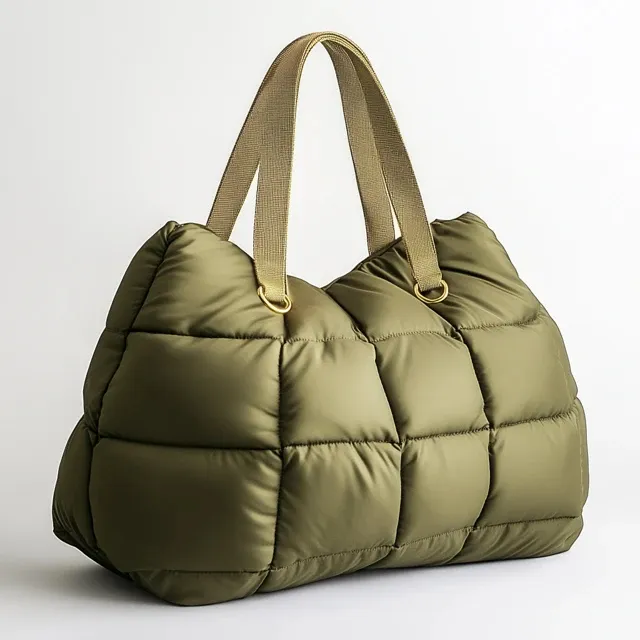
Spec snapshot
A fast engineering view of what matters for sourcing, quoting, and repeatable production.
| Item | Typical | Notes |
|---|---|---|
| Use scenario | beach / pool / travel carry | Use scenario drives base stiffness, handle comfort, and accessory needs |
| Base stability | flat base / anti-tip geometry (by spec) | Loaded carry needs a stable base and controlled wall flex |
| Handle comfort | molded grip / soft wrap (by spec) | Comfort matters for heavy beach carry; define load target early |
| Organization | inner pouch / divider insert (by spec) | Define interface standards to match the bag hole grid and size |
| Typical MOQ | 500–1500 pcs | Depends on size, colors, and accessory add-ons |
Base stability geometry
Original-size EVA totes must stand up under real loads. These geometry choices control stability and silhouette.
| Geometry | Benefit | Tradeoff | Control |
|---|---|---|---|
| Flat base + reinforced corners | stands upright with heavy loads | slightly higher material usage | base thickness tolerance and flatness inspection |
| Oval footprint (by spec) | better packability for travel | pattern complexity | dimensional checks and stand test with loaded sample |
| Stiffer wall ribbing (by spec) | shape holding and premium look | reduced flex feel | rib consistency and appearance gate |
Handle ergonomics & reinforcement
Handles define both comfort and failure rates. We balance stiffness and softness while maintaining pull-test performance.
| Feature | Comfort | Reinforcement | QC gate |
|---|---|---|---|
| Handle root reinforcement | reduces flex at lift | thickness balance + molded stress distribution | handle pull test + stress whitening visual check |
| Grip comfort (by spec) | improves carry for beach loads | molded grip or wrap add-on | edge feel review and abrasion check |
| Strap add-on (by spec) | hands-free travel carry | ring seat strategy + pull validation | ring pull tests and lot consistency checks |
Insert & pouch system
Organization accessories only work when interfaces are standardized. This system prevents mismatch and improves retail set execution.
| Insert | Purpose | Interface | Notes |
|---|---|---|---|
| Inner zip pouch | valuables separation | clip/hook to hole grid (by spec) | define pouch size to avoid blocking main opening |
| Divider insert | bottle + towel separation | snap-in or strap-in (by spec) | validate stability when bag is loaded and carried |
| Key leash | reduces lost items | handle or hole anchor | confirm metal/plastic choice by market compliance |
Custom Original EVA Bags catalog
Choose a base style and we will tailor materials, capacity, colors, and branding to your requirements.
Materials & fabrics
Material choice drives performance, durability, finishing, and target price point.
| Fabric | Waterproof | Cost | Notes |
|---|---|---|---|
| EVA | waterproof | varies | Washable, flexible, and durable for daily use. |
• appearance checks
• AQL final inspection
• Resort retail
• Family travel carry
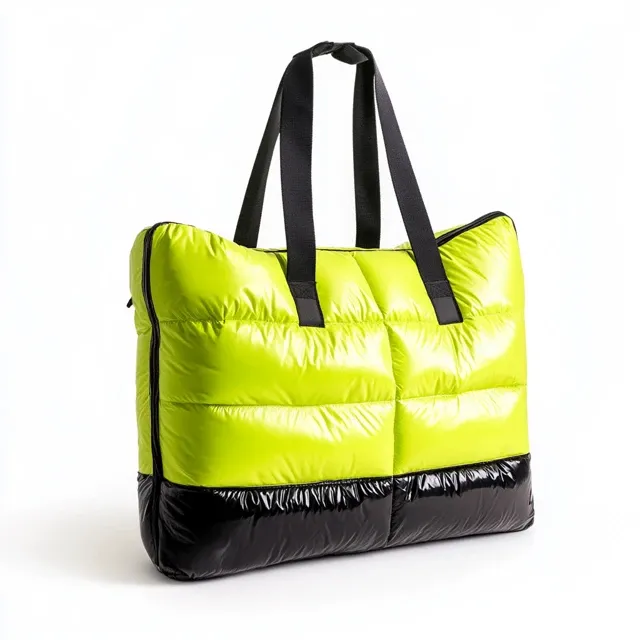
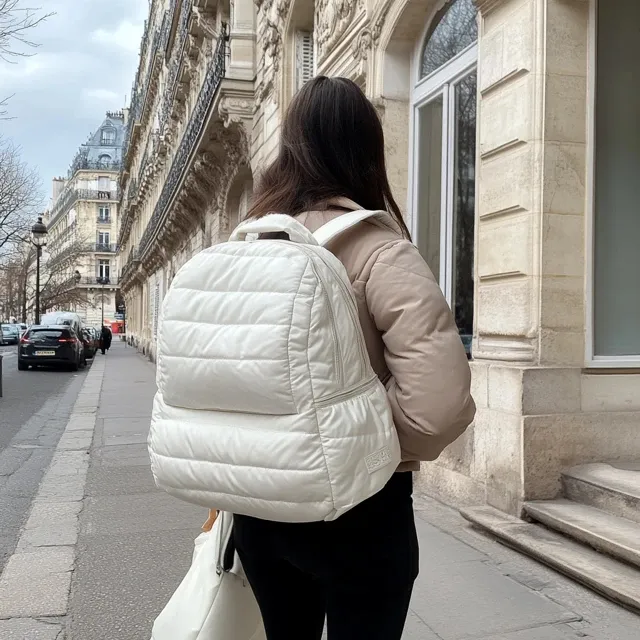
• Handle comfort priorities and expected load target (kg) for pull testing
• Accessory and organizer needs (inner pouch/divider/strap) and interface standards
• Colorways and finish preference (matte/glossy/textured) with reference samples
• Retail packaging plan and whether you need sets (mini + original) by SKU
Start custom original eva bags production
Send your requirements and get a structured RFQ checklist and a manufacturing plan.
An original design case is the point where a brand stops buying a catalogue shape and starts owning a silhouette. That shift changes the work: instead of matching a sample you already have, the programme begins with a concept, a fitment requirement and a set of drawings, and it ends with tooling you own. Below is how we take a hard-shell concept from sketch to a repeatable production part.
Specification options for original moulded cases
Design freedom on a moulded shell is real but bounded. Wall thickness has to stay within a range for the material to fill and cool consistently; draft angles are needed to release the part; and sharp internal corners concentrate stress. The grid below captures the parameters we set with a buyer at concept stage, before any steel is cut.
| Parameter | Slim case | Standard case | Deep case |
|---|---|---|---|
| External size (W x D x H) | 240 x 90 x 170 mm | 300 x 120 x 210 mm | 360 x 160 x 260 mm |
| Internal volume | 2.8 L | 5.6 L | 11.0 L |
| Wall thickness, nominal | 3.0 mm | 4.0 mm | 5.0 mm |
| Recommended draft | 2 degrees | 3 degrees | 3 degrees |
| Shell material | EVA, 0.16 g/cm3 | EVA, 0.18 g/cm3 | EVA, 0.22 g/cm3 + ribbing |
| Interior fitment | Die-cut foam, single layer | Die-cut foam, two layers | Moulded tray + elastic grid |
| Closure | #5 coil zip, 270 degrees | #8 coil, twin pull | #8 coil + compression lip |
| Sealing detail | Overlap lip | Overlap lip + gutter | Compression lip + gutter |
| Carry | Moulded grip | Moulded grip + strap | Moulded grip + padded strap |
| Empty weight | 330 g | 620 g | 1,050 g |
| Documented compliance | REACH, Proposition 65 | Adds CPSIA, EN 71-3 | Adds ASTM D751, amfori BSCI |
Draft angle and wall thickness are the two constraints that shape every original design, and both are negotiable within limits. A design with zero draft looks crisp on screen and will not release from a tool without scuffing. Reserve one flat, untextured area for a label or a print, because textured surfaces do not take decoration well.
How an original moulded case is developed
The concept stage is deliberately cheap. We work from sketches, a fitment list and target dimensions to produce a design proposal that states wall thickness, draft, parting line, cavity count and the surface finish approach. That proposal also flags the features that will cost tooling money - undercuts, moving cores, textured zones - so the design can be adjusted before anything is committed.
Prototyping comes next and it is usually a CNC-cut foam model or a 3D-printed shell, not a moulded part. The point is to validate ergonomics and fitment: does the device sit correctly, does the lid close over the contents, does the grip feel right in a hand. Changing a model costs nothing; changing a tool costs real money and calendar time.
Tooling follows approval. Cavity count is set by volume expectation and by budget, and it affects unit cost twice: more cavities mean higher tool cost but lower cycle cost per part. Every cavity is engraved with an identification number, and the tool is built with cooling channels sized for the wall thickness so the cycle is stable rather than marginal.
First shots, or T1, are dimensioned before anything is assembled. Length, width, height, wall thickness at defined points and lid fit are measured on parts from every cavity, and the shrinkage behaviour of the specific compound is recorded. Only after T1 parts are dimensionally accepted does an assembled sample get built for fitment and drop testing.
Assembly is where a moulded shell becomes a product. The zip is set into a fabric gutter bonded to the shell edge, the interior fitment is laminated or dropped in, and the carry hardware is mounted through reinforcement. Then the sealing detail is checked: a compression lip that closes evenly all round is what keeps dust and splashed water out of the case.
Cost drivers and MOQ for original moulded cases
Tooling is the first conversation and it is project-specific: charge, cavity count and amortisation. Beyond that, cycle time governs conversion cost and is driven by wall thickness and cooling; interior fitment governs assembly cost; and the closure and hardware spec governs the rest. Original designs also carry a development cost that catalogue shapes do not.
| Configuration | Indicative FOB | Primary cost driver |
|---|---|---|
| 2.8 L slim case | USD 4.50 - 7.00 | Mould amortisation, cycle time |
| 5.6 L standard case | USD 7.00 - 11.00 | Fitment layers, zip spec |
| 11.0 L deep case | USD 12.00 - 19.00 | Ribbed tooling, hardware |
| Moulded interior tray | + USD 1.20 - 3.00 | Second tool, cavity count |
| Custom emboss or logo panel | + USD 0.08 - 0.22 | Engraving, artwork prep |
Programme terms are unchanged by the design being original. Minimum order quantity is 500 units per style and colour, or 300 on repeat programmes. Sampling takes 6 to 10 working days once first shots exist, and 12 to 15 where a new tool or fitment is developed. Mass production runs 35 to 50 days after sample approval. Sample fees of USD 50 to 150 are credited to your first bulk order, tooling is quoted at USD 300 to 2,500 for plates and dies with mould charges quoted per cavity set, quotes return in 24 to 48 hours, and terms are T/T 30/70 FOB Xiamen with EXW, CIF and DDP under Incoterms 2020.
Quality gates and acceptance criteria
Original designs are validated against the use case rather than against a generic standard. A case built to protect a measuring instrument is drop tested at a defined height with the instrument inside and checked for function afterwards; a case built for retail presentation is tested for stacking and for scuff resistance in transit.
- T1 dimensional report per cavity, then in-process dimensional checks at defined intervals across the run.
- Drop test on all faces, edges and corners at rated load, plus a cold-condition drop for winter markets.
- Zip cycle and sealing check, 3,000 cycles, followed by a splash test at the closure line.
- Coated-fabric and laminate testing to ASTM D751 where a face fabric is bonded to the shell.
- Restricted substances to REACH (EC 1907/2006), CPSIA, EN 71-3, California Proposition 65, plus ASTM F2923 where the product is a children's item.
Stacking and compression are checked for any case that will be palletised, since a deep shell under pallet load can deform permanently. Final random inspection runs to AQL 2.5 (Critical 0, Major 2.5, Minor 4.0), with AQL 1.5 on request under ISO 2859-1.
Tooling ownership, intellectual property and repeat runs
Decide tooling ownership before the tool is built. A buyer-funded tool is your property, is identified as such, can be moved, and is maintained on a defined schedule at your cost or ours depending on the agreement. A tool we fund stays with the programme and is amortised into unit price. Either arrangement works; what causes problems is discovering the difference after the fact.
Intellectual property is handled the same way. Our production team works under confidentiality on original designs, and we will sign an NDA before drawings are exchanged. Design files, fitment drawings and cavity identification stay documented so a repeat run years later matches the original approval rather than a re-interpretation of it. With 7 lines, 149 machines, 137 people and 200,000 units of monthly capacity, a repeat programme can be slotted without displacing other work.