Your Trusted Custom Mini EVA Bags Manufacturer
Mini EVA bags for retail and gifting programs. Compact, waterproof, and designed for seasonal color drops and accessory-driven collections.
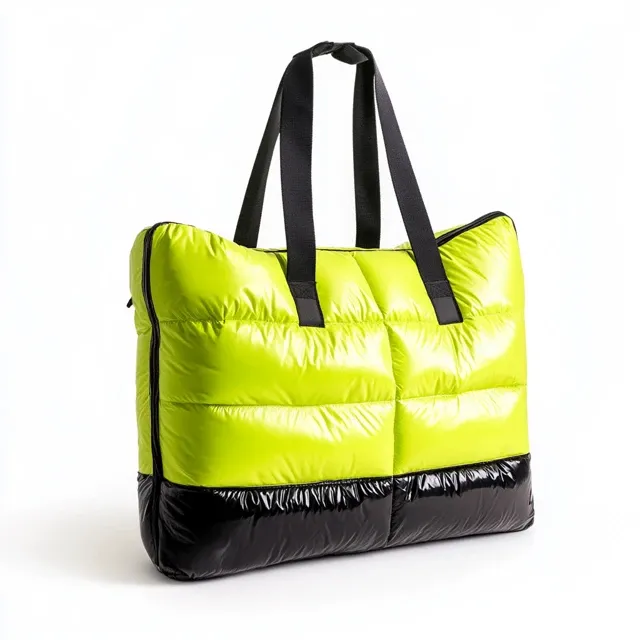
Spec snapshot
A fast engineering view of what matters for sourcing, quoting, and repeatable production.
| Item | Typical | Notes |
|---|---|---|
| Size positioning | mini tote / mini crossbody (by spec) | Mini sizing changes wall thickness and handle geometry requirements |
| Color drop plan | seasonal palette (by program) | Define repeat colors vs limited drops to manage MOQ and inventory |
| Surface finish | matte / glossy / textured (by spec) | Finish affects scratch visibility and branding method choice |
| Accessory ecosystem | charms + straps + insert pouch (by spec) | Accessory interfaces must be standardized to prevent mismatch |
| Typical MOQ | 800–2000 pcs | Depends on color count and molded parts strategy |
EVA color drop planner
Seasonal color drops are a merchandising strategy. This planner keeps MOQ, consistency, and SKU execution under control.
| Drop | Palette | MOQ | Notes |
|---|---|---|---|
| Core colors | black / white / navy (typical) | lowest MOQ tier | best for evergreen retail and repeat reorders |
| Seasonal pastels | mint / lilac / sand (by program) | mid MOQ tier | color drift is more visible; define delta range before bulk |
| Bright pop colors | hot pink / neon (by program) | higher MOQ tier | requires stable master chips and lot separation control |
| Limited edition | collab colorways (by spec) | program-based | lock packaging and SKU labels early to avoid mix-ups |
Mold venting & gate mark controls
Mini EVA bags are judged by appearance. These controls reduce flash, burr edges, and visible gate marks in bulk production.
| Area | Risk | Control |
|---|---|---|
| Handle roots | sink marks or stress whitening | wall thickness balance + cooling time control + visual gates |
| Perforation holes | flash and burr edges | mold trimming SOP + hole edge inspection |
| Gate mark zones | visible gate scars on front panels | gate placement planning + surface texture selection to hide marks |
| Color consistency | batch color drift | master chip + color tolerance approval + lot separation |
Charm & strap attachment points
Accessory-driven EVA collections need stable interfaces. These attachment points define what can be safely carried without tearing.
| Point | Option | Load | Note |
|---|---|---|---|
| Side holes | charms and tags | light load | define hole spacing and allowable ring thickness |
| Handle link (by spec) | short strap / keychain | medium load | validate pull force to avoid tearing at handle root |
| Crossbody strap ring (by spec) | detachable strap | higher load | requires reinforced insert or molded ring seat strategy |
Custom Mini EVA Bags catalog
Choose a base style and we will tailor materials, capacity, colors, and branding to your requirements.
Materials & fabrics
Material choice drives performance, durability, finishing, and target price point.
| Fabric | Waterproof | Cost | Notes |
|---|---|---|---|
| EVA | waterproof | varies | Compact sizing with durable handle reinforcement. |
• AQL final inspection
• Resort gifting
• Kids and family programs

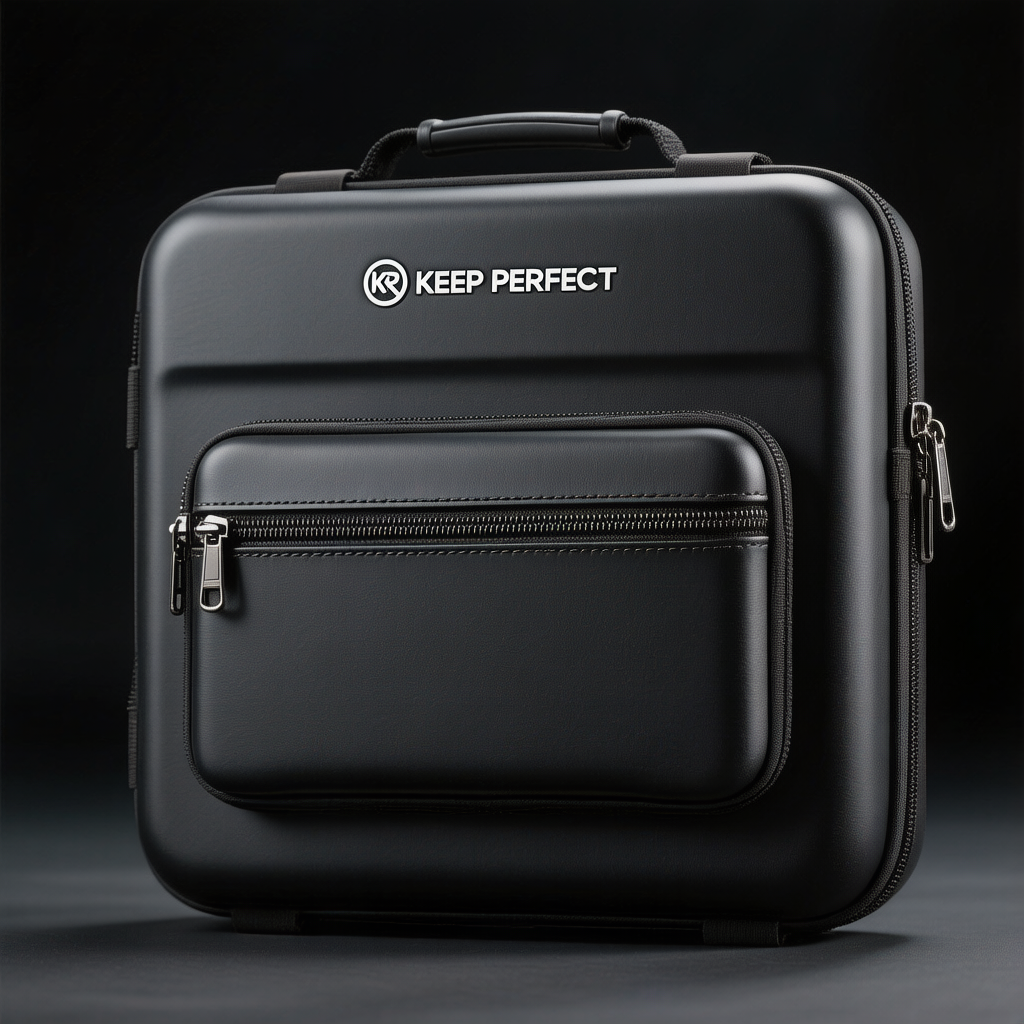
• Color drop plan (core + seasonal + limited) and target quantities per color
• Surface finish preference (matte/glossy/textured) and branding method
• Accessory list (charms/strap/insert pouch) and interface standards to match
• Packaging requirements (set box, inserts, barcode labels) and channel type
Start custom mini eva bags production
Send your requirements and get a structured RFQ checklist and a manufacturing plan.
A small moulded shell is a different discipline from sewn soft goods. There is no seam allowance, no fabric yield and no stitch to hide behind - the part either fills the cavity correctly or it does not, and the defects are visible in the surface of the finished piece. That makes tooling and process control the entire job, and it is why the specification for a moulded programme has to be written before a mould is cut.
Specification options for small moulded EVA cases
Ethylene-vinyl acetate is specified by density, wall thickness and surface finish, and all three interact. Thicker walls hold shape but add weight and cycle time; higher density resists compression but is harder to fill in thin sections. The grid below covers the small-format range used for cosmetics, tech accessories, promotional kits and children's products.
| Parameter | Light shell | Standard shell | Structured shell |
|---|---|---|---|
| External size (W x D x H) | 180 x 90 x 110 mm | 220 x 110 x 140 mm | 260 x 140 x 170 mm |
| Internal volume | 1.4 L | 2.6 L | 4.2 L |
| Wall thickness | 2.5 mm | 3.5 mm | 4.5 mm |
| Material density | 0.12 g/cm3 | 0.16 g/cm3 | 0.22 g/cm3 |
| Surface finish | Embossed skin texture | Matte, fine grain | Gloss zones + matte body |
| Interior fitment | Elastic loops | Die-cut foam tray, 2 loops | Moulded tray + mesh pocket |
| Closure | #5 coil zip | #5 coil, reverse coil | #8 coil + moulded pull |
| Carry | Wrist loop | Webbing loop, 15 mm | Moulded handle + strap |
| Empty weight | 140 g | 260 g | 430 g |
| Drop performance | 1.0 m, 4 corners | 1.2 m, 6 faces | 1.5 m, 6 faces + edges |
| Documented compliance | EN 71-3, CPSIA | Adds REACH, Proposition 65 | Adds OEKO-TEX Standard 100 |
Wall thickness is the number to argue about early. Going from 2.5 mm to 4.5 mm roughly doubles material and cooling time per shot, which shows up in both unit cost and daily output. Where a buyer wants the feel of a thick shell without the weight, the better answer is usually a higher-density material at a thinner wall with a ribbed internal structure.
How small moulded cases are built
The programme starts with a cavity decision. Compression moulding takes a pre-cut sheet, heats it and presses it into shape in a male and female tool; injection moulding injects molten material into a closed cavity. Compression suits larger, softer, lower-volume parts and gives a pleasant soft-touch surface. Injection suits tighter tolerances, sharper detail and higher volumes, and it costs considerably more to tool.
Material is compounded before it reaches the tool. EVA is mixed with foaming agent, filler and colour masterbatch, and the ratio sets density and cell structure. A poorly dispersed batch shows as surface mottling or as density variation between shots, which is why incoming compound is checked by weight and by a cut-section inspection before production.
Cycle control is the manufacturing discipline. Heat, pressure and cooling time are recorded per cavity, and the first article off each cavity is dimensioned before the run continues. On multi-cavity tools we identify each cavity number on the part so a dimensional drift can be traced back to a specific cavity rather than scrapping the whole day's output.
Assembly follows moulding. Zips are usually stitched into a fabric gutter that has been bonded to the shell edge, because sewing directly through EVA tears under load. Interiors get a die-cut foam tray laminated in place, elastic loops stitched to a backing panel, or a moulded insert that drops in. The zip line is then checked for smooth running around the full radius of the shell.
Decoration is applied last and the method depends on the surface. Heat transfer works on a smooth panel, screen print needs a pre-treatment on some compounds, and a moulded-in logo raised or recessed in the tool is the most durable option of all because it cannot wear off.
Cost drivers and MOQ for moulded cases
Mould amortisation is the single biggest variable at low volume, and it is worth stating plainly: the tooling line is quoted per project and spreads across the order, so a 500-piece first run carries the same tooling cost as a 20,000-piece run, spread over far fewer units. Secondary drivers are cycle time, which is set by wall thickness, and the interior fitment, which is cut-and-assemble labour.
| Configuration | Indicative FOB | Primary cost driver |
|---|---|---|
| 1.4 L shell, loops interior | USD 3.20 - 4.80 | Mould amortisation, cycle time |
| 2.6 L shell, foam tray | USD 4.60 - 6.90 | Tray complexity, zip spec |
| 4.2 L structured shell | USD 7.20 - 10.50 | Wall thickness, insert tooling |
| Moulded-in logo | + USD 0.05 - 0.15 | Cavity engraving |
| Custom colour match | + USD 0.10 - 0.35 | Masterbatch minimum, set-up |
Terms follow the standard programme. Minimum order quantity is 500 units per style and colour, or 300 on repeat runs. Sampling takes 6 to 10 working days once tooling is available, and 12 to 15 where a new tool or a new colour is developed. Mass production is 35 to 50 days after sample approval. Sample fees of USD 50 to 150 are credited against the first bulk order, tooling is quoted at USD 300 to 2,500 for dies and plates, mould charges are quoted per cavity set, and quotes return in 24 to 48 hours. Terms are T/T 30/70 FOB Xiamen with EXW, CIF and DDP under Incoterms 2020.
Quality gates and acceptance criteria
Moulded parts are inspected dimensionally first and aesthetically second. Every cavity is measured on first articles for length, width, height and wall thickness, and the run is monitored at defined intervals. Cosmetic acceptance is defined on a limit sample agreed before production, because surface texture on a foamed material is inherently variable and a written description alone will not settle a dispute.
- Drop test from the specified height onto concrete on all faces, corners and edges, unloaded and at rated load.
- Compression and recovery check on the shell, 24 hours at rated stacking load, then dimensional recovery.
- Zip cycle test, 3,000 cycles, with a running check around the shell radius.
- Colour fastness to AATCC 8 on printed or decorated surfaces, and light fastness where specified.
- Restricted substances to EN 71-3, CPSIA, REACH (EC 1907/2006) and California Proposition 65, including phthalate screening.
Low-temperature behaviour is checked on programmes shipping to cold climates, since a foamed shell that is fine at room temperature can crack when dropped at low temperature. Final random inspection runs to AQL 2.5 (Critical 0, Major 2.5, Minor 4.0) with AQL 1.5 available on request under ISO 2859-1.
Packaging, nesting and freight planning
Moulded parts do not compress, so freight is a real cost line rather than an afterthought. A rigid 2.6 litre shell that does not nest can fill a container on air alone, and the arithmetic is worth doing before the design is frozen: a nesting taper of a few degrees and a slightly domed lid can change the units-per-carton figure substantially. Our team runs the carton and container calculation at quotation stage.
For reference, plan on roughly 28 CBM in a 20GP, 56 CBM in a 40GP and 68 CBM in a 40HQ, and remember that rigid shells rarely achieve the utilisation a soft bag would. That is often the argument for shipping a moulded programme split across a shared container, or for reconsidering whether a semi-rigid construction would serve the product as well.