Your Trusted Custom EVA Bags Manufacturer
Custom EVA bags for beach, travel, and retail programs. Lightweight, waterproof, washable, and ideal for colorful branding and accessories.
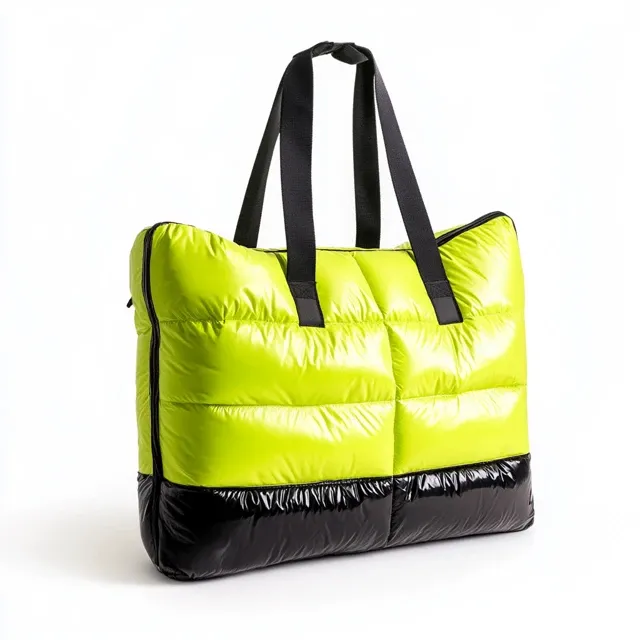
Spec snapshot
A fast engineering view of what matters for sourcing, quoting, and repeatable production.
| Item | Typical | Notes |
|---|---|---|
| EVA thickness | 3–8mm (by model) | Thickness drives stiffness, durability, and molded shape stability |
| Hardness | Shore C range (by spec) | Hardness changes hand-feel, handle comfort, and deformation resistance |
| Surface texture | matte / glossy / pebble (by mold) | Texture affects scratch visibility and brand perception |
| Accessory system | charms / straps / inserts (by program) | Define hole pattern and compatibility early to avoid SKU chaos |
| Typical MOQ | 1000+ pcs (varies by color/mold) | Depends on color count, mold tooling, and accessory complexity |
EVA Hardness & Hand-Feel
EVA bags are defined by hardness and thickness. We help you match hand-feel to channel positioning and control deformation risk in bulk.
| Hardness | Feel | Best For | Notes |
|---|---|---|---|
| Soft | more flexible, softer handle feel | kids and comfort-first series | too soft may deform under heavy loads; define load target |
| Balanced | stable shape with comfortable flex | mainstream retail programs | best cost/performance balance for most channels |
| Firm | structured and premium look | premium positioning and larger sizes | firm builds need edge comfort and handle ergonomics control |
Mold Development Playbook
EVA bags are mold-driven products. We run clear gates for thickness, texture, color uniformity, and compatibility so SKU expansions don’t create production chaos.
3D shape + texture selection
Mold trial + color match
Hole pattern & accessory spec
Handle reinforcement tuning
Bulk QC gates
Accessory Ecosystem (Retail Upsell Engine)
Accessories are what make EVA bags scale in retail. We design compatibility rules so charm packs, straps, and inserts work across seasonal drops without breaking fit.
Color & Odor Control Gates
For EVA bags, retail perception depends on uniform color, clean surface finish, and controlled odor. We define acceptance ranges and packing behavior to reduce complaints.
- Define acceptable odor level and ventilation time before packing for sealed retail boxes
- Set color tolerance range for bulk production (especially pastel and neon series)
- Control surface defects: bubbles, flow lines, and gloss inconsistency as appearance gates
- Confirm cleaning behavior expectations: sunscreen, sand, and saltwater exposure in real use
Capacity & dimensions reference
Standard size options for eva bags. We can also customize dimensions to fit your specific gear.
| Volume | Typical Dimensions | Best For |
|---|---|---|
| Mini | approx. 20–25cm width | kids, gifting, light carry |
| Original | approx. 30–40cm width | beach, pool, daily tote |
| Large (by spec) | 40cm+ width | family travel, bulky carry |
Materials & fabrics
Material choice drives performance, durability, finishing, and target price point.
| Fabric | Waterproof | Cost | Notes |
|---|---|---|---|
| EVA (Ethylene-vinyl acetate) | waterproof | varies by thickness | Soft, flexible, washable, and lightweight. |
| PVC / TPU accessories (by spec) | water-resistant | varies | For transparent trims, pockets, and add-ons. |
• appearance checks for surface defects
• AQL final inspection
• Lifestyle brands
• Promotional gifting with accessories
• Family travel and waterproof carry
• Hand-feel/hardness target and surface texture preference
• Color palette and number of SKUs (seasonal drops vs evergreen)
• Accessory plan (charms/straps/inserts) and compatibility requirements
• Branding/packaging needs (sets, inserts, barcode labels, cartons)
• Any compliance or material statements needed for target markets (by spec)
Start custom eva bags production
Send your requirements and get a structured RFQ checklist and a manufacturing plan.
Moulded EVA behaves nothing like a sewn textile. The shell is drawn over a heated tool under vacuum, so the shape on your drawing is the shape that comes off the line, and draft angles, corner radii and wall thickness settle the outcome long before anyone picks a fabric. Buyers arriving at EVA from a cut-and-sew background are usually surprised by two things: how much the tooling step shapes the calendar, and how directly wall thickness converts into both grams and dollars.
Specification options for custom moulded EVA bags
The grid below is the reference our production team prices against once a drawing or reference sample arrives. Read the wall-thickness row first — it sets weight, stiffness and cycle time in one move, and it is the line most programmes change after the first sample.
| Parameter | Compact 6 L | Standard 12 L | Deep 20 L |
|---|---|---|---|
| Capacity | 6 L | 12 L | 20 L |
| External dimensions | 28 × 18 × 14 cm | 36 × 24 × 18 cm | 44 × 30 × 22 cm |
| Shell construction | Single-piece vacuum-formed shell | Formed shell with welded gusset band | Formed shell, welded base tray, reinforced rim |
| Wall thickness | 2.5 mm even | 3.0 mm walls, 3.5 mm base | 4.0 mm base, 3.0 mm walls, 5 mm rim |
| Material hardness | 55 Shore C | 60 Shore C | 65 Shore C with 70 Shore C base |
| Surface finish | Embossed pebble grain | Smooth, screen-print ready | Debossed logo panel, matte topcoat |
| Interior | Bare moulded surface, wipe-clean | 210D polyester bonded to shell | 420D bonded liner, mesh lid pocket, elastic loops |
| Closure | #5 coil zip welded to flange | #8 water-resistant coil with storm lip | #10 coil, moulded pull, drain eyelet |
| Carry | Webbing grab handle, riveted | Moulded integral handle | Moulded handle plus detachable padded sling |
| Base detail | 4 moulded feet | 5 feet with moulded wear strip | 6 feet, moulded skid rails |
| Empty weight | 320 g | 620 g | 1,150 g |
| Tooling budget | USD 300–900 | USD 900–1,800 | USD 1,800–2,500 |
| Documented compliance | REACH (EC 1907/2006), Proposition 65 | REACH, CPSIA, EN 71-3 | REACH, CPSIA, OEKO-TEX Standard 100, amfori BSCI |
How a moulded EVA bag is built
Everything begins with the tool. EVA sheet is clamped, heated until it softens, then drawn over an aluminium mould by vacuum. Material thins wherever it has to stretch furthest, which is always the deepest corner, so the tooling is designed with local compensation: extra depth in the draw, generous radii, and draft of at least three degrees on every vertical face. Skip the draft and parts start sticking in the tool and tearing on ejection.
Once the shell comes off the mould it is die-cut or CNC-trimmed to its final outline. Trimming is where dimensional tolerance is actually held, and a formed shell left untrimmed can vary by two to three millimetres between the first and last part of a run. On designs that mate with a welded gusset or a zip flange, that variance alone is enough to cause visible panel mismatch.
Joining is high-frequency welding rather than needle work wherever possible. Welding fuses EVA to EVA and produces a seam that is waterproof without tape, but it only works on like materials, so any textile gusset has to be mechanically attached through a moulded flange. That hybrid — textile band trapped between two EVA lips and welded through — is the single hardest operation to stabilise on a new tool.
Zips are set into a moulded flange rather than sewn into fabric. The tape is captured in the weld, so the zip specification has to be fixed before the tool is cut; changing from a #5 to a #8 coil afterwards means reworking the flange geometry. This is why we ask for the closure decision at drawing stage rather than at sample stage.
Cost drivers and MOQ for moulded EVA programmes
Four variables set the unit price, and the first one is not a material. Tooling amortisation runs across the whole order, so the same shell costs materially less per unit at 2,000 pieces than at the 500-unit opening quantity. After that come wall thickness, cycle time and whether the interior is lined.
Wall thickness drives cost twice: more material per part, and longer heating and cooling per cycle. Moving a 12 L shell from 3.0 mm to 4.0 mm adds roughly a third to material weight and can add eight to ten seconds of cycle time, which on a seven-line schedule is real capacity. Programmes that need stiffness usually get it more cheaply from a rib or a rim than from a thicker wall.
| Tier | Typical configuration | Indicative FOB |
|---|---|---|
| Entry | Unlined single-piece shell, #5 coil zip, webbing handle | USD 4.50–6.50 |
| Mid | Lined shell, welded gusset, #8 water-resistant zip, moulded handle | USD 6.50–9.50 |
| Premium | Lined with mesh pockets, reinforced rim, skid rails, padded sling | USD 9.50–14.00 |
Opening quantity is 500 units per style per colour, and repeat programmes on an existing tool drop to 300. Sampling takes 6–10 working days where stock tooling can be adapted, and 12–15 where a new mould has to be cut, with sample fees of USD 50–150 credited against your first bulk order. Payment is T/T 30/70 on FOB Xiamen; EXW, CIF and DDP are all available under Incoterms 2020. Pricing comes back within 24–48 hours of a complete brief. Transit is 25–35 days by sea, 5–8 by air and 3–5 by courier, and note that rigid shells nest only partially — a 20 L body can occupy close to its own external volume in the carton, so plan against 28 CBM in a 20GP, 56 CBM in a 40GP or 68 CBM in a 40HQ rather than against unit count.
Quality gates and acceptance criteria
Final inspection runs to AQL 2.5 with sampling under ISO 2859-1 — Critical 0, Major 2.5, Minor 4.0 — and AQL 1.5 where your own retail protocol requires it. Reports are issued from our 4,950 m² SGS-verified production floor before loading, and reorders use an identical format so two shipments can be compared line by line.
| Check | Method | Acceptance |
|---|---|---|
| Drop resistance | In-house, 1 m, 6 faces, loaded to 80 percent | No crack, no weld separation |
| Weld seam peel | ASTM D751 | Above 60 N per 25 mm, cohesive failure in the foam |
| Compression and stacking | In-house, 30 kg for 24 h at 40 °C | Recovery above 92 percent of original height |
| Low-temperature flexibility | In-house, −10 °C for 4 h, bend over 25 mm mandrel | No cracking or whitening |
| Fabric tensile on textile band | ASTM D5034 | Above 450 N |
| Colour fastness to rubbing | AATCC 8 | Grade 4 dry, grade 3–4 wet |
| Zip endurance | In-house, 3,000 cycles | Smooth travel, no flange separation |
| Restricted substances | REACH (EC 1907/2006) | SVHC declaration on foam, coating and trim |
Tooling decisions and branding on a moulded shell
Branding can be built into the tool or applied afterwards, and the choice is mostly an economic one. Debossing a logo panel into the mould costs nothing per unit and cannot be changed for the life of the tool; screen printing or heat transfer after forming costs cents per unit and lets you run the same shell for three customers. Where a programme is expected to repeat for several seasons, debossing wins; where the shell will be shared across colourways, printing wins.
Ordering path for moulded EVA programmes
Six steps take you from a sketch to a loaded container; a first programme with new tooling typically lands at 12–16 weeks. Material trade-offs are set out under custom bag materials, and the wider process is documented on bag manufacturing process.
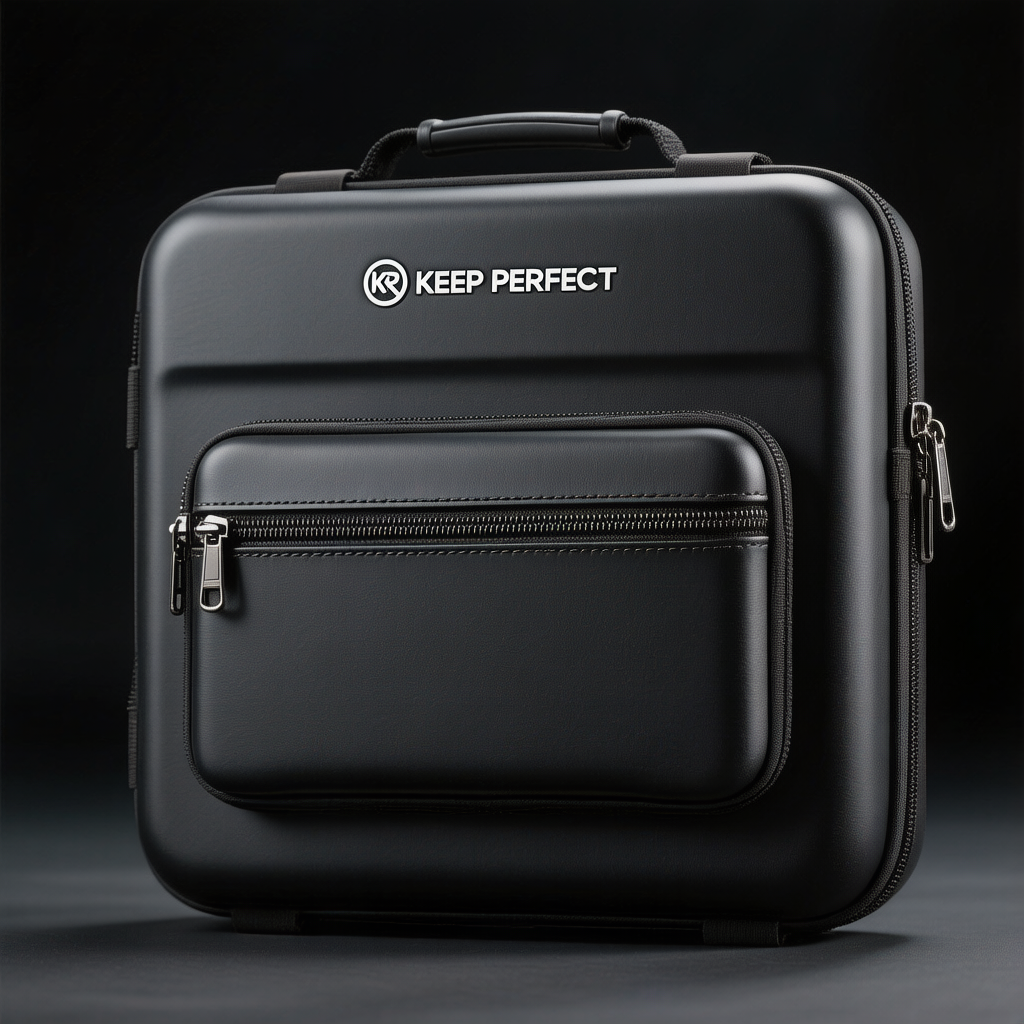
Send a drawing or a reference part and you will get a tooling estimate, a wall-thickness recommendation and an indicative FOB band within 48 hours. Protective hard-shell formats are also covered under custom laptop bags.