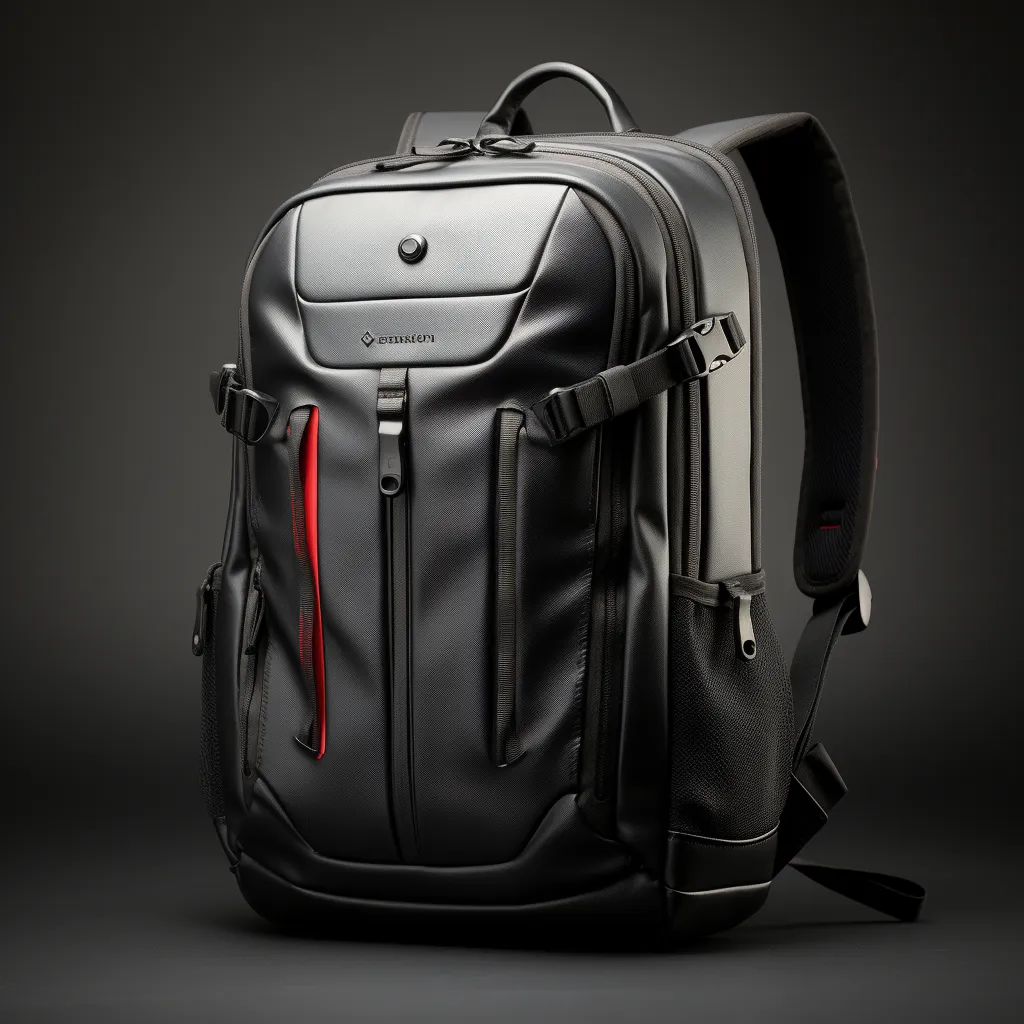
Waterproof Laptop Backpacks: Best-Selling Features
Learn how to run a custom laptop backpack oem program for United States: materials, tech pack, sampling, QC and shipping. Get OEM/ODM-ready checklists and quote


The Production Path a Laptop Backpack Follows
A professional laptop backpack program is a controlled workflow: clarify requirements, lock the build route, validate with measurable gates, then scale production with repeatable QC.
Primary SEO focus: custom laptop backpack oem. Secondary: laptop backpack manufacturer, private label bags, custom logo bags, OEM ODM bags.
Process controls behind a repeatable build
Any tour worth taking is a control-point checklist in disguise, not a showroom trip.
Each stage, in the order it happens
- Get the brief straight first: claim, cost target and packing spec, then cut samples.
- Within material sourcing, lock by spec: coating/laminate spec, fabric route, trim vendors.
- Templates, tolerance bands and a reinforcement plan come next.
- Cutting stage: check grain direction plus marker efficiency; hold shade lots steady.
- Sewing and welding: hold the line on stitch spec, seam allowance, critical-zone reinforcement.
- At the final assembly stage, placement jigs position logos, hardware and accessories.
- Inspect to AQL, mark the cartons and raise the shipping documents.
Typical buyer use scenarios
- outdoor sports
- fishing
- boating
- camping
- commuting
Key functions buyers request most
- RF welded seams
- roll-top closure
- airtight zipper option
- lash points
- abrasion reinforcement
Choosing the Best Materials for Custom Laptop Backpacks
| Material | Performance | Cost Range | Leading For | Upsides & Watch-outs | Risks & How to Control |
|---|---|---|---|---|---|
| TPU laminated nylon | Premium waterproof barrier potential (ISO 811 / AATCC 127 per spec); good abrasion when reinforced (ISO 12947 as specified) | US$1.6–5.5 / meter (per the specification) | Claim-led outdoor SKUs and premium builds | Advantages: strong claim ceiling. Limitations: crease sensitivity; higher BOM cost | Control laminate peel, crease tolerance and seam strategy; validate waterproof scope early |
| PVC tarpaulin (per the specification) | Upper barrier and wipe-clean surface (ISO 811 / AATCC 127 per the specification); strong abrasion tolerance (ISO 12947 to spec) | US$1.2–6.0 / meter (per spec) | Rugged utility lines and marine use | Upsides: durable surface. Watch-outs: heavier; sustainability concerns | Define fold/packout rules to avoid scuffs; control weight targets |
| Canvas / cotton (per spec) | Good hand-feel and print; waterproofing depends on finish (AATCC 22 per spec) | US$1.0–3.5 / meter (per spec) | Retail lifestyle lines, totes and promotions | Merits: classic look. Watch-outs: heavier; stain risk without finish | Define shrinkage and colorfastness tests (AATCC 61 / ISO 105 per the specification); specify lamination if needed |
Getting to two or three candidate fabrics
- Let the use case lead: abrasion, load paths and moisture pick the fabric for you.
- Decide whether the claim covers the whole bag or only zones like the main compartment.
- Every referenced ISO/AATCC/ASTM procedure should be listed, together with the numeric bar for approval.
- Choose route-suitable trims, from zipper type and sliders to buckles and webbing strength.
- Confirm that print and branding suit the specified fabric.
- Scuffing and creasing usually trace to transit, not to stitching defects.
Development Sequence for a Custom Build
Fields your tech pack cannot skip
Development steps in working order
- Set the buyer, the price bracket and the slot it fills.
- Confirm the claim scope and its test plan by spec.
- Artwork placement, tolerance map, measurement table and BOM: four pieces that make the tech pack.
- Fit, structure and material route get validated at prototype sampling.
- Final BOM, final packaging route: the PP stage.
- Sign-off requirement: QC checklists plus the reference sample, ahead of bulk cutting.
Sampling pitfalls and how to close them
- Confirm fabric shade and coating feel with the actual supplier lot (per spec).
- Load-test every anchor point: webbing, grab handles and D-ring areas, to specification.
- Verify the zipper path, then slider feel, then the cycle requirement per spec.
- Open, close and repack the product many times, watching for corner wear and seam creep.
- Three things need checking per lane: rub marks, folding lines, and defence against humidity.
Where sample rounds get saved
A programme that reorders cleanly
Success example (anonymized): a mid-range program targeting United States reduced rework by freezing a single tech pack, running one pre-production sample using the final BOM, and aligning QC checkpoints before cutting. A construction that can be duplicated means each season's reorder goes to the same partner.
Production & Manufacturing Methods for Laptop Backpacks
Weigh MOQ requirements against turnaround duration and price tier using the options table.
| Production Type | Lead Time | MOQ | Cost Level | Preferred For |
|---|---|---|---|---|
| Small-batch pilot run | 6-10 working days + 35-50 days | 500 pcs | medium | Startups, corporate gifting, SKU validation |
| Standard OEM mass production | 35-50 days | medium–high (per spec) | optimized | Retail replenishment and stable demand |
| Expedited production program | 15–25 days (per the specification) | by program | higher | Time-critical launches |
Which method, and why it matters
- Foam thickness and density for structure (per spec)
- Stitch density and thread type for load zones (as specified)
- Edge binding method and tolerance for clean finishing
- Trims and hardware installation: jigs, torque control, and anti-loosening measures (to spec)
How the Mark Goes On, and What Closes the Bag
Branding options and where each fits
Assembly checks before the carton closes
- Brand mark alignment check against placement template
- Zipper end reinforcement and smoothness check
- Visual check for wrinkles, creases, and surface scuffs before packing
Logistics and Fulfilment
Freight milestones to hold
Numbers age badly when copied into dozens of places, so the maintained version of this grid stays on the full manufacturing workflow.
Key Factors to Choose a Reliable Laptop Backpacks Manufacturer
Use this checklist before signing an OEM/ODM contract for laptop backpacks.
Due diligence, item by item
- Can they work from a pack and tell you what they inferred?
- Are alternatives by spec offered, and BOM sourcing controlled by them?
- Do they evidence QC checkpoints, IQC to IPQC to FQC, and an AQL plan?
- Without hurting workmanship, can they allow a flexible MOQ?
- Can they give firm lead time commitments and a defined escalation path?
- Do they bring packaging and shipping know-how that fits your market?
Audit points to tick before you commit volume
Strengths worth weighing
The feature set that drives reorders on a coated commuter pack
Laptop packs are bought on one dimension and returned on another. The purchase decision is made on whether the advertised size fits the device, and the return is made on whether the sleeve actually protects it. A 16-inch laptop measures roughly 356 by 249 millimetres, so a sleeve that is cut to those exact numbers will not fit the same machine in a sleeve case. The working rule is device dimensions plus 15 mm of ease in each direction, and a stated internal rather than external sleeve size.
Suspension is the second specification that matters. A sleeve that is sewn to the bag base transmits a drop straight into the corner of the machine, so the sleeve is suspended with roughly 25 mm of clearance above the base. Padding is typically 5 mm EPE closed-cell foam laminated to a 3 mm spacer, and the build is qualified by a drop test with a 5 kg load from one metre rather than by feel.
Closure choice splits the channel. A coated coil zipper gives fast access and splash protection, while a roll-top with three folds gives submersion-grade protection at the cost of access speed. Commuters in a city channel generally prefer the zip; the roll-top sells into the cycle-commute and outdoor channel where the pack is on the back in sustained rain.
Comfort, access and the details that get reviewed
Weight and harness geometry decide the review score. A 25 litre coated commuter pack should land between 0.9 and 1.1 kg, with shoulder webbing at 25 mm minimum and a sternum strap on anything above 20 litres. A luggage pass-through sleeve of roughly 200 mm width is now expected rather than optional on a travel-adjacent commuter model.
- Sleeve: internal dimension stated, device plus 15 mm ease, suspended with 25 mm base clearance
- Padding: 5 mm EPE laminated to 3 mm spacer, qualified by a 1 metre drop with 5 kg
- Closure: coated coil zipper for access, three-fold roll-top for sustained rain
- Harness: 25 mm webbing minimum, sternum strap above 20 litres
- Travel: 200 mm luggage pass-through sleeve on travel-adjacent models
Shell performance is specified separately from the sleeve. Body fabric is confirmed to at least 1,000 mm hydrostatic head under AATCC 127, and the abrasion figure under ISO 12947 is stated for the base panel because that is where a commuter pack wears. Our production team confirms both during costing so the shell is not substituted at bulk.
Organisation is where a commuter pack is judged in daily use. A coated pack usually carries one quick-access pocket at the top for a phone and credentials, two side pockets, and a document sleeve against the back panel. Adding beyond that tends to add weight and seam count without improving the review score, and every extra seam on a coated shell is another line that has to be sealed. Our production team recommends fixing the pocket count during costing so the weight target stays achievable.
Sampling takes 6 to 10 working days, extending to 12 to 15 where a moulded back panel or a custom jig is used, and bulk runs 35 to 50 days at a 500-piece minimum. Related options sit under the laptop bag programme.
Interior layout as numbers: slot pitch, elastic width and reach distance
Pocket count is a marketing number and layout is an engineering one. A pack advertised with twelve pockets is often worse to live with than one with six, because the twelfth pocket is usually too narrow for anything a commuter carries and too deep to find. What makes an interior work is that each zone is sized to the item it must hold, that the elastic is wide enough not to cut into that item, and that the quick-access zone sits within easy reach of the grab handle.
Reach distance is the least specified and most felt dimension. Anything the user needs several times a day should sit within roughly 300 mm of the top grab point, measured on the closed pack, which in practice rules out deep lower-front pockets for phones and travel cards. Elastic pitch matters next: loops spaced too widely waste panel width, and loops spaced too tightly crowd the contents so nothing can be pulled out one-handed.
| Zone | Item carried | Internal dimension | Component specification |
|---|---|---|---|
| Quick-access top | Phone plus case | 165 by 85 mm | Bonded slots, 20 mm loop elastic |
| Document sleeve | A4 folder or tablet | 320 by 240 mm | Flat slip, 150 gsm lining, no closure |
| Cable pocket | Charger and cable | 180 by 120 mm | 25 mm elastic loops at 60 mm pitch |
| Bottle pocket | 500 ml bottle | 70 mm diameter | Bound opening, 4 mm elastic top |
| Admin panel | Cards and pens | 210 by 130 mm | Six slots at 30 mm pitch |
Write those dimensions into the tech pack as internal, finished measurements and approve them on the prototype. A pocket that is specified by external panel size will always arrive smaller than the drawing suggested, because seam allowance and binding come out of the number.
Approval sequence for a commuter sample before you sign it off
Run the following sequence on the physical unit, in this order, and record the figures on the sample tag so bulk can be checked against the same reference.
- Weigh the empty pack first. A 25 litre coated commuter build should land between 0.9 and 1.1 kg, and an empty weight above target is the hardest figure to recover later in the programme.
- Load the sleeve with the actual device in its case, then drop the pack from one metre with that real mass rather than with a weight bag, because machines concentrate load differently.
- Cycle every closure twenty times and inspect the tape for wicking at the storm flap, since capillary pull through chain tape is the usual route for water into the device compartment.
- Confirm the shell figures: at least 1,000 mm hydrostatic head under AATCC 127, plus a stated ISO 12947 abrasion result for the base panel where a commuter pack actually wears.
- Draw the finished lot to AQL 2.5 under ISO 2859-1 with Critical 0, Major 2.5 and Minor 4.0, then release bulk cutting only after the golden sample is signed on both sides.
Our 4,950 m² SGS-verified production floor runs seven lines with 149 machines and monthly output near 200,000 units, which is why a pilot run before bulk is worth the calendar: a sleeve tolerance error costs nothing to catch on ten pieces. Sampling runs 6-10 working days, bulk 35-50 days, and shipment leaves FOB Xiamen for a 25-35 day sea leg.
Frequently Asked Questions (FAQs)
What internal sleeve dimension fits a 16-inch laptop plus a protective case?
A 16-inch machine measures roughly 356 by 249 millimetres, so the sleeve internal dimension should be device plus 15 mm in each direction, near 371 by 264 millimetres. Always specify the internal sleeve size and state a plus or minus 3 mm tolerance.
How much clearance should a suspended laptop sleeve keep above the bag base?
About 25 mm of clearance. A sleeve sewn straight to the base transmits a drop directly into the corner of the machine, while a suspended sleeve with clearance absorbs it. The build is qualified by a one metre drop with a 5 kg load.
Which padding build passes a one-metre drop with a 5 kg test load?
A 5 mm EPE closed-cell foam laminated to a 3 mm spacer passes the one metre, 5 kg drop in most commuter builds. Padding thickness alone is not enough; the sleeve has to be suspended with clearance above the base.
What hydrostatic head should a commuter pack shell reach under AATCC 127?
At least 1,000 mm under AATCC 127 for a rain-exposed commuter shell, with the abrasion figure under ISO 12947 stated separately for the base panel. Both are confirmed during costing so the shell is not substituted at bulk production.
What zipper tape coating stops water wicking into a laptop compartment?
A PU-treated coil tape with a coated face stops wicking along the stitch line, while a standard number 8 coil tape draws water in through the needle holes. Tape treatment and seam position are therefore specified together on the tech pack, not separately.
How wide should a luggage pass-through sleeve be on a commuter pack?
About 200 mm, which clears a standard telescopic trolley handle. The pass-through is now expected on a travel-adjacent commuter model and is bar-tacked at both ends where it meets the back panel, sewn at 8 to 10 stitches per inch.
What total weight should a 25 litre coated commuter pack target?
Between 0.9 and 1.1 kg. Above that, commuter reviews start to comment on empty weight. The figure is driven by shell denier, padding thickness and hardware gauge, so it is set during costing rather than discovered at sampling.
How is the laptop compartment inspected under AQL 2.5 before shipment?
Sleeve internal dimensions are measured against the stated plus or minus 3 mm tolerance, padding thickness is checked at 5 mm, and the 25 mm suspension clearance is confirmed. Inspection runs to AQL 2.5 under ISO 2859-1 at level II with critical defects at zero.
Related Guides
Internal resources
- Request a quote (RFQ)
- Browse products & categories
- Factory capabilities & process
- Download QC checklist
Related blog posts
- Custom Cosmetic Bags: Travel & Wash Bag Designs
- Custom Cosmetic Bags with Clear PVC Windows
- Custom Cooler Bags for Picnics, Camping & Food Service
- Custom Cooler Bags for Promotional Giveaways
- Custom Cooler Bags for Beverage & Wine Brands
- Custom Cooler Bags for Golf, Sports & Events
Next step
• Lock keyword and claim scope for custom laptop backpack oem
• Build a tech pack with BOM + tolerance map
• Choose materials route and validate tests (by spec)
• Plan sampling gates (lead time 6-10 working days)
• Set MOQ and cost targets (MOQ 500 pcs)
• Define QC plan and AQL checkpoints
• Confirm production + shipping timeline (35-50 days)
Start your next bag programme
Send over your requirements; a manufacturing plan and structured RFQ checklist are prepared for you.
Related programme guides: custom laptop bags · custom backpacks.
The five features that actually drive reorder rates
Commuter laptop packs are bought for five reasons, and none of them is fabric denier. Users care whether the sleeve fits their machine, whether the bag stands up on a floor, whether the zippers survive a year of daily pulls, whether water off a shoulder strap ruins a keyboard, and whether cables land somewhere predictable. Programmes that get those five right outperform clever designs with more pockets, and getting them right is mostly a matter of tolerances rather than budget.
Sleeve fit comes first, and it is a tolerance problem. A sleeve listed as 15.6 inch must accept the device with a case on it, which usually means adding 10 to 15 millimetres to each internal dimension versus the nominal screen size, and suspending the sleeve so that the base never rests on the bag bottom. A suspended sleeve with 8 to 10 millimetres of closed-cell foam and a false floor clears the drop-test scenario that generates most warranty claims. Corner reinforcement matters more than panel thickness, because impacts concentrate at corners.
Second is structure. A bag that collapses when set down gets negative reviews even though nothing about it is defective, so specify a base panel with enough stiffness to stand empty and a back panel that does not curl inward. Third is zipper durability: daily commute use easily exceeds several thousand open and close cycles a year, so a #8 or #10 chain with a metal or reinforced-slider construction and properly finished end stops will outlast any cosmetic upgrade you could spend the same money on.
| Feature | Specification that delivers it | Failure if underspecified | Indicative cost impact |
|---|---|---|---|
| Suspended laptop cradle | 8–10 mm closed-cell foam, 20 mm false floor | Corner damage on drop | + 0.30–0.60 |
| Weather-managed exterior | PU-coated shell, storm flap over #8 coil | Wicking through chain tape | + 0.40–0.80 |
| Self-standing base | 1.2 mm PE or EVA stiffener, four feet | Collapse and scuff complaints | + 0.25–0.50 |
| Organiser panel | Loop elastic, bonded pen slots, cable straps | Contents unmanaged, low review score | + 0.35–0.70 |
| Long-cycle closure | #8 to #10 chain, metal slider, reinforced stops | Slider split at 12 months | + 0.20–0.45 |
What each decision costs, and where the money goes wrong
The indicative FOB Xiamen band for a laptop backpack sits around USD 7.00 to 14.00 at a 500-unit MOQ, and the spread is almost entirely explained by structure and closure rather than branding. Adding a moulded back panel or a custom applique moves you to the top of that range quickly; upgrading from a #5 chain to a #8 with a branded pull costs far less and buys more visible quality. Spend on what the user touches twice a day.
Water management deserves a specific note, because it is where programmes over-promise. A coated shell and a storm flap will handle a shower; they will not survive immersion, and no amount of coated fabric changes that once there is a needle line through it. Decide honestly whether the brief calls for shed-off protection or for a fully sealed build, because the sealed route requires welded seams or taped construction with a different tooling budget and a longer sampling window.
Our 4,950 m² SGS-verified production floor runs seven lines with 149 machines and a monthly output near 200,000 units, and laptop programmes specifically benefit from a pilot run before bulk, since a sleeve tolerance error costs nothing to catch on ten pieces and everything to catch on ten thousand. Expect 6 to 10 working days for the first sample, 35 to 50 days for bulk after approval, and release on ISO 2859-1 sampling at AQL 2.5.
Two further checks will save you a season. First, run a loaded drop routine with the actual device mass rather than a weight bag, because real machines concentrate load differently. Second, ask for cycle testing on every zipper at quoted lifecycle rather than accepting a supplier statement, and compare the results with the common leak paths discussed in why sealed bags fail in the field. Then price the whole package against the custom laptop bag development page.
Numbers age badly when copied into dozens of places, so the maintained version of this grid stays on quality control and certification.
Rather than repeat the same matrix here, keep the detailed grading with the central reference on material selection — it lists the acceptance numbers and sampling levels our team works to.