Specialty Bag OEM: Custom Designs for Any Industry
Discover how to run a oem bag manufacturing program for EU & US: materials, tech pack, sampling, QC and shipping. Get OEM/ODM-ready checklists and quote

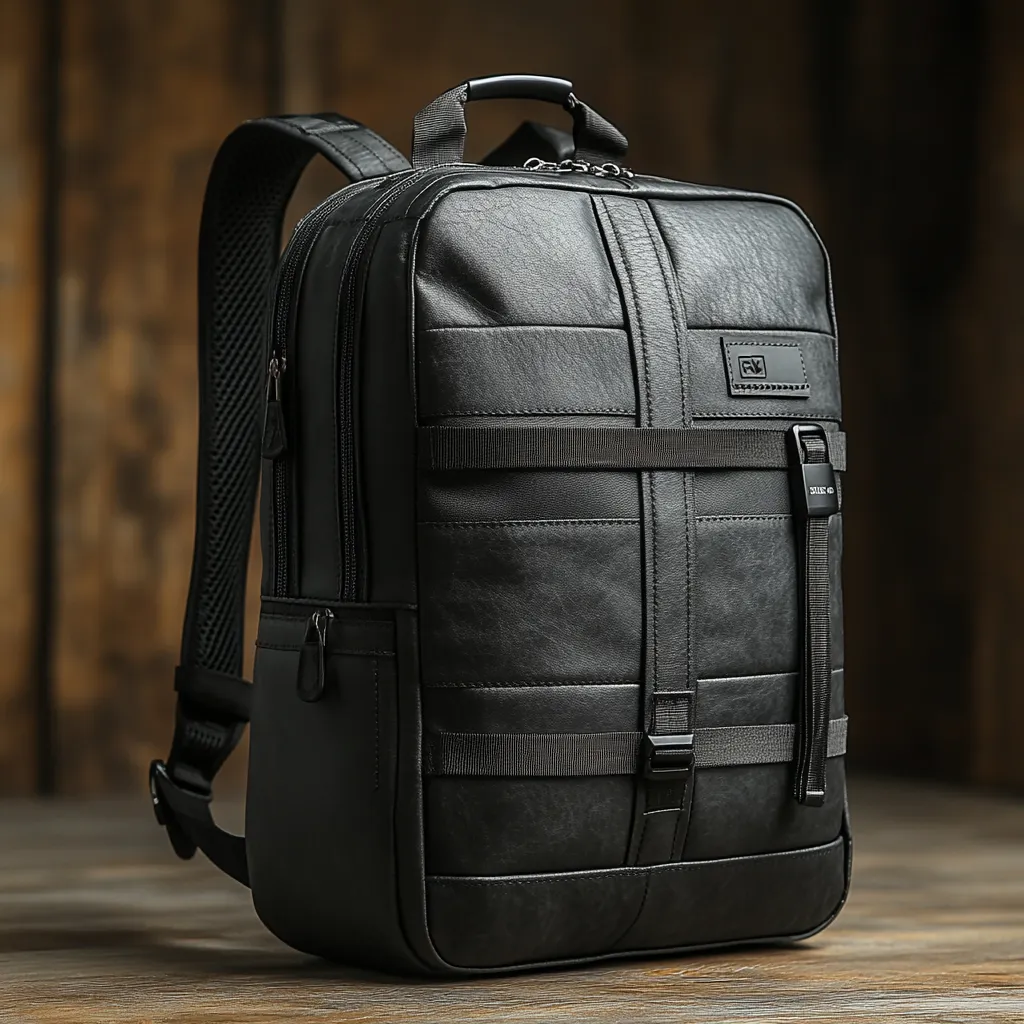
Inside the Build: From Tech Pack to Sealed Carton
Control points the build is measured against
Any tour worth taking is a control-point checklist in disguise, not a showroom trip.
Stage-by-stage: how the order is worked
- Brief alignment: settle the claim scope, cost target and packing rules before any sample.
- Within material sourcing, lock by spec: coating/laminate spec, fabric route, trim vendors.
- Pattern control: build templates, set a tolerance map, plan the reinforcement.
- Cutting stage: check grain direction plus marker efficiency; hold shade lots steady.
- Sewing and welding: hold the line on stitch spec, seam allowance, critical-zone reinforcement.
- At the final assembly stage, placement jigs position logos, hardware and accessories.
- Close with inspection: AQL sampling, carton marks and the export paperwork.
Typical buyer use scenarios
- brand launches
- wholesale programs
- corporate procurement
- retail distribution
Key functions buyers request most
- custom sizing
- durable construction
- logo branding options
- retail-ready packaging
- consistent QC
Choosing the Best Materials for Custom Bags
| Material | Performance | Cost Range | Leading For | Upsides & Watch-outs | Risks & How to Control |
|---|---|---|---|---|---|
| nylon | Even-handed wear life (ISO 13934 tensile as specified); good abrasion resistance (ISO 12947 per spec); stable for branding | US$1.6–5.5 / meter (as specified) | Volume styles with predictable yield | Upsides: versatile. Limitations: performance depends on coating/finish | Lock coating spec, color tolerance and print compatibility; confirm reinforcement mapping |
| Recycled RPET (route, to spec) | Sustainability positioning; performance depends on coating/laminate (ISO 4920 / ISO 811 per the specification) | US$1.5–3.8 / meter (as specified) | Eco positioning programs and corporate procurement | Advantages: sustainability narrative. Limitations: supply stability and lot drift risks | Lock supplier lots, traceability and color delta; validate print and coating compatibility |
| Canvas / cotton (to spec) | Good hand-feel and print; waterproofing depends on finish (AATCC 22 per the specification) | US$1.0–3.5 / meter (per spec) | Retail lifestyle lines, totes and promotions | Advantages: classic look. Watch-outs: heavier; stain risk without finish | Define shrinkage and colorfastness tests (AATCC 61 / ISO 105 per the specification); specify lamination if needed |
Narrowing the material route quickly
- Work back from use: where it rubs, where it carries load, and how wet it gets set the route.
- Decide whether the claim covers the whole bag or only zones like the main compartment.
- Every referenced ISO/AATCC/ASTM procedure should be listed, together with the numeric bar for approval.
- Choose route-suitable trims, from zipper type and sliders to buckles and webbing strength.
- Confirm that print and branding suit the specified fabric.
- Scuffing and creasing usually trace to transit, not to stitching defects.
Design and Development: How the Build Is Specified
Tech pack contents that get a fast quote
The development sequence, as it really runs
- Pin down who buys it, at what retail band, and where it sits.
- Confirm the claim scope and its test plan by spec.
- Artwork placement, tolerance map, measurement table and BOM: four pieces that make the tech pack.
- Fit, structure and material route get validated at prototype sampling.
- Final BOM, final packaging route: the PP stage.
- Sign-off requirement: QC checklists plus the reference sample, ahead of bulk cutting.
Sample-stage checks that prevent expensive rework
- Confirm fabric shade and coating feel with the actual supplier lot (as specified).
- Verify artwork location physically on paper before the selected print process runs.
- Load-test every anchor point: webbing, grab handles and D-ring areas, to specification.
- Verify the zipper path, then slider feel, then the cycle requirement per spec.
- One PP sample, built with the final BOM and final packing route, is what needs approval.
- Lock all changes before bulk cutting; avoid late feature creep.
Fewer sample rounds: what actually helps
Why a repeatable build outperforms a hero sample
Success example (anonymized): a premium program targeting EU & US reduced rework by freezing a single tech pack, running one pre-production sample using the final BOM, and aligning QC checkpoints before cutting. A construction that can be duplicated means each season's reorder goes to the same partner.
Production Routes and What They Cost You
Weigh MOQ requirements against turnaround duration and price tier using the options table.
| Production Type | Lead Time | MOQ | Cost Level | Top pick For |
|---|---|---|---|---|
| Small-batch pilot run | 6-10 working days + 35-50 days | 500 pcs | medium | Startups, corporate gifting, SKU validation |
| Standard OEM mass production | 35-50 days | medium–high (to spec) | optimized | Retail replenishment and stable demand |
| Expedited production program | 15–25 days (to spec) | by program | higher | Time-critical launches |
Build methods worth naming in the pack
Branding and Final Assembly
Decoration routes available (pick one or two per SKU)
Closing-stage checks that cut return rates
Freight, Documents and Delivery
Checkpoints on the shipping leg
Choosing a Bag Production Partner
Check every point here prior to signing your OEM/ODM bag contract.
Partner selection checklist
- Will they price off your pack and show what they assumed?
- Are alternatives by spec offered, and BOM sourcing controlled by them?
- Do they evidence QC checkpoints, IQC to IPQC to FQC, and an AQL plan?
- Without hurting workmanship, can they allow a flexible MOQ?
- Can they give firm lead time commitments and a defined escalation path?
- Do they bring packaging and shipping know-how that fits your market?
What to verify when you walk the production site
Where this build route is strongest
Turning an operational requirement into a build specification
Speciality programmes start with the operating environment rather than with a catalogue. A field instrument carrier has different failure modes from a clinical sample tote, and both differ from a fishing tackle roll. The most useful opening document is a description of the failure to prevent: vibration damage, contamination, moisture ingress, puncture, or simply a tool that cannot be located quickly in poor light.
The build follows from that answer. Precision instrument carriers generally need closed-cell foam layouts cut to specific equipment, inside a semi-rigid or rigid outer that spreads impact. Clinical applications add cleaning compatibility, so coatings are chosen for repeated wipe-down with a named disinfectant rather than for hand feel. Field work adds abrasion resistance, visibility and corrosion-tolerant hardware. Weight limits are another stated constraint, because a bag that protects its contents but pushes the carry allowance beyond what a shift allows is quietly left behind.
Compliance should be identified at nomination rather than at customs. European Union shipments need REACH (EC 1907/2006) documentation, United States orders are reviewed against California Prop 65, and anything with integrated lighting or electronics falls under RoHS restrictions. Identifying sector requirements early prevents a re-sourcing round that would otherwise reopen approved materials.
Costs, modularity and what is possible without a mould investment
The assumption that speciality automatically means expensive usually comes from expecting injection moulding. Most protection requirements can be met with textile engineering: laminated panels, formed EVA shells, welded seams or a removable insert. Those sit within the standard USD 300 to 2,500 tooling allowance, are revised by pattern change, and scale across reorders without further capital.
Modularity is the main cost lever. A common outer shell across several industry variants lets one order serve two or three customers, with only the insert layout, label and colourway changing. It is the same principle as splitting colourways, and it protects margin when individual volumes are modest.
| Requirement | Build response | Verification |
|---|---|---|
| Impact protection | Formed EVA shell or cut foam insert | Drop test from agreed height |
| Chemical wipe-down | Polyurethane or TPU coating | Repeated disinfectant exposure |
| Fine particle control | Welded seams and bound interiors | Visual and ingress check |
| Weight sensitivity | Lightweight shell, minimal hardware | Unit weight tolerance check |
Testing has to mirror how the bag will actually be mistreated. Drop testing to a stated height with a representative load, vibration checks for cart-mounted cases, abrasion to ISO 12947 for bodies dragged across rough surfaces, and ASTM B117 salt spray for hardware exposed to marine environments. Testing that ignores the real failure mode produces paperwork instead of confidence.
Lead time runs longer in development than in production. Bulk stays at 35 to 50 days, but sampling takes 6 to 10 working days, extending to 12 to 15 with moulded elements, and often needs two rounds because the first layout rarely survives contact with the equipment it is meant to hold.
Development scope and tooling cost are confirmed at nomination, and QUANZHOU JUNYUAN BAGS returns quotations within 24 to 48 hours. Programme structure is described in private label bags, and volume assumptions in custom bag cost and MOQ.
Frequently Asked Questions (FAQs)
What information is most useful in a first enquiry for a speciality bag?
A description of the failure you need to prevent, the load to be carried, and the environment: vibration, moisture, chemicals, temperature or abrasion. Those three answer most build questions. Dimensions come later, because designing around a stated hazard produces a far better first sample.
Can impact protection be achieved without injection moulding investment?
Usually yes. Laminated panels, formed EVA shells, cut foam inserts and welded seams cover most protection needs, keeping tooling inside the standard USD 300 to 2,500 allowance. Fully rigid bodies only pay off at volumes where tool amortisation and abuse tolerance outweigh the freight penalty.
How should cleaning and disinfection be specified for clinical carriers?
Name the disinfectant and the expected wipe frequency, then choose coating accordingly. Polyurethane and TPU-coated shells tolerate repeated wipe-down better than PVC or untreated fabric. Interiors should be bound or welded rather than raw, since stitched interiors retain fluid and become the first failure point.
Can several industry versions be built within one 500-piece order?
Yes, when they share an outer shell. A common body with different insert layouts, labels and colourways lets one run serve multiple sectors, which is how modest-volume variants stay economical. Only where hardware grade or shell construction genuinely differs does the run need splitting.
Which tests should be scheduled before approving a field-grade speciality bag?
Match testing to the abuse pattern: drop testing from an agreed height with representative load, vibration checks for cart-mounted cases, ISO 12947 abrasion for dragged bodies, and ASTM B117 salt spray for marine-exposed hardware. Poorly matched testing produces paperwork rather than genuine confidence in the design.
Do instrument carriers with electronics need additional compliance work?
Where any integrated electronics or batteries are included, yes. RoHS documentation and battery transport evidence apply, alongside standard REACH (EC 1907/2006) records for European shipments. Declaring this at nomination matters, because adding a powered element after tooling changes the entire documentation route.
How many sampling rounds should a speciality programme budget for?
Plan for two. The first layout rarely survives contact with the real equipment or tool dimensions, particularly where foam inserts are cut to specific instruments. Each round runs 6 to 10 working days, extending to 12 to 15 with moulded elements, and fees are USD 50 to 150 refundable against bulk.
What production volume can a speciality build reliably scale to?
Our 4,950 m² SGS-verified production floor runs 7 lines with 149 pieces of equipment and 137 staff, giving monthly capacity near 200,000 units. Bulk orders follow the 35 to 50 day window once approved, so scaling usually raises planning questions well before it raises any capacity question.
Further Reading and Internal Resources
Internal resources
Detailed thresholds, sampling levels and test references are consolidated on tote bag specifications so one source stays current for every programme.
Related blog posts
- IPX6 vs. IPX8 Waterproof Ratings: What Do They Mean?
- Labeling & Barcode Requirements for US/EU Bag Imports
- Leak-Proof Cooler Bags: Design & Manufacturing Secrets
- Lightweight Travel Backpacks: Material & Design Tips
- Inline Production QC (IPQC) for Bags: Key Checkpoints
- Insulated Bag Lining Materials: Safe & Food-Grade Options
Next step
• Lock keyword and claim scope for oem bag manufacturing
• Build a tech pack with BOM + tolerance map
• Choose materials route and validate tests (by spec)
• Plan sampling gates (lead time 6-10 working days)
• Set MOQ and cost targets (MOQ 500 pcs)
• Define QC plan and AQL checkpoints
• Confirm production + shipping timeline (25–35 days)
Ready to move on your next build?
Send over your requirements; a manufacturing plan and structured RFQ checklist are prepared for you.
Next guides: custom backpacks.
What makes a bag a specialty programme rather than a variant
A specialty bag is one where something other than the user decides the shape. It might be the instrument it protects, the process it has to survive, the regulation it has to satisfy, or the way it is carried into a customer site. Once the brief is driven by an external constraint rather than by a trend, the design sequence inverts: you specify the constraint first and the silhouette last, and the programmes that fail are almost always the ones that started from a catalogue shape and tried to make it fit.
There are three families. Content-defined cases carry a specific object: a diagnostic device, a handheld scanner, a tool set, a drone and its controller, a set of test leads. Here the interior drives everything, and the process is to model the insert first and wrap the shell around it. Process-defined cases have to survive a specific environment: a cleanroom, an autoclave cycle, an electrostatic-safe area, a food-handling zone, a field service van in winter. Here the material and the compliance drive the design, and the interior is fitted afterward. Channel-defined cases are shaped by how they are used commercially: a sample case a representative opens in front of a client, a loaner kit that has to survive return shipping, a subscription box that doubles as the product.
Insert construction is the fork that decides cost and flexibility. Die-cut foam is the cheapest per unit and the least forgiving: it is exact, it looks precise, and it is wrong the moment the instrument changes. Pick-and-pluck foam costs a little more and absorbs variation, which makes it the right choice for a kit that ships with options. A padded divider system built from Velcro-attached panels is the most expensive and the most adaptable, and it is what a field-service programme usually ends up wanting after the first revision. Decide which of those three you need before quoting, because retrofitting a divider system into a die-cut shell is a re-tool.
- Contents: exact dimensions, weight, centre of gravity and the fragile face, plus whether the item ships with accessories that share the cavity.
- Environment: temperature range in storage and in use, exposure to fluids, cleaning agents, UV, salt air or sterilants, and any cleanroom or electrostatic classification.
- Compliance: food contact to FDA 21 CFR where contents are consumable, restricted substances under REACH (EC 1907/2006), and any sector standard the end customer audits against.
- Transit: whether the case ships as a parcel, a palletised carton or checked baggage, and whether it needs a transit simulation to ISTA 3A.
- Lifecycle: expected number of open and close cycles, whether the case is returned and reused, and what happens at end of life.
- Branding: where the customer-facing surface is, what decoration method survives the cleaning regime, and whether colour-coding is used to identify contents.
- Volume shape: first-year quantity, reorder frequency and whether the contents will change within the life of the tooling.
How a specialty programme is sequenced, and what it costs to get wrong
The sequence that works is constraint, then insert, then shell, then compliance, then branding. Working backwards from a nice-looking shell is the failure path, and it usually surfaces as a case that fits the instrument but not the cable, or that passes a drop test but cannot be wiped down with the agent the customer actually uses. Where the environment is harsh, ask for the cleaning agent by name and test the material against it rather than against a generic alcohol wipe, because a coating that survives isopropanol will sometimes craze under a quaternary ammonium cleaner within a month.
Compliance should be specified as a list of named tests with pass thresholds, not as a request for a compliant product. A food-handling case needs its liner declared to FDA 21 CFR. A case with any electronic element brings RoHS into scope through that component. A case sold into the EU carries REACH obligations on coatings and plastics, and a case that ships as a single parcel is a candidate for ISTA 3A transit simulation. Stating the standard and the threshold in the purchase order converts a subjective argument into a measurable one, and our production team works to AQL 2.5 with critical defects at zero and can tighten to AQL 1.5 where the end customer demands it.
Economically, specialty programmes are kinder than they look. Volumes start at 500 units per style and colour, which is modest for a product that often sells at a high margin, and tooling for dies, patterns and insert tooling sits in the USD 300 to 2,500 band. Sampling runs 6 to 10 working days, or 12 to 15 where an insert has to be modelled and iterated, and mass production takes 35 to 50 days after sample approval. Our SGS-verified production floor runs 7 lines with capacity of 200,000 units a month, so a specialty run sits alongside mainstream programmes without distorting the schedule. Send the constraint list rather than a drawing to start: the enquiry desk returns quotes in 24 to 48 hours, material options are in the materials reference, and a comparable engineering problem is worked through in soft versus hard cooler manufacturing.
Numbers age badly when copied into dozens of places, so the maintained version of this grid stays on quality control and certification.
Rather than repeat the same matrix here, keep the detailed grading with the central reference on material selection — it lists the acceptance numbers and sampling levels our team works to.