Packaging Specifications For Custom Neoprene Bag
Plan how to run a custom custom bag oem program for Global: materials, tech pack, sampling, QC and shipping. Get OEM/ODM-ready checklists and quote guidance.
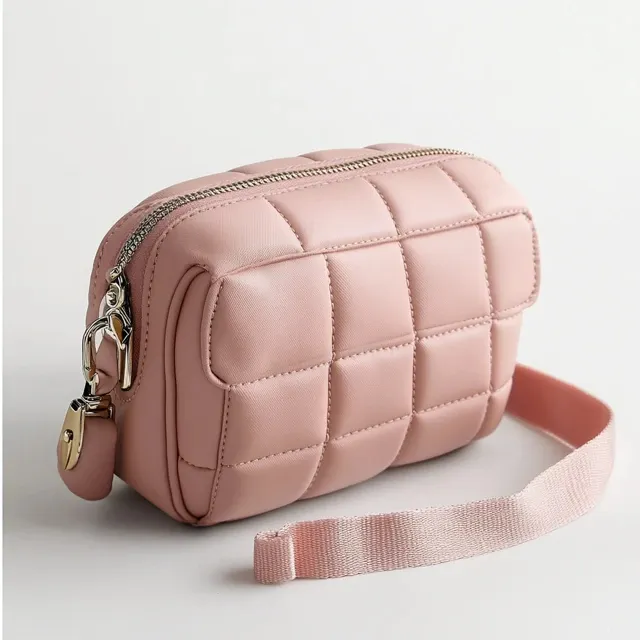

How a Custom Bag Actually Gets Made, Step by Step
SEO priority: custom bag OEM. Secondary: bag export logistics, custom bag manufacturer, private label bags, custom logo bags, OEM ODM bags.
What the production team controls (process, not hype)
A useful visit audits control points; it should never feel like a showroom tour.
Workflow on the production floor: step by step
- RFQ alignment: confirm claim scope, target cost, and packout rules before sampling.
- By spec, material sourcing locks the coating/laminate spec, fabric route and trim vendors.
- Pattern & measurement control: create templates, tolerance map, and reinforcement plan.
- Keep shade lots in order; verify marker efficiency and grain direction when cutting.
- Critical-zone reinforcement, then seam allowance and stitch spec, enforced at sewing or welding.
- Use placement jigs during final assembly to install hardware, logos and accessories.
- Inspection & packing: apply AQL sampling, carton marking, and shipping documents.
Typical buyer use scenarios
- brand launches
- wholesale programs
- corporate procurement
- retail distribution
Key functions buyers request most
- custom sizing
- durable construction
- logo branding options
- retail-ready packaging
- consistent QC
Choosing the Best Materials for Custom Bags
| Material | Performance | Cost Range | Leading For | Advantages & Watch-outs | Risks & How to Control |
|---|---|---|---|---|---|
| nylon | Even-handed wear resistance (ISO 13934 tensile as specified); good abrasion resistance (ISO 12947 per spec); stable for branding | US$1.6–5.5 / meter (to spec) | Running styles with predictable yield | Upsides: versatile. Limitations: performance depends on coating/finish | Lock coating spec, color tolerance and print compatibility; confirm reinforcement mapping |
| PU coated polyester (600D, per the specification) | Good repellency (ISO 4920 / AATCC 22 per spec); moderate barrier (ISO 811 as specified) | US$1.2–6.0 / meter (to spec) | Value/core lines where print clarity matters | Advantages: cost controlled. Trade-offs: coating wear over time | Define spray rating targets and abrasion resistance benchmarks; protect high-wear zones |
| Recycled RPET (route, per the specification) | Sustainability positioning; performance depends on coating/laminate (ISO 4920 / ISO 811 per the specification) | US$1.5–3.8 / meter (to spec) | Eco positioning programs and corporate procurement | Advantages: sustainability narrative. Trade-offs: supply stability and lot drift risks | Lock supplier lots, traceability and color delta; validate print and coating compatibility |
How to shortlist materials fast
- Start from the scenario: abrasion zones, load points, and water exposure define the route.
- Main compartment only is one option; decide if the claim spans the whole bag or zones.
- Cite the ISO, AATCC or ASTM references in your pack and state what passes.
- Pick trims that suit the chosen route: zipper type, sliders, buckles and webbing strength.
- Print and branding compatibility is confirmed on the real fabric.
- Evaluate transit rubbing risk, because visible creases are freight damage far more often than stitching faults.
Custom Design & Development Process
What to include in a buyer-ready tech pack
OEM/ODM development flow (practical)
- Define target user, price band and positioning.
- Lock claim scope, then confirm the test plan to spec.
- To build it, add the BOM, then the measurement table, then the tolerance map, then artwork placement.
- Prototype sampling validates fit, structure and the material route.
- By PP, BOM and packaging route are final.
- First, sign the QC checklists and golden sample; only then cut bulk.
Sampling checklist (avoid costly mistakes)
What shortens the sampling loop
Numbers age badly when copied into dozens of places, so the maintained version of this grid stays on quality control and certification.
Repeatability beats one-off samples
Success example (anonymized): a value program targeting Global reduced rework by freezing a single tech pack, running one pre-production sample using the final BOM, and aligning QC checkpoints before cutting. Reproducible builds remove the annual need to qualify someone new when reordering.
Production & Manufacturing Methods for Bags
Ordering choices get clearer once you compare lead time, MOQ requirements and cost bands in the table.
| Production Type | Lead Time | MOQ | Cost Level | Preferred For |
|---|---|---|---|---|
| Standard OEM mass production | 35-50 days | medium–high (per spec) | optimized | Retail replenishment and stable demand |
| Expedited production program | 15–25 days (per spec) | by program | higher | Time-critical launches |
| New tooling / new input materials route | sampling + production as specified | per spec | premium | New silhouettes and claim-led innovation |
Manufacturing methods you should specify (by spec)
Custom Branding, Logo & Final Assembly
Logo methods we can support (select 1–2 per SKU)
Final assembly controls that prevent returns
Shipping, Logistics & Order Fulfillment
Logistics execution gates
Key Factors to Choose a Reliable Bags Manufacturer
Signing an OEM/ODM bags agreement? Clear this checklist beforehand.
Manufacturer selection checklist
- Can they quote from a tech pack and explain assumptions?
- Can they source the BOM and also suggest alternatives that meet spec?
- Is there an AQL plan, and do QC checkpoints cover IQC through IPQC into FQC?
- Can workmanship survive a flexible MOQ arrangement?
- Can you expect firm lead times and a clear escalation procedure?
- Does their track record include packaging and shipping into your market?
Site audit checklist (what to check in person)
Capability summary
Compression and crease control when packing foam laminate
Neoprene is a closed-cell foam bonded between two knit faces, and that foam layer is the reason a neoprene lunch tote or bottle sleeve cannot be packed the way a woven polyester bag is. Under sustained load the cells lose part of their recovery and the panel keeps a visible crease that no amount of steaming will fully remove. QUANZHOU JUNYUAN BAGS writes compression limits directly into the packing specification rather than leaving the decision to whoever closes the carton on the day.
The working rule is a maximum of 12 flat units per bundle, with the fold placed along an existing seam instead of across the centre of a printed panel. Where a style genuinely has to ship folded, bundles are rotated 90 degrees every six layers so the crease load alternates direction through the stack. Roll-packed sleeves are limited to a core diameter that keeps the outer lap under moderate strain, and the roll is closed with a paper band rather than a tight elastic that would bite into the foam face.
Foam thickness changes the relaxation requirement. A 3 mm sleeve recovers quickly and can be packed the same day, while a 5 mm tote panel needs roughly 24 hours of relaxation after lamination and cutting before it goes into a bundle. Skipping that window is the single most common cause of crease complaints on arrival, and it is cheap to prevent when the packing spec states it explicitly.
Polybag, carton and moisture control
A 0.04 mm LDPE polybag with four vent holes lets residual foaming agent escape while keeping dust off the jersey face. Each master carton carries a 5 g silica gel sachet, because a 25 to 35 day sea voyage inside a closed container can push interior humidity high enough to encourage mildew on knit surfaces. Venting and desiccant together cost very little measured against a rejected shipment.
Cartons are double-wall five-ply, and cube is calculated against 20GP at roughly 28 CBM and 40HQ at roughly 68 CBM so freight is planned from the packing specification instead of being guessed once production is finished. Pallet height is capped so the bottom cartons in a stack are not carrying the full load of the pallet through the foam.
Packed cartons are drop and vibration tested to ISTA 3A before a programme is released, and packing faults are counted under the same AQL 2.5 plan used for the product itself. Retail barcodes, fibre content labels and California Prop 65 warnings are verified at the packing line with a scan check, since a mislabelled carton costs far more to correct after it has shipped FOB Xiamen than before.
Printed neoprene adds one more constraint. Dye-sublimated faces can offset onto an adjacent panel if units are stacked face to face while still warm, so the packing spec calls for interleaving tissue between printed faces for the first 24 hours after pressing. That single line in the specification removes an entire category of arrival complaints that is otherwise almost impossible to attribute once the carton has been opened at a distribution centre.
Packing method, carton count and label placement are confirmed during quotation, and QUANZHOU JUNYUAN BAGS returns packing-inclusive pricing within 24 to 48 hours. Material selection context is covered under custom bag materials, and cost drivers are explained in custom bag cost and MOQ.
What A Neoprene Packing Line Costs Per Shipped Unit
Packing is treated as a rounding error on most neoprene programmes, and then it becomes the line item that decides whether a promotion clears its margin. Foam laminate needs more packing material per unit than a woven polyester style, because every extra item in the carton is there to prevent a crease or a mildew claim that costs far more than the material.
The five lines below are the ones that actually move. They are quoted per shipped unit, so a change in carton count shows up immediately instead of being hidden inside a freight estimate prepared weeks later.
| Packing item | Specification | Cost per unit | Total at 5,000 units | Lever |
|---|---|---|---|---|
| Vented polybag | 0.04 mm LDPE, 4 vent holes | USD 0.03 to 0.06 | USD 150 to 300 | Common gauge across sizes |
| Desiccant | 5 g silica gel per carton | USD 0.01 to 0.03 | USD 50 to 150 | Only above 3 week transit |
| Interleaving tissue | Printed faces, first 24 hours | USD 0.01 to 0.02 | USD 50 to 100 | Printed styles only |
| Master carton | 5-ply double wall, 40 to 60 units | USD 0.02 to 0.04 | USD 100 to 200 | Raise the carton count |
| Barcode and marking | GS1 barcode plus side mark | USD 0.02 to 0.05 | USD 100 to 250 | Relabelling at destination costs more |
Measured against a unit price, packing rarely exceeds a few percent. Measured against a rejected container it is the cheapest insurance on the order. Our production team costs the packing route alongside the bag, so cube, carton count and label placement are settled before production rather than after inspection.
The Sequence For Freezing A Neoprene Packing Specification
A packing specification fails when it is written last. Foam behaves differently from fabric under load, so the packout has to be decided while the panel construction is still open to change.
- Fix the fold method and the bundle limit first, at 12 flat units per bundle with the fold along an existing seam, before any carton is sized.
- Set the carton count, then check cube against 20GP at roughly 28 CBM and 40HQ at roughly 68 CBM so freight is known before booking.
- Specify the 0.04 mm vented polybag and one 5 g silica gel sachet per carton for any voyage beyond about three weeks.
- Lock label fields and the GS1 barcode at the same time as the artwork, and scan-verify at the packing line.
- Validate the packed carton to ISTA 3A drop and vibration, then sign the first packed carton as the reference for the run.
Packing faults are counted under the same AQL 2.5 plan as the product, with Critical at zero acceptance, Major at 2.5 and Minor at 4.0. Where cartons ship on wooden pallets, ISPM 15 heat treatment marking applies. Full context is available in the packing format specification guide.
Frequently Asked Questions (FAQs)
Why does neoprene crease permanently when a carton is packed too tightly?
Closed-cell foam loses recovery under sustained load. We cap flat bundles at 12 units, fold along an existing seam, and rotate stacks 90 degrees every six layers. A 5 mm panel also gets about 24 hours of relaxation after cutting before it is packed at all.
What polybag thickness and venting should a neoprene packing spec call out?
Specify a 0.04 mm LDPE polybag with four vent holes. Venting lets residual foaming agent escape instead of condensing on the jersey face. Add a 5 g silica gel sachet per master carton, because a 25 to 35 day sea transit can raise interior humidity enough to cause mildew.
How many neoprene lunch totes fit into one master export carton?
A typical 5-ply double-wall carton holds 40 to 60 folded totes depending on panel thickness and whether the base board is inserted. Carton cube is then checked against 20GP at roughly 28 CBM and 40HQ at roughly 68 CBM before freight is booked.
Should desiccant always be used inside neoprene bag cartons for sea freight?
Yes for any voyage longer than about three weeks. A 25 to 35 day sea transit in a sealed container is enough for knit faces to mildew if residual moisture is trapped. One 5 g silica gel sachet per carton is the standard allowance we quote.
How is crease recovery on a folded panel verified before the carton is sealed?
Panels are unpacked, laid flat and measured after 24 hours at room temperature. Recovery is treated as a Major defect under the AQL 2.5 plan, so a visible permanent crease is counted against the shipment rather than being passed as acceptable handling.
Which transit test applies to a carton of foam-laminated bags?
ISTA 3A covers drop and vibration for parcel and less-than-container shipments. Packed cartons are tested before programme release, and the same ISTA 3A sequence is repeated if carton dimensions or packing density change materially later in the run. Air freight runs 5 to 8 days and express 3 to 5 days, so transit risk is lower, but ISTA 3A remains the reference.
Can retail barcode and fibre content labels be applied at the packing stage?
Yes, and it is cheaper than relabelling at destination. Barcodes are scan-verified at the packing line, and fibre composition plus California Prop 65 warnings are checked against the approved artwork. Errors found after FOB Xiamen shipment are far more expensive to correct.
Does the packing specification change a FOB Xiamen quotation?
It changes the landed cost per unit even when the bag price is unchanged. Carton grade, desiccant, polybag gauge and carton count all move freight cube. QUANZHOU JUNYUAN BAGS includes packing in the quote and returns figures within 24 to 48 hours.
Related Blog Posts & Useful Resources
Internal resources
- Request a quote (RFQ)
- Browse products & categories
- Download RFQ template
- Packing format specification guide
Related blog posts
- Custom Gym Duffels for Fitness Brands & Gyms
- Custom Golf Cooler Bags: Integrated Drink Storage
- Custom Messenger Bags for Business & Commute
- Custom Medical Bags, Pet Bags & Camera Bags
- Custom Duffel Bags for Travel Brands & Airlines
- Custom Drawstring Backpacks for Sports & Schools
Next step
• Lock keyword and claim scope for custom custom bag oem
• Build a tech pack with BOM + tolerance map
• Choose materials route and validate tests (by spec)
• Plan sampling gates (lead time 6-10 working days)
• Set MOQ and cost targets (MOQ 500 pcs)
• Define QC plan and AQL checkpoints
• Confirm production + shipping timeline (35-50 days)

Want help with your next bag project?
Your requirements go in; a structured RFQ checklist and manufacturing plan come out.
Linked programme guides: custom backpacks.
Compression set is the enemy neoprene packing must beat
Neoprene behaves like no other bag material in a carton. It is compressible, it remembers compression, and it gives off its own odour for weeks after lamination — so the packing spec has to solve for shape memory and ventilation at the same time.
Thickness governs everything else. Sheets between 3 and 5 mm are typical for sleeves and everyday bags, and the thicker the sheet the stronger the memory: compress a 4 mm panel at a sharp fold line for six weeks in a sealed carton and it may not fully recover. The practical control is to ship these units flat wherever the silhouette permits, and where it does not, to roll them along their longest axis rather than fold them, distributing the bend across a wide radius instead of concentrating it.
Odour is the other half of the problem and the reason neoprene should never be sealed hot. Laminated foam continues to off-gas after assembly, so units are ventilated on open racks before packing, ideally for 48 hours in a well-aired space, and only then bagged. Packing with the bag open and with air exchange holes in the polybag helps for sea freight; adding a desiccant helps with humidity but does nothing for trapped volatiles. Buyers who skip ventilation tend to meet this issue for the first time as a one-star review rather than as a quality report.
Packing specification and costly failure modes
Two further failure modes are specific to the material. First, print and dye migration: neoprene laminated fabrics accept sublimation printing well, but under pressure and heat — exactly the conditions inside a shipping container — dyes can transfer onto adjacent surfaces, so interleave sheets between units rather than stacking face to face. Second, seam creep: bonded or blind-stitched seams relax under sustained compression, and a unit stored folded can develop a permanent set along a seam that was never creased at production.
| Item | Specification | Check | Failure prevented |
|---|---|---|---|
| Shipping orientation | Flat where possible, otherwise rolled | Packing instruction signed before bulk | Permanent fold line in thick sheet |
| Ventilation before bagging | 48 hours on open racks | Rack time logged per batch | Trapped lamination odour on arrival |
| Polybag specification | Vented bag, open closure | 100 percent visual | Volatiles sealed in during a long sea leg |
| Interleaving | Sheet between printed faces | First 50 units, then per shift | Dye transfer inside the carton |
| Sheet thickness tolerance | 3 to 5 mm, plus or minus 0.3 mm | Caliper check per material lot | Inconsistent fit and protection |
| Seam construction | Blind stitch plus bonded reinforcement | Sampling three seams per style | Seam creep under sustained compression |
| Carton fill | No forced compression to close the lid | Lid closes without pressure | Compression set across the batch |
| Final audit | AQL 2.5, Critical 0 / Major 2.5 / Minor 4.0 | ISO 2859-1 plan | Inconsistent lots reaching retail |
Route selection interacts with all of the above. A 25 to 35 day sea transit through tropical heat is the harshest realistic environment for neoprene, and if your timeline can absorb it, splitting the difference with air freight at 5 to 8 days reduces exposure considerably. Either way, cartons should never be stored under other heavy cartons for extended periods, and ISTA 3A transit testing is worth requesting on the first shipment of any new neoprene style because it reproduces exactly the compression and vibration conditions that cause set. Whichever route you take, ask us to ship one unopened carton to your office as a retained control; comparing it against warehouse stock after four weeks is the fastest way to tell whether a shape complaint originated in transit or in your own storage.
Everything else follows standard terms. Minimums are 500 units per style per colour, 300 open to repeat programmes, tooling where a custom die or plate is needed sits between USD 300 and 2,500, samples cost USD 50 to 150 and are credited against the first bulk order, sampling takes 6 to 10 working days rising to 12 to 15 for complex laminated constructions, and production runs 35 to 50 days after approval under T/T 30/70 FOB Xiamen. Laminated-sheet selection is covered in the materials guide, and typical use cases appear across the protective sleeve range.
Numbers age badly when copied into dozens of places, so the maintained version of this grid stays on quality control and certification.
Rather than repeat the same matrix here, keep the detailed grading with the central reference on material selection — it lists the acceptance numbers and sampling levels our team works to.