Logo Methods That Work On Custom Jerseys
Learn how to run a custom custom bag oem program for North America: materials, tech pack, sampling, QC and shipping. Get OEM/ODM-ready checklists and quote
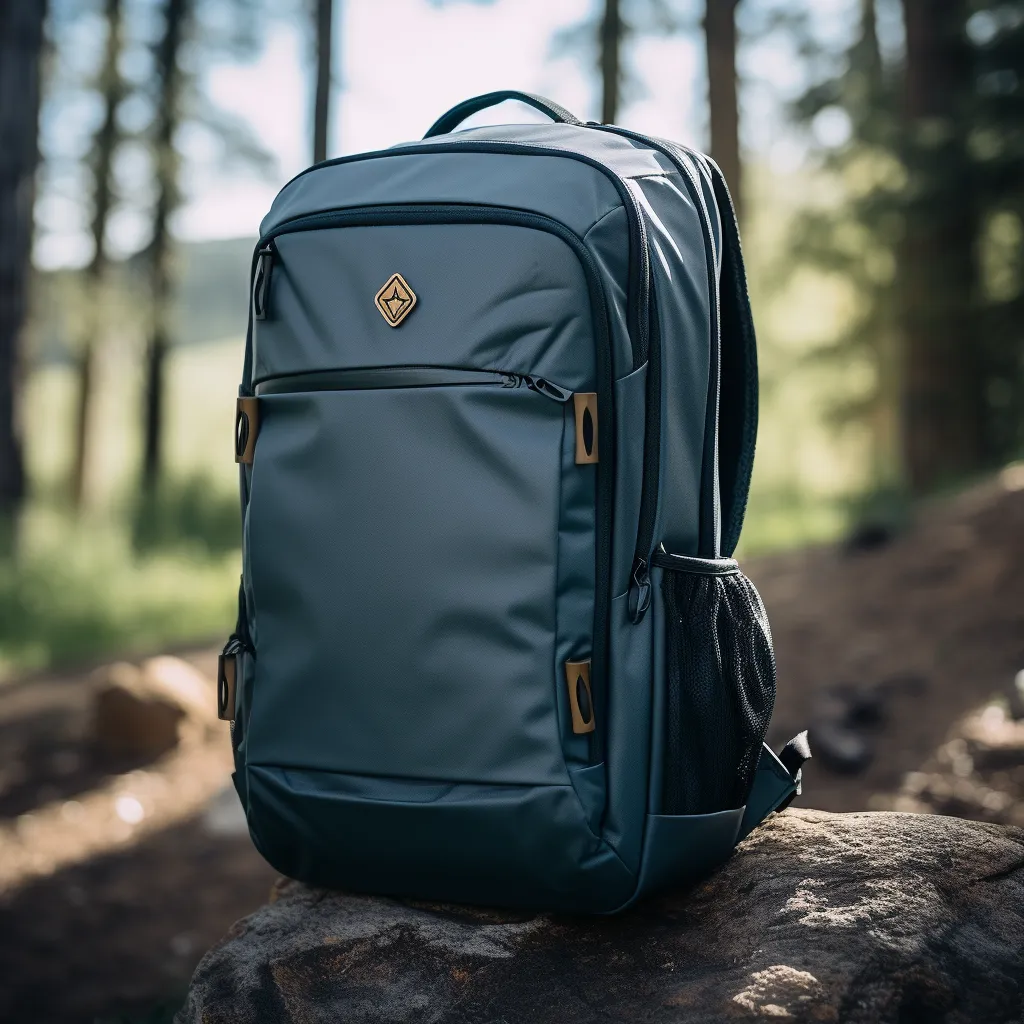
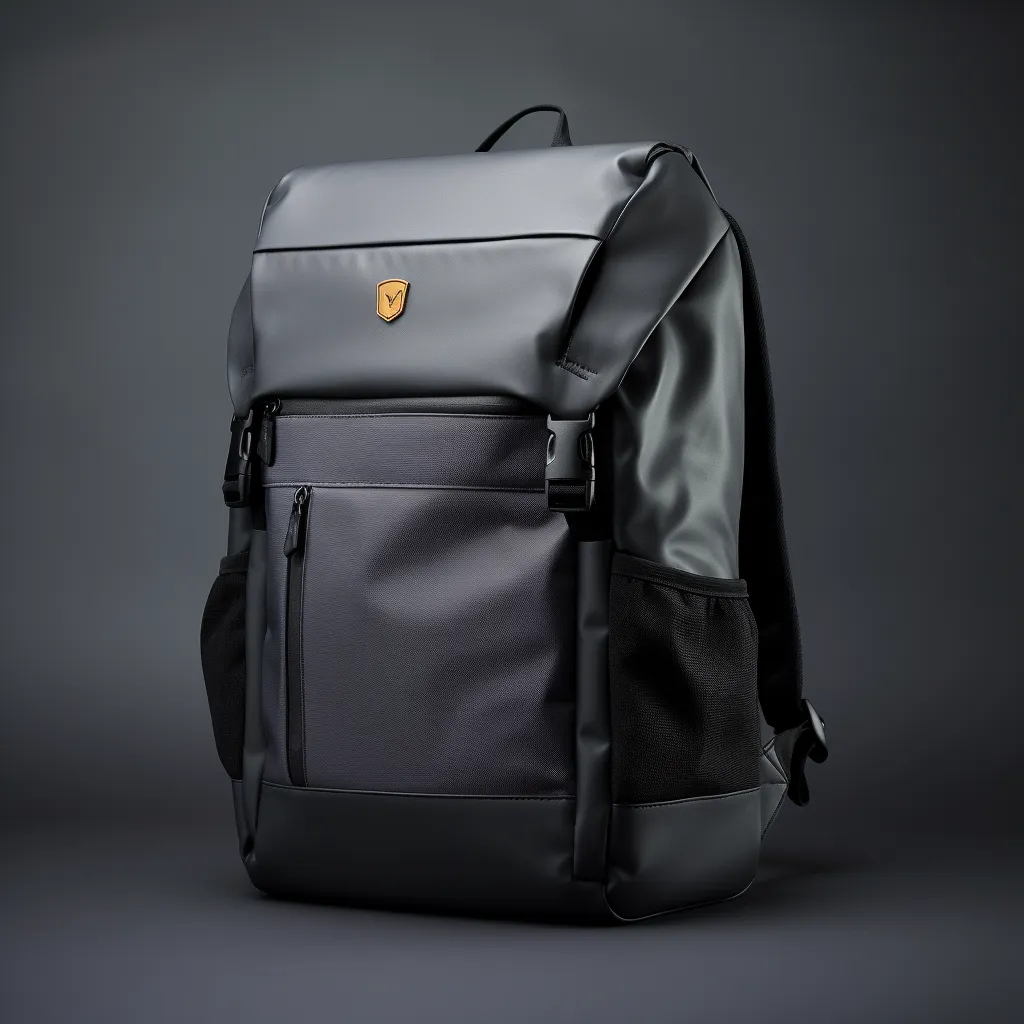
How a Custom Bag Actually Gets Made, Step by Step
If you are targeting North America with a mid-range positioning, the key is to prevent variance: materials, trims, workmanship and packout rules must be written and checked.
What the production team controls (process, not hype)
A useful visit audits control points; it should never feel like a showroom tour.
Workflow on the production floor: step by step
- RFQ alignment: confirm claim scope, target cost, and packout rules before sampling.
- By spec, material sourcing locks the coating/laminate spec, fabric route and trim vendors.
- Pattern & measurement control: create templates, tolerance map, and reinforcement plan.
- Keep shade lots in order; verify marker efficiency and grain direction when cutting.
- Critical-zone reinforcement, then seam allowance and stitch spec, enforced at sewing or welding.
- Use placement jigs during final assembly to install hardware, logos and accessories.
- Inspection & packing: apply AQL sampling, carton marking, and shipping documents.
Typical buyer use scenarios
- brand launches
- wholesale programs
- corporate procurement
- retail distribution
Key functions buyers request most
- custom sizing
- durable construction
- logo branding options
- retail-ready packaging
- consistent QC
Choosing the Best Materials for Custom Bags
| Material | Performance | Cost Range | Leading For | Advantages & Watch-outs | Risks & How to Control |
|---|---|---|---|---|---|
| nylon | Steady durability (ISO 13934 tensile per the specification); good abrasion resistance (ISO 12947 per spec); stable for branding | US$1.6–5.5 / meter (to spec) | Main line items with predictable yield | Advantages: versatile. Limitations: performance depends on coating/finish | Lock coating spec, color tolerance and print compatibility; confirm reinforcement mapping |
| PU coated polyester (600D, per the specification) | Good repellency (ISO 4920 / AATCC 22 to spec); moderate barrier (ISO 811 to spec) | US$1.2–6.0 / meter (as specified) | Value/core lines where print clarity matters | Upsides: cost controlled. Watch-outs: coating wear over time | Define spray rating targets and abrasion resistance benchmarks; protect high-wear zones |
| Canvas / cotton (per the specification) | Good hand-feel and print; waterproofing depends on finish (AATCC 22 as specified) | US$1.0–3.5 / meter (to spec) | Retail lifestyle lines, totes and promotions | Advantages: classic look. Limitations: heavier; stain risk without finish | Define shrinkage and colorfastness tests (AATCC 61 / ISO 105 per spec); specify lamination if needed |
How to shortlist materials fast
- Start from the scenario: abrasion zones, load points, and water exposure define the route.
- Main compartment only is one option; decide if the claim spans the whole bag or zones.
- Cite the ISO, AATCC or ASTM references in your pack and state what passes.
- Pick trims that suit the chosen route: zipper type, sliders, buckles and webbing strength.
- Print and branding compatibility is confirmed on the real fabric.
- Evaluate transit rubbing risk, because visible creases are freight damage far more often than stitching faults.
Custom Design & Development Process
What to include in a buyer-ready tech pack
OEM/ODM development flow (practical)
- Define target user, price band and positioning.
- Lock claim scope, then confirm the test plan to spec.
- To build it, add the BOM, then the measurement table, then the tolerance map, then artwork placement.
- Prototype sampling validates fit, structure and the material route.
- By PP, BOM and packaging route are final.
- First, sign the QC checklists and golden sample; only then cut bulk.
Sampling checklist (avoid costly mistakes)
What shortens the sampling loop
Repeatability beats one-off samples
Success example (anonymized): a mid-range program targeting North America reduced rework by freezing a single tech pack, running one pre-production sample using the final BOM, and aligning QC checkpoints before cutting. Reproducible builds remove the annual need to qualify someone new when reordering.
Production & Manufacturing Methods for Bags
Ordering choices get clearer once you compare lead time, MOQ requirements and cost bands in the table.
Manufacturing methods you should specify (by spec)
The full row-by-row breakdown lives on own-brand programmes; this piece keeps the focus on how those figures change the decision you actually have to make.
Custom Branding, Logo & Final Assembly
Logo methods we can support (select 1–2 per SKU)
Numbers age badly when copied into dozens of places, so the maintained version of this grid stays on quality control and certification.
Final assembly controls that prevent returns
Numbers age badly when copied into dozens of places, so the maintained version of this grid stays on importing from China.
Shipping, Logistics & Order Fulfillment
Logistics execution gates
Key Factors to Choose a Reliable Bags Manufacturer
Signing an OEM/ODM bags agreement? Clear this checklist beforehand.
Manufacturer selection checklist
- Can they quote from a tech pack and explain assumptions?
- Can they source the BOM and also suggest alternatives that meet spec?
- Is there an AQL plan, and do QC checkpoints cover IQC through IPQC into FQC?
- Can workmanship survive a flexible MOQ arrangement?
- Can you expect firm lead times and a clear escalation procedure?
- Does their track record include packaging and shipping into your market?
Site audit checklist (what to check in person)
Capability summary
Reading the Knit Before You Pick a Decoration Method
A jersey is a knit, and a knit behaves nothing like the woven polyester shell used on a bag panel. Loop structure decides how far a decorated mark can stretch before it cracks, how much needle penetration the surface tolerates without runs, and how much heat the face will accept. Pique and interlock constructions both hold shape, yet they differ in surface flatness; the open mesh used for ventilation is too loose to carry a fine screen dot or small embroidered lettering. Fibre content comes first, because sublimation only bonds to a high polyester share, while a cotton-rich body has to take pigment ink, transfer film or thread instead.
Stretch is the second variable. A four-way stretch body with elastane routinely moves 20 to 30 percent under load, so a plastisol deposit laid too thick will crack across the chest on the first wearing. Low-cure ink with an elastic additive, a stretch-grade transfer film, or a lightweight digitised crest keeps the mark flat through that movement. Our production team runs a stretch-and-recovery check on the decorated panel before sampling is signed off, then repeats the wash cycle specified for bulk, ISO 6330 at 40 degrees Celsius, to confirm the edges stay down.
Placement is the third constraint. Back numbers must clear the shoulder seam allowance by at least 20 mm, and a front crest needs a flat area away from plackets and pocket tops. Embroidery is the heaviest option on a light knit; a dense fill pulls the loop structure into puckers unless a cut-away backing and a second stabiliser are specified. Where a brief calls for a crest plus several sponsor marks, splitting them across embroidery, transfer and print usually costs less in handling than forcing one method into four separate positions.
Colour and compliance close the specification. Pigment and disperse inks are screened against OEKO-TEX Standard 100 and the REACH (EC 1907/2006) restricted substance list, and any plastisol print entering the United States is checked against CPSIA lead-in-coating limits. Team programmes need several sizes decorated identically, so registration tolerance and shade continuity across a size run matter more here than on a single flat panel. QUANZHOU JUNYUAN BAGS returns a jersey decoration quotation within 24-48 hours once artwork, fibre content and the position list arrive.
Programme logistics decide the final method more often than aesthetics does. A school or club order rarely arrives as one flat list; it arrives as a size curve with names, numbers and sponsor marks that differ per garment, which favours transfer film for the variable elements and print or embroidery for the fixed crest. Digitising a crest costs a one-off setup inside the USD 300 to 2,500 tooling band, and that file is reused for every later season. Bulk production runs 35-50 days once the sample is approved, shipped FOB Xiamen with sea transit of 25-35 days.
Buyers running team kit alongside a bag programme should standardise artwork files and colour references once, then reuse them across both. The same digitised crest that sits on a chest panel transfers cleanly to a front pocket panel, and one shared Pantone reference keeps thread, transfer film and print within a single shade family. See custom bag materials for how face fabrics are specified, and ODM bag catalogs for ready bases that accept the same branding package.
Unit cost build-up: where each jersey decoration method breaks even at MOQ 500
A decoration method is a cost curve, not a flat price. The fixed part — screens, digitising, plates and trial runs — sits inside the USD 300–2,500 tooling and moulding band, and it is recovered across the run. The variable part is ink, thread, film and press time, and it barely moves with quantity. Once a buyer separates the two, the ranking of methods changes completely between a 200-piece club order and a 5,000-piece league programme.
At the MOQ 500 threshold most programmes land in a narrow band: screen printing is cheapest per piece from roughly 300 units upward, heat transfer wins below that because it needs no screens at all, embroidery only makes commercial sense when the crest is small or the garment is a premium retail piece, and sublimation is the only route when the artwork covers a whole panel. Use the grid below as a starting point, then confirm it with a strike-off on the actual knit.
| Method | One-off setup | Unit cost at 500 pcs | Laundering durability |
|---|---|---|---|
| Screen print, 4 colours | Screens inside the USD 300–2,500 tooling band | USD 0.35–0.90 | 25 ISO 6330 cycles before visible cracking |
| Heat transfer name and number set | Artwork only, no tooling | USD 0.60–1.40 | 15–25 cycles before edge lift |
| Embroidery, 8,000 stitches | Digitising plus backing trials | USD 1.20–2.60 | 40+ cycles, best long-term result |
| Dye sublimation, single panel | None, printed from file | USD 0.80–1.60 | 50+ cycles, no film to fail |
The break-even rule is simple: divide the one-off setup by the run size and add it to the unit price. A USD 400 screen set spread across 500 pieces adds USD 0.80 per piece; across 2,000 pieces it adds USD 0.20. That single line is usually what flips a programme from transfer to screen print, so ask for it itemised on every quotation you receive.
Sequence that keeps a decorated jersey programme inside its 35–50 day window
Decoration delays almost never come from the press. They come from artwork that was approved on a different knit, and from a wash test that was skipped because the calendar looked tight. The order below puts the cheap decisions first and the irreversible ones last, so a change at step three costs a day rather than a season.
- Day 0–2: freeze vector artwork with Pantone TCX references and a maximum of six spot colours; every colour beyond that adds a screen and pushes the setup higher inside the USD 300–2,500 band.
- Day 3: approve the knit itself. Confirm fibre content and stretch percentage, because a knit above 8 percent elastane needs a stretch additive in the plastisol ink system or the print will craze.
- Day 4–13: strike-off inside the 6–10 working day sampling window; allow 12–15 working days when printing and embroidery are combined on one panel.
- Day 14–18: wash verification to ISO 6330, five domestic cycles at 40 °C, with a grey scale rating of 4 or better for colour change and 3–4 for staining.
- Bulk release only after first-article approval and an AQL 2.5 inspection under ISO 2859-1 General Inspection Level II, Critical 0 / Major 2.5 / Minor 4.0, then 35–50 days to FOB Xiamen.
The most expensive slip is approving the strike-off on a substitute knit and then cutting bulk in the original. Lock the fabric reference at step two and re-test if it changes at all; a substitution after approval invalidates the ISO 6330 result and restarts the sampling clock. Our production team flags any substitution in writing before a single panel is cut. See material selection guidance for how the same rule applies to bag shells.
Frequently Asked Questions (FAQs)
Why does polyester content decide whether sublimation is possible on a jersey?
Sublimation dye bonds to polyester fibre under heat, not to cotton. Below roughly 65 percent polyester the colour washes out and the mark reads faded. Ask the mill for a fibre content declaration, then test a swatch; a cotton-rich body needs pigment ink, transfer film or thread instead of dye sublimation.
How is stretch managed when a jersey panel carries a large front logo?
Specify low-cure plastisol with an elastic additive or a stretch-grade transfer film rated for 20 to 30 percent elongation. Stitch a lightweight digitised crest rather than a dense fill. Our production team runs a stretch-and-recovery check on the decorated panel before sampling is signed off.
What underlay and backing stop embroidery from puckering a jersey knit?
Use a cut-away backing with a second temporary stabiliser, plus an edge-run underlay that locks the loop structure before the satin stitch goes down. Reduce fill density and switch to a 65/9 ballpoint needle. Puckering usually falls away once density drops below roughly 0.40 mm stitch spacing.
Which ink system keeps a plastisol print flexible on a high-stretch knit?
Low-cure plastisol with an elasticity additive, cured around 150 degrees Celsius, stays flexible on elastane blends. Avoid thick deposits; two thin passes beat one heavy pass. Confirm with a stretch-and-recovery check and ISO 6330 laundering at 40 degrees Celsius before bulk approval.
How many home laundering cycles should a sublimated jersey logo survive?
Specify 20 cycles under ISO 6330 at 40 degrees Celsius with a grey scale rating of 4 or better for shade change. Sublimated marks normally outperform printed ones because the dye sits inside the fibre. Record the rating on the approval sheet so bulk runs can be compared against the same baseline.
Which chemical rules apply to pigment inks used on team jersey artwork?
Screen inks against OEKO-TEX Standard 100, the REACH (EC 1907/2006) restricted substance list and California Prop 65. For United States delivery, check CPSIA limits for lead in coatings and substrates. Request a valid test report per ink colour rather than one generic certificate for the whole print.
How much does sublimation setup add to a 500-piece team order?
Sublimation avoids screen charges, so setup usually sits inside the USD 300 to 2,500 tooling and plate band only when custom cut panels or moulded items appear. Sampling runs 6-10 working days, the sample fee is USD 50-150 and is refunded against the bulk order.
When is a heat-transfer name and number set better than direct printing?
Choose transfer when every garment carries a different name or number, or when the run is short. It avoids a screen per character, holds fine edges down to about 6 mm letter height, and applies in one press cycle. Direct printing wins once artwork is identical across the whole order.
Related Blog Posts & Useful Resources
Internal resources
- Request a quote (RFQ)
- Browse products & categories
- Factory capabilities & process
- Download QC checklist
Related blog posts
- Diaper Bag Features: Pockets, Wipes Compartments & Insulation
- Custom Waterproof Pouches: Top Uses for Brands & Retail
- Drawstring Bag MOQs: Low-Minimum Promotional Runs
- Diaper Bag OEM: Functional & Stylish Parent-Friendly Bags
- Custom Waterproof Bags for Corporate Gifts & Promotions
- Custom Waterproof Backpacks With Laptop Sleeves: Design Tips
Next step
• Lock keyword and claim scope for custom custom bag oem
• Build a tech pack with BOM + tolerance map
• Choose materials route and validate tests (by spec)
• Plan sampling gates (lead time 6-10 working days)
• Set MOQ and cost targets (MOQ 500 pcs)
• Define QC plan and AQL checkpoints
• Confirm production + shipping timeline (35-50 days)
Want help with your next bag project?
Your requirements go in; a structured RFQ checklist and manufacturing plan come out.
Linked programme guides: custom backpacks.
Decoration on a stretch knit behaves differently from decoration on a panel
A jersey is a four-way stretch polyester knit that gets washed after every wear. Any logo method that sits on the surface as a film will eventually crack along the stretch line; any method that adds weight will change how the garment hangs. The two methods that dominate the category both solve that by becoming part of the fabric rather than sitting on it.
Sublimation is the first, and it is the reason modern team jerseys look the way they do. Dye is transferred into the polyester under heat and pressure, so the print has no hand feel, no weight, and no film to crack. It handles gradients, photographs and unlimited colours at no extra cost per colour. Its two hard constraints: it works only on polyester or polymer-coated substrates, and it needs white or light base fabric unless the artwork is designed to work over a coloured ground. On a cotton or cotton-rich jersey, sublimation is simply not available.
Tackle twill is the other, and it is what gives a jersey its traditional look. Letters and numbers are cut from twill or from a polyester fabric, then applied by stitch or by heat-activated adhesive. It is heavier and more expensive per placement than sublimation, but it survives years of washing and it reads as authentic in a way no print quite manages. The trade-off is breathability: a full twill front on a jersey worn for a full match adds noticeable warmth, which is why many programmes now use sublimated bodies with twill numbers only.
Method comparison and acceptance testing
The table below compares the four methods used on jerseys on the variables that affect a team or retail programme. Durability figures assume a domestic wash cycle.
| Method | Substrate | Colour count | Hand feel | Wash durability |
|---|---|---|---|---|
| Sublimation | Polyester only | Unlimited | None | Excellent, dye is in the fibre |
| Tackle twill | Any | Per cut layer | Heavy | Excellent, edges can curl |
| Screen print, stretch ink | Most knits | One per screen | Moderate | Good if fully cured |
| Heat transfer vinyl | Most knits | Per layer | Moderate to heavy | Fair, edge lift over time |
| Embroidery | Stable knits | Per thread colour | Stiff | Good, poor on light stretch knit |
Acceptance testing on decorated jerseys concentrates on three things. Wash durability is measured to ISO 6330 conditions, with the garment inspected for cracking, edge lift and shade change after repeated cycles. Crocking is assessed to AATCC 8, because a printed crest that rubs onto a training jacket is a return waiting to happen. And dimensional stability is checked after washing, since a sublimated panel behaves differently from a twill patch under heat — a jersey can end up with a subtle pucker where a large patch has shrunk less than the surrounding knit.
Two rules settle the choice in most programmes. If the design involves gradients, sponsor logos, or more than three colours, go with sublimation and accept the polyester constraint. If the design is a wordmark or a number in one or two colours and the programme wants a heritage look, use tackle twill on the numbers and keep the body sublimated — that combination is now the standard in most team kits because it balances cost, weight and appearance.
Placement on a jersey is constrained by the seams and by the body, not by the artwork. The chest zone between the shoulder seam and the armhole is the standard crest position, and anything wider than the panel will wrap around the side seam and distort. Numbers are placed against a back panel measured flat, and names go above them with a fixed baseline so a long surname does not run into the yoke seam.
Compliance and commercial terms are straightforward here. Fabric for EU programmes is specified against REACH (EC 1907/2006), children's kits add CPSIA documentation, and OEKO-TEX Standard 100 fabric removes most of the testing burden at intake. Minimum is 500 units per style per colour, repeat programmes can discuss 300, and sampling runs 6 to 10 working days — or 12 to 15 where a full sublimation layout and a twill programme both have to be approved in one round. Mass production is 35 to 50 days after approval. Test documentation is handled through our certification workflow; the kit-bag counterpart sits at custom gym bags; and for the same inspection discipline applied to a simpler garment, see inline QC checkpoints for T-shirts.
Numbers age badly when copied into dozens of places, so the maintained version of this grid stays on quality control and certification.
Rather than repeat the same matrix here, keep the detailed grading with the central reference on material selection — it lists the acceptance numbers and sampling levels our team works to.