Your Trusted Custom Luxury Backpacks Manufacturer
Luxury backpack manufacturing for premium retail positioning. Focused on material hand-feel, finishing, and hardware consistency.

Spec snapshot
A fast engineering view of what matters for sourcing, quoting, and repeatable production.
| Item | Typical | Notes |
|---|---|---|
| Material program | PU / microfiber / genuine leather (by program) | Material dictates edge paint, stitch strategy, and finishing time |
| Hardware finish | gold / nickel / gunmetal (by spec) | Finish consistency must be controlled across batch and suppliers |
| Hand-feel target | soft / structured / semi-structured | Structure drives foam, board, and reinforcement choices |
| Brand protection | serial label / NFC (by spec) | Align placement and durability for premium retail |
| Typical MOQ | 500–800 pcs | Depends on material, custom hardware, and packaging complexity |
Material Hand-Feel Decisions
Luxury positioning depends on tactile experience and finishing consistency. We help you lock the material program and define an acceptable range for bulk.
Hardware Finish Matrix
Premium perception is fragile: plating drift, scratches, and mismatched tone will downgrade the product instantly. We set up batch lot control and appearance gates.
| Part | Finish Options | QC Focus | Notes |
|---|---|---|---|
| Zipper puller | custom logo puller (by spec) | plating color delta + scratch checks | avoid sharp edges that cut straps |
| Buckles/rings | polished / matte (by spec) | salt-fog option (by spec) + appearance checks | match batch lot to reduce color drift |
| Brand plate | laser logo + plating (by spec) | logo sharpness + alignment template | plan rivet/backplate structure to avoid lining damage |
Atelier-Style Quality Gates
Luxury backpacks require tighter appearance tolerance than regular programs. We run key gates around materials, edge finishing, hardware matching, and final symmetry.
Incoming material
Edge finishing
Hardware matching
Final appearance
Materials & fabrics
Material choice drives performance, durability, finishing, and target price point.
| Fabric | Waterproof | Cost | Notes |
|---|---|---|---|
| PU/genuine leather (by program) | depends on finish | varies | Premium appearance and finishing control. |
• hardware plating consistency
• lining and pocket finishing
• hardware checks (by spec)
• AQL final inspection
• Premium retail collections
• Luxury gifting programs
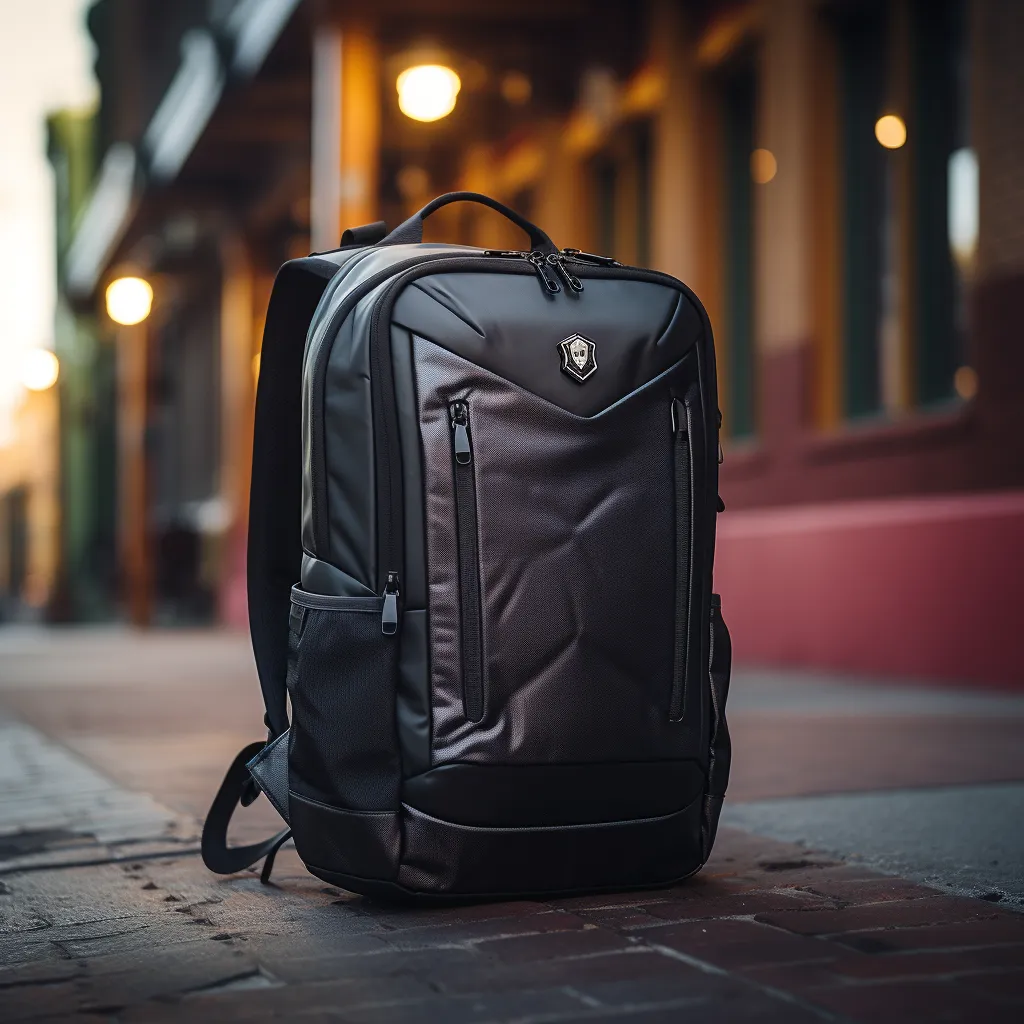
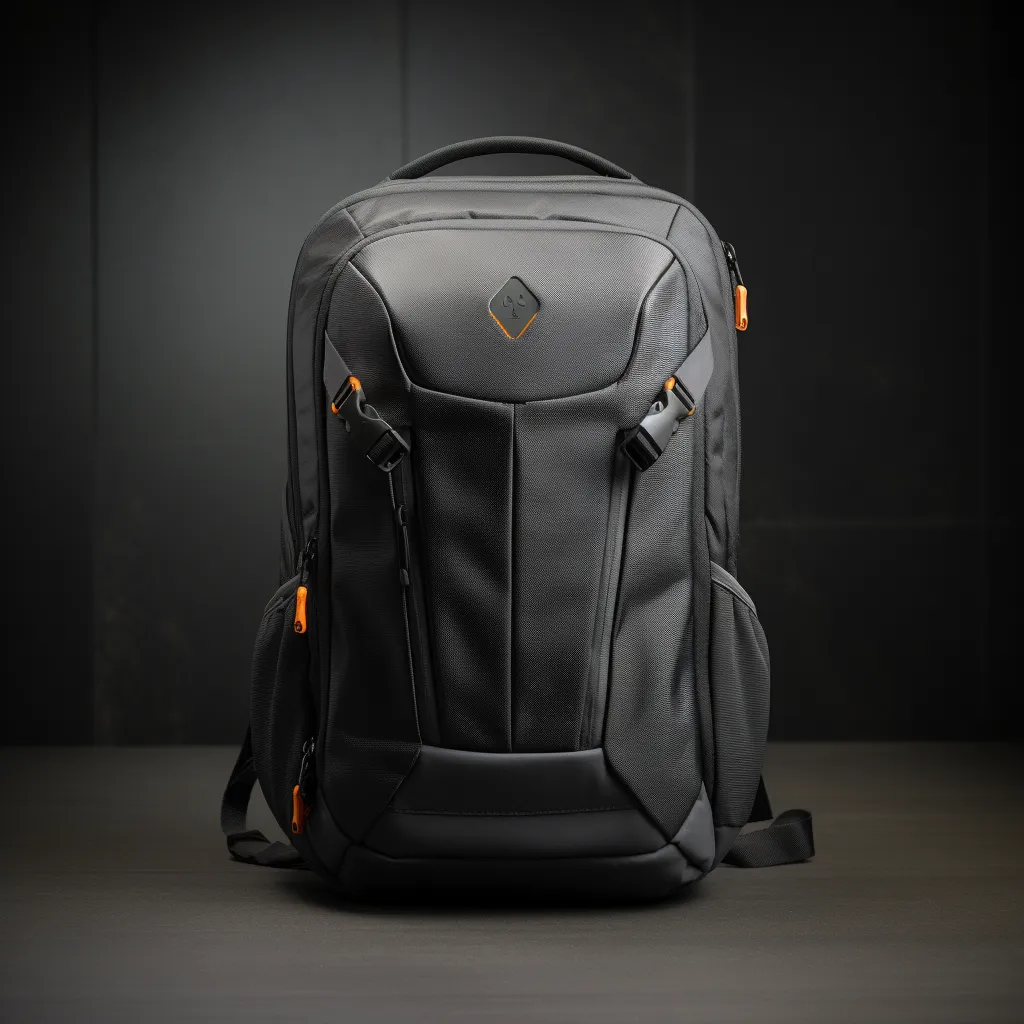
• Target hand-feel (soft/structured) and size/volume targets
• Hardware finish target and whether custom hardware is needed
• Brand protection needs (serial label/NFC) and placement preferences
• Edge finishing spec (edge paint vs folded edge) and durability expectations
• Packaging requirements (dust bag, box, inserts, hangtag, tissue)
Start custom luxury backpacks production
Send your requirements and get a structured RFQ checklist and a manufacturing plan.
At the premium end of the market, a backpack is judged in the first four seconds of handling: how the leather feels, whether the zipper runs without catching on the lining, and whether the edge paint is even along every seam. None of those impressions survive a production run unless the specification describes them numerically. Below is how we convert a design intent into tolerances a line can hold across a full order.
Specification options for premium leather-trim backpacks
Leather behaves differently from every other bag material: it has a grain direction, it stretches, and no two hides yield identically. A premium specification therefore has to fix substance, finish, temper and cut yield, not just colour. The grid below covers the three tiers most buyers land on.
| Parameter | Entry premium | Mid premium | Top tier |
|---|---|---|---|
| External size (W x D x H) | 300 x 140 x 430 mm | 310 x 150 x 450 mm | 320 x 160 x 470 mm |
| Volume | 18 L | 20 L | 22 L |
| Primary material | Coated canvas 14 oz + leather trim | Full-grain bovine 1.2 mm | Full-grain 1.4 mm, aniline finish |
| Secondary panels | Bonded leather 0.8 mm | Full-grain 1.0 mm | Full-grain 1.2 mm, matched hide |
| Lining | 210D ripstop polyester | Microfibre suede 0.6 mm | Cotton twill, yarn-dyed, GRS option |
| Hardware | Zinc-alloy, brushed | Solid brass, brushed | Custom die-cast, PVD coated |
| Zipper | YKK #8 coil | YKK Excella #8 metal | Riri or custom metal, engraved pull |
| Stitch density | 8 SPI, poly-cotton 40s | 9 SPI, bonded nylon 69 | 10 SPI, bonded nylon 69, twin-needle |
| Edge finish | Turned and stitched | 2-coat edge paint | 4-coat edge paint, sanded between coats |
| Device sleeve | 14 in, padded | 15.6 in, suspended | 16 in, suspended, felt lined |
| Empty weight | 1.05 kg | 1.28 kg | 1.46 kg |
| Documented compliance | REACH, Proposition 65 | Adds ISO 17075, EN 1811 | Adds amfori BSCI, Sedex SMETA |
The two rows that generate the most argument are stitch density and edge finish, and both are labour lines rather than material lines. Going from 8 to 10 stitches per inch slows every seam operation and raises the skill threshold on the line, but it is the single most visible signal of quality on a leather good. Edge paint is worse: four coats with sanding between each adds roughly two days to a production run, and it is the defect category that shows up most often at final inspection.
How premium backpacks are built
Hide selection happens before cutting. Hides are graded by area and by defect distribution, and a premium programme needs a cutting marker that keeps the clean centre of the hide on the front panel and pushes scars and neck wrinkles into hidden areas or into small components. Our production team writes the marker rule into the specification rather than leaving it to operator judgement, because a good marker on a full-grain hide can shift yield by eight to twelve percent.
Structural reinforcement separates a premium shell from a mid-market one. A 20 litre leather pack carries load through the shoulder straps into the back panel and down to the base, so the strap attachment is reinforced with a hidden webbing loop that runs the full height of the back panel rather than being stitched to the lining alone.
Lining installation is a separate operation with its own tolerances. On high-tier builds the lining is assembled as an inner bag, dropped into the shell and joined at the zip line and top opening only. That floating construction prevents the lining from telegraphing shell seams to the outside and keeps interior pockets from pulling on the leather when loaded.
Hardware load paths get their own review. Every metal component that carries load - strap adjusters, D-rings, top handle mounts - is backed with a reinforcement patch and riveted or bar-tacked rather than stitched alone. Finishing is specified separately: brushed brass, PVD-coated zinc alloy, or a custom die-cast puller with an engraved logo.
Device protection is engineered rather than padded. A suspended sleeve holds the laptop clear of the base by at least 15 mm so a set-down impact never travels through the corner of the machine, and the suspension is built with elasticated corner tabs rather than a sewn bottom seam.
Cost drivers and MOQ for premium backpacks
Material is the dominant line, and within material it is yield rather than price per metre. A full-grain hide bought at an attractive rate can cost more per finished bag than a pricier hide that cuts cleanly. Hardware is the second line: moving from stamped zinc alloy to a custom die-cast or a branded metal zipper changes both unit cost and lead time, because branded components are ordered against mill lead times rather than pulled from stock.
| Configuration | Indicative FOB | Primary cost driver |
|---|---|---|
| Coated canvas with leather trim | USD 18.00 - 26.00 | Trim area, hardware finish |
| Full-grain leather, mid hardware | USD 27.00 - 35.00 | Hide yield, stitch density |
| Full-grain, custom hardware | USD 36.00 - 48.00 | Die-cast tooling, plating |
| Custom engraved puller | + USD 1.20 - 3.00 | Tooling and finish |
| Premium dust bag and gift box | + USD 2.40 - 5.50 | Board grade, print, lamination |
Commercial terms do not change with price point. Minimum order quantity is 500 units per style and colour, or 300 on a repeat programme. Sampling takes 6 to 10 working days and 12 to 15 where custom hardware or a new leather finish is involved. Mass production is 35 to 50 days after sample approval. Sample fees of USD 50 to 150 are credited to the first bulk order, tooling is quoted at USD 300 to 2,500, quote turnaround is 24 to 48 hours, and terms are T/T 30/70 FOB Xiamen with EXW, CIF and DDP available under Incoterms 2020.
Quality gates and acceptance criteria
Leather goods fail in predictable places, so inspection is weighted toward them. Edge paint is checked for cracking on a cold bend test, adhesion by tape test, and colour consistency against an approved swatch under standardised lighting. Stitch density is measured on every seam of the first-off sample and spot-checked on the line.
- Chromium VI screening to ISO 17075 on all leather components, with a documented pass before cutting.
- Nickel release to EN 1811 on every metal component that touches skin.
- Colour fastness to rubbing to AATCC 8, wet and dry, on leather and lining.
- Tensile strength to ISO 13934-1 on lining and webbing, grab test to ASTM D5034 on canvas shells.
- Salt spray to ASTM B117 on plated hardware, 24 hours, with no base-metal corrosion.
Finished packs are drop tested to ISTA 3A in their retail carton and load cycled at 8 kg for 5,000 cycles to validate the strap attachment. Restricted substances are screened to REACH (EC 1907/2006) and California Proposition 65, with CPSIA documentation where the product is sold into the US. Final random inspection runs to AQL 2.5 (Critical 0, Major 2.5, Minor 4.0) and AQL 1.5 on request under ISO 2859-1.
Finishing and presentation standards for premium programmes
Presentation is part of the product at this level. A dust bag, a rigid gift box with a magnetic closure and a printed care card are specified as line items, each with its own artwork approval and its own inspection criteria. Branding methods are chosen for permanence rather than coverage: blind debossing, foil blocking, a stitched leather patch or a laser-engraved metal bar. Screen printing is usually reserved for linings.
Serialisation is increasingly requested. Individual numbering on a metal plate or a discreet interior label supports warranty registration and gives brand protection teams a handle on grey-market units. Our 4,950 square metre SGS-verified production floor runs 7 lines with 149 machines and 137 people, enough capacity to hold a serialised programme without slowing the line.