Zipper And Hardware Selection For Custom Travel Bag
Learn how to run a custom custom bag oem program for UK & Europe: materials, tech pack, sampling, QC and shipping. Get OEM/ODM-ready checklists and quote
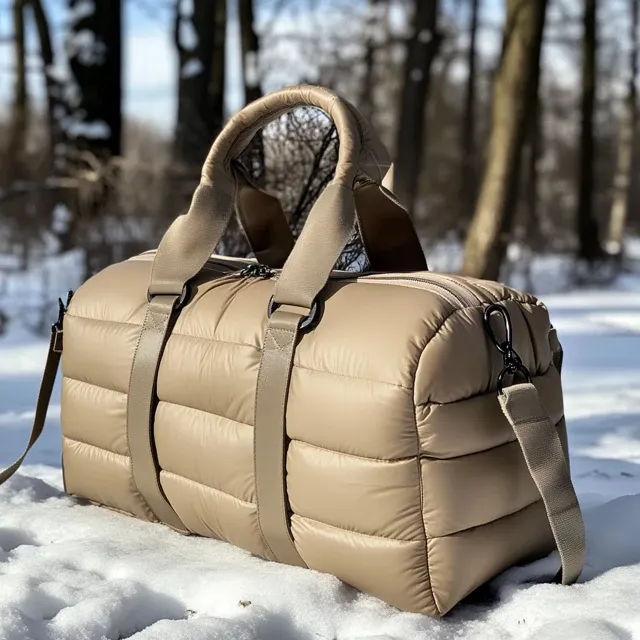
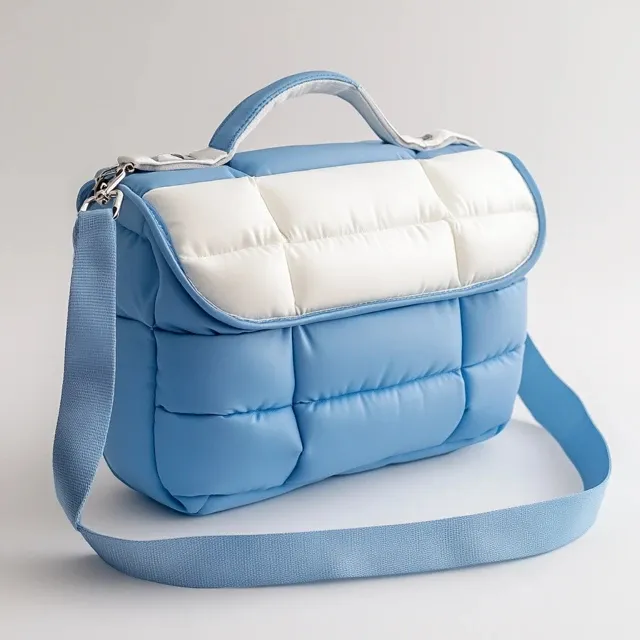
How a Custom Bag Actually Gets Made, Step by Step
What the production team controls (process, not hype)
A useful visit audits control points; it should never feel like a showroom tour.
Workflow on the production floor: step by step
- RFQ alignment: confirm claim scope, target cost, and packout rules before sampling.
- By spec, material sourcing locks the coating/laminate spec, fabric route and trim vendors.
- Pattern & measurement control: create templates, tolerance map, and reinforcement plan.
- Keep shade lots in order; verify marker efficiency and grain direction when cutting.
- Critical-zone reinforcement, then seam allowance and stitch spec, enforced at sewing or welding.
- Use placement jigs during final assembly to install hardware, logos and accessories.
- Inspection & packing: apply AQL sampling, carton marking, and shipping documents.
Typical buyer use scenarios
- brand launches
- wholesale programs
- corporate procurement
- retail distribution
Key functions buyers request most
- custom sizing
- durable construction
- logo branding options
- retail-ready packaging
- consistent QC
Choosing the Best Materials for Custom Bags
| Material | Performance | Cost Range | Leading For | Merits & Trade-offs | Risks & How to Control |
|---|---|---|---|---|---|
| nylon | Steady wear life (ISO 13934 tensile per spec); good abrasion (ISO 12947 as specified); stable for branding | US$1.6–5.5 / meter (as specified) | Running styles with predictable yield | Upsides: versatile. Limitations: performance depends on coating/finish | Lock coating spec, color tolerance and print compatibility; confirm reinforcement mapping |
| PU coated polyester (600D, to spec) | Good repellency (ISO 4920 / AATCC 22 to spec); moderate barrier (ISO 811 per the specification) | US$1.2–6.0 / meter (per the specification) | Value/core lines where print clarity matters | Merits: cost controlled. Watch-outs: coating wear over time | Define spray rating targets and abrasion resistance benchmarks; protect high-wear zones |
| Recycled RPET (route, as specified) | Sustainability positioning; performance depends on coating/laminate (ISO 4920 / ISO 811 per the specification) | US$1.5–3.8 / meter (per the specification) | Eco positioning programs and corporate procurement | Advantages: sustainability narrative. Limitations: supply stability and lot drift risks | Lock supplier lots, traceability and color delta; validate print and coating compatibility |
How to shortlist materials fast
- Start from the scenario: abrasion zones, load points, and water exposure define the route.
- Main compartment only is one option; decide if the claim spans the whole bag or zones.
- Cite the ISO, AATCC or ASTM references in your pack and state what passes.
- Pick trims that suit the chosen route: zipper type, sliders, buckles and webbing strength.
- Print and branding compatibility is confirmed on the real fabric.
- Evaluate transit rubbing risk, because visible creases are freight damage far more often than stitching faults.
Custom Design & Development Process
What to include in a buyer-ready tech pack
OEM/ODM development flow (practical)
- Define target user, price band and positioning.
- Lock claim scope, then confirm the test plan to spec.
- To build it, add the BOM, then the measurement table, then the tolerance map, then artwork placement.
- Prototype sampling validates fit, structure and the material route.
- By PP, BOM and packaging route are final.
- First, sign the QC checklists and golden sample; only then cut bulk.
Sampling checklist (avoid costly mistakes)
- Confirm fabric shade and coating feel with the actual supplier lot (as specified).
- Testing to spec means stressing the webbing, the handles and each D-ring junction.
- Sign off cycles per spec only after zipper path and slider feel are checked.
- Run the open/close and pack cycle many times: corner wear and seam creep are what to watch.
- A final BOM and a final packing route go into the PP sample awaiting approval.
- Changes stop at freezing, so bulk cutting runs without late feature creep.
What shortens the sampling loop
Repeatability beats one-off samples
Success example (anonymized): a mid-range program targeting UK & Europe reduced rework by freezing a single tech pack, running one pre-production sample using the final BOM, and aligning QC checkpoints before cutting. Reproducible builds remove the annual need to qualify someone new when reordering.
Production & Manufacturing Methods for Bags
Ordering choices get clearer once you compare lead time, MOQ requirements and cost bands in the table.
| Production Type | Lead Time | MOQ | Cost Level | Leading For |
|---|---|---|---|---|
| Standard OEM mass production | 35-50 days | medium–high (per spec) | optimized | Retail replenishment and stable demand |
| Expedited production program | 15–25 days (to spec) | by program | higher | Time-critical launches |
| New tooling / new raw inputs route | sampling + production to spec | per the specification | premium | New silhouettes and claim-led innovation |
Manufacturing methods you should specify (by spec)
Custom Branding, Logo & Final Assembly
Logo methods we can support (select 1–2 per SKU)
Final assembly controls that prevent returns
For the complete spec grid — including the acceptance criteria and lot sizes — read tote bag specifications.
Shipping, Logistics & Order Fulfillment
Logistics execution gates
Key Factors to Choose a Reliable Bags Manufacturer
Signing an OEM/ODM bags agreement? Clear this checklist beforehand.
Manufacturer selection checklist
- Can they quote from a tech pack and explain assumptions?
- Can they source the BOM and also suggest alternatives that meet spec?
- Is there an AQL plan, and do QC checkpoints cover IQC through IPQC into FQC?
- Can workmanship survive a flexible MOQ arrangement?
- Can you expect firm lead times and a clear escalation procedure?
- Does their track record include packaging and shipping into your market?
Site audit checklist (what to check in person)
Capability summary
Specifying for Twenty Kilograms and a Moving Baggage Belt
Travel bags are the only category where the carrier's own handling system is part of the test specification. A checked duffel is loaded to 20 to 40 kg, lifted by whichever panel the handler grabs, dropped onto a belt, and dragged over an edge. Hardware chosen for weekender look frequently fails that reality, which is why the specs here look conservative next to those of a daypack.
The main opening takes a #10. Either a large coil or a moulded-tooth chain is acceptable, but the details matter more than the type: dual sliders so the bag can be worked from either end, pull holes at least 4 mm across so a travel padlock can be fitted, and a gusseted seam allowance around 10 mm so the zip placket cannot be forced. Anti-burst bar-tacks at each end of the chain stop the slider being pushed off the bottom stop.
Shell selection follows the abuse profile. Polyester at 900D or 1680D with PU backing is standard, and the backing is what gives the seam its holding power. Where the base is on the ground constantly, a coated panel or corner patches are added, because abrasion concentrates where the bag is dragged.
Handles, Straps and the Load That Never Reaches the Shell
The single most important construction decision on a duffel is whether grab handles continue under the body. Handles tacked only to the shell tear out; a continuous webbing loop running beneath the base puts the load into the strongest possible path. That loop is then bar-tacked at each end with a stitch count agreed in the tech pack, not left to the line supervisor.
Shoulder straps take the secondary load. Webbing runs 38 to 50 mm, padded where the bag exceeds about 15 kg, and the swivel hooks are specified with a three-to-one safety factor against the loaded bag. Detachable straps need hooks that cannot unlatch against a conveyor; moulded POM hooks are lighter, while metal hooks need EN 1811 and corrosion screening.
Compression straps with cam buckles in 20 to 25 mm width collapse volume and stabilise contents, but each one adds a wear point on the shell where it rubs a belt. Trolley sleeves and daisy-chain loops round out the set, each needing reinforcement because they are grabbed far harder than their size suggests.
Lock compatibility is worth settling early. Travellers expect to fit either a padlock or a built-in TSA-style lock, so the hardware card states shackle clearance and whether both sliders can be locked together. The zip is then tensioned so the locked position sits slightly taut, because a slack placket lets a handler's grip lever the slider away from the bottom stop and open the bag in transit.
Verification matches the reality: loaded strap cycling at 15 kg with elongation checked afterwards, plus ISTA 3A drop testing where units ship direct to consumers. Abrasion on the shell is assessed under ISO 12947. MOQ is 500 pieces and samples take 6 to 10 working days. See also custom travel bags.
Frequently Asked Questions (FAQs)
Why does a checked duffel need a #10 chain rather than something lighter?
A checked bag is loaded to 20 to 40 kg and compressed against its own contents, which forces the placket apart. A #10 with dual sliders, a 10 mm gusseted seam allowance and anti-burst bar-tacks at both ends resists that; a #8 in the same position is where most field failures actually start.
How do grab handles avoid tearing out of a loaded duffel body?
The webbing loop continues under the base rather than stopping at the top panel, putting load into the strongest available path instead of into the shell alone. Both ends are bar-tacked with a stitch count fixed in the tech pack and verified against cycling carried out with the bag fully loaded.
What size of slider pull hole allows a travel padlock shackle?
Pull holes are specified at least 4 mm across, which fits common travel padlock shackles and small TSA-style locks. Anything smaller forces the user to lock the zip against the bag body instead, which puts a bending load on the slider and eventually deforms the pull itself.
Which shell construction stands up to being dragged along the ground?
Polyester at 900D or 1680D with PU backing is standard, since the backing gives the seam holding power the face yarn cannot. Coated base panels or corner patches are added where the bag rests and drags constantly, because abrasion concentrates at exactly those few square centimetres of the panel.
What safety factor is applied to detachable shoulder strap hardware?
Hooks are specified on a three-to-one safety factor against loaded bag weight, using webbing of 38 to 50 mm, padded above roughly 15 kg. Moulded POM hooks keep weight down, while metal hooks need EN 1811 nickel release data and afterwards a check that no component can unlatch against a conveyor rail.
How is strap performance verified before a travel range is approved?
Loaded strap cycling at 15 kg with elongation measured afterwards catches webbing that creeps and buckles that slip under sustained tension. Where units ship direct to consumers, ISTA 3A drop testing is added, and shell abrasion is assessed under ISO 12947 so the two failure modes stay separated.
Do compression straps shorten the service life of a travel bag?
Each one adds a wear point where it rubs against a baggage belt, so 20 to 25 mm width distributes friction and a smooth cam buckle reduces snagging. The payoff is stabilised contents and reduced zip loading, which usually outweighs the additional abrasion when the panel is properly backed.
What order size and timeline suit a first travel bag programme?
MOQ is 500 pieces with samples produced in 6 to 10 working days at USD 50 to 150, refunded against the order. Bespoke buckles or moulded inserts fall in the USD 300 to 2,500 tooling band, bulk occupies 35 to 50 days and sea transit to most markets runs 25 to 35 days.
Related Blog Posts & Useful Resources
Internal resources
Related blog posts
- Airtight Zippers for Waterproof Bags: Everything You Need to Know
- 4-Step QC Process for Custom Bag Manufacturing
- 10 Steps to Successful OEM Bag Sampling (Avoid Costly Mistakes)
- Zipper And Hardware Selection For Custom Waterproof Duffel
- Backpack Sampling: How to Get the Perfect Prototype
- Backpack Lining Materials: Durable & Easy to Clean
Next step
• Lock keyword and claim scope for custom custom bag oem
• Build a tech pack with BOM + tolerance map
• Choose materials route and validate tests (by spec)
• Plan sampling gates (lead time 6-10 working days)
• Set MOQ and cost targets (MOQ 500 pcs)
• Define QC plan and AQL checkpoints
• Confirm production + shipping timeline (35-50 days)

Want help with your next bag project?
Your requirements go in; a structured RFQ checklist and manufacturing plan come out.
Specifications in this category are normally verified against ISTA 3A (parcel transit), together with ISO 2859-1 (AQL sampling) and AATCC 127 (hydrostatic head) before a purchase order is released.
Related programme guides: hardware and trim selection · custom travel bags.
On travel bags the zipper takes the load, not the fabric
A travel bag is closed while the contents are compressed. That is the difference between a travel closure and every other closure on a bag: the chain is asked to hold tension every single time it is shut, and it is opened and shut by people in a hurry, in airports, often with one hand. Select for that duty and you will not be dealing with popped chains and split sliders six weeks after launch.
Gauge comes first. Number 5, the workhorse on daypacks, is marginal on a main travel opening; number 8 is the sensible default for holdalls and weekender-scale bags, and number 10 belongs on large openings that get closed over a full load. Coil is quieter and more tolerant of curves, which is why it dominates soft travel bags; a moulded-tooth chain tolerates grit better and is easier to repair in the field, but it is stiffer and noisier. Where the bag is sold with a weather claim, a reverse coil with a storm flap over the run is the pragmatic answer: the flap does the work and the zipper stays clean.
Sliders and pullers are where travel closures actually fail. A double slider lets a user open from either end and is what most travellers expect on a duffel; the puller should be large enough to grab with a glove on and should sit in a garage when closed so it does not snag on a conveyor. Lockable sliders are worth specifying where the bag will be checked: a slider with a hole that accepts a small padlock, plus a discreet pocket for the key. Test the slider for accidental opening under side load, because that is the failure mode behind most "my bag came open" reports.
| Component | Specification | Test method | Pass threshold |
|---|---|---|---|
| Main opening zipper | #8 or #10 coil, double slider, garage | Cycle test plus lateral burst | 500–1,000 cycles, no chain opening |
| Slider lock | Padlock eye, discreet key pocket | Accidental-opening test under side load | Does not release below rated load |
| Telescopic handle | Aluminium, two or three stage | Extension cycle with load | 5,000 cycles, no wobble beyond limit |
| Wheel assembly | 50–60 mm PU tyre, sealed bearing | Rolling test over an obstacle course | No tyre loss or bearing seizure |
| Compression straps | 25 mm webbing, Duraflex cam buckle | Slip test at working load | No slip, no tooth damage |
| Carry handles | Wrapped webbing with padded grip | Static load, 24 hours | No creep or stitch damage |
| Luggage tag or ID window | Welded TPU or stitched frame | Abrasion and pull check | No delamination or tear-out |
| Shell coating | PU or TPU coating, stated weight | AATCC 22 spray, AATCC 127 hydrostatic | Rated spray and head figures met |
Trolley hardware deserves its own specification because it is the part customers blame first. A telescopic handle should be cycled — extension and retraction under a representative load — for thousands of cycles, because a handle that develops play is read as a broken bag. Wheels should be specified by diameter, tyre material and bearing type, then run over an obstacle course with a rated load; a soft PU tyre is quiet and protects floors, a harder compound lasts longer on rough ground.
The closure and the shell have to be designed together. A zipper set into a stiff, heavily padded panel will fight the curve and the chain will open under tension; the fix is a gusseted opening with the chain relaxed, or a slightly inset zipper run so the panels meet before the chain is loaded. Conversely, a soft unstructured duffel with a heavy number 10 chain will look and feel wrong. Decide the structure first, then the gauge, then the flap — in that order.
Freight, packing and the cost of a heavier hardware spec
Hardware weight is not free. A trolley frame, wheels and a metal handle assembly add kilograms to a product that then competes for container space with everything else on the order; a 20GP holds roughly 28 CBM, a 40GP about 56 and a 40HQ about 68, and bulky soft travel bags tend to hit the volume limit before the weight one. That makes carton dimensions a costing variable, not a packing detail: a fold that reduces the carton height by two centimetres can change how many units fit a container.
Transit planning follows the usual windows — sea freight 25–35 days, air 5–8, courier 3–5 — and cartons for parcel channels should be validated to ISTA 3A because a handle or a wheel is exactly what a corner drop damages. Finished goods are inspected under ISO 2859-1 at AQL 2.5, Critical 0, Major 2.5 and Minor 4.0, with AQL 1.5 available on request; functional checks — zipper cycling, handle extension, wheel rotation on a drawn sample — are more valuable than an extra visual pass.
Compliance follows the market: REACH (EC 1907/2006) for Europe, CPSIA and California Proposition 65 for the United States, EN 1811 for nickel release on metal trim, and GRS documentation where recycled content is marketed. Programmes start at 500 units per style and colour, with repeat styles discussable from 300; sampling takes 6–10 working days, complex builds with moulded or welded elements 12–15, and mass production 35–50 days. Quotes are returned in 24–48 hours with T/T 30/70 against FOB Xiamen under Incoterms 2020. The travel constructions we run are shown under custom travel bags, and the test evidence process is described in custom bag quality certification. For a fully sealed duffel variant, see hardware selection for waterproof duffels.
Numbers age badly when copied into dozens of places, so the maintained version of this grid stays on quality control and certification.
Rather than repeat the same matrix here, keep the detailed grading with the central reference on material selection — it lists the acceptance numbers and sampling levels our team works to.