Color Fastness Testing for Bag Fabrics & Logos
Discover how to run a custom custom bag oem program for United States: materials, tech pack, sampling, QC and shipping. Get OEM/ODM-ready checklists and quote
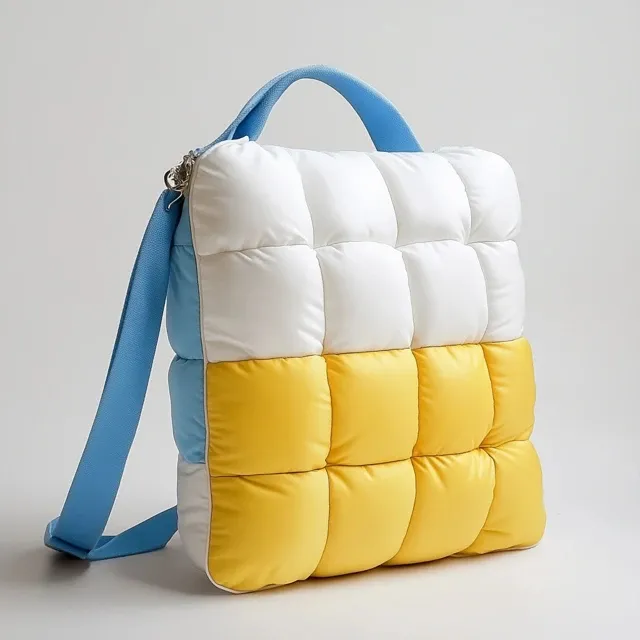

The Production Path a Custom Bag Follows
If you are targeting United States with a mid-range positioning, the key is to prevent variance: materials, trims, workmanship and packout rules must be written and checked.
Primary keyword for SEO: custom bag OEM. Secondary: bag quality control, custom bag manufacturer, private label bags, custom logo bags, OEM ODM bags.
Process controls behind a repeatable build
Where you need the granular row detail, the full manufacturing workflow carries it with the test methods and sample sizes attached.
Any tour worth taking is a control-point checklist in disguise, not a showroom trip.
Each stage, in the order it happens
- Get the brief straight first: claim, cost target and packing spec, then cut samples.
- Within material sourcing, lock by spec: coating/laminate spec, fabric route, trim vendors.
- Templates, tolerance bands and a reinforcement plan come next.
- Cutting stage: check grain direction plus marker efficiency; hold shade lots steady.
- Sewing and welding: hold the line on stitch spec, seam allowance, critical-zone reinforcement.
- At the final assembly stage, placement jigs position logos, hardware and accessories.
- Inspect to AQL, mark the cartons and raise the shipping documents.
Typical buyer use scenarios
- brand launches
- wholesale programs
- corporate procurement
- retail distribution
Key functions buyers request most
- custom sizing
- durable construction
- logo branding options
- retail-ready packaging
- consistent QC
Choosing the Best Materials for Custom Bags
| Material | Performance | Cost Range | Top pick For | Advantages & Trade-offs | Risks & How to Control |
|---|---|---|---|---|---|
| nylon | Balanced wear resistance (ISO 13934 tensile as specified); good scuff resistance (ISO 12947 as specified); stable for branding | US$1.6–5.5 / meter (per the specification) | Main line items with predictable yield | Advantages: versatile. Watch-outs: performance depends on coating/finish | Lock coating spec, color tolerance and print compatibility; confirm reinforcement mapping |
| PU coated polyester (600D, as specified) | Good repellency (ISO 4920 / AATCC 22 to spec); moderate barrier (ISO 811 per the specification) | US$1.2–6.0 / meter (per spec) | Value/core lines where print clarity matters | Upsides: cost controlled. Limitations: coating wear over time | Define spray rating targets and abrasion benchmarks; protect high-wear zones |
| Canvas / cotton (as specified) | Good hand-feel and print; waterproofing depends on finish (AATCC 22 per spec) | US$1.0–3.5 / meter (per spec) | Retail lifestyle lines, totes and promotions | Advantages: classic look. Watch-outs: heavier; stain risk without finish | Define shrinkage and colorfastness tests (AATCC 61 / ISO 105 to spec); specify lamination if needed |
Getting to two or three candidate fabrics
- Let the use case lead: abrasion, load paths and moisture pick the fabric for you.
- Decide whether the claim covers the whole bag or only zones like the main compartment.
- Every referenced ISO/AATCC/ASTM procedure should be listed, together with the numeric bar for approval.
- Choose route-suitable trims, from zipper type and sliders to buckles and webbing strength.
- Confirm that print and branding suit the specified fabric.
- Scuffing and creasing usually trace to transit, not to stitching defects.
Development Sequence for a Custom Build
Fields your tech pack cannot skip
- Measurement table: critical dimensions and tolerances by zone
- Construction notes: stitch type, stitch density, seam allowance, reinforcement mapping
- Branding method: print/embroidery/patch method, backing, and acceptance examples
- Retail packing spec: insert, polybag, carton count, carton marking, barcode placement
- Testing plan: references and pass criteria (ISO/AATCC/ASTM to spec)
- Revision control: version number, change log, and approval record
Development steps in working order
- Set the buyer, the price bracket and the slot it fills.
- Confirm the claim scope and its test plan by spec.
- Artwork placement, tolerance map, measurement table and BOM: four pieces that make the tech pack.
- Fit, structure and material route get validated at prototype sampling.
- Final BOM, final packaging route: the PP stage.
- Sign-off requirement: QC checklists plus the reference sample, ahead of bulk cutting.
Sampling pitfalls and how to close them
- Confirm fabric shade and coating feel with the actual supplier lot (as specified).
- Load-test every anchor point: webbing, grab handles and D-ring areas, to specification.
- Confirm the zipper path, then slider feel, then the cycle requirement per spec.
- Three things need checking per lane: rub marks, folding lines, and defence against humidity.
- One PP sample, built with the final BOM and final packing route, is what needs approval.
- Lock all changes before bulk cutting; avoid late feature creep.
Where sample rounds get saved
Condensed here by design — the extended comparison belongs to the full manufacturing workflow, alongside the rest of the reference data.
A programme that reorders cleanly
Success example (anonymized): a mid-range program targeting United States reduced rework by freezing a single tech pack, running one pre-production sample using the final BOM, and aligning QC checkpoints before cutting. A construction that can be duplicated means each season's reorder goes to the same partner.
How the Order Is Actually Produced
Weigh MOQ requirements against turnaround duration and price tier using the options table.
| Production Type | Lead Time | MOQ | Cost Level | Preferred For |
|---|---|---|---|---|
| ODM catalog customization | 6-10 working days + 35-50 days | low–medium (to spec) | low–medium | Fast launches and proven silhouettes |
| Small-batch pilot run | 6-10 working days + 35-50 days | 500 pcs | medium | Startups, corporate gifting, SKU validation |
| Standard OEM mass production | 35-50 days | medium–high (per the specification) | optimized | Retail replenishment and stable demand |
Which method, and why it matters
- Bonding / lamination requirements and peel strength targets (per spec)
- Foam thickness and density for structure (per the specification)
- Stitch density and thread type for load zones (to spec)
- Fittings installation: jigs, torque control, and anti-loosening measures (per spec)
How the Mark Goes On, and What Closes the Bag
Branding options and where each fits
- Screen print / heat transfer (best for clean graphics and scale)
- Woven/TPU/rubber patch (durable, consistent placement with jigs)
- Custom zipper puller / metal logo (premium trims, longer lead time)
Assembly checks before the carton closes
- Thread trimming and burn control (no loose ends, no scorch marks)
- Trims and hardware function check: buckles, sliders, and snaps
- Zipper end reinforcement and smoothness check
- Visual check for wrinkles, creases, and surface scuffs before packing
Logistics and Fulfilment
Freight milestones to hold
- Assess how the item fares when dropped or pressed.
- Warehouse scanning depends on locked labeling, barcodes and carton counts.
- Buffer time should be planned around inspections and export documents.
How to Vet a Bag Production Route
Check every point here prior to signing your OEM/ODM bag contract.
Due diligence, item by item
- Can they work from a pack and tell you what they inferred?
- Are alternatives by spec offered, and BOM sourcing controlled by them?
- Do they evidence QC checkpoints, IQC to IPQC to FQC, and an AQL plan?
- Without hurting workmanship, can they allow a flexible MOQ?
- Can they give firm lead time commitments and a defined escalation path?
- Do they bring packaging and shipping know-how that fits your market?
Audit points to tick before you commit volume
- Incoming material inspection records and traceability by lot
- Needle control and metal detection process (if required to spec)
- Measurement tools calibration and template storage
- Packing area: carton marking, barcode process, and SKU separation
- Corrective action loop: how issues are documented and closed
- Load space reality: line balance, overtime policy, and peak season plan
Strengths worth weighing
- Strong at structured bags: stand bags, hard-base bags, specialized tooling
- Multi-stage QC system: incoming material → inline → pre-shipment
- Sustainable options: RPET, recycled nylon, eco-friendly fabrics
Rubbing, Washing and Light: Three Colour Tests That Matter
Colour complaints arrive in three forms: dye rubbing off onto clothing, a shade shifting after washing, and a logo changing under shop lighting. Each has its own test, and passing one says nothing about the other two, which is why a fabric approved only on a visual match still generates returns. A colour programme should name all three tests and their acceptance grades in the specification before a metre is dyed.
Rubbing, or crocking, is measured to AATCC 8 for small areas and AATCC 165 for larger patterned or pile surfaces, with a white cloth rubbed 10 times dry and 10 times wet. Results are read on the grey scale for staining from 1 to 5, and a shade destined for a light-coloured garment contact should hold 4 to 5 dry and 4 wet. Pigment prints run wetter than dyes, so logo areas are tested separately from the shell.
Wash fastness runs to ISO 6330, normally five cycles at 40 degrees with a reference detergent, and is read on two scales: shade change of the sample itself and staining of the adjacent multifibre strip. A practical acceptance is grey scale 4 for shade change and 4 for staining, with an instrumental colour difference held to a delta E of 2.0 or less against the approved standard. Shifting beyond delta E 3.0 is visible to most retail buyers on a shelf.
Light fastness matters for window displays and for bags that sit in a car. Fabric is rated on the blue wool scale, and a rating of 4 or better is expected for anything merchandised under direct lighting for more than two weeks. Fluorescent and some bright acid shades on nylon struggle here, which is a specification conversation rather than a production defect.
Setting a Colour Tolerance That Both Sides Can Hold
Logo method drives the fastness profile as much as the ink does. Screen-printed plastisol deposits a 120 to 160 mesh film that sits proud and is prone to wet crocking; heat transfer applies at 150 to 160 degrees for 12 to 15 seconds at roughly 0.35 MPa and gives cleaner edges; silicone patches are vulcanised at 160 to 180 degrees and hold up best against abrasion and washing; embroidery at a 0.4 mm stitch length avoids dye entirely, since the thread is solution-dyed.
| Property | Method | Typical acceptance |
|---|---|---|
| Dry and wet rubbing | AATCC 8, AATCC 165 | Grey scale 4 dry, 4 wet |
| Wash fastness | ISO 6330, 5 cycles at 40 degrees | Shade change 4, staining 4 |
| Shade match | Instrumental, D65, 10 degree observer | Delta E 2.0 maximum |
| Light fastness | Blue wool scale | Rating 4 for display goods |
| Abrasion of print | ISO 12947 | No film loss at 10,000 rubs |
| Restricted substances | REACH, CPSIA, Prop 65 | Screening per material lot |
Colour is approved as a physical standard, not a number on a screen: a signed lab dip plus a retained production shade band, checked under D65 lighting, is what settles disputes later. Pigments and inks also have to clear restricted substance rules including REACH (EC 1907/2006), CPSIA and California Prop 65, and OEKO-TEX Standard 100 certification is often requested by European retail accounts. Our production team submits lab dips within the 6 to 10 working day sampling window and keeps the approved standards for 12 months. Documentation sits within custom bag quality certification.
Frequently Asked Questions (FAQs)
What grey scale rating should a screen-printed logo hold after rubbing?
A screen-printed logo should read 4 to 5 dry and 4 wet on the grey scale for staining under AATCC 8. Pigment prints on coated shells often drop one grade wet, so the wet result is the one written into the specification.
How many wash cycles should a printed panel survive before approval?
Five cycles at 40 degrees to ISO 6330 with reference detergent is standard, with shade change no worse than grey scale 4 and staining at 4. Instrumental colour difference should stay within delta E 2.0 of the approved standard.
Why does sublimation outperform screen print on colour fastness tests?
Sublimation dyes the fibre itself rather than sitting as a surface film, so it scores 4 to 5 on both dry and wet crocking. It only works on polyester above roughly 65% content, which limits where it can be used.
What colour tolerance is realistic across two different fabric dye lots?
Delta E of 2.0 or less under D65 lighting is achievable and is the usual commercial tolerance. Anything above delta E 3.0 is visible side by side on a shelf, so lots outside the band are reworked or re-dyed.
Which test catches dye migrating from a dark shell onto light webbing?
Staining is read on the multifibre strip in the ISO 6330 wash test, and separately by a heated contact test where shell and webbing are pressed together. Grey scale 4 on the adjacent fibre is the standard acceptance. Dark navy and black shells against light webbing migrate worst, so those combinations are tested first.
How does OEKO-TEX Standard 100 change dye selection for a bag fabric?
The standard sets limits on arylamines, formaldehyde, heavy metals and pesticides in the finished textile, which rules out certain azo and chrome dyes. Suppliers must present a valid certificate covering the exact article class. Class II covers articles with direct skin contact, which is the class most shells and linings are certified against.
What light fastness rating should retail bag fabric carry for window display?
A blue wool rating of 4 or better is expected for anything displayed under direct lighting for more than two weeks. Bright fluorescent shades on nylon frequently reach only 3 and should be avoided in such programmes. Displays in direct sun beyond two weeks should specify rating 5 or rotate stock every 10 days.
Which restricted substance rules apply to pigment inks used on bag logos?
Pigment inks are screened against REACH (EC 1907/2006) SVHC limits, CPSIA lead and phthalate limits for childrens articles, and California Prop 65. Heavy-metal pigment lines are normally excluded from the approved ink list. A declaration is requested per ink lot, and the printed panel is screened rather than the raw ink alone.
Related Guides
Internal resources
Related blog posts
- ODM vs. OEM for Startups: Budget & Timeline Comparison
- ODM Bag Design Trends for 2026–2027
- ODM Bag Catalogs: How to Customize Ready Designs Effectively
- Needle Detector & Safety Testing for Export Bags
- OEM Bag MOQs Explained: How to Negotiate Minimum Orders
- OEM Bag Manufacturing for Promotional & Corporate Brands
Next step
• Lock keyword and claim scope for custom custom bag oem
• Build a tech pack with BOM + tolerance map
• Choose materials route and validate tests (by spec)
• Plan sampling gates (lead time 6-10 working days)
• Set MOQ and cost targets (MOQ 500 pcs)
• Define QC plan and AQL checkpoints
• Confirm production + shipping timeline (35-50 days)

Start your next bag programme
Send over your requirements; a manufacturing plan and structured RFQ checklist are prepared for you.
Related programme guides: bag fabric options · bag certification standards.
Which Fastness Test Applies to Which Part of the Bag
Colour fastness is not a single test. It is a family of tests, and each one answers a different question about a different part of the bag. Crocking asks whether dye transfers onto whatever the bag rubs against. Wash fastness asks whether the shade survives laundering. Water and rain tests ask what happens when the bag gets wet and stays wet. Light and UV tests ask how quickly a shade fades on a retail shelf or on the passenger seat of a car. When a buyer writes "colour fastness 4" with no method attached, the requirement is unenforceable: a fabric can pass dry rubbing at 4–5 and still fail light exposure at 3.
The method matters as much as the rating. AATCC 8 covers dry and wet crocking and is what catches indigo denim and deep navy shells; the wet rub is almost always the lower of the two results. AATCC 22 (spray) and AATCC 35 (rain) describe surface wetting and water penetration respectively, which is why a shell can pass one and fail the other. AATCC 127 is the hydrostatic head method used when a specification makes a water-resistance claim. ISO 6330 governs domestic washing and drying, ISO 12945 covers the pilling and fuzzing that changes how a colour reads after use, and AATCC 183 handles ultraviolet protection claims. Pair any of these with ISO 13934-1 to confirm the fabric did not lose tensile strength in the process.
| Exposure | Method | Common acceptance | What it catches |
|---|---|---|---|
| Dry and wet rubbing | AATCC 8 | 4 dry, 3–4 wet | Dye transfer onto light clothing and car upholstery |
| Domestic laundering | ISO 6330 | 4 shade change, 4 staining | Shade drift after the customer washes the bag |
| Surface wetting | AATCC 22 | Spray 90 or rating 4 | Coating breakdown after abrasion |
| Water penetration | AATCC 35 | Rating 4 | Leaks through seams, not through the cloth |
| Hydrostatic head | AATCC 127 | Set by the claim, often 600–1,500 mm | Overstated water-resistance marketing |
| Ultraviolet exposure | AATCC 183 | Rating 4 after the agreed exposure time | Fading of printed logos on outdoor programmes |
Reading a Report Without Getting Burned
A fastness report is rated on the grey scale for shade change and staining, so the number means nothing until you know which fibre the staining panel used. A multi-fibre strip tells you whether the dye moved onto acetate, cotton, nylon, polyester, acrylic or wool, and a single-number summary usually hides the worst of the six. Ask for the full panel, and ask for the result on the production lot rather than on the lab dip; a dye lot that drifts two shade bands can still pass rubbing while failing the colour comparison against your approved reference swatch.
Branding fails differently from fabric. A plastisol screen print cracks when the film is over-cured or applied too thick, and peels when it is under-cured, so specify a cure window and a tape-test pull on every print lot. Heat transfers are sensitive to the recipient fabric's coating, and the same transfer that passes on 600D polyester can lift from a silicone-finished ripstop. Embroidery thread is usually solution-dyed and therefore strong on light fastness, but the backing can pucker after washing, which reads as a defect even though no colour moved. Woven and printed labels need their own rub test, since a label that bleeds onto a light lining is a visible reject.
Confirm chemical compliance alongside fastness rather than separately. OEKO-TEX Standard 100 and REACH (EC 1907/2006) restrict the substances behind many of the dyes that produce the most saturated shades, and California Proposition 65 and CPSIA set the enforcement context for programmes sold into the United States. Where a shade is critical to the brand, approve a dyed handloom or a lab dip in natural and artificial light before the bulk dyeing starts, and keep the signed reference in the specification pack.
Sequencing keeps this cheap. Fastness testing on a lab dip costs a few days and can be run in parallel with the 6–10 working day sampling window, whereas discovering a failing shade after the bulk fabric has been dyed pushes the programme past its 35–50 day production slot. Our production team runs the relevant subset of the matrix on every submitted reference, and the results are filed against the lot number so a repeat order can be matched rather than re-negotiated.
For the wider control framework around these tests, see the quality and certification programme, and cross-check how a fastness failure shows up in the inspection record in common bag defects and early detection.