Your Trusted Custom Drawstring Bags Manufacturer
OEM/ODM drawstring bag manufacturing with custom branding, stable quality control, and export-ready packaging.
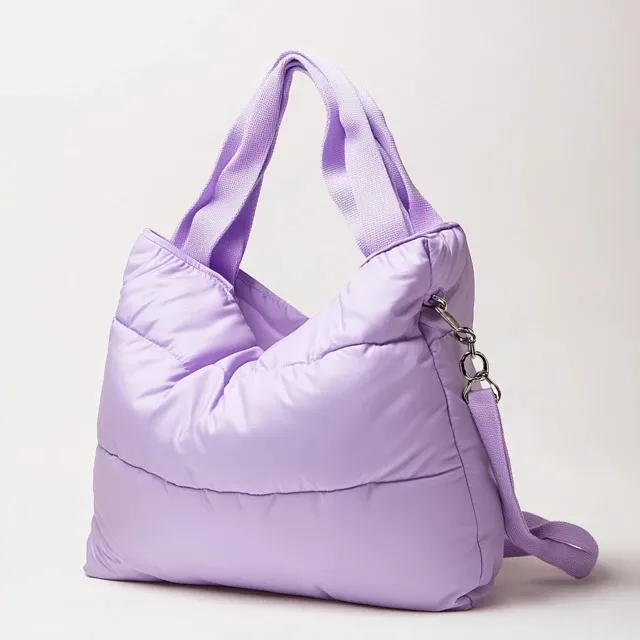
Custom Drawstring Bags catalog
Choose a base style and we will tailor materials, capacity, colors, and branding to your requirements.
Materials & fabrics
Material choice drives performance, durability, finishing, and target price point.
| Fabric | Waterproof | Cost | Notes |
|---|---|---|---|
| Nylon / polyester | depends on spec | varies | Common base fabrics for mass production. |
| RPET recycled fabric | depends on spec | varies | Sustainability positioning for eco-driven brands. |
| PU leather / leather | depends on finish | varies | Premium hand-feel and visual upgrade. |
• reinforcement on stress points
• accessories matching and consistency control
• brand-ready packaging execution
• inline workmanship checkpoints
• function tests for accessories
• AQL final inspection report
• Promotional and event sourcing
• Importers and distributors
• Private label product lines
Start custom drawstring bags production
Send your requirements and get a structured RFQ checklist and a manufacturing plan.
Drawstring pouches are usually bought by the tens of thousands for launches, events, retail packaging and laundry programmes, and they are almost always quoted too early. Before anyone talks about price, three things have to be settled: which substrate the pouch is cut from, how the raw edges are finished, and whether the print goes on before or after assembly.
Specification options for custom drawstring bags
The table below covers the three families we run most often, from a giveaway pouch to a reusable retail tote substitute. Note that at this size, grams of fabric per unit dominate everything: two choices worth 40 grams between them will outweigh any cord or eyelet upgrade you might make.
| Parameter | Promo pouch | Retail gift | Heavy laundry |
|---|---|---|---|
| Typical size | 20 × 25 cm | 25 × 35 cm | 40 × 55 cm |
| Substrate | 80 gsm non-woven polypropylene | 140 gsm RPET non-woven or 6 oz cotton twill | 210D polyester with PU back |
| Edge finish | Overlocked | Turned hem with twin-needle topstitch | Bound with 15 mm tape |
| Draw cord | 3 mm polyester, single draw | 4 mm cotton cord | 5 mm braided polyester, double draw |
| Cord entry | Turned hem, no hardware | Metal eyelets at both entries | Bound channel plus bar-tack at each exit |
| Cord lock | Knotted end only | Wooden toggle | Spring-loaded plastic |
| 1-colour screen, one face | Full-coverage transfer or screen, two faces | 2-colour screen with contrast base print | |
| Unit weight | 18 g | 55 g | 120 g |
| Units per export carton | 500 | 250 | 120 |
| Documented compliance | REACH (EC 1907/2006) | REACH, GRS, OEKO-TEX Standard 100 | REACH, Proposition 65, OEKO-TEX Standard 100 |
Carton count is not a footnote. A promo pouch shipped 500 to a carton may cost less in freight than it does in fabric, whereas a heavy laundry bag at 120 per carton inverts that relationship and changes which Incoterm you want to agree to.
How a drawstring pouch is produced
Substrate selection is the entire conversation for non-woven constructions. Spunbond polypropylene has grain direction that governs how it drapes and how the draw hem folds, and it does not recover from a mis-cut — curl is permanent. Woven substrates such as cotton or polyester behave normally but fray, which is why every raw edge on a woven pouch needs a decision.
Three edge finishes are available, and the choice is really a durability-versus-cost curve. Overlocking is fastest and cheapest, and leaves a raw edge that will fray slowly over years of use. A turned hem with twin-needle topstitch costs two passes and looks retail-ready. Binding is the most expensive and the only one that will survive repeated industrial laundering.
The draw hem is turned to a depth dictated by the cord: roughly four times cord diameter plus allowance. Too shallow and the cord pulls through the hem; too deep and the pouch bunches when closed in a way that photographs badly on retail shelves.
Eyelets are set with a washer on both faces wherever the substrate is woven, or the first hard pull will tear the metal straight out. On non-woven constructions we generally skip eyelets entirely, because the turnover hem itself is the reinforcement and adding hardware there makes the failure worse, not better.
Print stage follows the same logic as every other soft good: flat, before assembly, always. On non-woven polypropylene, however, ink selection changes — the surface is low-energy and needs a formulation that will flex rather than a standard plastisol.
Packing is a specification too. Individually polybagged and barcode-stickered suits retail distribution; bulk-packed in master polybags suits events and giveaways; both options should be priced at quote stage rather than discovered afterwards.
Cost drivers and MOQ for drawstring bags
At this product scale the ranking is stark: material grams first, then the number of sewing operations, then print coverage, then trim, then packing. Buyers regularly spend effort negotiating cord upgrades that move unit price by a fraction of a cent while leaving a fabric weight decision untouched that moves it twenty times as much.
The floor is 500 units per style per colourway — though on this product most programmes run well above it — and 300 on reorder once the markers exist. Sampling is 6–10 working days, stretching to 12–15 where a dyed-to-order non-woven or a bespoke width is required. Sample fees are USD 50–150 and credited against the first bulk order.
| Tier | Typical configuration | Indicative FOB |
|---|---|---|
| Entry | 80 gsm non-woven, knotted draw, 1-colour print, bulk packed | USD 0.55–0.95 |
| Mid | 140 gsm RPET or 6 oz cotton, eyelets, toggle, two-face print | USD 0.95–1.60 |
| Premium | 210D polyester, bound seams, spring lock, contrast print, retail packed | USD 1.60–2.60 |
Terms are T/T 30/70 against FOB Xiamen, with EXW, CIF and DDP available under Incoterms 2020, and quotes returned in 24–48 hours. Sea transit is 25–35 days, air 5–8 days and courier 3–5 days; a 20GP takes roughly 28 CBM, which on a lightweight pouch is a quantity most first-time buyers overestimate.
Quality gates and acceptance criteria
Batches are inspected to AQL 2.5 sampled per ISO 2859-1, with Critical 0, Major 2.5 and Minor 4.0, and AQL 1.5 on request. Because these programmes often run long, every shipment gets its own report from our 4,950 m² SGS-verified production floor so any drift between runs is visible rather than anecdotal.
Failure modes here are specific: print cracking on folds, hem pull-through at the cord, dimension drift when a non-woven lot changes, and shrinkage on cotton. Each has a corresponding check below.
| Check | Method | Acceptance |
|---|---|---|
| Seam strength | ISO 13934-1 | Above 120 N on the bound construction |
| Grab tensile, shell | ASTM D5034 | Above 250 N woven, above 150 N non-woven |
| Strip strength, non-woven | ASTM D5035 | Above 120 N in the machine direction |
| Hem pull-through | In-house, 10 kg on the cord, 30 s | No hem distortion above 3 mm |
| Print fastness | AATCC 8 rub, then ISO 6330 cycle | Grade 4 dry; no cracking after 5 cycles |
| Dimensional tolerance | In-house audit of 20 pieces per run | Within 5 mm of the approved sample |
| Water repellency | AATCC 22 | Rating 80 or above where a finish is specified |
| Odour and restricted substances | REACH (EC 1907/2006), Proposition 65, OEKO-TEX Standard 100 | Conformance documentation issued per lot |
Choosing a substrate for a drawstring pouch
Non-woven polypropylene wins on price and printability and loses on longevity, which makes it right for a campaign and wrong for a reusable retail bag. RPET non-woven carries the recycled story and satisfies GRS documentation needs, provided you can accept a slightly rougher hand. Cotton twill reads premium and takes dye beautifully but shrinks, so it must be pre-shrunk or oversized in the marker.
Polyester at 210D is the durability answer and the only substrate here that survives repeated washing with the print intact. If your programme promises reuse rather than single use, specify accordingly — the custom bag materials page sets out the trade-offs in detail.
Ordering path for drawstring bag programmes
Six straightforward steps, and a first programme usually ships in 8–11 weeks. Promotional volumes are frequently run alongside our custom tote bag lines, which share most materials and print setups.
Tell us the size, the substrate you are considering and the quantity band you need, and a priced grid with a recommended construction comes back within 48 hours. Private look-and-feel options are covered on the private label bags page.