Waterproof Golf Bags: Rain Hood & Sealed Seams
Learn how to run a custom golf bag oem program for UK & Europe: materials, tech pack, sampling, QC and shipping. Get OEM/ODM-ready checklists and quote
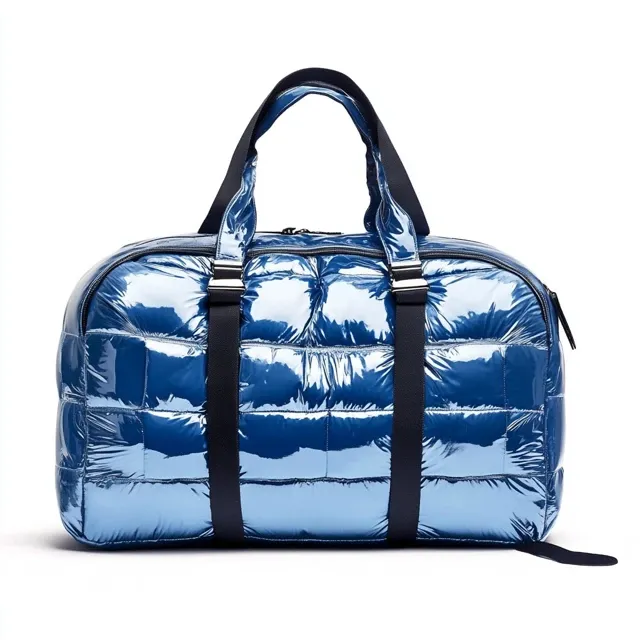
.webp)
What Happens Between the PO and the Loading Bay
A professional golf bag program is a controlled workflow: clarify requirements, lock the build route, validate with measurable gates, then scale production with repeatable QC.
Primary SEO focus: custom golf bag oem. Secondary: golf bag manufacturer, private label bags, custom logo bags, OEM ODM bags.
Which variables the programme actually locks down
Judge the visit by the records you are shown, not by the display wall.
The sequence from cutting table to carton
- Start by agreeing claim scope, budget band and packout, then sample.
- By spec, material sourcing locks the coating/laminate spec, fabric route and trim vendors.
- Draft the patterns, fix the tolerances and map where reinforcement goes.
- Control shade lots, then confirm marker efficiency and grain at cutting.
- Build up the load points, then apply the seam and stitch specification on the line.
- Jig the placement so hardware, branding and accessories land in the same spot every time.
- Final stage: AQL sampling, carton marking and the shipping set.
Typical buyer use scenarios
- outdoor sports
- fishing
- boating
- camping
- commuting
Key functions buyers request most
- RF welded seams
- roll-top closure
- airtight zipper option
- lash points
- abrasion reinforcement
Choosing the Best Materials for Custom Golf Bags
| Material | Performance | Cost Range | Preferred For | Merits & Limitations | Risks & How to Control |
|---|---|---|---|---|---|
| TPU laminated nylon | Higher waterproof barrier potential (ISO 811 / AATCC 127 per spec); good abrasion resistance when reinforced (ISO 12947 as specified) | US$1.6–5.5 / meter (per spec) | Claim-led outdoor SKUs and premium builds | Advantages: strong claim ceiling. Watch-outs: crease sensitivity; higher BOM cost | Control laminate peel, crease tolerance and seam strategy; validate waterproof scope early |
| PVC tarpaulin (as specified) | Premium barrier and wipe-clean surface (ISO 811 / AATCC 127 per spec); strong abrasion resistance tolerance (ISO 12947 per the specification) | US$1.2–6.0 / meter (as specified) | Rugged utility lines and marine use | Upsides: durable surface. Trade-offs: heavier; sustainability concerns | Define fold/packout rules to avoid scuffs; control weight targets |
| Canvas / cotton (to spec) | Good hand-feel and print; waterproofing depends on finish (AATCC 22 per the specification) | US$1.0–3.5 / meter (per spec) | Retail lifestyle lines, totes and promotions | Advantages: classic look. Limitations: heavier; stain risk without finish | Define shrinkage and colorfastness tests (AATCC 61 / ISO 105 to spec); specify lamination if needed |
A fast way to cut the material list
- Begin with the conditions: scuff zones, stress points and water contact decide the material.
- Main compartment only is one option; decide if the claim spans the whole bag or zones.
- Cite the ISO, AATCC or ASTM references in your pack and state what passes.
- Pick trims that suit the chosen route: zipper type, sliders, buckles and webbing strength.
- Print and branding compatibility is confirmed on the real fabric.
- Evaluate transit rubbing risk, because visible creases are freight damage far more often than stitching faults.
From Brief to Approved Sample
Building a pack a production team can quote from
How an OEM/ODM build is taken from brief to bulk
- Start with the end user, the shelf price and the positioning.
- Lock claim scope, then confirm the test plan to spec.
- To build it, add the BOM, then the measurement table, then the tolerance map, then artwork placement.
- Prototype sampling validates fit, structure and the material route.
- By PP, BOM and packaging route are final.
- First, sign the QC checklists and golden sample; only then cut bulk.
What to clear before you sign a sample
Cutting re-sampling out of the calendar
The case for building it the same way twice
Production & Manufacturing Methods for Golf Bags
Ordering choices get clearer once you compare lead time, MOQ requirements and cost bands in the table.
Construction routes to call out explicitly
Logo Application and Closing Operations
How the mark can be applied
What to verify at final assembly
- Fittings function check: buckles, sliders, and snaps
- Zipper end reinforcement and smoothness check
- Visual check for wrinkles, creases, and surface scuffs before packing
Getting It Loaded, Cleared and Delivered
What has to clear before the vessel sails
Key Factors to Choose a Reliable Golf Bags Manufacturer
Use this checklist before signing an OEM/ODM contract for golf bags.
Questions to put on the table first
- Do they quote against the spec and state their assumptions?
- Can they source the BOM and also suggest alternatives that meet spec?
- Is there an AQL plan, and do QC checkpoints cover IQC through IPQC into FQC?
- Can workmanship survive a flexible MOQ arrangement?
- Can you expect firm lead times and a clear escalation procedure?
- Does their track record include packaging and shipping into your market?
On-site checks worth the flight
What the programme is set up to do well
Rain hood geometry and sealed seam construction on a golf bag
A rain hood fails for two reasons and neither of them is the fabric. It is either too small to clear the club heads, or it lifts because the attachment only holds at the front. The hood has to clear the top cuff with roughly 30 mm of overhang all round and drop far enough to cover the longest club head, which on a 14-way top means a hood depth of 250 to 300 mm depending on the driver length the brand specifies.
Hood fabric is lighter than the body shell but is specified to a real hydrostatic figure rather than a spray rating, because a hood carries standing water rather than beading it. A 210D or 420D nylon with a PU coating reaching at least 1,500 mm under AATCC 127 is the working specification, and the hood itself is seam-sealed rather than left stitched so it does not drip along the needle holes.
Attachment is where the design is won. A number 5 coil zipper across the back of the cuff, combined with an elasticated hem and a snap or hook-and-loop tab at the front, keeps the hood seated in wind. Hoods that rely on a single elastic edge are the ones that end up in the fairway on an exposed course.
Sealed seams: tape, temperature and verification
Seam sealing on a golf bag is a hot-applied tape process. A 20 mm PVC or TPU tape is laid over the stitched seam and heat-set at roughly 380 to 420 degrees Celsius with controlled roller pressure and dwell. The tape has to be chemically compatible with the shell coating, or it lifts after a season in a hot car. Where a seam geometry cannot be taped flat, a liquid PU sealant is applied and cured instead.
- Hood overhang: about 30 mm beyond the top cuff, 250 to 300 mm depth for a 14-way top
- Hood fabric: 210D to 420D nylon, PU coated, minimum 1,500 mm under AATCC 127
- Attachment: number 5 coil zipper, elasticated hem plus a front snap or hook-and-loop tab
- Seam tape: 20 mm PVC or TPU, heat-set at 380 to 420 degrees Celsius
- Verification: water column on the hood, leak check on every taped seam before packing
Verification is simple and should be written into the specification. The hood is subjected to a water column and inspected for drip-through at the tape lines, and every taped seam on the body is leak-checked before the unit goes into its carton. Finished goods are sampled to AQL 2.5 under ISO 2859-1 with critical defects at zero tolerance.
A hood adds roughly 120 to 180 grams and needs its own storage pocket, which is usually a zipped panel at the base of the bag. Sampling a golf bag with a hood and taped seams takes 6 to 10 working days, and bulk runs 35 to 50 days at a 500-piece minimum per colourway. Golf range options are listed under the golf bag programme.
Choosing a rain programme by cost, rating and schedule
On a course bag, weather protection is bought as a package, and the package has tiers that are rarely laid side by side. A stitched hood with no sealing is cheap and leaks. A taped seam build is the mainstream answer. A welded build is the strongest and the slowest. Picking between them is a decision about how much water the bag must survive, how many units are being made, and how much calendar is available.
The mistake is treating the options as grades of the same thing. They fail differently: an unsealed stitched seam wets through at the needle line, a poorly applied tape looks fine on the day and lifts in month three, and a welded joint rarely fails but needs compatible materials and tooling. Matching the option to the programme beats always specifying the highest grade.
| Option | Added cost per bag | Water performance | Effect on schedule | Best order size |
|---|---|---|---|---|
| Stitched hood, no sealing | None | Wets through at needle lines within minutes | No effect | Not recommended |
| Stitched plus 20 mm hot-applied tape | USD 0.80-2.50 | Holds to AATCC 127 at 1500 mm plus AATCC 35 spray | Adds 1-2 days to the 35-50 day run | 500 units upward |
| Hot-air or radio-frequency welded panels | USD 2.50-6.00 plus tooling | Strongest joint, no needle holes | Tooling in the USD 300-2,500 band, longer sampling | Repeat programmes |
| Full hood plus taped body seams | USD 2.00-5.00 | Whole-bag protection | Adds 2-4 days | Premium programmes |
Tape is the default for a reason: at 500 units and above it delivers most of the welded performance for a fraction of the tooling cost, without extending sampling beyond the 6-10 working day window. Welding earns its place on repeat programmes where tooling amortises, or on panels below the waterline. QUANZHOU JUNYUAN BAGS quotes each option as a named line so the trade is made on numbers. Golf builds are covered in custom golf bags for brands, tournaments and corporate gifts.
The order in which a rain hood should be developed
A hood is a shaped cover with a closure and a drain path, and it is developed in that order. Skipping ahead to fabric or attachment before the shape is settled produces a hood that fits the drawing and misses the clubs.
- Confirm club head clearance first. Agree the longest driver length the brand specifies, because that single dimension sets hood depth and no fabric choice recovers a hood that is too shallow.
- Set the geometry, then the crown. Roughly 30 mm of overhang beyond the top cuff, 5-8 mm of crown on the top panel so water does not pool, and at least two drainage grommets at the lowest points.
- Specify the hood fabric as a number. 210D to 420D nylon with a PU coating reaching at least 1500 mm under AATCC 127, because a hood carries standing water rather than beading it.
- Build the sample hood inside the sampling window. 6-10 working days, or 12-15 where welding is involved, with one hood kept as the reference.
- Test the assembly, not the swatch. AATCC 35 spray exposure for five minutes, then a 24-hour static water column check on every taped seam, since the tape application is the variable.
- Inspect to a stated level before packing. ISO 2859-1 general inspection level II at AQL 2.5, Critical 0, Major 2.5, Minor 4.0, then book 25-35 days of sea transit or 5-8 days by air.
Two checks close the loop. The hem should run on an elasticated shock cord rather than a fixed binding, because a fixed hem cannot follow a loaded top cuff and lifts in wind. And tape should be inspected after a heat soak, not only on the day it is applied, since a bond that looks sound cold is the one that lifts after a season in a hot car.
Frequently Asked Questions (FAQs)
How much overhang should a golf bag rain hood have beyond the top cuff?
About 30 mm of overhang all round, with a hood depth of 250 to 300 mm for a 14-way top so the longest club head is covered. Under-size the hood and it will not clear the driver, which is the most common hood complaint in the field.
What hydrostatic head should rain hood fabric be specified to reach?
At least 1,500 mm under AATCC 127. A hood carries standing water rather than beading it, so a spray rating under AATCC 22 is not an adequate specification. A 210D or 420D PU-coated nylon reaches that figure without excess weight.
Which attachment system keeps a rain hood from lifting in wind?
A number 5 coil zipper across the back of the cuff combined with an elasticated hem and a front snap or hook-and-loop tab. A single elastic edge is the configuration that lifts on an exposed course and ends up on the fairway.
How wide should heat-applied seam tape be on a golf bag shell?
A 20 mm PVC or TPU tape is standard for a golf bag body seam. The tape must be chemically compatible with the shell coating, otherwise it lifts after a season stored in a hot car, which is the usual cause of tape failure claims.
What temperature range applies to heat-sealing tape on a coated golf shell?
Tape is heat-set at roughly 380 to 420 degrees Celsius with controlled roller pressure and dwell. Too low and the tape lifts, too high and the shell coating is damaged. The window is recorded per shell so a repeat run matches the approved sample.
How is a sealed seam leak tested before a golf bag order is released?
Every taped seam is leak-checked before the unit is packed, and the hood is subjected to a water column and inspected for drip-through at the tape lines. Finished goods are sampled to AQL 2.5 under ISO 2859-1 with critical defects at zero.
How much does a rain hood add to the packed weight and volume of a golf bag?
A hood adds roughly 120 to 180 grams and needs a zipped storage panel, usually at the base of the bag. Hood fabric is 210D to 420D PU-coated nylon at 1,500 mm hydrostatic head, and the packed carton dimension moves with pocket placement rather than the hood.
Does seam taping change the minimum quantity or the golf bag production schedule?
Neither changes. A 500-piece minimum per colourway applies, sampling takes 6 to 10 working days, and bulk runs 35 to 50 days. Taping adds a station to the line but is scheduled inside the standard run rather than extending it.
More Guides and Where to Go Next
Internal resources
- Request a quote (RFQ)
- Browse products & categories
- Download RFQ template
- Download QC checklist
- Packing format specification guide
Related blog posts
- Incoming Material Inspection (IQC) for Bag Factories
- Inline Production QC (IPQC) for Bags: Key Checkpoints
- Insulated Bag Lining Materials: Safe & Food-Grade Options
- Insulated Cooler Bag Production Process Step by Step
- How to Test Cooler Bag Ice Retention (Factory Standards)
- How to Test Waterproof Bag Performance (Factory Standards)
Next step
• Lock keyword and claim scope for custom golf bag oem
• Build a tech pack with BOM + tolerance map
• Choose materials route and validate tests (by spec)
• Plan sampling gates (lead time 6-10 working days)
• Set MOQ and cost targets (MOQ 500 pcs)
• Define QC plan and AQL checkpoints
• Confirm production + shipping timeline (35-50 days)
.webp)
Talk to us about your next programme
Your requirements go in; a structured RFQ checklist and manufacturing plan come out.
Linked programme guides: custom backpacks.
Why the hood leaks even when the fabric does not
In a course bag, the rain hood fails far more often than the body fabric does. Users meet water through an opening, a channel or a seam, and the hood is where all three meet: it has a closure, a drain path and a hem that has to hug a shape it was never cut to follow. Getting the fabric specification right on the shell is the easy part of a rain programme; the engineering effort belongs in how water arrives at the top and where it goes next.
The first recurring defect is pooling. A hood cut with a flat top instead of slight crown selectivity collects water in a shallow dish, and once a hundred millilitres sit there, hydrostatic pressure does the work your coating was supposed to avoid. The fix is geometric: give the top panel 5 to 8 millimetres of crown, run the hem on an elastic shock cord rather than a fixed binding, and place at least two drainage grommets at the lowest points so that water exits rather than accumulates. Brass or 304 stainless grommets with a washer backing are worth specifying here, because a plain rolled grommet in a wet panel pulls through in a season.
The second defect is the zipper line running through the hood. Every chain is a wick, and a standard coil chain with a cotton-reinforced tape will move moisture along its length into the interior even with a flap over it. Specify a moulded-tooth or reverse-coil chain, add a storm flap with a minimum 20 millimetres of overlap beyond the chain centre, and finish the flap edge rather than leaving it raw. Where the buyer accepts a magnetic or hook-and-loop closure instead, the problem disappears but so does the security of contents, which is the trade you should state plainly on the specification.
| Element | Method | Typical specification | Test | Pass threshold |
|---|---|---|---|---|
| Field seams | Bound seam with taped underside | 12 mm PU tape, 140–160 °C application | AATCC 127 | No strike-through at 1,500 mm |
| Load seams | Sewn plus bar-tack every 60 mm | 8–10 SPI bonded nylon thread | ISO 13934-1 | No rupture below 900 N |
| Hood hem | Elastic shock cord with cordlock | 3 mm cord, 25 mm hem allowance | Shower rack assessment | No pooling after 30 min at 20 L/h |
| Closure | Storm flap over moulded #8 | 20 mm overlap past chain centre | AATCC 35 spray test | Interior weight gain under 1 g |
| Hardware | Stainless or brass with washer | 304 ring and washer assembly | ASTM B117 | No red rust at 240 hours |
Sealing methods and the tests that separate them
Tape and weld are not interchangeable. Heat-applied seam tape bonded over a needle line is the mainstream solution and works well provided the operator controls temperature, pressure and dwell; when any one of those drifts, the tape looks bonded on the day and lifts in month three. Radio-frequency or hot-air welding removes the needle holes entirely and gives a stronger joint on coated substrates, but it needs compatible materials and a tooling investment, which is why it is usually reserved for premium rain programmes or for panels that sit below the waterline.
Verification has to happen on the finished bag, not on a swatch. AATCC 127 hydrostatic head tells you what the panel survives; AATCC 35 spray test tells you whether the assembly sheds water under a shower rack; a simple 24-hour static water column check on the taped seam tells you whether the tape application was sound on that shift. Add a tape peel check at receiving on every lot, because adhesion failures are process failures and always arrive in clusters.
Retail programmes also carry chemical obligations that sit alongside the rain story. Restricted substance screening against REACH and California Proposition 65 applies to coatings and to any metal hardware in skin contact, and nickel release testing to EN 1811 is standard for European destinations. Our vetted partner facilities release goods on ISO 2859-1 sampling at AQL 2.5 with Critical 0, Major 2.5 and Minor 4.0, and a sewn seam missing its tape is classified Critical rather than cosmetic.
Development samples for a hooded rain programme run 12 to 15 working days because the hood pattern needs a fit round on the actual bag body, followed by 35 to 50 days for bulk once the sample is signed. Tooling for a custom shaped stiffener or a branded cordlock falls in the USD 300 to 2,500 range, and the sample fee of USD 50 to 150 is credited against your first order. Browse the product range that this construction applies to, and cross-check your acceptance plan against the certification and testing evidence retailers ask for.
Numbers age badly when copied into dozens of places, so the maintained version of this grid stays on quality control and certification.
Rather than repeat the same matrix here, keep the detailed grading with the central reference on material selection — it lists the acceptance numbers and sampling levels our team works to.