Your Trusted Custom Outdoor Backpacks Manufacturer
Outdoor backpack manufacturing for hiking and adventure programs. Focused on abrasion resistance, harness ergonomics, and load-bearing reinforcement.
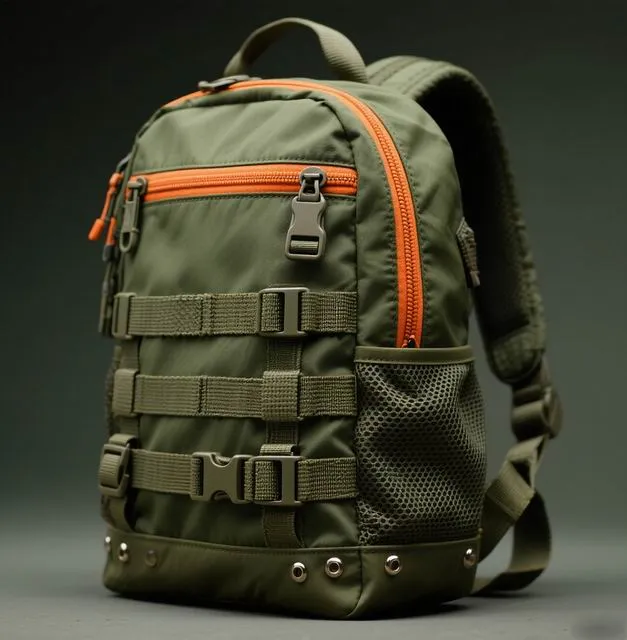
Suspension & Load Distribution
For serious hiking, comfort dictates performance. Our suspension systems transfer load effectively while maintaining critical back ventilation.
Airflow Back Panel
Suspended mesh or channeled EVA foam back panels to maximize ventilation during strenuous hikes.
Load Lifters
Adjustable straps at the shoulders to pull weight closer to the center of gravity, reducing fatigue.
Padded Hip Belt
Thick, contoured hip belts to transfer up to 80% of the pack's weight off the shoulders.
Weather Defense Strategies
Protecting gear from the elements is non-negotiable for outdoor packs. We offer multi-tiered weatherproofing solutions.
DWR Coating
Durable Water Repellent treatments on the face fabric cause water to bead up and roll off.
Integrated Rain Cover
Stowable, high-visibility rain covers deployed from a dedicated bottom zip pocket.
Seam Sealing
PU-taped seams on critical panels to prevent water ingress during heavy downpours.
Exterior Gear Attachment
Modular attachment points ensure users can carry specialized equipment like trekking poles, helmets, and hydration bladders without consuming internal capacity.
Trekking Pole Loops
Dedicated elastic cords and bottom loops to secure hiking poles when not in use.
Hydration Port
Internal bladder sleeve with a sealed hose routing port and shoulder strap clips.
Daisy Chains
Webbing loops for clipping carabiners, helmets, or extra gear to the exterior.
Materials & fabrics
Material choice drives performance, durability, finishing, and target price point.
| Fabric | Waterproof | Cost | Notes |
|---|---|---|---|
| Cordura® / high-denier nylon | DWR / coating options | varies | Abrasion control and durability. |
• breathable back panels
• reinforced base panels
• abrasion checks (by spec)
• AQL final inspection
• Adventure travel retailers
• Tactical-outdoor crossover lines
Start custom outdoor backpacks production
Send your requirements and get a structured RFQ checklist and a manufacturing plan.
Specification options for custom outdoor backpacks
An outdoor pack brief should define the carried load, trip duration, climate, and retail position before fabric is selected. Those inputs control frame stiffness, pocket access, seam placement, and the balance between empty weight and durability. Use the ranges below as a practical starting point, then confirm the final geometry with a fitted sample and an agreed packing list.
| Specification | Standard range | Development notes |
|---|---|---|
| Body dimensions | 45 × 28 × 18 cm to 64 × 34 × 24 cm | Torso profile and load determine length |
| Usable capacity | 24–55 L | Measured with pockets in normal use |
| Shell materials | 420D nylon, 600D polyester, 210D ripstop | PU or TPU backing by weather target |
| Hardware | Acetal buckles, aluminium stays, coil zips | Salt-resistant options for coastal use |
| Typical empty weight | 0.75–1.65 kg | Varies with frame and hip belt density |
| Closure type | Zip, drawcord lid, or roll-top opening | Opening choice affects access and sealing |
| Load architecture | HDPE sheet, one or two stays, padded belt | Set after target load trials |
| Compliance lines | REACH, CPSIA, OEKO-TEX Standard 100 | Applied according to market and user age |
Capacity claims should be checked against the physical pattern rather than inferred from external dimensions. A deep front pocket, hydration sleeve, shaped back panel, and extension collar all change usable volume. If your line includes several sizes, hold buckle families, webbing widths, and colour standards constant where possible. That approach protects the visual system while reducing component fragmentation. See the broader custom backpack range when planning coordinated commuter and trail styles.
How custom outdoor backpacks are built
Development starts with a load map. The pattern maker locates dense items close to the back and uses curved side panels to control depth without making the pack feel boxy. A taller pattern needs enough taper to preserve arm clearance. Shoulder strap spacing is matched to the intended torso range, while the hip belt angle is adjusted so padding wraps instead of bridging across the body.
The back system carries most of the engineering work. A removable HDPE sheet can spread pressure, and aluminium stays can transfer vertical load toward the belt. Foam density is selected after compression trials because very soft foam looks comfortable in a sample yet can collapse under a full pack. Spacer mesh improves air movement, but its edges must be captured cleanly to prevent abrasion against clothing.
Stress paths run from the shoulder strap anchors through the upper body, base, and belt wings. Those areas use reinforcement patches, box stitching, bar tacks, or folded webbing that continues into a seam. Sewing directly onto a single shell panel creates a weak peel point. Binding tape protects internal cut edges, while double-needle or lapped seams are considered where the load and water exposure justify them.
Pockets are built around field access. Side pockets need elastic recovery and enough height to retain a bottle during movement. Zip garages reduce direct rain entry, but they do not replace a suitable coated fabric and controlled seam construction. Drain eyelets may be added to exposed pockets. The lining is kept lighter than the shell, with brighter colours available to improve visibility inside the compartment.
Hardware is validated as part of the assembly rather than as isolated components. Zip sliders must move around loaded curves, compression buckles must release with gloves, and cord locks must grip the specified cord diameter. Material options can be compared through the custom bag materials guide before a sample bill of materials is frozen.
Cost drivers and MOQ for custom outdoor backpacks
Frame parts, sculpted foam, multi-panel belts, coated textiles, and numerous attachment points move the unit price more than a simple change in overall size. Custom-moulded hardware adds tooling, while a stock buckle in a controlled colour avoids that charge. Print coverage, seam-sealing work, and separate colour lots also affect labour and purchasing efficiency. A clean feature hierarchy usually gives better value than adding pockets that do not support a defined use case.
| Item | Working term | What to confirm |
|---|---|---|
| Indicative FOB Xiamen | USD 6.50–16.00 each | Final material, frame, trim, and packing |
| MOQ | 500 units/style/colour; repeat programmes 300 | Fabric and hardware colour continuity |
| Sampling | 6–10 working days; complex 12–15 | Fitted load sample and artwork approval |
| Bulk timing | 35–50 days after sample approval | Starts after signed specification lock |
| Sample and tooling | USD 50–150; tooling USD 300–2,500 | Sample fee credited on first bulk order |
| Payment and delivery | T/T 30/70; FOB Xiamen | EXW, CIF, and DDP available |
A documented brief normally receives a quote in 24–48 hours. Our 4,950 m² SGS-verified production floor has 137 people, 7 lines, and 149 machines, with listed capacity of 200,000 units/month. The operation was founded in 2014, and the founder has worked in the trade since 2004. These figures help capacity planning, but the confirmed delivery date still depends on approved materials, colour lots, and the production slot.
Quality gates and acceptance criteria
Inspection begins with approved swatches, a sealed sample, and a measurement sheet that identifies tolerances at functional points. Fabric tensile performance can be evaluated to ASTM D5034, with colour transfer checked to AATCC 8. Where rain resistance matters, the chosen construction can be compared under AATCC 22 or a buyer-defined spray protocol. Claims should describe the tested assembly accurately rather than extending a fabric result to every seam and opening.
- Measure body, strap, belt, and opening dimensions against the signed specification.
- Load the pack to the agreed use weight and cycle both shoulder anchors and grab handle.
- Run zips around packed corners, checking slider travel, teeth alignment, and end stops.
- Inspect bar tacks, seam allowance, binding coverage, and frame-channel security.
- Check coating appearance, shade consistency, print adhesion, and odour after airing.
- Apply AQL 2.5: Critical 0 / Major 2.5 / Minor 4.0; AQL 1.5 on request.
Final random inspection follows ISO 2859-1 with the agreed defect library. Packaging review includes strap containment, carton fit, moisture protection, labels, and scannable codes. For a fuller audit framework, use the bag quality and certification guide when writing your purchase specification.
Branding and weather-protection choices
Branding should follow the panel stress map. A woven patch or small transfer works well on a pocket that stays relatively flat; embroidery needs a backing layer and should not perforate a surface expected to shed rain. Reflective transfers can support low-light visibility, while moulded badges suit a technical appearance but may require tooling. Artwork files should specify finished size, colour reference, location, and acceptable edge detail.
Weather protection is a system of shell fabric, coating, zip design, seam geometry, and packing practice. A coated textile can slow water entry, yet needle holes and openings remain paths unless the design addresses them. A separate rain cover is often easier to replace and test. Define the claim language before development so construction, care labels, and sales copy describe the same level of protection.
Ordering path
Move from use case to shipment through six controlled approvals. Each gate leaves a record, which reduces subjective changes after materials have been committed.
Send a packing list and target retail position to receive a construction proposal that can be sampled and tested.