Your Trusted Custom School Backpacks Manufacturer
School backpack manufacturing for kids and youth programs. Built for high-volume durability, stable printing, and safe workmanship standards.
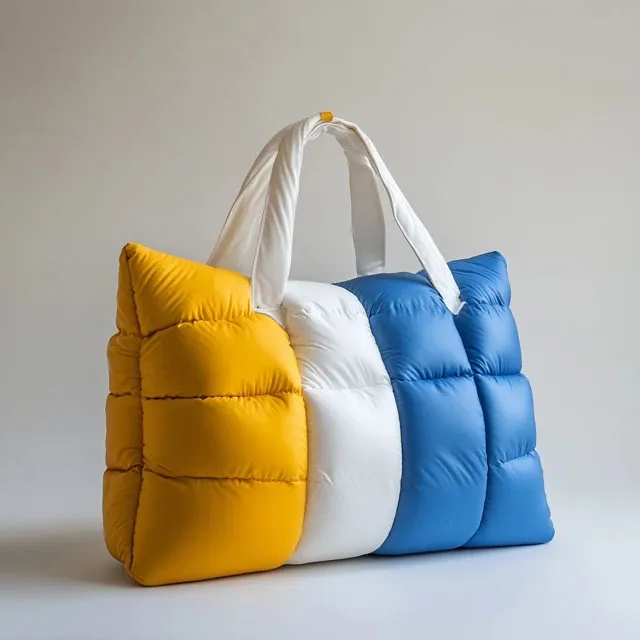
Child-Safe Ergonomics
Growing bodies require careful load distribution. Our school backpack patterns are specifically graded for youth anthropometrics.
S-Curve Straps
Ergonomically contoured shoulder straps to fit smaller frames without pinching or slipping.
Sternum Strap
Adjustable chest strap to stabilize the load while children run or ride bikes.
Safety Reflectors
High-visibility reflective piping or patches on all sides for safe early morning or evening commutes.
Heavy Load Construction
Textbooks and laptops exert immense stress on backpack seams. We over-engineer critical stress points to guarantee a full school year of durability.
- Bar-tack Reinforcement: Heavy-duty stitching at strap anchors and handles to support the weight of textbooks and laptops.
- Double Bottom Panel: Two layers of durable fabric (e.g., 900D) at the base to prevent corner wear from heavy books.
- Structural Piping: Internal bound seams and external piping help the bag hold its shape, making packing easier.
Print & Material Safety Standards
Vibrant designs are key for school markets. We ensure all prints are colorfast, washable, and strictly compliant with child safety regulations.
Colorfast Sublimation
Deep-penetrating inks that resist fading from UV exposure and repeated washing.
Licensed IP Standards
Strict quality control for character and brand printing, ensuring crisp lines and exact pantone matches.
Non-Toxic Materials
CPSIA and REACH compliant inks and fabrics, free from lead, phthalates, and harmful chemicals.
Materials & fabrics
Material choice drives performance, durability, finishing, and target price point.
| Fabric | Waterproof | Cost | Notes |
|---|---|---|---|
| 600D/900D polyester | water-resistant options | varies | Cost-efficient for mass programs. |
• panel printing alignment
• durable zippers
• optional reflective trims
• zipper function checks
• AQL final inspection
• Retail seasonal programs
• Promotional back-to-school campaigns
Start custom school backpacks production
Send your requirements and get a structured RFQ checklist and a manufacturing plan.
Specification options for custom school backpacks
A school backpack specification should begin with student age, book and device sizes, daily load, commute pattern, and destination market. Body proportions, strap geometry, visibility, opening access, and labelling vary by age group. A well-defined size family is safer and more useful than one oversized pack marketed across every grade.
| Specification | Typical range | Planning note |
|---|---|---|
| Body dimensions | 34 × 24 × 14 cm to 47 × 32 × 20 cm | Match torso and school storage limits |
| Usable capacity | 14–30 L | Confirm with books, lunch, and clothing |
| Shell materials | 300D or 600D polyester, recycled polyester | Balance weight, print, and abrasion |
| Device sleeve | 11–16 inch padded compartment | Specify actual device dimensions |
| Typical empty weight | 0.45–0.95 kg | Organisation and padding drive weight |
| Closure type | U-zip, dual zip, or flap-and-buckle | Choose for access and age group |
| Carry system | Curved padded straps, back panel, chest strap | Adjust geometry by size |
| Compliance lines | CPSIA, EN 71-3, REACH | Final test scope follows age and market |
Capacity must be demonstrated with a realistic school-day packing list. A laptop sleeve should hold the named device with clearance for its opening, while bottle pockets need enough depth and elastic recovery for movement. Coordinated lunch, pencil, and accessory pieces can use common colour standards. Explore the wider custom school bag programme when planning a collection.
How custom school backpacks are built
Pattern proportions are set for the intended age and load. A shorter body avoids contact below the torso on younger students, while shaped side panels add volume without excessive width. The main opening should expose books without requiring a child to pull the zipper around a tight loaded corner. Notches maintain alignment across printed panels and curved seams.
Shoulder straps use foam selected for compression recovery, with spacing and curve adjusted by size. Upper anchors connect through reinforcement into the back panel, and lower webbing points spread load through side seams. A chest strap can help stabilise the pack, but its position and adjustment range need validation on the intended user group.
The back panel supports comfort and protects contents. Layered foam can create channels without adding a rigid frame. A device sleeve is suspended above the base so a laptop does not take direct impact when the pack is set down. Binding covers internal edges, and reinforcement is concentrated at the base corners, grab handle, strap anchors, and bottle pockets.
Organisation follows the school routine. Heavy books sit near the back, small stationery uses a front pocket, and keys or cards use a secured internal pocket. Bottle pockets should not push into the main compartment when filled. Reflective elements can be placed on forward, side, and strap surfaces, with artwork approval covering daytime colour as well as reflected appearance.
Decoration is applied before assembly and kept clear of stress seams. Printed panels require rub and colour checks, while embroidery needs backing that does not leave a rough exposed surface. The complete sample is packed, worn, opened, and placed in a locker or under a desk. Compare general constructions across the custom backpack range.
Cost drivers and MOQ for custom school backpacks
Size count, printed fabric, padded device protection, shaped straps, organiser pockets, reflective trim, and custom hardware drive cost. Using one zipper family and webbing width across several sizes improves purchasing efficiency. A licensed all-over print may add artwork approvals and cutting control. Custom moulded pullers require tooling; a woven pull tab can carry colour and identity with a simpler development path.
| Commercial term | Guide | Scope |
|---|---|---|
| Indicative FOB Xiamen | USD 4.50–9.00 each | Size, fabric, print, padding, trim, and pack |
| MOQ | 500 units/style/colour; repeat programmes 300 | Print and component colour minimums apply |
| Sampling | 6–10 working days; complex 12–15 | Allow fit review for each body size |
| Production | 35–50 days after sample approval | Calendar starts after all artwork is released |
| Development fees | Sample USD 50–150; tooling USD 300–2,500 | Sample fee credited on first bulk order |
| Terms | T/T 30/70; FOB Xiamen | EXW, CIF, and DDP available |
Complete school briefs are normally quoted in 24–48 hours. Our production team works through a 4,950 m² SGS-verified production floor with 137 people, 7 lines, 149 machines, and stated capacity of 200,000 units/month. The operation was founded in 2014, and the founder has participated in the trade since 2004. Confirmed delivery follows material, print, and sample approval.
Quality gates and acceptance criteria
School programmes require workmanship, load, colour, and chemical controls tied to the intended age group. Shell strength can reference ASTM D5034, colour transfer AATCC 8, and restricted-substance testing CPSIA, EN 71-3, or REACH as appropriate. The sealed sample defines fit, print placement, hand feel, strap shape, zipper operation, and acceptable cosmetic variation.
- Measure body, opening, straps, sleeve, pockets, and reflective placements against the approved size sheet.
- Load the school-day contents and cycle shoulder anchors, grab handle, chest strap, and bottle pockets.
- Check device suspension, base protection, zipper paths, slider stops, seam allowance, and binding.
- Inspect prints, coatings, trims, and accessible parts against the agreed age-grade test scope.
- Verify warnings, fibre and care labels, barcodes, importer details, batch code, and carton marks.
- Use ISO 2859-1 at AQL 2.5: Critical 0 / Major 2.5 / Minor 4.0; AQL 1.5 on request.
Changes between colourways may require separate evidence if inks, coatings, metal finishes, or fabric sources differ. Maintain a material matrix so reports map to each variant. Parcel programmes can add ISTA 3A packaging checks. Build a destination-specific plan from the quality and certification guide before bulk release.
Age grading, visibility, and collection planning
Age grading is a design input, not only a label decision. It affects body height, strap spacing, adjustment length, opening force, loose-part review, warnings, and artwork. Test the intended size on representative forms or approved fitting references. Avoid claiming one construction is equally suitable for young children and older students without validating both groups.
Visibility details can include reflective transfers, piping, or tabs placed on several viewing angles. Their performance and durability should be specified rather than inferred from appearance. For a collection, keep colour codes, logo scale, label language, and trim families consistent across backpacks, pencil pouches, and lunch pieces. This creates a recognisable range while allowing each item to use the structure it needs.
Ordering path
The six approval stages connect student fit, daily contents, artwork, compliance, and delivery without leaving age-grade decisions until the end.
Provide student age, daily contents, and destination market for a size-led school backpack proposal.