Your Trusted Custom Laptop Backpacks Manufacturer
Laptop backpack manufacturing focused on protection, organization, and zipper durability. OEM/ODM support for retail and corporate programs.

Spec snapshot
A fast engineering view of what matters for sourcing, quoting, and repeatable production.
| Item | Typical | Notes |
|---|---|---|
| Laptop size | 13" / 14" / 15.6" / 16"+ | Define device thickness to set sleeve tolerance |
| Protection level | daily commute / travel / heavy travel | Level drives padding density and base structure |
| Access architecture | clamshell / U-zip / TSA lay-flat (by spec) | Access system changes zipper length and assembly time |
| Organization | minimal / tech heavy | Pocket count is a key cost driver; map to real items |
| Typical MOQ | 500–1,000 pcs | Depends on fabrics, molded parts, and packaging |
Drop protection plan
Laptop backpacks are bought for protection. This plan links sleeve structure and base design to validation checkpoints.
| Element | Options | Risk it prevents | Validation |
|---|---|---|---|
| Laptop sleeve | suspended sleeve / flat padded sleeve | base impact damage | drop checks by sampling plan (by spec) |
| Base structure | reinforced base + skid zones | floor impacts and abrasion | wear-zone inspection and drop checks |
| Padding density | foam density choices (by spec) | collapse over time | compression recovery checks (by spec) |
| Corner seams | binding/structure choices | seam burst on impact | stitch density and seam allowance control |
TSA / travel layout options
Travel laptop backpacks need a clear access architecture. Choose a layout that matches real airport behavior and durability constraints.
| Layout | Pros | Cons | Best for |
|---|---|---|---|
| Lay-flat laptop compartment (by spec) | fast security access, better travel reviews | longer zipper and more complexity | frequent travelers and TSA-style programs |
| Clamshell main opening | easy packing and organization | more zipper length, pattern complexity | travel and EDC crossover |
| U-zip quick access | fast daily access | less pack-flat behavior | office commute programs |
Backpack platform blueprint
Backpacks scale into a product line by modular platform choices: harness, frame, access system, and organization.
| Module | Options | Engineering notes |
|---|---|---|
| Laptop sleeve design | suspended vs flat, padding thickness by device | Suspended sleeve reduces base-impact risk |
| Cable management | elastic loops, zip mesh pocket, admin panel | Avoid hard edges facing device sleeve |
| Back panel comfort | air-mesh, foam channels, frame sheet (by spec) | Comfort upgrades must not weaken anchor seams |
| Security options | hidden pocket, inward zippers (by spec) | Choose based on channel and market risk tolerance |
Materials & fabrics
Material choice drives performance, durability, finishing, and target price point.
| Fabric | Waterproof | Cost | Notes |
|---|---|---|---|
| Polyester/nylon + coating | water-resistant | varies | Balanced durability and printability. |
• organizer pockets
• reinforced straps and handles
• drop protection checks (by spec)
• AQL final inspection
• Business travel
• Corporate promotions and gifting

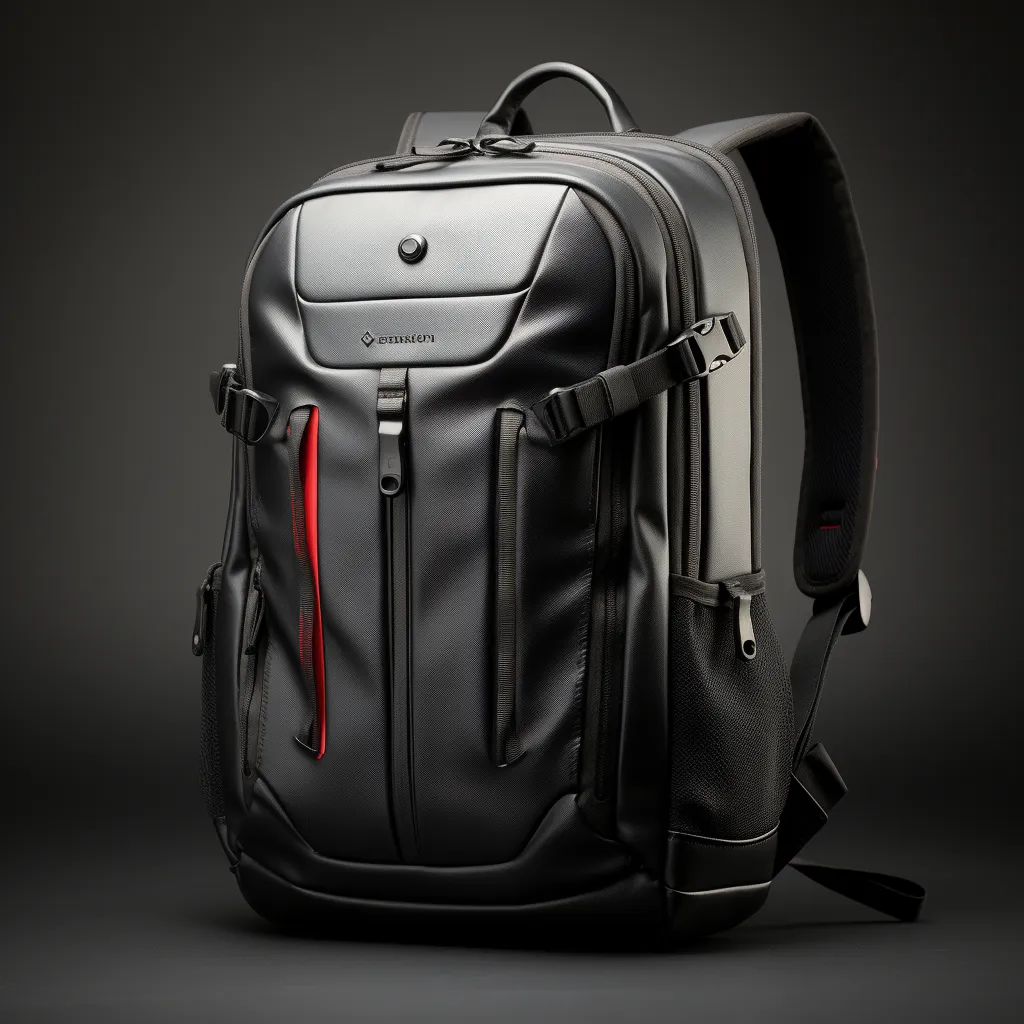
• Protection level (commute vs travel) and drop-risk expectation
• Access layout preference (clamshell/U-zip/lay-flat) and organization needs
• Fabric preference and weather protection target
• Branding method and packaging requirements
• Any extras (RFID pocket, anti-theft, trolley sleeve by spec)
Start custom laptop backpacks production
Send your requirements and get a structured RFQ checklist and a manufacturing plan.
On a laptop backpack, the device bay is the product and the rest of the bag is packaging around it. Get the suspension wrong and no amount of pocket engineering will rescue the programme, because the failure a customer remembers is a cracked screen, not a missing pen loop. The specification below treats the bay as a structural component with its own load path rather than as a padded pocket sewn into the back panel.
Specification options for custom laptop backpacks
Start with the device size you actually ship to, not the largest screen on the market. A bay sized for a 17-inch machine puts a 14-inch laptop in a loose pocket with 2 cm of travel, which is worse than a snug 14-inch bay. The grid below is what we price against for commuter, corporate and travel programmes of custom backpacks with device protection.
| Parameter | Slim 14-inch, 16 L | Commuter 15.6-inch, 22 L | Travel 17-inch, 30 L |
|---|---|---|---|
| Capacity | 16 L | 22 L | 30 L |
| External dimensions | 40 × 28 × 14 cm | 45 × 31 × 18 cm | 50 × 34 × 22 cm |
| Device bay, internal | 34 × 24 × 2.2 cm | 38 × 27 × 2.6 cm | 42 × 30 × 3.0 cm |
| Shell fabric | 420D nylon, PU coated | 600D recycled polyester | 900D polyester, PVC backed |
| Coating | PU, 1,000 mm head | PU, 1,500 mm head | PVC, 2,000 mm head |
| Lining | 210D polyester, light grey | 210D RPET, high-visibility orange | 420D RPET, two-tone |
| Back panel | 8 mm EVA, spacer mesh | Moulded 12 mm EVA with airflow channels | Moulded 15 mm EVA, lumbar pad |
| Shoulder strap | 10 mm foam, 7 cm wide | Dual-density foam, 8 cm, load lifters | Dual-density, 9 cm, sternum strap |
| Bay padding | 6 mm closed-cell, suspended | 8 mm closed-cell, suspended, false bottom | 10 mm, suspended, corner reinforcement |
| Frame sheet | 0.8 mm HDPE removable | 1.0 mm HDPE with aluminium stay | 1.2 mm HDPE, full-height |
| Zippers | #8 coil, water-resistant | #8 coil, water-resistant, garage | #10 coil, lockable pulls |
| Organisation | 3 pockets, 2 pen slots | 6 pockets, key clip, cable loop | 8 pockets, tablet slip, bottle pockets |
| Trolley sleeve | None | Yes, pass-through | Yes, pass-through with zip pocket |
| Empty weight | 680 g | 950 g | 1,320 g |
How custom laptop backpacks are built
The bay is engineered as a floating compartment. Its base is raised 15–20 mm off the bottom of the bag so that putting the pack down on a hard floor never drives the device corner into the ground, and its side walls are closed-cell foam rather than loose wadding, because wadding migrates after a few months and leaves the corner unprotected. The bay is attached to the frame sheet side of the body, not to the outer shell, so the load path runs through the stiffest part of the pack.
The back panel does two jobs at once: it protects the device from the wearer's back and it decides whether the pack is comfortable at 8 kg. Flat foam is cheap and hot. A moulded EVA panel with air channels costs tooling but holds its shape, spreads the load and lets air move, which is why commuter and travel builds use it while slim builds stay flat. Closing the moulded panel into the shell is the heaviest sewing operation on the bag and needs a jig.
Strap geometry is the third decision. Straps are not simply padded webbing: the root of the strap, where it meets the body, carries the entire load, so we anchor it to a reinforced band that runs into the frame sheet channel and bar-tack it across the full width. Load lifters above the shoulder change the angle of pull and matter on anything above 22 L. Strap foam is dual-density, firmer at the root and softer at the shoulder, and the face is a 3D spacer mesh rather than a flat knit.
Everything else is assembly detail that still has consequences. Seams are bound internally so the coating does not fray into the lining; zipper ends get a garage so the pull does not rest against a device corner; the frame sheet sits in a sleeve with a removable board so the pack can be flattened for shipping. Final operations are a shape check on a stand, a device-fit check with a real 15.6-inch or 17-inch dummy, and a carry test.
Cost drivers and MOQ for custom laptop backpacks
Fabric denier and coating sit at the base. 420D PU-coated nylon and 600D recycled polyester are within a few cents of each other; 900D PVC-backed is a different price bracket and adds weight. Lining choice is next: a light grey 210D is cheapest, a high-visibility RPET lining costs more and buys you a retail feature that customers notice in store.
The back panel and the bay are where the real money is. A moulded EVA panel needs tooling and a longer assembly time; a suspended bay with a false bottom and corner reinforcement adds foam, a panel and two operations. Hardware is the fourth driver: water-resistant #8 coil is the standard, lockable #10 pulls and branded hardware add per-unit cost, and a moulded logo badge needs its own tool.
Terms are published and fixed. Minimum is 500 units per style per colour, 300 for repeat programmes. Sampling runs 6–10 working days, 12–15 for builds with moulded panels or custom hardware; mass production is 35–50 days after sample approval. Sample fees are USD 50–150, credited against your first bulk order, and tooling for moulded back panels, zip pulls or logo plates runs USD 300–2,500. Quotes come back within 24–48 hours, payment is T/T 30/70, and pricing is FOB Xiamen, with EXW, CIF and DDP available.
| Build | Indicative FOB band | Typical use |
|---|---|---|
| Slim 14-inch, flat panel | USD 7.00–10.00 | Corporate onboarding kits |
| Commuter 15.6-inch, moulded panel | USD 8.50–12.00 | Retail and channel programmes |
| Travel 17-inch, full frame | USD 10.50–14.00 | Business travel ranges |
Quality gates and acceptance criteria
Inspection follows ISO 2859-1 at AQL 2.5, with Critical 0, Major 2.5 and Minor 4.0; AQL 1.5 is available where a corporate rollout demands it. Critical defects are a failed strap root, a torn bay or a zip that separates; majors are device bay misalignment beyond 3 mm, open seam, missing reinforcement or a foam void in the panel; minors are cosmetic marking and thread tails.
Materials are tested to ASTM D5034 grab tensile, ASTM D751 for coating adhesion, AATCC 22 spray and AATCC 127 hydrostatic head, ISO 13934-1 for seam strength, AATCC 8 for colour transfer on dark shells, and ISO 12945 for pilling on spacer mesh. Metal parts are checked to EN 1811 for nickel release and ASTM B117 for corrosion.
Product-level validation is the part buyers care about: a 1 m drop onto concrete on all six faces with a 5 kg dummy load in the bay, a 2,000-cycle loaded bounce test on the strap system, 5,000 zip cycles, and a 30 kg static pull on the grab handle. Cartons are validated to ISTA 3A, and where a ruggedness protocol is written into the tender we report against MIL-STD-810 methods.
Device-fit and protection engineering
Tell us the exact machines you ship. Internal bay dimensions are set from the largest device plus 10 mm of clearance, and the corner radius of the bay is matched to the device radius rather than cut square, because square corners concentrate impact. A false bottom and corner reinforcement are the two cheapest additions that materially change drop results.
Two options come up repeatedly: a lay-flat bay that opens 180 degrees for security screening, and a separate tablet slip so the device bay is not opened in transit. Both add a panel and a seam. Cable routing, an asset-tag window for corporate fleets and a power-bank pass-through are all cheap additions if they are designed in before the first sample rather than after approval. We have been building these programmes since 2014, with the founder in the trade since 2004, which shows up mostly in how quickly a component problem gets traced to its source.
Ordering path
Send the device list with your brief and we will size the bay before quoting. See laptop bag formats and testing standards, or request a quote.