Your Trusted Custom Business Backpacks Manufacturer
Business backpack manufacturing for office and corporate programs. Focused on clean appearance, stable structure, and laptop protection.
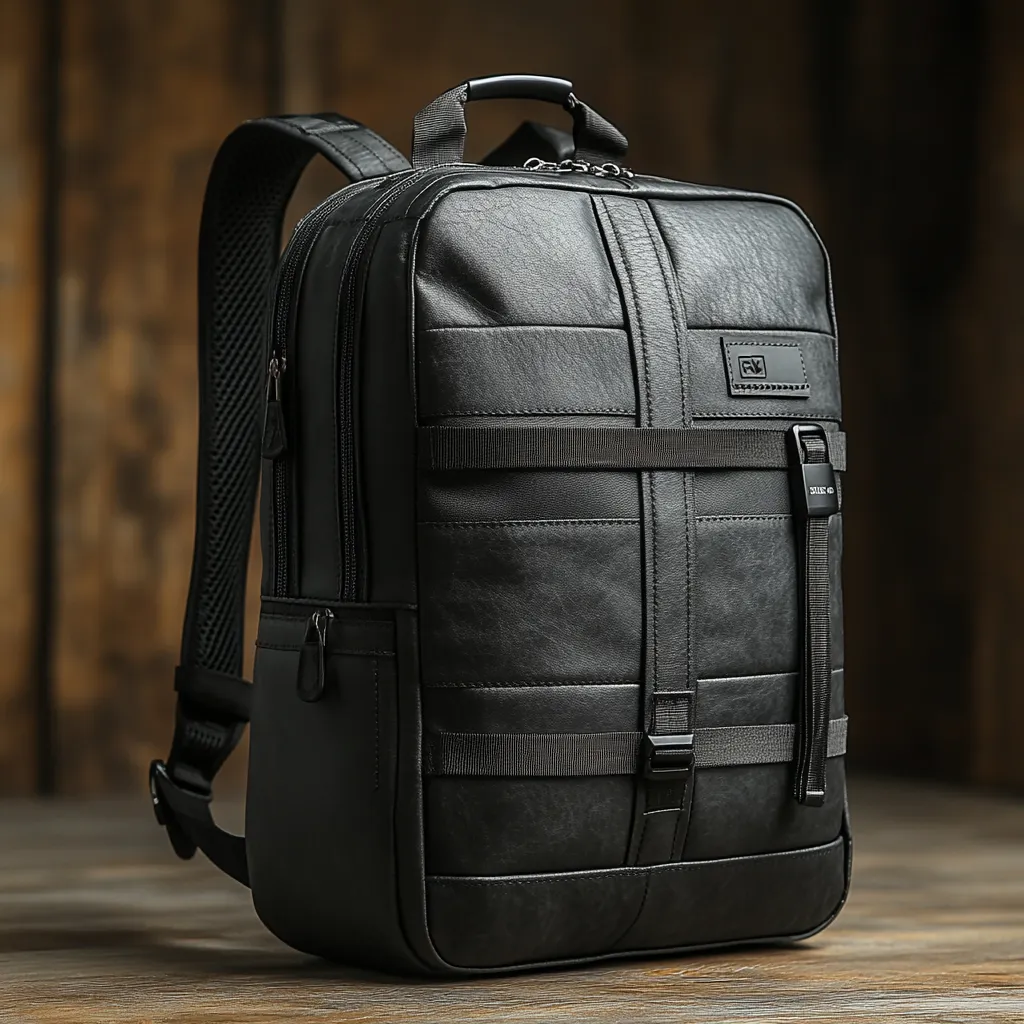
Spec snapshot
A fast engineering view of what matters for sourcing, quoting, and repeatable production.
| Item | Typical | Notes |
|---|---|---|
| Laptop size | 13" / 14" / 15.6" / 16"+ | Define device + case thickness and sleeve tolerance |
| Office carry | laptop + charger + documents + bottle | Organization should match real daily carry |
| Travel add-ons | trolley sleeve / quick-access pocket (by spec) | Travel programs need stable access architecture |
| Look & structure | minimal / structured premium | Panel structure affects appearance and cost |
| Typical MOQ | 500–1,000 pcs | Depends on fabrics, hardware, and logo package |
Office organization blueprint
Business backpacks win when organization is intentional, not random pockets. This blueprint maps compartments to real office carry items.
| Compartment | Best for | Notes |
|---|---|---|
| Laptop compartment | device protection | Suspended sleeve reduces base impact; define padding density and thickness |
| Charger/cable zone | power accessories | Cable routing reduces tangles; avoid hard edges against device sleeve |
| Quick pocket | phone, keys, transit card | Design for one-hand access and inward zipper routing options |
| Document zone | A4 folders, notebooks | Flat panel support improves appearance and reduces wrinkling |
| Bottle pocket | commute hydration | Leak risk: add base reinforcement and spill separation logic |
Business travel checklist
Business backpacks are often used as carry-on companions. This checklist converts travel requirements into practical design constraints.
| Requirement | Why it matters | Design notes |
|---|---|---|
| Trolley sleeve option | Common for business travel and airport use | Define sleeve width and reinforcement at pass-through seams |
| Quick access at security | Reduces friction and improves reviews | Choose zipper geometry that opens wide without twisting |
| Professional appearance | Corporate and office programs demand clean lines | Control panel structure, edge binding, and hardware matching |
| Wear-zone durability | Commute contact points fail first | Reinforce base and strap anchors; define AQL focus points |
• Control zipper alignment and end-stops for high-cycle office use
• Define strap anchor reinforcement map and bar-tack count
• If using PU leather, define scratch tolerance and cleaning expectation
Materials & fabrics
Material choice drives performance, durability, finishing, and target price point.
| Fabric | Waterproof | Cost | Notes |
|---|---|---|---|
| Ballistic nylon | water-resistant | varies | Premium durability for business positioning. |
| PU leather | depends on finish | varies | Premium look with easy cleaning. |
• organizer pockets
• laptop padding strategy
• hardware consistency control
• strap pull tests
• AQL final inspection
• Business travel retail
• Office commuter lines
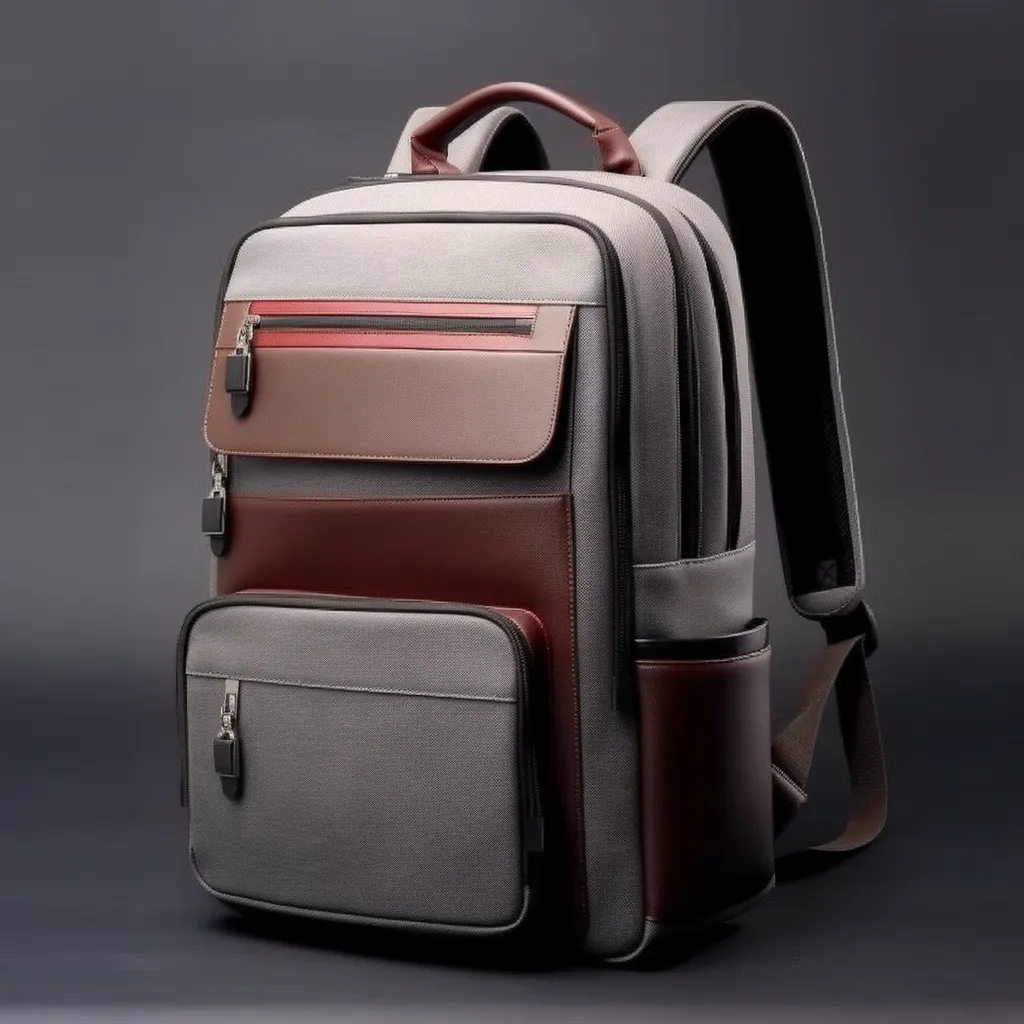
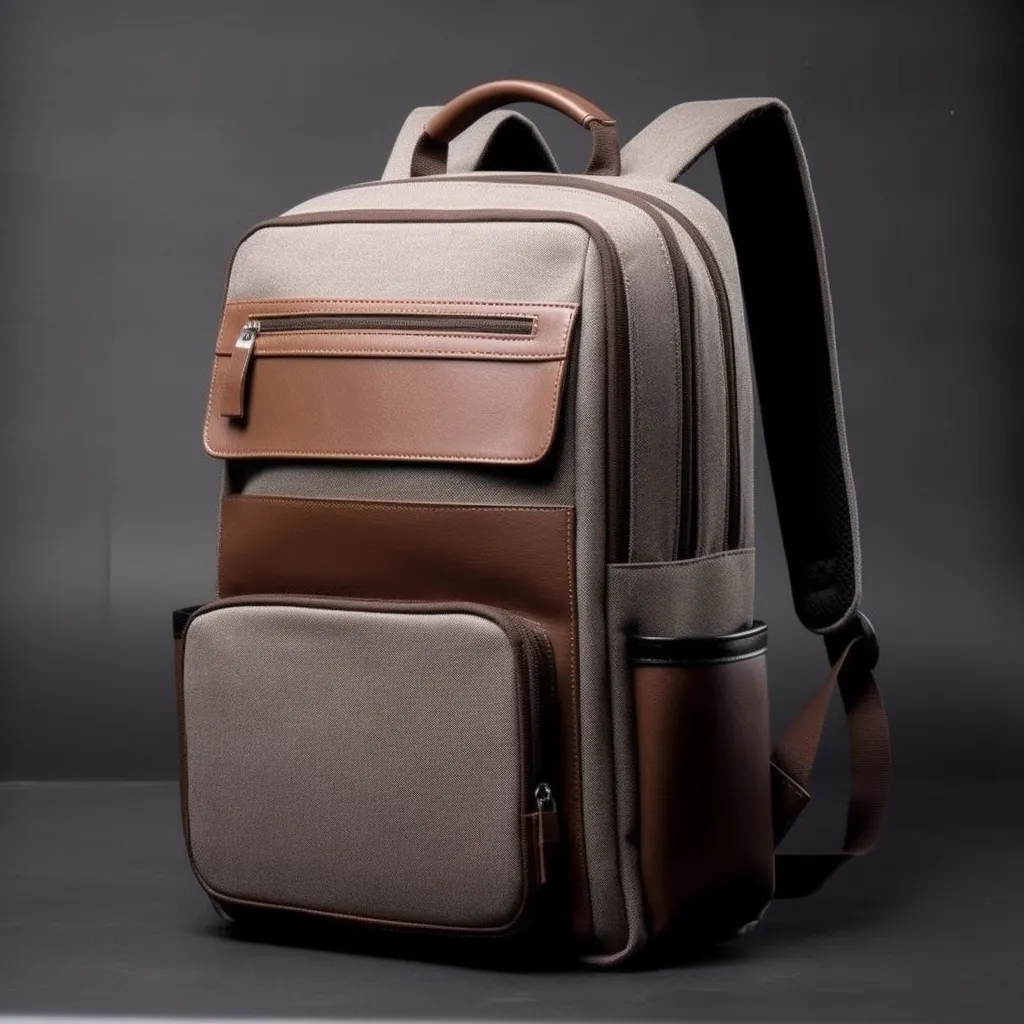
• Desired appearance (minimal vs premium structured) and colorways
• Organization needs (charger zone, quick pocket, document zone, bottle)
• Travel features (trolley sleeve, lay-flat access by spec)
• Fabric preference (ballistic/PU leather) and scratch tolerance
• Branding method and packaging requirements
Start custom business backpacks production
Send your requirements and get a structured RFQ checklist and a manufacturing plan.
A business backpack carries a laptop, a charger, documents and usually a water bottle, and it has to look presentable in a meeting room. Those two requirements pull against each other: structure costs weight, and professional finishes are less abrasion-tolerant than technical face fabrics. The specification is a negotiation between them.
Specification options for custom business backpacks
Below is the configuration grid for the three tiers we build most: a slim commuter pack, a standard 24 L corporate pack, and a full-featured travel-capable build. Capacity is measured with the laptop bay installed, because that bay consumes real volume.
| Parameter | Slim commuter | Corporate | Travel-capable |
|---|---|---|---|
| Usable capacity | 20 L | 24 L | 28 L |
| Exterior dimensions | 44 × 30 × 14 cm | 46 × 31 × 16 cm | 48 × 33 × 18 cm |
| Face fabric | 420D nylon twill, PU | 900D polyester, PU + DWR | 1680D ballistic or leather trim |
| Lining | 210D polyester | 420D, light grey | Recycled rPET 210D, GRS documented |
| Laptop bay | 14 in, padded slip | 15.6 in, suspended 20 mm | 15.6 in, suspended 25 mm plus tablet slip |
| Organiser | 6 slots, key leash | 10 slots, pen loops | 14 slots, RFID pocket, cable garage |
| Empty weight | 900 g | 1,100 g | 1,350 g |
| Documented compliance | REACH (EC 1907/2006), Proposition 65 | REACH, CPSIA, Proposition 65 | REACH, CPSIA, ISO 17075 leather, EN 1811 |
The laptop bay is the specification to argue about. A suspended bay with a false bottom and 25 mm of clearance protects a device dropped onto a hard floor; a padded slip with the base seam directly under the device does not. The difference is a few cents of foam and one extra panel, and it is the most common cause of device damage claims.
Closure and hardware are where cost hides. A lockable #8 coil with a branded puller reads as premium and costs less than a metal zip; a magnetic flap closure costs more in labour and can lose strength over time. On corporate programmes we recommend coil closures with a custom puller and put the budget into the lining.
How a business backpack is built
Patterning on this product is driven by silhouette. A business pack has to hold a flat, rectangular shape rather than a technical bag's rounded one, which means an internal frame sheet or a laminated front panel. Without one, the bag slumps and reads as a casual pack regardless of the face fabric.
The front panel is laminated to a 1.5 mm EVA or PE sheet and then assembled, so the panel cannot be embroidered afterwards. Any branding on that face has to be applied before lamination or added as a separate badge. This sequencing requirement is the most common cause of artwork delays on corporate programmes.
The laptop bay is built as a separate suspended sleeve. It is stitched to the back panel at the top edge only, with the base floating 20–25 mm above the bag floor, and the sides tacked with a small amount of ease so the device cannot contact the outer shell. Load transfers through the sleeve top seam, which is bar-tacked and backed with webbing.
Interior organisation is assembled on a separate panel that drops into the bag. This lets the organiser be changed without re-patterning the shell, which matters when a programme runs several SKUs off one body. Panels are edge-bound and topstitched to stop them curling under the weight of contents.
The back panel and harness are specified for a shirt, not a technical tee. A spacer mesh that is comfortable against bare skin will pill a shirt collar in a season, so corporate builds use a finer tricot or a smooth woven facing over the foam, and strap edges are turned and topstitched rather than bound with tape.
Cost drivers and MOQ for business backpacks
Face fabric and lining account for less of the unit cost than buyers expect; the organiser panel and the laptop bay assembly account for more. A 14-slot organiser with an RFID pocket and a cable garage can add more labour than upgrading the shell by two denier steps. If the budget is tight, simplify the organiser.
Hardware is the second lever. Custom pullers, branded buckles and metal feet each add unit cost and, in the case of moulded parts, tooling. A custom puller is the best value of the three because it reads at retail and amortises across your whole range.
Minimum runs are 500 units per style and colourway, with reorders from 300. Sampling takes 6–10 working days, or 12–15 where leather trim or custom hardware is involved. Sample fees are USD 50–150, credited against your first bulk order, and tooling runs USD 300–2,500.
| Configuration | Indicative FOB | Notes |
|---|---|---|
| 20 L slim commuter | USD 7.00–10.00 | 420D twill, 14 in bay, 6-slot organiser |
| 24 L corporate | USD 9.00–14.00 | 900D shell, suspended 15.6 in bay, 10 slots |
| 28 L travel-capable | USD 13.00–19.00 | 1680D or leather trim, full organiser, rPET lining |
Standard terms are T/T 30/70 against FOB Xiamen, with EXW, CIF and DDP available. Quotations are returned in 24–48 hours. Transit runs 25–35 days by sea, 5–8 days by air and 3–5 days by courier, and a 40HQ holds about 68 CBM.
Quality gates and acceptance criteria
Inspection is AQL 2.5 — Critical 0, Major 2.5, Minor 4.0 — sampled to ISO 2859-1, and AQL 1.5 is available on request. The product-specific checks centre on the laptop bay, the organiser seams and the panel lamination, because those are the failure points that generate corporate complaints.
Laptop bay protection is validated with a loaded drop: the bag carries a weighted dummy device and is dropped from 300 mm onto a hard surface in six orientations, and the device must show no contact with the shell. Lamination is checked for bond after a heat cycle. Leather trim is tested for chromium VI to ISO 17075 and metal hardware for nickel release to EN 1811.
| Check | Method | Acceptance |
|---|---|---|
| Laptop bay drop | In-house, weighted dummy, 300 mm, 6 orientations | No device-to-shell contact |
| Shell tensile | ASTM D5034 grab | Above 500 N warp and weft |
| Seam strength | ISO 13934-1 | Above 180 N main seams |
| Abrasion | In-house Martindale, 10,000 cycles | No thread break, no pilling above grade 4 |
| Colour fastness to rubbing | AATCC 8 | Grade 4 dry, 3–4 wet |
| Leather chromium VI | ISO 17075 | Not detectable at 3 ppm |
Compliance documentation by destination market
Corporate programmes are usually the ones that need a documentation pack, because procurement teams ask for it. For the United States, the relevant lines are CPSIA where any component could be classed as a children's product, and California Proposition 65 warnings on listed substances. For the European Union, REACH (EC 1907/2006) restricted-substance declarations are the baseline.
Where leather is used, ISO 17075 chromium VI results are included, and where metal hardware contacts skin, EN 1811 nickel release. Social compliance is documented separately: amfori BSCI and Sedex SMETA reports are available for the facilities we run our programmes through, and ISO 9001 and ISO 14001 certificates are issued at site level.
Recycled claims need chain-of-custody evidence. If you specify rPET lining, we issue a GRS transaction certificate with the shipment rather than a generic statement, because a claim without a transaction certificate will not survive a retailer audit.
Ordering path for business backpack programmes
Most first programmes reach shipment in 9–12 weeks. Corporate artwork and leather shade approval are the two items that most often slip, so start both in week one.
Send capacity, laptop size and destination market and we will return a specification sheet with an indicative band and the compliance pack that applies. Certification detail sits on our quality and certification page, and related formats under laptop bags.